This article examines how clubs, brands, and athletes can avoid fit issues when developing a custom competition gymnastics leotard. It explains that fit is a performance concern because a leotard must stretch, recover, stay in place, provide secure coverage, and allow complete freedom of movement. Common problems such as riding up, slipping straps, insufficient torso length, excess fabric, leg line issues, chest gaps, uneven stretch, and decoration drag are described in detail. The article then identifies root causes, including inaccurate measurements, inconsistent sizing systems, poor fabric recovery, weak pattern development, and decoration weight. It emphasizes that custom manufacturing reduces risk by aligning design, measurement, materials, sampling, and bulk production. T&J Sportswear is presented as a professional gymnastics apparel manufacturer with more than 10 years of experience, OEM and ODM services, an in-house design team, and expertise in fabrics such as Lycra, Spandex, Polyester, Mystique, and Mesh. The company serves 36+ countries, maintains 30+ skilled workers, and reports capacity of 300+ leotards per day. Its low MOQ starting from 10 sets supports clubs, new brands, and distributors that need flexible testing and gradual collection development. The article also covers measurement best practices, communication details, design choices that support fit, quality control, and certifications such as ISO9001, SGS, and CE for applicable products. It concludes that fit should be treated as a central performance feature from the first idea to the final leotard. By working with a manufacturing partner such as T&J Sportswear, customers can pursue reliable fit, consistent workmanship, and confident competition performance.
Avoiding Fit Issues With a Custom Competition Gymnastics LeotardFor competitive gymnasts, a leotard is not simply apparel. It is a piece of performance equipment that must move with the body through every swing, turn, jump, and landing. A custom competition gymnastics leotard can elevate a routine with striking design, but its value depends on one fundamental quality: fit. When a leotard fits correctly, the athlete can focus on technique, timing, and presentation. When it does not, the mind is pulled toward straps that slip, fabric that rides up, or seams that restrict. Avoiding fit issues is therefore a critical part of custom gymnastics apparel development.
T&J Sportswear is a professional gymnastics apparel manufacturer specializing in the development and production of high-quality gymnastics leotards and teamwear. With more than 10 years of experience in the sportswear industry, the company has built strong expertise in product development, custom design, manufacturing, and international business. Its work with gymnastics clubs, teams, brands, wholesalers, distributors, and other sportswear businesses has shown that fit problems rarely come from a single mistake. They usually emerge from a combination of measurement errors, pattern choices, fabric behavior, construction methods, and communication gaps.
Competition leotards must satisfy demands that everyday sportswear does not face. They need to stretch, recover, stay in place, provide secure coverage, and look polished under bright lights and close judging. A leotard that is too tight can restrict breathing, pull at the shoulders, or create uncomfortable pressure. A leotard that is too loose can shift during tumbling, expose areas that should remain covered, or create visual wrinkles that distract from the line of the body.
Fit also affects confidence. Athletes who feel secure in their apparel are more likely to perform with freedom. Coaches and clubs know that uniform fit supports a professional team image. Brands and distributors understand that fit influences customer satisfaction, returns, and reputation. For these reasons, fit should be treated as a technical requirement from the very beginning of a custom leotard project, not as a final detail to be adjusted later.
undefined
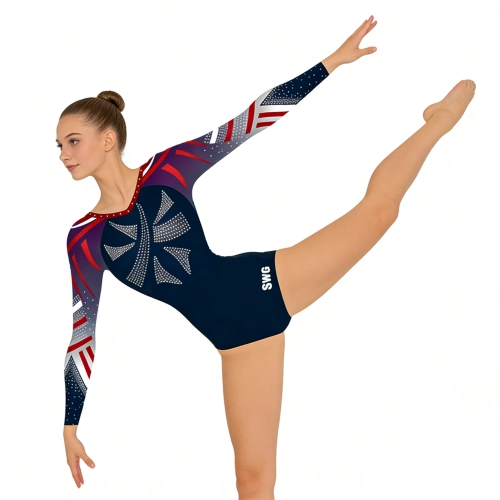
Each of these problems can be reduced or avoided when the manufacturer understands gymnastics-specific fit. T&J Sportswear focuses on competition and training leotards, and unlike general sportswear suppliers, it understands the specific requirements of gymnastics apparel, including stretch, fit, comfort, coverage, durability, decoration, and freedom of movement.
Fit issues are usually symptoms of deeper development decisions. Identifying the root cause helps clubs, brands, and athletes avoid repeating the same problem in future orders.
Measurement is the foundation of custom fit. A small error in torso length, chest circumference, waist, hips, or leg rise can produce a noticeable problem in a high-stretch garment. Teams often measure many athletes quickly, and inconsistent technique can lead to size variations that do not reflect actual body shapes. T&J Sportswear recommends clear measurement guides, consistent tools, and, when possible, a second check for key dimensions.
Different brands and countries use different size charts. A size that fits in one system may not fit in another. When clubs order custom team leotards, relying only on generic sizes can create fit gaps. A manufacturer with international experience can help translate measurements into reliable patterns. T&J Sportswear has served customers in 36+ countries, giving it practical experience with different markets, sizing systems, and product preferences.
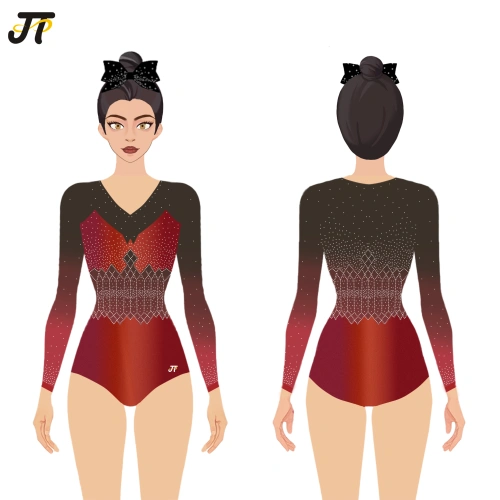
Fabric choice affects fit as much as measurement. Lycra, Spandex, Polyester, Mystique, and Mesh each behave differently. Some fabrics offer strong stretch and recovery, while others provide structure, shine, or breathability. If a fabric has poor recovery, the leotard may sag or bag after repeated wear. If it has too much compression, it may restrict movement. T&J Sportswear pays close attention to fabric selection and garment construction so that performance and appearance work together.
Pattern development determines how fabric panels wrap around the body. A pattern that works for one body type may not work for another. Seam placement, gusset design, leg opening shape, and strap angle all influence fit. Poorly aligned seams can twist during movement. A weak gusset can reduce comfort. A strap that is attached at the wrong angle can slip. T&J Sportswear supports professional design and pattern development, helping customers turn concepts into finished gymnastics apparel with better fit control.
Rhinestones, crystals, sublimation graphics, mesh inserts, and layered fabrics can change the drape and stretch of a leotard. Heavy decoration in the wrong area may pull the fabric downward. Stiff appliqués may reduce flexibility. T&J Sportswear can combine sublimation graphics, color blocking, mesh, rhinestones, crystal decoration, and different fabric effects to create distinctive visual designs while considering how those details affect movement.
Custom manufacturing is not only about unique colors and logos. It is a controlled process that aligns design, measurement, materials, and production. A professional manufacturer can create patterns based on specific athlete measurements or team size sets, select fabrics that match the intended level of stretch and support, test samples, and maintain consistency in bulk production.
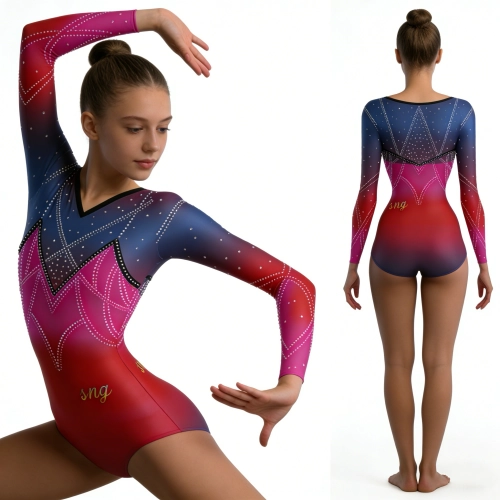
T&J Sportswear offers OEM and ODM services and can develop products based on customer designs, sketches, reference images, color requirements, or original ideas. Its professional design team can assist with artwork development and product optimization. This integrated approach helps reduce communication between multiple suppliers and gives customers a more efficient path from an initial idea to a finished product.
T&J Sportswear approaches fit as a shared responsibility between the customer and the manufacturer. The customer provides accurate measurements, fit preferences, and performance requirements. The manufacturer provides technical guidance, pattern expertise, material knowledge, and production consistency.
The process often begins with a design concept. This may be a sketch, a reference image, a color combination, or a team identity. The design team translates the idea into a technical plan that considers panel lines, stretch direction, seam placement, and decoration zones. For competition leotards, the goal is to create a striking look that still supports secure coverage and freedom of movement.
Material selection follows the performance needs of the leotard. For training leotards, T&J Sportswear focuses on comfortable stretch, durability, moisture management, and everyday wear. For competition leotards, the company places greater emphasis on precision fit, secure coverage, decorative details, and professional finishing. The right fabric combination can improve stretch recovery, reduce transparency, and help the leotard hold its shape.
Before bulk production, a sample allows the customer to review design, fabric, fit, decoration, and finishing. This stage is essential for avoiding fit issues. Athletes or coaches can check shoulder pressure, torso length, leg rise, chest coverage, and overall comfort. If adjustments are needed, they can be made before mass production. This reduces the risk of producing a large order with a fit problem that affects every garment.
Once a sample is approved, consistency becomes the priority. T&J Sportswear maintains stable workmanship and carefully inspects finished products before shipment. The factory team includes 30+ skilled workers, with reported production capacity of 300+ leotards per day. This capacity supports both flexible customization and larger wholesale and team orders. The real value is the ability to maintain consistent workmanship when moving from samples to bulk production.
Accurate measurement is the most practical way to avoid fit issues. Teams should use a flexible measuring tape, wear fitted clothing, and follow a consistent measurement guide. Key measurements for gymnastics leotards often include chest, waist, hips, torso length, and sometimes leg rise or shoulder width. It is helpful to measure each athlete individually rather than assigning sizes based on age or general clothing size.
For growing athletes, clubs may consider a small amount of adjustment room in the pattern without sacrificing compression. For elite athletes, precision is more important. T&J Sportswear can advise on size sets and measurement interpretation based on the specific design and fabric. Clear communication at this stage prevents costly corrections later.
Fit is not only a number on a chart. It is also a set of preferences. Some athletes prefer a tighter competition fit, while others prefer more coverage or less pressure on the shoulders. Some teams want a higher leg line, while others prefer a more conservative cut. These preferences should be documented before sampling.
T&J Sportswear provides one-to-one service from initial inquiry and design development to sampling, production, inspection, and shipment. Customers can communicate their requirements directly and receive assistance with product development, customization, production details, and logistics. This responsive communication helps prevent assumptions that could lead to fit problems.
Certain design choices can improve fit or reduce risk. Mesh inserts can add breathability and visual interest without adding heavy decoration. Color blocking can create flattering lines while allowing different fabric panels to serve different functions. Sublimation printing can add complex graphics without the weight of appliqués. Rhinestone layouts can be planned to avoid pulling or stiffening key stretch areas.
T&J Sportswear offers competition gymnastics leotards, practice gymnastics leotards, custom team leotards, rhinestone gymnastics leotards, and gymnastics warm-up wear. Each product category has different fit priorities. Competition leotards require precise fit and secure coverage. Practice leotards prioritize comfort, stretch, breathability, and durability. Warm-ups and matching team apparel support a complete team collection with customizable colors, logos, patterns, labels, and packaging.
Quality control starts before bulk production and continues through final inspection. During sample development, customers can review the design, fabric, fit, decoration, and finishing before confirming mass production. For finished garments, key inspection points can include fabric condition, printing quality, stitching, measurements, rhinestone placement, coverage, and overall appearance.
T&J Sportswear works to reduce common problems such as inconsistent sizing, printing defects, loose decoration, or uneven finishing. Product information also lists certifications such as ISO9001, SGS, and CE for applicable products. Specific certification and testing documentation can be provided according to the product and customer requirements.
Fit issues can be especially costly for small orders because there may be limited room for replacement. A low minimum order quantity helps clubs and new brands test designs before committing to large production. T&J Sportswear offers a low MOQ starting from 10 sets for selected products. This gives gymnastics clubs, new brands, boutique retailers, and smaller distributors greater flexibility when testing new designs or launching new collections.
Instead of requiring customers to commit to large quantities before they know how a design will perform in their market, T&J Sportswear can support smaller initial orders and help customers gradually develop their collections. This approach is useful for fit testing as well. A small batch allows athletes to try the leotard in training and competition before a larger order is placed.
Customization is at the center of T&J Sportswear's manufacturing service. The company supports both OEM and ODM, allowing customers to choose between producing their own designs and developing new products together with the team. Customization can cover artwork, colors, sublimation printing, logos, rhinestone layouts, fabric combinations, sizes, labels, packaging, and other details.
For clubs, this means team uniforms that reflect identity and fit the needs of each athlete. For new brands, it means a manufacturing partner that can help develop a first collection. For established distributors, it means regular production with consistent workmanship and dependable service. The production process covers design development, fabric selection, digital artwork, printing, cutting, sewing, decoration, inspection, packaging, and delivery.
T&J Sportswear aims to build long-term partnerships rather than simply complete individual orders. With 10+ years of industry experience, 36+ countries served, 30+ skilled workers, 300+ daily leotard capacity, low MOQ, professional design support, OEM/ODM customization, and one-to-one service, the company combines manufacturing capability with the flexibility required by today's international gymnastics apparel market.
The company's main markets include North America and Europe, where customers place strong emphasis on product quality, customization, consistency, and reliable communication. This experience helps T&J Sportswear understand that fit is both a technical and a commercial concern. A well-fitting leotard satisfies the athlete, supports the coach, strengthens the club, and protects the brand.
Avoiding fit issues with a custom competition gymnastics leotard requires planning, accurate measurement, appropriate materials, careful pattern development, sample approval, and consistent production. It also requires a manufacturer that understands the unique demands of gymnastics. T&J Sportswear focuses on competition and training leotards, with more than 10 years of experience and a customer-focused approach.
From the first idea to the final leotard, T&J Sportswear is committed to making custom gymnastics apparel more efficient, flexible, and reliable. By treating fit as a central performance feature, clubs, brands, and athletes can step onto the competition floor with confidence, knowing that their leotards are designed to move with them, not against them.
