Sourcing competition gymnastics leotards on a tight deadline is a planning challenge rather than an impossible one. This article outlines practical strategies that clubs, teams, brands, wholesalers, and distributors can use to compress timelines without sacrificing quality. Key recommendations include choosing a manufacturer that specializes in gymnastics apparel rather than general sportswear, locking design and color decisions before production begins, prioritizing proven performance fabrics such as Lycra, Spandex, Polyester, Mystique, and Mesh, and using low minimum order quantities to place focused, fast-moving orders. Buyers are encouraged to confirm production capacity in advance, keep quality control embedded in the schedule rather than treating it as an afterthought, consolidate feedback into single approval rounds, and maintain one clear point of contact with the supplier. The article also provides a reverse countdown timeline from competition day, a table of typical stage durations, a checklist of information to prepare before contacting a supplier, and a list of common deadline mistakes such as delaying orders for full rosters, requesting major design changes after sampling, and ignoring shipping and customs time. Decoration choices matter as well: sublimation printing is generally faster than heavy rhinestone application, and combining both techniques strategically can preserve visual impact while saving days. T&J Sportswear, a professional gymnastics apparel manufacturer with more than ten years of experience, customers in over 36 countries, a team of 30 or more skilled workers, daily capacity of 300 or more leotards, low MOQ starting from 10 sets, OEM and ODM services, in-house design support, and one-to-one service, is presented as an example of a supplier structured to handle urgent competition orders. Ultimately, the article argues that tight deadlines are best managed through early preparation, realistic buffers, specialized manufacturing partners, and consistent communication, allowing athletes to step onto the competition floor in apparel that fits well, performs reliably, and reflects their team identity.
Competition Gymnastics Leotard Supplier Tips for Tight DeadlinesEvery gymnastics season brings the same familiar pressure. A club qualifies for a regional final with three weeks to spare. A brand decides to launch a competition collection before a major trade show. A distributor receives an urgent request from a team that suddenly needs twenty matching leotards in a specific colorway, with rhinestones, in a size range that spans three different body types. In each of these situations, the deadline is fixed and the calendar refuses to negotiate. What can be managed, however, is the way a buyer chooses and works with a competition gymnastics leotard supplier.
Tight deadlines are not a sign of poor planning in every case. Gymnastics is a sport built around competition calendars that are set months in advance but frequently reshuffled by qualification results, travel arrangements, and last-minute roster changes. A team that expects to wear one design may suddenly need another. A club that ordered practice leotards in January may discover in March that its competition squad requires a completely different look for a national event. The reality is that gymnastics apparel buyers operate in a fast-moving environment, and the suppliers who serve them well are the ones who are structured to handle speed without sacrificing quality.
undefined
This article examines practical, field-tested strategies for sourcing competition gymnastics leotards when time is short. It looks at how clubs, teams, brands, wholesalers, and distributors can compress timelines, reduce risk, and still receive apparel that performs under the lights. Throughout, the discussion references the capabilities of T&J Sportswear, a professional gymnastics apparel manufacturer with more than ten years of experience producing competition leotards, practice leotards, custom team leotards, rhinestone leotards, and gymnastics warm-up wear for customers in the United States, Europe, and other international markets.
Before discussing solutions, it helps to understand why gymnastics apparel timelines are so unforgiving. Competition leotards are not simple garments. They are engineered products that must combine stretch, recovery, coverage, comfort, and visual impact. A leotard that fits poorly will distract an athlete during a routine. A leotard that loses its shape after two washes will not survive a full season. A leotard with loose rhinestones can become a safety and presentation problem on the competition floor. These requirements mean that a competition leotard typically passes through more production stages than a standard piece of sportswear.
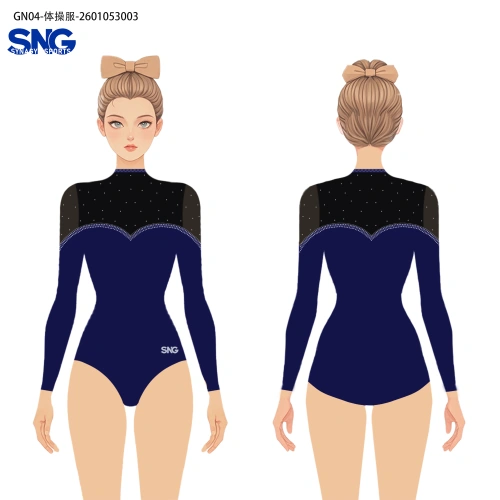
A single custom competition leotard may involve fabric selection, pattern development, size grading, digital artwork, sublimation printing, cutting, sewing, binding, elastic application, rhinestone placement, quality inspection, and packaging. Each stage adds value, and each stage also adds time. When a buyer approaches a supplier six weeks before a competition, every one of those stages must be compressed, parallelized, or eliminated. Suppliers who understand this reality build their processes around it. Suppliers who do not often create delays that cascade into missed deadlines.
There is also the human factor. Design approvals can stall when a club committee needs to vote on a colorway. Size lists can arrive incomplete because a new gymnast joined the team late. Payment processing can slow down when a purchase order passes through multiple departments. A supplier that communicates clearly and follows up proactively can keep these human bottlenecks from becoming production bottlenecks.
When a competition leotard order arrives late, the consequences go beyond inconvenience. A team may be forced to compete in mismatched practice wear, which affects both presentation scores and team morale. A brand may miss a retail launch window and lose shelf space. A distributor may damage a long-standing relationship with a club that trusted them to deliver. In gymnastics apparel, deadlines are not administrative details. They are part of the product.
The single most effective way to protect a tight deadline is to work with a manufacturer that already understands gymnastics apparel. General sportswear suppliers can produce attractive garments, but they often underestimate the specific demands of the sport. Gymnastics leotards require a particular balance of stretch and recovery, secure coverage during inversions, consistent sizing across a wide range of body types, and construction that holds up to repeated stretching and washing.
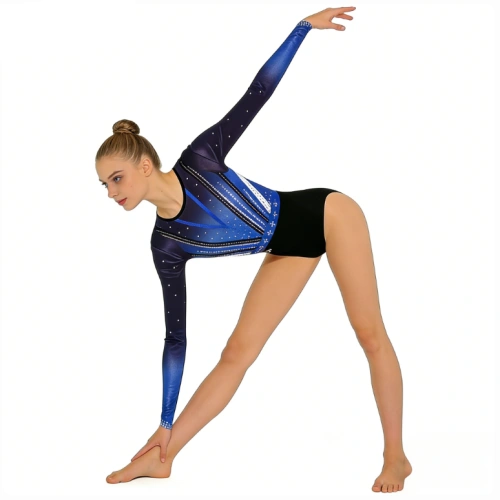
T&J Sportswear has more than ten years of experience in gymnastics apparel manufacturing, with a strong focus on competition and training leotards. Unlike general sportswear suppliers, the company understands the specific requirements of gymnastics apparel, including stretch, fit, comfort, coverage, durability, decoration, and freedom of movement. That specialized knowledge translates directly into speed, because experienced manufacturers do not need to learn the fundamentals of the product category while a deadline is ticking.
Over the years, T&J Sportswear products and services have reached customers in more than 36 countries, giving the company practical experience working with different markets, customer requirements, sizing systems, and product preferences. Its main markets include North America and Europe, where customers place strong emphasis on product quality, customization, consistency, and reliable communication. For a buyer facing a short timeline, working with a supplier that has already solved similar problems in similar markets removes an enormous amount of risk.
A specialized gymnastics manufacturer already has proven patterns, established size charts, tested fabric combinations, and reliable construction methods. When a club requests a new design, the manufacturer is adapting an existing framework rather than inventing one from scratch. This difference can save several days during sampling and several more during bulk production. It also reduces the likelihood of fit problems that would require costly rework.
Design indecision is the most common cause of missed deadlines in custom gymnastics apparel. A club may love three different colorways. A coach may want to adjust the sleeve length after seeing a sample. A brand may request a logo placement change after the artwork has already been sent to printing. Each of these changes is reasonable on its own, but each one consumes time that a tight schedule does not have.
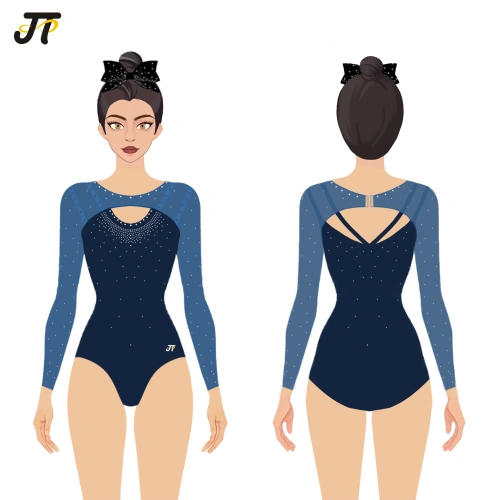
The solution is to treat design approval as a deadline of its own, ideally placed well before the production deadline. Buyers should aim to finalize colors, patterns, logos, rhinestone layouts, fabric choices, and size lists before the supplier begins bulk production. When a supplier offers professional design support, this stage becomes faster and more structured.
T&J Sportswear maintains an in-house professional design team specializing in gymnastics apparel. The team does more than simply manufacture designs supplied by customers. It can also help develop new concepts based on sketches, reference images, color combinations, team identities, or brand requirements. For competition leotards, the design team can combine sublimation graphics, color blocking, mesh, rhinestones, crystal decoration, and different fabric effects to create distinctive visual designs. Customers can also customize colors, logos, patterns, labels, and other branding elements.
Buyers should aim to consolidate feedback into a single round whenever possible. Instead of sending comments in five separate emails over two weeks, they should collect all internal feedback and deliver one clear, consolidated approval. This single habit can shorten a custom leotard timeline by several days and dramatically reduce the chance of miscommunication.
When time is short, there is a temptation to simplify. Buyers sometimes assume that a rushed leotard should use whatever fabric is fastest to source. In practice, the opposite is usually true. Choosing a proven performance fabric from the beginning avoids the delays that come from testing unfamiliar materials, correcting fit problems, or replacing garments that fail during the season.
A beautiful gymnastics leotard must also perform during movement, and T&J Sportswear therefore pays close attention to fabric selection and garment construction. The company product range can use materials including Lycra, Spandex, Polyester, Mystique, and Mesh, depending on the design and application. Different products can be developed for different priorities, such as stretch, lightweight construction, breathability, quick drying, comfort, durability, and visual appearance.
For training leotards, the focus is on comfortable stretch, durability, moisture management, and everyday wear. For competition leotards, greater emphasis is placed on precision fit, secure coverage, decorative details, and professional finishing. Buyers working against a deadline should communicate which priorities matter most, because that information allows the manufacturer to recommend fabrics and construction methods that fit both the performance requirement and the schedule.
| Fabric | Typical Strength | Best Suited To |
|---|---|---|
| Lycra | Excellent stretch and recovery | Competition and practice leotards requiring a close, flexible fit |
| Spandex blends | High elasticity, shape retention | Performance leotards with demanding movement requirements |
| Polyester | Durability and color retention | Practice wear and sublimated designs with detailed graphics |
| Mystique | Distinctive shine and visual impact | Competition leotards that need stage presence |
| Mesh | Lightweight breathability and contrast | Design accents, panels, and ventilation zones |
Understanding these trade-offs before sampling begins helps buyers make faster decisions and reduces the number of sample rounds required. Fewer sample rounds mean shorter lead times.
One major advantage for small and growing customers is a low minimum order quantity. T&J Sportswear offers low MOQ starting from 10 sets for selected products, which gives gymnastics clubs, new brands, boutique retailers, and smaller distributors greater flexibility when testing new designs or launching new collections.
This matters enormously for tight deadlines. When a supplier requires a large minimum order, buyers often spend weeks confirming quantities, gathering commitments from multiple teams, and waiting for internal approvals. A low MOQ allows a club to place a smaller order immediately, receive the garments in time for the competition, and then scale up later if the design performs well.
Instead of requiring customers to commit to large quantities before they know how a design will perform in their market, the manufacturer can support smaller initial orders and help customers gradually develop their collections. For a team facing a fast-approaching event, this flexibility can be the difference between competing in coordinated uniforms and competing in whatever is available.
Small orders are generally faster to produce than large ones. A ten-piece order can be cut, sewn, decorated, inspected, and packed in a fraction of the time required for a five-hundred-piece run. Buyers who understand this can use low MOQ policies strategically, placing a focused order for the athletes who need competition wear immediately while planning a larger follow-up order for the rest of the season.
Customization sits at the center of gymnastics apparel manufacturing, and the way a supplier handles customization has a direct impact on turnaround time. Buyers who need speed should look for a manufacturer that supports both OEM and ODM services, allowing them to choose between producing their own designs and developing new products together with the supplier team.
Customization can cover artwork, colors, sublimation printing, logos, rhinestone layouts, fabric combinations, sizes, labels, packaging, and other details. T&J Sportswear production process covers design development, fabric selection, digital artwork, printing, cutting, sewing, decoration, inspection, packaging, and delivery. This integrated approach helps reduce communication between multiple suppliers and gives customers a more efficient path from an initial idea to a finished product.
For buyers on a tight deadline, the value of integration is difficult to overstate. When design, printing, sewing, and rhinestone application all happen under one roof, there is no waiting for a third-party printer to return artwork files, no shipping delay between a cutter and a sewing unit, and no confusion about who is responsible for a quality problem. Every handoff that disappears from the process is a day that returns to the schedule.
OEM production, in which the customer supplies a finished design, is generally the fastest route because the artwork is already defined. ODM development, in which the manufacturer helps create the design, takes slightly longer but can be faster overall for buyers who do not yet have artwork. In that scenario, the manufacturer design team can produce concepts quickly rather than waiting for the buyer to develop them internally. Choosing the right route early is one of the most important deadline decisions a buyer can make.
A supplier may promise a fast turnaround, but the promise is only meaningful if production capacity actually exists. Buyers working against a deadline should ask direct questions about current workload, daily output, and whether the order can be scheduled immediately or must wait behind existing commitments.
T&J Sportswear factory team includes more than 30 skilled workers, with reported production capacity of 300 or more leotards per day. This provides a balance between flexible customization and the ability to support larger wholesale and team orders. For customers, production capacity is not simply about quantity. The real value is the ability to maintain consistent workmanship when moving from samples to bulk production. The company pays attention to fabric, printing, stitching, sizing, rhinestone placement, and overall finishing throughout production.
Answers to these questions allow buyers to build a realistic schedule rather than an optimistic one. A realistic schedule that succeeds is far more valuable than an optimistic schedule that fails.
Rushed production sometimes skips inspection steps, and that decision almost always backfires. A leotard with a stitching defect, an uneven rhinestone pattern, or an inconsistent measurement can require replacement, which consumes far more time than the original inspection would have.
Quality control starts before bulk production at T&J Sportswear. During sample development, customers can review the design, fabric, fit, decoration, and finishing before confirming mass production. For finished garments, key inspection points can include fabric condition, printing quality, stitching, measurements, rhinestone placement, coverage, and overall appearance. The production process is designed to reduce common problems such as inconsistent sizing, printing defects, loose decoration, or uneven finishing.
The company product information also lists certifications such as ISO9001, SGS, and CE for applicable products. Specific certification and testing documentation can be provided according to the product and customer requirements. For buyers who need to satisfy internal compliance teams or retail partners, having this documentation available early prevents a last-minute scramble.
Some buyers, under deadline pressure, are tempted to skip sampling and move straight to bulk production. This is one of the most expensive shortcuts in custom apparel. A single sample reveals fit issues, color accuracy problems, and decoration placement errors while they are still cheap and quick to fix. Approving a sample takes days. Correcting a bulk order takes weeks.
Manufacturing quality is only one part of a successful supplier relationship. Clear communication and responsive service are equally important, especially for customized gymnastics apparel. When a deadline is tight, unclear communication is the most common source of delay that has nothing to do with the factory floor.
From initial inquiry and design development to sampling, production, inspection, and shipment, the T&J Sportswear team provides professional support throughout the process. Customers can communicate their requirements directly and receive assistance with product development, customization, production details, and logistics. The company also provides flexible solutions with low MOQ, competitive pricing, professional communication, and one-to-one service.
These habits cost nothing and save days. They also make the supplier relationship more productive over the long term, which matters for clubs and brands that order season after season.
The most reliable way to hit a tight deadline is to work with a supplier that is invested in the outcome. A transactional vendor fills orders. A manufacturing partner solves problems. The difference becomes obvious when a shipment is delayed at customs, a fabric arrives with a minor flaw, or a team adds two athletes at the last minute.
The goal at T&J Sportswear is to build long-term partnerships rather than simply complete individual orders. Whether a customer is a gymnastics club developing team uniforms, a new brand launching a collection, a distributor expanding a product range, or an established buyer looking for a reliable manufacturing partner, the company provides flexible solutions based on specific requirements.
With more than ten years of industry experience, 36 or more countries served, 30 or more skilled workers, 300 or more leotards of daily capacity, low MOQ, professional design support, OEM and ODM customization, and one-to-one service, the company combines manufacturing capability with the flexibility required by today international gymnastics apparel market. From the first idea to the final leotard, the commitment is to make custom gymnastics apparel more efficient, flexible, and reliable.
One of the most useful tools a buyer can build is a reverse timeline. Instead of starting at the order date and hoping everything fits, the buyer starts at the competition date and works backward, assigning a deadline to every stage. The table below illustrates a workable structure for a custom competition leotard order.
| Stage | Typical Duration | Notes |
|---|---|---|
| Requirement gathering and size list confirmation | 2 to 5 days | Collect athlete measurements and finalize quantities |
| Design development and artwork approval | 3 to 10 days | Faster if reference images and color codes are supplied |
| Sample production and review | 7 to 14 days | Includes shipping time for physical sample review |
| Sample approval and revisions | 2 to 5 days | Consolidate feedback into one response |
| Bulk production | 10 to 25 days | Depends on quantity, decoration, and capacity |
| Quality inspection and packaging | 2 to 4 days | Built into the production schedule |
| Shipping and customs clearance | 5 to 20 days | Varies significantly by destination and shipping method |
Buyers should add a buffer at the end of the schedule. A buffer of one to two weeks is ideal, but even three or four days can absorb a minor delay without affecting the competition date. Buffers feel wasteful when everything goes smoothly, but they are the single most effective insurance policy in apparel sourcing.
When a buffer is not available, buyers can compress specific stages without increasing risk. Supplying complete artwork and color codes eliminates design back-and-forth. Approving samples digitally before physical samples arrive can save a week. Choosing a proven design from the supplier catalog rather than developing something entirely new removes the sampling stage almost entirely. Reducing the number of decoration techniques, such as using sublimation instead of a combination of sublimation and heavy rhinestone work, shortens production time.
Most missed deadlines follow recognizable patterns. Understanding these patterns allows buyers to avoid them.
Each of these mistakes is avoidable with a short conversation at the beginning of the project. Suppliers who specialize in gymnastics apparel will usually raise these issues proactively, because they have seen the consequences many times before.
Decoration is often where competition leotards differ most from practice leotards, and it is also where deadlines are most likely to slip. Sublimation printing allows complex, colorful graphics to be integrated directly into the fabric, and the process is relatively efficient once artwork is approved. Rhinestone application, by contrast, can be labor intensive, particularly for full-coverage crystal designs.
T&J Sportswear competition leotards combine performance fabrics with creative designs, sublimation printing, rhinestones, and other decorative techniques. The company pays close attention to fabric selection, cutting, stitching, embellishment, and finishing to create eye-catching leotards that allow athletes to move confidently during competition.
For buyers on a tight deadline, a practical approach is to identify which elements are essential and which are optional. If the design must include rhinestones, the buyer should confirm the rhinestone layout early and avoid changes after approval. If the schedule is extremely compressed, a strong sublimated design with strategic rhinestone accents can often be produced faster than a fully crystal-encrusted garment while still delivering a striking competition look.
Competition leotards need to look impressive on the floor, but visual impact does not always require maximum decoration. Color blocking, mesh panels, Mystique fabrics, and well-designed sublimation graphics can create a bold appearance with fewer production steps. Experienced manufacturers can advise on which design approaches deliver the greatest visual return for the least production time.
The quality of the information a buyer provides at the start of a project strongly influences how quickly the project moves. A supplier that receives complete information can begin immediately. A supplier that receives partial information must wait, and waiting is exactly what a tight deadline cannot afford.
| Item to Prepare | Why It Matters |
|---|---|
| Final design or reference images | Reduces design development rounds |
| Exact color codes or Pantone references | Prevents color approval delays |
| Logo files in vector format | Ensures clean printing and embroidery |
| Complete size list with quantities | Allows cutting to begin without interruption |
| Decoration preferences | Clarifies rhinestone and printing scope |
| Target competition or delivery date | Allows the supplier to schedule realistically |
| Shipping address and preferred method | Prevents last-minute logistics decisions |
| Label and packaging requirements | Avoids delays at the finishing stage |
For customers looking to build a complete team collection, T&J Sportswear also provides custom gymnastics warm-ups and matching team apparel. Team colors, logos, patterns, labels, packaging, and other details can be customized according to specific requirements. Preparing these details in advance allows the entire collection to move through production together rather than in separate, slower waves.
Production is only part of the journey. A finished leotard sitting in a factory is not a finished order. Buyers should plan shipping and customs clearance with the same care they apply to production, particularly for international orders.
Air freight is faster but more expensive. Sea freight is economical but slow and unsuitable for tight deadlines. Express courier services offer a middle ground for smaller orders. The right choice depends on order size, destination, and how much time remains. Suppliers who handle international business regularly can advise on realistic transit times and documentation requirements.
T&J Sportswear works with gymnastics clubs, teams, brands, wholesalers, distributors, and other sportswear businesses, with a strong focus on customers in the United States, Europe, and other international markets. This international experience means the company understands the documentation, packaging, and communication requirements that come with cross-border shipping.
A simple rule is to add a buffer equal to roughly ten percent of the total lead time, with a minimum of three days. For a forty-day project, that means adding four days. For a twenty-day project, that means adding three. The buffer should be placed at the end of the schedule, before the competition date, so that any delay in production, inspection, or shipping is absorbed without affecting the athletes.
When deadlines are tight, buyers need a supplier with the right combination of specialization, capacity, flexibility, and communication. T&J Sportswear is a professional gymnastics apparel manufacturer specializing in the development and production of high-quality gymnastics leotards and teamwear. With more than ten years of experience in the sportswear industry, the company has built strong expertise in product development, custom design, manufacturing, and international business.
Its main products include competition gymnastics leotards, practice gymnastics leotards, custom team leotards, rhinestone gymnastics leotards, and gymnastics warm-up wear. Competition leotards combine performance fabrics with creative designs, sublimation printing, rhinestones, and other decorative techniques. Practice leotards focus on comfort, stretch, breathability, and durability for everyday training, with a wide range of colors, patterns, and styles available and customized designs offered for gymnastics clubs and teams.
At T&J Sportswear, the understanding is that gymnastics apparel needs to combine comfort, flexibility, durability, fit, and visual appeal. The production team pays attention to every stage of manufacturing, from fabric selection and pattern development to cutting, sewing, printing, rhinestone application, quality inspection, and final packaging. This helps provide products that are suitable for both demanding training sessions and high-level competitions.
Customization is one of the company key strengths. T&J Sportswear offers OEM and ODM services and can develop products based on customer designs, sketches, reference images, color requirements, or original ideas. The professional design team can assist with artwork development and product optimization, helping customers turn concepts into finished gymnastics apparel.
The company also understands that different customers have different order requirements. Whether a customer is a growing gymnastics club looking for customized team uniforms, a new brand developing a first collection, or an established distributor requiring regular production, flexible solutions are available with low MOQ, competitive pricing, professional communication, and one-to-one service. Quality and consistency are important throughout the production process. Stable workmanship is maintained, and finished products are carefully inspected before shipment. The goal is not only to manufacture gymnastics apparel, but also to build long-term partnerships through reliable products and responsive service.
Buyers facing a tight competition deadline can use the following checklist to keep a project on track from the first inquiry to the final delivery.
Deadlines in gymnastics apparel are demanding, but they are not impossible. The difference between a stressful scramble and a smooth delivery usually comes down to preparation, supplier selection, and communication. A manufacturer that understands gymnastics, maintains real production capacity, offers flexible customization, and communicates clearly can turn a tight deadline into a manageable project.
Competition gymnastics leotards carry more than fabric and decoration. They carry a team identity, a season of preparation, and the confidence of the athletes who wear them. When a deadline is tight, that significance does not disappear. It simply raises the stakes on every decision the buyer makes.
The most successful buyers treat tight deadlines as a planning problem rather than a crisis. They start early where they can, prepare thoroughly where it matters, and partner with manufacturers who have the specialization, capacity, and flexibility to deliver. With more than ten years of experience, customers in more than 36 countries, a skilled workforce, daily production capacity of 300 or more leotards, low MOQ options, professional design support, OEM and ODM customization, and one-to-one service, T&J Sportswear is positioned to support clubs, teams, brands, wholesalers, and distributors who need quality gymnastics apparel on a demanding schedule.
From the first idea to the final leotard, the right supplier makes custom gymnastics apparel more efficient, more flexible, and more reliable, even when the calendar offers very little room to breathe.
