This guide explains how gymnastics clubs can choose custom practice leotards with confidence. Practice leotards are worn frequently and must provide comfort, stretch, breathability, durability, fit, coverage, and team identity. Clubs should understand the difference between practice and competition leotards, prioritize athlete feedback, and select fabrics such as Lycra, Spandex, Polyester, Mystique, and Mesh based on training needs. Customization options include colors, patterns, sublimation printing, logos, labels, rhinestones, and packaging. T&J Sportswear is presented as a professional gymnastics apparel manufacturer with more than 10 years of experience, serving customers in 36+ countries. The company offers OEM and ODM services, low MOQ from 10 sets for selected products, a design team, and production capacity of 300+ leotards per day with 30+ skilled workers. Quality control covers fabric, printing, stitching, measurements, rhinestone placement, and finishing, with certifications such as ISO9001, SGS, and CE available for applicable products. The guide also outlines the ordering process from brief and sample to bulk production, inspection, packaging, and delivery. It highlights common mistakes clubs make, such as ignoring athlete feedback, choosing style over durability, skipping sample fittings, underestimating decoration costs, and waiting too long to order. A practical checklist helps clubs define purpose, budget, quantity, colors, logos, fabric, sizing, decoration, MOQ, lead time, quality control, certifications, packaging, and reorder records. Ultimately, clubs that plan carefully and work with a reliable manufacturing partner can equip athletes with practice leotards that feel comfortable, last longer, and strengthen team identity.
Custom Practice Gymnastics Leotards Buying Guide for ClubsFor gymnastics clubs, practice leotards are not a minor purchase. They are worn multiple times each week, washed frequently, stretched in every direction, and expected to keep their shape through long training sessions. A club that chooses practice leotards carefully can improve athlete comfort, reduce replacement costs, and build a stronger team identity. A club that chooses poorly may face sizing complaints, fading fabrics, poor coverage, and unnecessary reordering. This guide explains how clubs can evaluate custom practice gymnastics leotards, what features matter most, and how to work with a manufacturing partner such as T&J Sportswear.
T&J Sportswear is a professional gymnastics apparel manufacturer with more than 10 years of experience in the sportswear industry. The company specializes in competition gymnastics leotards, practice gymnastics leotards, custom team leotards, rhinestone gymnastics leotards, and gymnastics warm-up wear. It works with gymnastics clubs, teams, brands, wholesalers, distributors, and other sportswear businesses, with a strong focus on customers in the US, Europe, and other international markets. That experience is useful for clubs that need guidance on fabric, fit, customization, and production planning.
undefined
Many clubs spend a great deal of time choosing competition leotards and then treat practice leotards as an afterthought. This is a mistake. Practice leotards are the garments athletes wear most often. They must survive repeated stretching, sweating, washing, and drying. They also affect how athletes feel during training. A leotard that rides up, digs into the shoulders, or loses elasticity can distract an athlete from learning skills. A leotard that fits well and feels comfortable allows the athlete to focus on technique and progress.
For clubs, practice leotards also represent a recurring expense. If the fabric fades, the stitching breaks, or the sizing is inconsistent, the club may need to replace garments sooner than expected. A thoughtful buying strategy helps clubs balance upfront cost with long-term value. It also helps clubs create a consistent look for classes, teams, and events. T&J Sportswear understands these needs because it manufactures both competition and training leotards and works with clubs that order in different quantities.
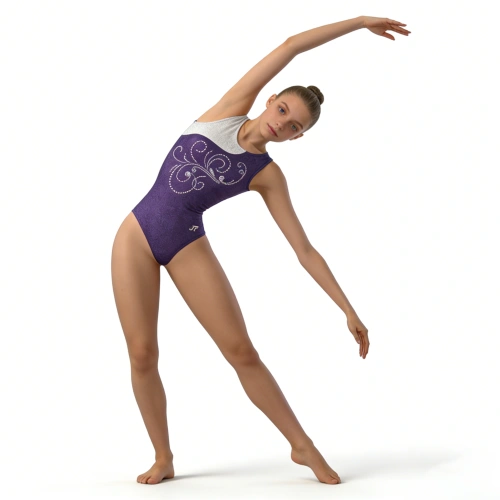
Another reason to plan carefully is that practice leotards often serve multiple purposes. They may be used for recreational classes, developmental teams, competitive team training, camps, and community events. A club may need a basic style for beginners, a more durable style for high-volume training, and a team style with logos and colors. A flexible manufacturer can help a club develop a small collection rather than a single uniform.
Practice leotards and competition leotards share some characteristics, but they are not identical. Competition leotards often prioritize visual impact, precision fit, rhinestones, sublimation graphics, mesh panels, and special finishing. They are designed for a performance moment. Practice leotards prioritize comfort, breathability, stretch, durability, and easy care. They are designed for repeated use.
T&J Sportswear approaches these two categories differently. For training leotards, the company focuses on comfortable stretch, durability, moisture management, and everyday wear. For competition leotards, it places greater emphasis on precision fit, secure coverage, decorative details, and professional finishing. A club can benefit from working with a manufacturer that understands both categories, because the same supplier can provide practice leotards and competition teamwear with consistent sizing and branding.
When clubs understand the difference, they can make better choices about fabric weight, decoration, and construction. A practice leotard does not need the same level of embellishment as a competition leotard. In fact, too much decoration can make a practice leotard less comfortable and harder to maintain. The best practice leotards are simple, strong, and comfortable, with enough design flexibility to reflect the club's identity.
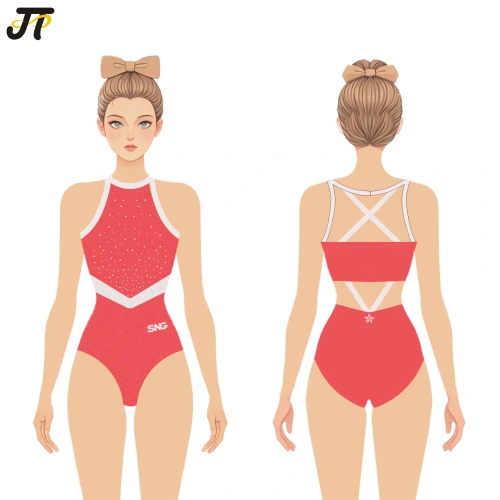
Comfort is the first requirement for a practice leotard. Athletes wear these garments for hours. If the leotard restricts movement, the athlete may struggle with splits, leaps, turns, and tumbling. Stretch fabrics such as Lycra and Spandex allow the garment to move with the body. The pattern must also be developed correctly so that the fabric stretches in the right directions. T&J Sportswear pays attention to fabric selection and pattern development because these stages determine how a leotard feels in motion.
Comfort also depends on seam placement, armhole shape, leg opening, and shoulder design. A leotard that looks good on a hanger may still cause discomfort if the seams rub or the leg openings are too tight. Clubs should ask for samples and gather feedback from athletes before placing a bulk order. This is especially important when a club is switching suppliers or introducing a new design.
Gymnastics training is intense. Athletes sweat, and they need apparel that manages moisture. Breathable fabrics help regulate temperature and reduce discomfort. Moisture-wicking properties can help the fabric dry faster. For clubs in warm climates or gyms with limited air circulation, breathability is not a luxury. It is a practical requirement.
T&J Sportswear can use materials such as Lycra, Spandex, Polyester, Mystique, and Mesh, depending on the design and application. Different products can be developed for different priorities, such as stretch, lightweight construction, breathability, quick drying, comfort, durability, and visual appearance. A club can discuss its training environment and choose fabrics that match.

Practice leotards face more wear than competition leotards. They are washed more often, stretched more frequently, and exposed to friction from mats, bars, beams, and floors. Durability depends on fabric quality, stitching, elastic recovery, and colorfastness. A leotard that loses its shape or color after a few washes is not a good value, even if the initial price is low.
Clubs should ask about fabric composition, care instructions, and expected lifespan. They should also review the quality control process. T&J Sportswear inspects finished products before shipment and works to maintain stable workmanship. The company pays attention to fabric, printing, stitching, sizing, rhinestone placement, and overall finishing throughout production.
Fit is one of the most common sources of complaints in gymnastics apparel. A leotard that is too tight can restrict movement. A leotard that is too loose can shift during skills. Coverage is also important, especially for younger athletes and for movements that involve bending, twisting, and inverted positions. Clubs should choose a manufacturer that offers clear size charts, sample fittings, and consistent sizing across repeat orders.
T&J Sportswear provides custom team leotards and can develop products based on customer designs, sketches, reference images, color requirements, or original ideas. This flexibility helps clubs adjust fit details such as torso length, leg opening, and shoulder shape. A club can also request size sets for fitting sessions before final production.
Practice leotards do not need to be plain. They can reflect a club's colors, logo, and spirit. A consistent look helps athletes feel part of a team. It also makes it easier for coaches and parents to identify club members at events and camps. Customization can include colors, patterns, logos, labels, and packaging. T&J Sportswear offers custom designs for gymnastics clubs and teams, with a wide range of colors, patterns, and styles.
At the same time, clubs should avoid designs that are too complicated for daily training. Small logos, color blocking, and simple prints often work better than heavy rhinestone coverage for practice wear. Rhinestones can be used selectively, but they should be placed where they will not interfere with comfort or durability.
The fabric is the foundation of a practice leotard. It determines stretch, recovery, breathability, opacity, and feel. Clubs do not need to become fabric experts, but they should understand the basic options. T&J Sportswear works with several materials and can advise on the best choice for a specific design and training purpose.
Fabric choice should match the intended use. A practice leotard for high-volume training may need a durable, breathable blend. A leotard for a special club event may use more decorative fabrics. T&J Sportswear can develop different products for different priorities, so clubs can order practice wear and competition wear from the same partner.
Color is one of the most visible aspects of a team leotard. Clubs often have official colors that should be matched as closely as possible. T&J Sportswear can work with color requirements and reference images to develop the right shade. Patterns can be simple or complex, including stripes, gradients, geometric shapes, and abstract designs. For practice leotards, patterns should be chosen with care because they may be repeated across many sizes and reorders.
Sublimation printing allows detailed, colorful designs to be integrated into the fabric. Unlike some surface prints, sublimation can produce designs that do not crack or peel easily when properly made. T&J Sportswear uses sublimation printing for competition leotards and can also use it for practice designs when appropriate. Clubs can use sublimation to create team-specific patterns, sponsor logos, and event graphics.
Rhinestones and crystal decoration can make a leotard stand out. They are common in competition leotards, where visual impact matters. For practice leotards, rhinestones should be used thoughtfully. They can be placed on the chest, back, or sleeves, but they should not interfere with comfort or create a risk of snagging. T&J Sportswear has experience with rhinestone gymnastics leotards and can advise on placement and quantity.
Logos and labels help clubs build a professional identity. Customization can cover artwork, colors, sublimation printing, logos, rhinestone layouts, fabric combinations, sizes, labels, packaging, and other details. T&J Sportswear supports OEM and ODM services, so clubs can either supply their own designs or develop new products with the company's design team. This is useful for clubs that want a unique look but do not have in-house designers.
OEM and ODM are common terms in apparel manufacturing. OEM means the customer provides the design, and the manufacturer produces it. ODM means the manufacturer helps develop the design, often from a sketch, reference image, or concept. T&J Sportswear offers both services. This flexibility allows a club to choose the path that fits its resources and timeline.
For a club with a clear design, OEM production can be straightforward. The club provides artwork, colors, sizes, and branding details. For a club that needs design help, ODM support can turn an idea into a finished leotard. T&J Sportswear has an in-house professional design team specializing in gymnastics apparel. The team can assist with artwork development and product optimization, helping customers turn concepts into finished gymnastics apparel.
Customization is one of T&J Sportswear's key strengths. The company can develop products based on customers' designs, sketches, reference images, color requirements, or original ideas. This is especially valuable for gymnastics clubs that want team uniforms but may not have technical design skills. The design team can also suggest improvements for fit, comfort, and production efficiency.
Sizing is often the biggest challenge in custom gymnastics leotards. Gymnasts come in different body types, and a size that fits one athlete well may not fit another. Clubs should work with a manufacturer that provides clear size charts, sample garments, and guidance on how to measure. T&J Sportswear works with different markets, customer requirements, sizing systems, and product preferences, so it understands that sizing is not one-size-fits-all.
Before placing a bulk order, clubs should consider the following steps:
Consistent sizing across repeat orders is important. If a club orders the same style next season, athletes and parents expect the fit to be similar. T&J Sportswear aims to maintain stable workmanship and inspect finished products before shipment. This helps reduce common problems such as inconsistent sizing, printing defects, loose decoration, or uneven finishing.
The process begins with a clear brief. The club should describe the intended use, quantity, sizes, colors, logo requirements, and deadline. Reference images, sketches, and existing leotards can help. T&J Sportswear's design team can develop artwork and suggest fabrics and construction details. Good communication at this stage reduces misunderstandings later.
After the design is confirmed, the manufacturer produces a sample. The club reviews the sample for design, fabric, fit, decoration, and finishing. This is the time to request changes. T&J Sportswear supports sample development so customers can review the product before confirming mass production. A sample is not just a formality. It is a risk-management tool.
Once the sample is approved, bulk production begins. T&J Sportswear's factory team includes more than 30 skilled workers, with reported production capacity of 300+ leotards per day. This provides a balance between flexible customization and the ability to support larger wholesale and team orders. Production covers cutting, sewing, printing, rhinestone application, and assembly.
Quality control is essential. Inspections may cover fabric condition, printing quality, stitching, measurements, rhinestone placement, coverage, and overall appearance. T&J Sportswear inspects finished products before shipment and works to maintain stable workmanship. The company also lists certifications such as ISO9001, SGS, and CE for applicable products. Specific certification and testing documentation can be provided according to the product and customer requirements.
Packaging and delivery should be planned early. Clubs may need individual packaging for each athlete, team boxes, or simple bulk packing. Labels and hangtags can be customized. T&J Sportswear provides flexible solutions with low MOQ, competitive pricing, professional communication, and one-to-one service. The company works with customers in the US, Europe, and other international markets, so it understands international shipping and documentation needs.
Minimum order quantity, or MOQ, is a major consideration for clubs. Some manufacturers require large orders, which can be difficult for a growing club or a new team. T&J Sportswear offers a low MOQ starting from 10 sets for selected products. This gives gymnastics clubs, new brands, boutique retailers, and smaller distributors greater flexibility when testing new designs or launching new collections.
Pricing depends on fabric, design complexity, decoration, quantity, and packaging. Rhinestones, sublimation printing, and special fabrics can increase cost. Clubs should ask for a detailed quotation that explains what is included. It is also wise to compare the total cost of ownership, not just the unit price. A durable leotard that lasts longer may be more economical than a cheaper leotard that needs frequent replacement.
T&J Sportswear aims to provide competitive pricing and flexible solutions. Whether a club needs a small customized team order or a large wholesale production project, the company can discuss options. Clubs should share their budget range and timeline early so the manufacturer can recommend suitable materials and production methods.
Quality and consistency are important throughout the production process. T&J Sportswear works to maintain stable workmanship and carefully inspect finished products before shipment. The goal is not only to manufacture gymnastics apparel, but also to build long-term partnerships with customers through reliable products and responsive service.
Certifications can be important for clubs that need to meet school, government, or organizational requirements. T&J Sportswear lists certifications such as ISO9001, SGS, and CE for applicable products. Specific certification and testing documentation can be provided according to the product and customer requirements. Clubs should ask about any documentation they need before placing an order.
Production capacity matters when a club needs teamwear by a certain date. T&J Sportswear has more than 30 skilled workers and reported production capacity of 300+ leotards per day. For customers, production capacity is not simply about quantity. The real value is the ability to maintain consistent workmanship when moving from samples to bulk production.
Consistency is especially important for team orders. If a club orders 60 leotards, every athlete should receive a garment that matches the approved sample in color, fit, and decoration. T&J Sportswear pays attention to fabric, printing, stitching, sizing, rhinestone placement, and overall finishing throughout production. This helps reduce surprises and makes the ordering process smoother for clubs.
Choosing a manufacturer is not just about price. It is about partnership. A good partner communicates clearly, meets deadlines, solves problems, and provides consistent quality. T&J Sportswear provides one-to-one professional service. From initial inquiry and design development to sampling, production, inspection, and shipment, the team provides professional support throughout the process. Customers can communicate their requirements directly and receive assistance with product development, customization, production details, and logistics.
T&J Sportswear has more than 10 years of experience in gymnastics apparel manufacturing, with a strong focus on competition and training leotards. Unlike general sportswear suppliers, the company understands the specific requirements of gymnastics apparel, including stretch, fit, comfort, coverage, durability, decoration, and freedom of movement. Over the years, its products and services have reached customers in 36+ countries, giving it practical experience working with different markets, customer requirements, sizing systems, and product preferences. Its main markets include North America and Europe, where customers place strong emphasis on product quality, customization, consistency, and reliable communication.
The company's goal is to build long-term partnerships rather than simply complete individual orders. Whether a club is developing team uniforms, a new brand is launching a collection, a distributor is expanding a product range, or an established buyer is looking for a reliable manufacturing partner, T&J Sportswear provides flexible solutions based on requirements. With 10+ years of industry experience, 36+ countries served, 30+ skilled workers, 300+ daily leotard capacity, low MOQ, professional design support, OEM/ODM customization, and one-to-one service, the company combines manufacturing capability with the flexibility required by today's international gymnastics apparel market.
Custom practice gymnastics leotards are a practical investment for clubs. They affect athlete comfort, training performance, team identity, and long-term apparel costs. By focusing on fabric, fit, durability, customization, and supplier reliability, clubs can make better decisions and avoid common problems. T&J Sportswear offers more than 10 years of manufacturing experience, professional design support, OEM and ODM services, low MOQ, competitive pricing, and one-to-one service. The company works with gymnastics clubs, teams, brands, wholesalers, and distributors in the US, Europe, and other international markets.
From the first idea to the final leotard, T&J Sportswear is committed to making custom gymnastics apparel more efficient, flexible, and reliable. Clubs that plan carefully and partner with an experienced manufacturer can equip their athletes with practice leotards that feel good, last longer, and represent the club with pride.
