Fit is the most important and most overlooked element of practice gymnastics leotards for young athletes. Because children grow unevenly and rapidly, and because gymnastics demands extreme range of motion, a leotard must be evaluated in motion rather than only in a mirror. The key measurements are torso girth, chest, waist, hips, and rise, with torso length being the most critical number when a child falls between sizes. Straps should rest flat, leg openings should not pinch or gap, and coverage should hold through squats, splits, and overhead reaches. Fabric choice directly affects fit and longevity, with Lycra and Spandex blends providing essential four-way stretch, polyester adding durability and moisture management, and Mystique or mesh used selectively for visual effect. Common mistakes include buying a size up for growth, trusting size labels over measurements, and ignoring the athlete's own feedback. A practical rotation of four to six practice leotards, washed in cold water and air dried, preserves elasticity and shape. For clubs and brands, consistent sizing depends on manufacturing detail, from pattern development and stitching to elastic quality and quality inspection. T&J Sportswear, a professional gymnastics apparel manufacturer with more than ten years of experience and customers in over thirty-six countries, specializes in competition leotards, practice leotards, custom team leotards, rhinestone leotards, and warm-up wear. The company offers OEM and ODM services, in-house design support, low minimum order quantities starting from ten sets, a team of more than thirty skilled workers, and reported capacity of over three hundred leotards per day. By measuring carefully, checking fit in motion, and partnering with an experienced manufacturer, parents and clubs can ensure young gymnasts train comfortably, confidently, and without distraction.
Practice Gymnastics Leotards Fit Tips for Young AthletesEvery parent who has ever watched a young gymnast step onto the mat knows the look. It is a small tug at the shoulder strap, a quick pull at the leg opening, a subtle wiggle of discomfort between rotations. Young athletes rarely complain about their leotards out loud, but their bodies tell the story. A practice leotard that rides up, digs in, twists, or slips simply gets in the way of the work that matters, and the work that matters in gymnastics is endless repetition, precise movement, and growing confidence.
Fit is the single most overlooked element in a young gymnast's training wardrobe. Parents spend hours comparing colors, sparkle levels, and club requirements, yet the question that genuinely shapes a gymnast's daily experience is far simpler: does the leotard actually fit the body wearing it? A properly fitted practice leotard supports movement, protects the athlete, and quietly disappears from the gymnast's awareness so that attention can stay on the coach, the apparatus, and the skill being built. A poorly fitted one becomes a constant distraction and, in some cases, a genuine safety concern.
This guide gathers practical fit guidance for parents, coaches, and club administrators who want young athletes to train comfortably and confidently. It covers how growing bodies change, which measurements matter most, how different fabrics influence fit, the mistakes that are easy to make, and how clubs and brands can work with a manufacturing partner such as T&J Sportswear to get sizing right from the very first sample.
undefined
Gymnastics is a sport of extreme range of motion. Shoulders rotate through full circles, spines arch and hollow, hips split wide, and knees bend deep, often within a single routine. A practice leotard has to move with all of that without shifting, bunching, or restricting. When fit is correct, the garment becomes an extension of the athlete. When fit is wrong, the athlete unconsciously compensates, shortening movements, guarding certain positions, or losing focus mid-skill.
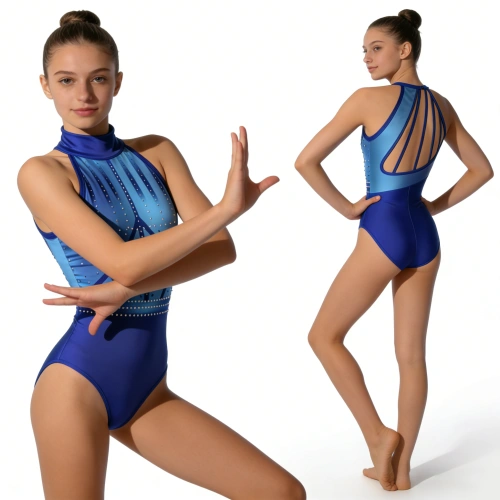
There is also a confidence dimension that parents and coaches should not underestimate. Young gymnasts are acutely aware of how they look in front of teammates, judges, and mirrors. A leotard that fits well and stays in place lets a child think about gymnastics rather than about clothing. That psychological freedom is worth far more than a trendy print or an extra row of rhinestones.
Finally, fit affects durability and cost. A leotard that is stretched beyond its intended range wears out faster at the seams, loses elasticity in the straps, and thins at stress points. Buying the right size the first time is genuinely more economical than replacing garments that failed early because they were fighting the body.
Children and teenagers are not simply smaller versions of adult athletes. Their proportions, growth patterns, and tissue elasticity differ in ways that directly affect garment fit. Anyone choosing practice leotards for young athletes should keep several realities in mind.
A gymnast can grow several centimeters in a single season, and growth does not happen evenly. Torso length may increase before leg length, or shoulders may broaden before the hips catch up. A leotard that fit perfectly in September can feel tight across the shoulders by January without the child appearing to have grown at all. This is why measuring before every purchase matters far more than relying on last year's size.

Parents should also recognize that growth spurts often come with temporary changes in comfort tolerance. A child who never noticed a snug strap may suddenly find it unbearable. Sensitivity to seams, elastic, and pressure points tends to increase during rapid growth phases.
Two gymnasts of identical height and weight can require completely different leotard sizes. One may carry length in the torso; another may have broader shoulders or a longer rise. Some young athletes have a straight, athletic build, while others have more curve through the hips and seat. A single sizing chart cannot capture all of this, which is why understanding a few key measurements is so valuable.
Young gymnasts are often extremely flexible, and their garments must accommodate positions that adults rarely attempt. A leotard that feels acceptable while standing still may reveal serious fit problems the moment the athlete reaches overhead, bridges, or splits. Fit should always be evaluated in motion, never only in front of a mirror.
Most sizing problems trace back to a small set of measurements. Taking these at home takes only a few minutes and dramatically improves the odds of choosing the right size.
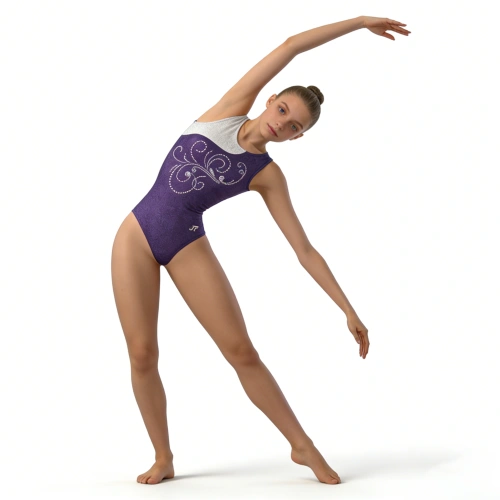
| Measurement | How to Take It | Why It Matters |
|---|---|---|
| Torso (girth) | From the top of the shoulder, down through the crotch, and back up to the same shoulder | The single most important number for leotard sizing; determines whether straps pull or fabric sags |
| Chest | Around the fullest part of the chest, tape level and snug but not tight | Affects comfort across the ribcage and how the bodice sits |
| Waist | Around the natural waistline, usually the narrowest point | Influences how the garment hugs the midsection during twisting movements |
| Hips | Around the fullest part of the seat | Determines coverage and whether leg openings stay in place |
| Rise | From the waistline down to the crotch seam position | Helps identify whether a child needs a longer or shorter torso cut |
When measurements fall between two sizes, the general rule for practice leotards is to prioritize the torso measurement. A slightly generous torso is far more comfortable than one that is too short, because a short torso pulls the straps down into the shoulders and drags the leg openings upward. If the torso is correct but the hips are slightly wider than the chart suggests, many manufacturers, including T&J Sportswear, can adjust patterns or offer specific cuts to accommodate the difference.
Numbers only go so far. The final test is how the garment behaves on the body. Below are the specific checkpoints that parents and coaches can use.
Straps should rest flat on the shoulders without cutting in or sliding outward. When the gymnast raises both arms overhead, the leotard should not pull sharply upward at the crotch. If it does, the torso length is too short. Conversely, if straps fall off the shoulders during skills, the torso is too long or the strap placement is not suited to the child's shoulder shape.
Some young athletes have narrow, sloping shoulders that cause straps to slip regardless of size. In those cases, styles with cross-back straps, wider shoulder coverage, or adjustable elements often solve the problem more effectively than changing sizes.
A well-fitted torso allows a full overhead reach with only minimal upward movement at the leg openings. The fabric should feel supportive but never taut to the point of restriction. Parents can test this by asking the gymnast to reach high, arch gently, and then hollow the spine. If the leotard stays roughly in place throughout, the torso length is correct.
Leg openings are a common source of discomfort. They should sit comfortably around the upper thigh without pinching or gaping. A leg opening that cuts into the skin leaves marks and restricts movement; one that is too loose allows fabric to shift and reduces coverage. Elastic quality matters here, and it is one of the details that separates well-made practice leotards from inexpensive alternatives.
Coverage should remain consistent through squats, splits, and jumps. A simple test is to have the gymnast perform a deep squat and a full split while a parent or coach observes whether the fabric stays in position. If the leotard rides up or the seat pulls down, the rise or hip measurement is off.
The bodice should lie flat without wrinkles or tension lines. Bunching across the chest usually indicates excess fabric, while horizontal pull lines suggest the garment is too small. Older gymnasts in particular benefit from cuts that provide support without compression.
Fit is not purely a matter of dimensions. The material determines how the garment responds to movement, how long it retains its shape, and how it feels against the skin.
Manufacturers with genuine gymnastics expertise understand how to combine these materials so that stretch, recovery, breathability, and appearance work together. T&J Sportswear, for example, selects fabrics based on the intended use of each garment, prioritizing comfortable stretch, durability, and moisture management for training leotards, and precision fit, secure coverage, and refined finishing for competition pieces. That distinction matters because a practice leotard worn four or five days a week has different demands than a competition leotard worn a few times a season.
Even well-intentioned parents fall into predictable traps. Recognizing them in advance saves time, money, and frustration.
The instinct to buy a size up so the leotard lasts longer is understandable but usually counterproductive. An oversized practice leotard shifts during skills, exposes the athlete in inverted positions, and creates distracting folds of fabric. Sizing up by one step is sometimes reasonable for a child in the middle of a growth spurt, but sizing up two steps rarely works.
Size labels are not standardized across brands. A child who wears a certain size in one label may need a different size in another. Measuring the torso before every purchase eliminates most of the guesswork.
Young gymnasts are often the best judges of fit. If a child consistently adjusts the straps, tugs at the leg openings, or avoids certain leotards in the drawer, that is meaningful data. Parents should ask specific questions: does it pull when you raise your arms, does it feel tight when you breathe deeply, does it stay in place when you tumble.
Practice sessions often include warm-up clothing over the leotard. If the warm-up fits poorly or the leotard bunches underneath it, the athlete may overheat or feel restricted. Coordinating practice leotards with warm-up wear is a detail that clubs ordering team apparel should consider from the start.
Not every fit problem requires a new leotard. Some can be solved with adjustments or a different style, while others genuinely signal that the athlete has outgrown the garment.
Signs that it is time to size up include visible strain across the chest, straps that dig deeply into the shoulders, leg openings that leave red marks after a short session, and a torso that pulls noticeably during overhead movement. Signs that a style change may help include slipping straps on narrow shoulders, riding leg openings on a longer rise, and pressure points where seams cross the hip or underarm.
Between growth spurts, proper care extends a leotard's useful life considerably. Washing in cold water, avoiding fabric softener, air drying rather than machine drying, and rotating several leotards through the week all help preserve elasticity and shape.
Most competitive young gymnasts train three to six days per week, which means a single leotard is not enough. A practical rotation typically includes four to six practice leotards, allowing each garment to rest between wears and retain its stretch. Rotating also gives parents a chance to compare fit across styles and identify which cuts suit the athlete best.
A sensible rotation might include solid basics for heavy training days, a few patterned pieces for variety and motivation, and one or two slightly more decorative leotards for in-house performances or club events. Keeping the rotation organized by size and condition prevents the frustrating discovery of a too-small leotard on the morning of a long training day.
Coaches see fit problems every day, often before parents do. A leotard that is too loose around the seat makes it harder for a coach to assess body alignment. A leotard that restricts the shoulders prevents full extension in handstands and swings. Strap slippage forces the athlete to pause and adjust, breaking the rhythm of a routine.
Experienced coaches also know that consistent fit supports consistent technique. When the body is not fighting the garment, the athlete can focus on shapes, lines, and timing. This is one reason many clubs standardize practice leotards across their teams rather than allowing unlimited individual variation.
For clubs, the challenge multiplies. A team may include gymnasts ranging from six to eighteen years old, each with a different body type and growth trajectory. Custom team leotards solve several problems at once, but only if the sizing process is handled carefully.
Working with a manufacturer that understands gymnastics apparel makes this far easier. T&J Sportswear, a professional gymnastics apparel manufacturer with more than ten years of experience in the sportswear industry, specializes in competition gymnastics leotards, practice gymnastics leotards, custom team leotards, rhinestone gymnastics leotards, and gymnastics warm-up wear. The company works with gymnastics clubs, teams, brands, wholesalers, and distributors, with a strong focus on customers in the United States, Europe, and other international markets.
For clubs building a team collection, T&J Sportswear offers OEM and ODM services, developing products from customer designs, sketches, reference images, color requirements, or original ideas. Team colors, logos, patterns, labels, and packaging can all be customized. An in-house design team can assist with artwork development and product optimization, helping clubs turn a concept into finished gymnastics apparel that fits real athletes.
Flexibility is another practical advantage. Low minimum order quantities, starting from ten sets for selected products, allow growing clubs and new brands to test designs before committing to large volumes. The factory team includes more than thirty skilled workers with reported production capacity of over three hundred leotards per day, which supports both smaller customized team orders and larger wholesale projects.
Fit is not created at the fitting appointment. It is created on the cutting table and at the sewing machine. Pattern development determines whether a leotard follows the body's natural curves. Stitching quality determines whether seams stay flat under tension. Elastic choice determines whether leg openings hold their shape after fifty washes. Rhinestone placement, printing accuracy, and finishing all influence how a garment performs over time.
T&J Sportswear pays attention to every stage of manufacturing, from fabric selection and pattern development to cutting, sewing, printing, rhinestone application, quality inspection, and final packaging. Quality control begins before bulk production, with sample development allowing customers to review design, fabric, fit, decoration, and finishing before confirming mass production. Finished garments are inspected for fabric condition, printing quality, stitching, measurements, rhinestone placement, coverage, and overall appearance. Product information also lists certifications such as ISO9001, SGS, and CE for applicable products, with documentation available according to product and customer requirements.
Before a practice leotard enters the regular rotation, parents can run through a short checklist. Measure the torso, chest, waist, and hips. Compare those numbers against the specific brand's chart rather than assuming a standard size. Have the gymnast try the leotard and perform an overhead reach, a bridge, a split, and a jump. Check that straps stay flat, leg openings do not pinch, and the seat keeps coverage. Ask the athlete how it feels rather than relying only on appearance. Wash it once and check whether the fit has changed.
If a leotard passes all of these checks, it is likely to serve the athlete well. If it fails one or two, consider whether a different size or a different cut would solve the issue before returning to the same style.
Young gymnasts are in a constant state of change, and no single purchase decision solves fit forever. The most effective approach is a habit rather than a one-time fix: measure regularly, evaluate fit in motion, replace garments when they stop supporting the athlete, and choose manufacturers and brands that understand the specific demands of gymnastics apparel.
Clubs that treat sizing as an ongoing process rather than an annual formality see the benefits in athlete comfort, coach efficiency, and team presentation. Brands that partner with experienced gymnastics manufacturers avoid the costly cycle of returns, complaints, and inconsistent sizing that plagues generic sportswear suppliers.
For clubs, brands, wholesalers, and distributors, the difference between acceptable and excellent gymnastics apparel usually comes down to the partner behind the product. A manufacturer with deep category experience understands stretch, coverage, decoration, and durability in ways that general apparel suppliers simply do not.
T&J Sportswear has built more than ten years of specialized experience in gymnastics apparel manufacturing, with products and services reaching customers in more than thirty-six countries. That international exposure provides practical insight into different markets, sizing systems, and product preferences, particularly in North America and Europe where customers place strong emphasis on quality, customization, consistency, and reliable communication. The company positions itself as a long-term manufacturing partner rather than a one-off supplier, offering one-to-one service from initial inquiry and design development through sampling, production, inspection, and shipment.
Practice leotards are not the most glamorous part of a young gymnast's equipment, but they are among the most consistently present. They are worn during long conditioning sessions, repeated skill drills, and the quiet, unglamorous hours that eventually produce competitive results. Getting the fit right is a small investment that pays back in comfort, confidence, and progress.
Parents should measure carefully, evaluate fit in motion, and treat sizing as an ongoing practice rather than a guess. Coaches and clubs should standardize thoughtfully and work with manufacturers who understand the sport. And everyone involved should remember that the goal is simple: a young athlete who can move freely, focus fully, and enjoy the process of becoming a gymnast.
From the first measurement to the final stitch, fit is a partnership between the athlete, the family, the club, and the manufacturer. When all four align, the leotard disappears into the background and the gymnastics takes center stage, which is exactly where it belongs.
