Smart design in a gymnastics leotard combines comfort, flexibility, durability, fit, and visual appeal. Key features include stretch and recovery fabrics such as Lycra and Spandex, secure coverage, breathable mesh, moisture management, and durable construction. Seam placement, lining, leg openings, and necklines all affect how a leotard performs during movement. Competition leotards often use sublimation printing, color blocking, rhinestones, and crystals to create a polished look, while practice leotards prioritize comfort, breathability, and durability. Customization options such as colors, logos, patterns, labels, and packaging help teams and brands build a cohesive identity. Quality control from sample to bulk production is essential for consistent sizing, secure decoration, and reliable workmanship. Manufacturers like T&J Sportswear, with more than 10 years of experience, support OEM and ODM services, low MOQ, and one-to-one service for clubs, brands, wholesalers, and distributors. By evaluating fabric, fit, construction, decoration, and supplier reliability, customers can choose leotards that support performance and confidence in both training and competition.
Gymnastics is a sport of precision, power, and presentation. Every routine depends on an athlete's ability to move freely, land safely, and express confidence. While training and talent are essential, the leotard worn during practice and competition plays a surprisingly important role. A well-designed leotard can support movement, reduce distraction, and help a gymnast feel prepared for the demands of the sport. A poorly designed one can cause discomfort, restrict motion, or create wardrobe concerns that break concentration. For clubs, coaches, parents, and athletes, understanding the smart design features of a gymnastics leotard is a practical investment in performance and peace of mind.
This article explores the design, fabric, construction, and customization details that distinguish a high-quality gymnastics leotard from an ordinary garment. It also examines how experienced manufacturers approach these features. For example, T&J Sportswear, also known as T&J, is a professional gymnastics apparel manufacturer with more than 10 years of experience in the sportswear industry. The company specializes in competition gymnastics leotards, practice gymnastics leotards, custom team leotards, rhinestone gymnastics leotards, and gymnastics warm-up wear. Its work with gymnastics clubs, teams, brands, wholesalers, and distributors offers useful insight into what makes a leotard truly smart in design.
Gymnastics apparel is not simply fashion. It is functional equipment. A leotard must stretch, recover, breathe, cover, and stay in place through jumps, splits, turns, tumbling, and balance work. The garment must also withstand repeated use, washing, and exposure to chalk, sweat, and movement. Smart design balances these practical needs with visual appeal, because competition leotards also contribute to a team's identity and an athlete's confidence.
undefined
For manufacturers, the challenge is to combine comfort, flexibility, durability, fit, and visual appeal. T&J Sportswear states that its production team pays attention to every stage of manufacturing, from fabric selection and pattern development to cutting, sewing, printing, rhinestone application, quality inspection, and final packaging. This end-to-end approach helps create products suitable for both demanding training sessions and high-level competitions. When customers evaluate a leotard, they should look for the same qualities: thoughtful materials, reliable construction, secure coverage, and design details that serve the athlete rather than distract from the routine.
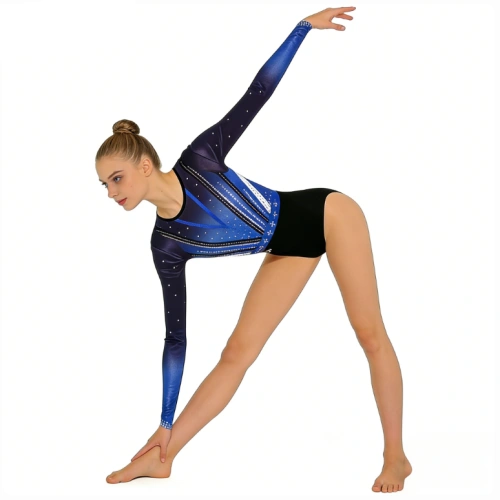
The first smart design feature to examine is stretch. A gymnastics leotard must move with the body in every direction. Fabrics such as Lycra and Spandex are common because they offer elasticity and recovery. Recovery is especially important: after a fabric stretches, it should return to its original shape instead of sagging or becoming loose. A leotard that loses shape can shift during skills, causing athletes to adjust it mid-routine. High-quality manufacturers select fabrics with balanced stretch and recovery so the garment supports movement without feeling restrictive.
Coverage is another critical feature. Gymnasts need to feel secure when they raise their arms, bend, twist, or perform inverted skills. Smart design includes adequate lining, well-placed seams, and leg openings that stay in place. The goal is not simply modesty; it is confidence. When an athlete trusts the leotard to remain in position, they can focus on technique and performance. T&J Sportswear notes that competition leotards emphasize precision fit, secure coverage, decorative details, and professional finishing, while practice leotards focus on comfortable stretch, durability, moisture management, and everyday wear.
Fit does not happen by accident. It begins with pattern development. A manufacturer must understand how different body types move and how fabric behaves when cut and sewn. Sizing systems also matter. Because T&J Sportswear has served customers in 36+ countries, it has practical experience working with different markets, customer requirements, sizing systems, and product preferences. This international perspective helps manufacturers develop leotards that fit a wide range of athletes while maintaining consistency across team orders.
The fabric determines much of a leotard's performance. Lycra and Spandex provide stretch and shape retention. Polyester can add durability and color vibrancy. Mystique is often used for a shiny, metallic look that catches light on the competition floor. Mesh can add breathability and visual texture without adding excessive weight. A smart design may combine several materials to achieve the right balance of comfort, appearance, and function.
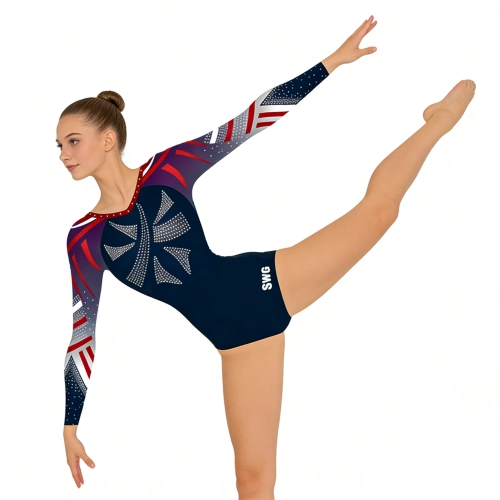
T&J Sportswear reports that its product range can use materials including Lycra, Spandex, Polyester, Mystique, and Mesh, depending on the design and application. Different products can be developed for different priorities, such as stretch, lightweight construction, breathability, quick drying, comfort, durability, and visual appearance. This flexibility allows customers to choose fabrics that match the intended use, whether the leotard is for daily training, a team uniform, or a high-level competition.
Gymnasts sweat, especially during long training sessions. A leotard that traps moisture can become uncomfortable, heavy, and cold when the athlete stops moving. Breathable fabrics and strategic mesh panels can help regulate temperature and improve comfort. Moisture management is not only a luxury; it supports focus. When an athlete is not distracted by damp fabric or overheating, they can concentrate on repetitions and corrections.
Durability is essential because leotards are worn frequently. They are stretched, washed, and exposed to friction from equipment and movement. Smart design uses fabrics and construction methods that resist pilling, fading, and seam failure. Shape retention is part of durability: a leotard should continue to fit and support the athlete after many uses. For clubs ordering team leotards, consistency in fabric quality is particularly important. Every athlete should receive a garment that performs the same way, wash after wash.
Stitching is where design meets engineering. Flatlock seams, reinforced stress points, and smooth finishes can reduce chafing and improve comfort. Seam placement should support movement rather than fight it. For example, seams that run across high-flex areas can pull or irritate during splits and tumbling. A well-constructed leotard uses stitching that stretches with the fabric and remains secure under tension.

T&J Sportswear emphasizes attention to cutting, sewing, printing, rhinestone application, quality inspection, and final packaging. This level of detail matters because even a beautiful design can fail if the stitching is weak or uncomfortable. When evaluating a leotard, buyers should check seam quality, thread tension, and whether the garment lies flat without twisting.
Lining affects both comfort and appearance. A good lining can provide coverage, smooth the silhouette, and protect the outer fabric. It should be soft, breathable, and properly integrated so it does not bunch or show through. In competition leotards, lining may also support rhinestone and mesh placement, helping decorative elements sit correctly without irritating the skin.
Leg openings are a common source of discomfort. If they are too tight, they dig into the skin. If they are too loose, they ride up during movement. Smart design uses appropriate elastic, binding, or folded edges that stay in place without excessive pressure. The leg opening should allow full range of motion for splits, leaps, and tumbling while maintaining a clean, professional look.
Necklines and back designs are not only aesthetic choices. They affect fit, support, and coverage. A high neck may provide a secure feeling, while a scoop or keyhole back can add style and ventilation. The key is to ensure that the design remains stable during movement. Straps should not slip, and closures should not create pressure points. Smart design considers how the garment behaves when the athlete is in motion, not just when standing still.
Competition leotards often use sublimation printing to create detailed, permanent graphics. Sublimation allows colors to become part of the fabric rather than sitting on top of it, which can improve durability and feel. Color blocking is another popular technique, using contrasting panels to create dynamic shapes that flatter the body and express team identity. A smart design uses these elements to enhance the athlete's presentation without overwhelming the routine.
T&J Sportswear can combine sublimation graphics, color blocking, mesh, rhinestones, crystal decoration, and different fabric effects to create distinctive visual designs. Customers can also customize colors, logos, patterns, labels, and other branding elements. This level of customization helps teams create a cohesive look that reflects their identity.
Rhinestones and crystals add sparkle and stage presence. However, they must be applied securely. Loose stones can fall off during a routine, creating a distraction and potentially a safety concern on the floor. Smart design considers the size, placement, and application method of each stone. High-quality rhinestone leotards use reliable adhesives and careful placement so the decoration remains intact through movement, stretching, and washing.
Mesh panels can add breathability, texture, and visual interest. They can also create a modern, athletic look. When combined with solid fabrics, mesh can define shapes and add dimension. The best designs use mesh strategically, ensuring it provides the intended effect without compromising coverage or durability.
Competition leotards must look polished. This means clean edges, secure closures, even hems, and consistent decoration. T&J Sportswear places emphasis on precision fit, secure coverage, decorative details, and professional finishing for competition leotards. These details help athletes feel confident and prepared when they step onto the floor.
Practice leotards are worn for hours, often several times a week. Comfort is therefore the top priority. Fabrics should be soft, stretchy, and breathable. Seams should be smooth, and the fit should allow complete freedom of movement. Practice leotards do not need as much decoration as competition leotards, but they still benefit from thoughtful design.
T&J Sportswear focuses its practice gymnastics leotards on comfort, stretch, breathability, and durability for everyday training. The company offers a wide range of colors, patterns, and styles, with customized designs available for gymnastics clubs and teams. This variety allows athletes to find leotards that suit their preferences while meeting the practical demands of training.
Because practice leotards are washed frequently and exposed to repeated stretching, they must be durable. Reinforced stitching, quality elastic, and colorfast fabrics help extend the life of the garment. For clubs, durability also affects budget. A leotard that lasts longer provides better value and reduces the need for frequent replacements.
Smart design considers care instructions. Leotards that are easy to wash and maintain are more likely to stay in good condition. Manufacturers can select fabrics that resist fading and shrinking, and they can provide clear care guidance. This practical aspect is often overlooked, but it matters to athletes, parents, and team managers.
For teams, a leotard is more than apparel. It is a symbol of unity. Custom colors, logos, and patterns help athletes feel part of something larger. Smart customization ensures that team branding is integrated into the design in a way that looks intentional and professional. This may include sublimated logos, embroidered patches, or rhinestone accents.
T&J Sportswear supports OEM and ODM services. The company can develop products based on customers' designs, sketches, reference images, color requirements, or original ideas. Its professional design team can assist with artwork development and product optimization, helping customers turn concepts into finished gymnastics apparel. For clubs, brands, and distributors, this means greater control over the final look and feel of their leotards.
Customization extends beyond the garment itself. Labels, hangtags, and packaging can reinforce a brand's identity. For new brands and boutique retailers, these details help create a professional impression. For established distributors, consistent labeling and packaging support inventory management and customer trust. T&J Sportswear notes that team colors, logos, patterns, labels, packaging, and other details can be customized according to requirements.
One smart business feature for clubs and emerging brands is a low minimum order quantity. T&J Sportswear offers a low MOQ starting from 10 sets for selected products. This gives gymnastics clubs, new brands, boutique retailers, and smaller distributors greater flexibility when testing new designs or launching new collections. Instead of committing to large quantities before knowing how a design will perform, customers can start smaller and grow gradually.
A smart design must be reproducible. It is not enough to create one perfect sample; the manufacturer must be able to produce consistent quality in bulk. This requires clear communication, reliable production processes, and quality control. T&J Sportswear supports OEM and ODM services from design development and sample making to bulk production. The production process covers design development, fabric selection, digital artwork, printing, cutting, sewing, decoration, inspection, packaging, and delivery.
Quality control should begin before bulk production. During sample development, customers can review the design, fabric, fit, decoration, and finishing before confirming mass production. For finished garments, key inspection points can include fabric condition, printing quality, stitching, measurements, rhinestone placement, coverage, and overall appearance. A thorough quality control process helps reduce common problems such as inconsistent sizing, printing defects, loose decoration, or uneven finishing.
T&J Sportswear works to maintain stable workmanship and carefully inspect finished products before shipment. The company also lists certifications such as ISO9001, SGS, and CE for applicable products. Specific certification and testing documentation can be provided according to the product and customer requirements. These measures help customers feel confident that their orders meet expectations.
Production capacity supports both customization and larger orders. T&J Sportswear's factory team includes 30+ skilled workers, with reported production capacity of 300+ leotards per day. This provides a balance between flexible customization and the ability to support larger wholesale and team orders. For customers, capacity is not only about quantity; it is about maintaining consistent workmanship when moving from samples to bulk production.
Different gymnastics disciplines place different demands on a leotard. Artistic gymnasts need maximum stretch and secure coverage for explosive tumbling and intricate bar work. Rhythmic gymnasts often prefer a sleek, close fit that moves with the body during leaps, pivots, and apparatus handling. Trampoline and tumbling athletes need durability and freedom of movement for repeated jumps and landings. A leotard that works well for one discipline may not be ideal for another.
Smart design recognizes these differences. For example, competition leotards may use more elaborate decoration to enhance presentation, while practice leotards prioritize breathability and durability. T&J Sportswear works with gymnastics clubs, teams, brands, wholesalers, and distributors, which gives the company experience across a range of needs. This helps it develop products that suit both demanding training sessions and high-level competitions.
Coaches and athletes should consider how a leotard performs during the specific skills they perform most often. If an athlete spends hours on bars, the leotard must not dig into the shoulders or ride up. If an athlete tumbles frequently, the leg openings must stay in place. If a gymnast performs on beam, the leotard should allow full range of motion without shifting. These practical considerations are at the heart of smart design.
Even well-intentioned designs can run into problems. Knowing what to avoid helps clubs, brands, and athletes make better choices. The following are common design mistakes that can reduce comfort, performance, or durability.
These mistakes can be avoided through careful sample development, fabric testing, and quality control. T&J Sportswear pays attention to every stage of manufacturing, from fabric selection and pattern development to cutting, sewing, printing, rhinestone application, quality inspection, and final packaging. This helps reduce common problems and ensures that the final product supports the athlete.
Color and contrast are powerful design tools. They can make a leotard stand out on the competition floor, express team identity, and even influence how an athlete feels. Bright colors can convey energy and confidence, while darker colors can create a sleek, focused appearance. Contrasting panels can define the body's lines and create a dynamic silhouette.
Sublimation printing allows for complex gradients, patterns, and graphic effects that would be difficult to achieve with traditional fabric dyeing. Color blocking uses solid panels to create bold shapes. Mesh can add subtle texture and depth. Rhinestones and crystals can catch the light and add sparkle. When used together thoughtfully, these elements enhance the routine without distracting from it.
T&J Sportswear can combine sublimation graphics, color blocking, mesh, rhinestones, crystal decoration, and different fabric effects to create distinctive visual designs. Customers can also customize colors, logos, patterns, labels, and other branding elements. This flexibility allows teams and brands to create a unique look that reflects their identity and values.
Safety and comfort are closely connected in gymnastics apparel. A leotard should never restrict breathing, pinch the skin, or create pressure points. Straps should stay in place without digging into the shoulders. Leg openings should be snug but not tight. Lining should be soft and breathable. Decoration should be securely attached so it does not become a hazard.
Fabric weight also matters. A very heavy fabric may feel restrictive, while a very light fabric may lack coverage or durability. Smart design selects fabric weight according to the intended use. Practice leotards may use softer, more breathable fabrics, while competition leotards may use fabrics with more structure and shine. T&J Sportswear focuses on comfort, stretch, breathability, and durability for practice leotards, and on precision fit, secure coverage, decorative details, and professional finishing for competition leotards.
Quality control is essential for safety. Inspection points can include fabric condition, printing quality, stitching, measurements, rhinestone placement, coverage, and overall appearance. T&J Sportswear works to maintain stable workmanship and carefully inspect finished products before shipment. This attention to detail helps ensure that leotards are safe, comfortable, and ready for performance.
Clubs, coaches, athletes, and parents can use a simple evaluation process before purchasing leotards. This process helps identify smart design features and avoid potential problems.
These steps are especially important for custom team leotards, where consistency across multiple athletes is essential. T&J Sportswear supports sample development so customers can review the design, fabric, fit, decoration, and finishing before confirming mass production. This reduces risk and helps ensure satisfaction with the final product.
Gymnastics apparel continues to evolve. Advances in fabric technology are making leotards more breathable, durable, and comfortable. Digital printing allows for increasingly detailed designs. Sustainable materials and ethical manufacturing are becoming more important to customers and athletes. Fit technology, such as improved pattern development and sizing systems, is helping manufacturers create garments that perform better for a wider range of body types.
At the same time, the core principles of smart design remain the same. A leotard must support movement, provide coverage, and feel comfortable. It must be durable enough for frequent use and attractive enough to inspire confidence. Manufacturers that understand these principles are better positioned to serve the evolving needs of the gymnastics community.
T&J Sportswear, with more than 10 years of experience in gymnastics apparel manufacturing, continues to focus on competition and training leotards. Its experience with customers in 36+ countries gives it insight into different markets, sizing systems, and product preferences. By combining manufacturing capability with flexible customization, the company aims to meet the demands of today's international gymnastics apparel market.
Sustainability in gymnastics apparel is not only about materials. It is also about durability and responsible production. A leotard that lasts longer reduces waste and provides better value. Quality control and consistent workmanship help ensure that garments do not fail prematurely. Efficient production processes can reduce material waste and energy use.
Ethical manufacturing involves safe working conditions, fair treatment of workers, and transparent communication. Customers increasingly want to know where and how their apparel is made. Manufacturers that prioritize quality, consistency, and long-term partnerships are better able to meet these expectations. T&J Sportswear emphasizes reliable products and responsive service, with a goal of building long-term partnerships rather than simply completing individual orders.
For clubs, brands, and distributors, working with a manufacturing partner can be a smooth process when expectations are clear. The following steps outline a typical custom gymnastics apparel project.
T&J Sportswear supports OEM and ODM services and can develop products based on customers' designs, sketches, reference images, color requirements, or original ideas. Its professional design team can assist with artwork development and product optimization. With low MOQ, flexible customization, competitive pricing, and one-to-one service, the company makes it easier for new brands, gymnastics clubs, and established distributors to develop their own collections.
When evaluating a gymnastics apparel supplier, clubs, brands, and distributors can use a set of practical questions to assess whether the manufacturer understands smart leotard design. These questions cover materials, construction, customization, quality control, and service.
T&J Sportswear, often abbreviated as T&J, is a professional gymnastics apparel manufacturer specializing in custom gymnastics leotards and teamwear for clubs, teams, brands, wholesalers, and distributors worldwide. With more than 10 years of manufacturing experience, the company provides reliable quality, flexible customization, and professional service for customers in the US, Europe, and other international markets.
The company's main products include competition gymnastics leotards, practice gymnastics leotards, custom team leotards, rhinestone gymnastics leotards, and gymnastics warm-up wear. From everyday training to competition performances, these products are designed to provide a comfortable fit, excellent flexibility, and a professional appearance.
For competition leotards, T&J Sportswear combines performance fabrics with creative designs, sublimation printing, rhinestones, and other decorative techniques. The company pays close attention to fabric selection, cutting, stitching, embellishment, and finishing to create eye-catching leotards that allow athletes to move confidently during competition.
For practice leotards, the focus is on comfort, stretch, breathability, and durability for everyday training. A wide range of colors, patterns, and styles is available, with customized designs for gymnastics clubs and teams. For customers building a complete team collection, T&J Sportswear also provides custom gymnastics warm-ups and matching team apparel. Team colors, logos, patterns, labels, packaging, and other details can be customized according to requirements.
T&J Sportswear supports OEM and ODM services, from design development and sample making to bulk production. Its professional design team can help transform ideas, sketches, or reference images into finished gymnastics apparel. With low MOQ, flexible customization, competitive pricing, and one-to-one service, the company makes it easier for new brands, gymnastics clubs, and established distributors to develop their own collections.
Quality and consistency are important throughout the production process. T&J Sportswear works to maintain stable workmanship and carefully inspect finished products before shipment. The goal is not only to manufacture gymnastics apparel but also to build long-term partnerships with customers through reliable products and responsive service.
Smart design in a gymnastics leotard is the result of many decisions working together. Fabric choice affects stretch, breathability, and durability. Pattern development determines fit and coverage. Construction details influence comfort and security. Decorative elements add expression and team identity. Quality control ensures that the final product matches the sample and performs as expected. When these elements are aligned, a leotard becomes more than a uniform; it becomes a tool that supports the athlete's performance and confidence.
For clubs, brands, and distributors, choosing the right manufacturing partner is as important as choosing the right design. A supplier with specialized experience, in-house design capability, flexible customization, reliable production, and responsive service can help turn ideas into successful products. T&J Sportswear's experience with competition leotards, practice leotards, custom team leotards, rhinestone leotards, and warm-up wear reflects a broad understanding of what gymnasts need. By looking for smart design features and working with a dependable manufacturer, customers can create gymnastics apparel that performs beautifully in both training and competition.
From the first sketch to the final stitch, smart design is about supporting the athlete. Whether the goal is a durable practice leotard or a stunning competition piece, the right features make all the difference.
