Consistent sizing in gymnastics leotards is crucial for athlete performance, team uniformity, and brand reputation. This article explores why a specialized gymnastics leotard factory is essential for achieving consistent sizing, highlighting the challenges of working with elastic fabrics, grading patterns, and customizing designs. It details how factories like T&J Sportswear address these challenges through in-house design, careful fabric selection, skilled construction, and rigorous quality control. T&J Sportswear's 10+ years of experience, low MOQ, OEM/ODM services, and one-to-one customer support are presented as key advantages for clubs, brands, and distributors. The article includes case studies illustrating the impact of inconsistent sizing and outlines best practices such as developing comprehensive size charts, testing patterns on multiple body types, and investing in skilled workers. It concludes that partnering with a specialized factory is not just about manufacturing—it is about building a reliable partnership that ensures every athlete receives a leotard that fits perfectly, thereby enhancing performance and trust. With a focus on quality, flexibility, and customer service, T&J Sportswear exemplifies the standards required for consistent sizing in the global gymnastics apparel market.
In the world of gymnastics, where precision, performance, and presentation converge, the fit of a leotard is not merely a matter of comfort—it is a critical factor that influences an athlete's confidence, movement, and overall performance. Consistent sizing across a team, a product line, or a brand is essential for building trust among customers, ensuring athlete satisfaction, and maintaining a professional reputation. While many factors contribute to achieving consistent sizing, the role of a specialized gymnastics leotard factory cannot be overstated. This article explores why partnering with a dedicated manufacturing facility is crucial for consistent sizing, and how factories like T&J Sportswear are setting benchmarks in the industry.
Gymnastics is a sport that demands an extraordinary range of motion. Athletes perform splits, leaps, twists, and tumbles that push the body to its limits. A leotard that is too tight can restrict movement, cause discomfort, and even lead to injury. Conversely, a leotard that is too loose can shift during routines, causing distractions and potential wardrobe malfunctions. For coaches and clubs, consistent sizing means that every athlete receives a garment that fits properly, regardless of body type or size. This consistency is not just about matching a size chart; it is about understanding how different fabrics stretch, how patterns are graded, and how construction techniques affect the final fit.
In the competitive world of gymnastics, teams often order matching leotards for competitions. If the sizing is inconsistent, some athletes may receive leotards that fit perfectly while others struggle with ill-fitting garments. This can lead to frustration, additional costs for alterations, and a lack of uniformity that detracts from the team's professional appearance. For brands selling gymnastics apparel, inconsistent sizing can result in high return rates, negative reviews, and damage to their reputation. Therefore, the factory responsible for manufacturing these garments plays a pivotal role in ensuring that sizing is consistent from the first sample to the final bulk order.
undefined
Moreover, gymnastics apparel is not like everyday clothing. It must accommodate growth spurts, varying body shapes, and the unique demands of the sport. A factory that specializes in gymnastics leotards understands these nuances and can implement quality control measures that general sportswear manufacturers might overlook. This specialization is what makes a dedicated leotard factory indispensable for consistent sizing.

Achieving consistent sizing in gymnastics leotards is fraught with challenges. Unlike rigid garments, leotards are made from highly elastic materials that stretch and recover. The way a fabric behaves during cutting, sewing, and finishing can significantly impact the final dimensions. For example, a fabric that stretches more in one direction than another can cause a leotard to fit differently than intended. Similarly, the tension applied during sewing can alter the garment's measurements. Without rigorous controls, these variables can lead to inconsistencies from one leotard to the next.
Another challenge is the grading process. Grading involves increasing or decreasing the dimensions of a pattern to create different sizes. In gymnastics, where athletes range from petite children to tall adults, accurate grading is essential. However, grading is not a simple matter of adding inches uniformly. Different parts of the body grow at different rates, and the elasticity of the fabric means that a size small in one style might fit like a size medium in another. A factory must have the expertise to grade patterns correctly and test them on actual athletes or dress forms to ensure consistency.
Furthermore, customization adds another layer of complexity. Teams often request custom designs, colors, and embellishments. Each customization can potentially affect the fit if not handled carefully. For instance, adding rhinestones or appliqués can add weight and reduce stretch, altering the way the leotard fits. A factory that specializes in gymnastics apparel knows how to integrate these elements without compromising sizing consistency.
Finally, communication between the customer and the factory is critical. If a customer provides measurements or size charts that are not accurately translated into production, inconsistencies will arise. A dedicated factory works closely with clients to ensure that sizing expectations are clearly defined and met.
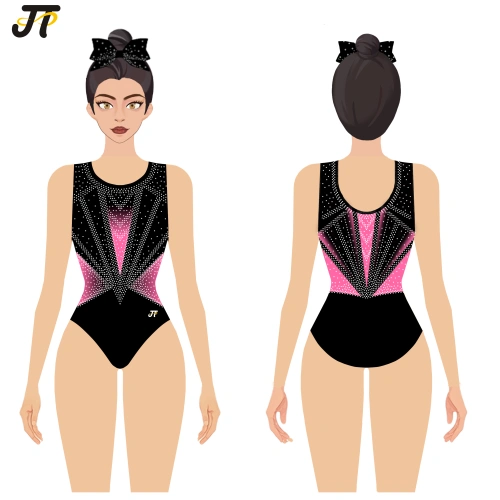
Specialized gymnastics leotard factories, such as T&J Sportswear, have developed systems and expertise to overcome the challenges of consistent sizing. Their approach encompasses every stage of production, from design and pattern development to cutting, sewing, and quality inspection. By focusing exclusively on gymnastics apparel, these factories have a deep understanding of the materials, construction techniques, and fit requirements that general manufacturers lack.
The foundation of consistent sizing lies in pattern development and grading. A specialized factory employs skilled pattern makers who understand the unique proportions of gymnasts. They create base patterns that are tested on a range of body types to ensure a proper fit. When grading these patterns, they use sophisticated software and years of experience to adjust dimensions accurately. T&J Sportswear, for example, has an in-house design team that specializes in gymnastics apparel. They do more than simply manufacture designs supplied by customers—they can also help develop new concepts based on sketches, reference images, color combinations, team identities, or brand requirements. This design capability extends to pattern making, ensuring that every size is meticulously crafted.
Grading is not a one-size-fits-all process. A factory must consider the stretch of the fabric, the intended use of the leotard (practice vs. competition), and the preferences of the target market. For instance, competition leotards often require a snugger fit for aerodynamic purposes, while practice leotards may prioritize comfort and ease of movement. A specialized factory can adjust grading accordingly, ensuring that each size meets the specific performance needs of the athlete.
The choice of fabric is inextricably linked to sizing consistency. Different fabrics have different stretch and recovery properties. Lycra, Spandex, Polyester, Mystique, and Mesh are common materials used in gymnastics leotards. Each behaves differently when stretched and sewn. A factory that specializes in gymnastics apparel knows how to select fabrics that will provide the desired fit and how to adjust patterns to account for fabric behavior.

T&J Sportswear pays close attention to fabric selection and garment construction. Their product range can use materials including Lycra, Spandex, Polyester, Mystique, and Mesh, depending on the design and application. Different products can be developed for different priorities, such as stretch, lightweight construction, breathability, quick drying, comfort, durability, and visual appearance. For training leotards, they focus on comfortable stretch, durability, moisture management, and everyday wear. For competition leotards, they place greater emphasis on precision fit, secure coverage, decorative details, and professional finishing. This careful matching of fabric to function ensures that sizing remains consistent across different product lines.
Moreover, fabric consistency from lot to lot is crucial. If a factory switches to a different fabric supplier or a new batch of fabric with slightly different stretch properties, sizing can drift. A dedicated factory like T&J Sportswear establishes strong relationships with fabric suppliers and conducts rigorous testing to ensure that each batch meets specifications. This attention to detail prevents subtle variations that could lead to inconsistent sizing.
The way a leotard is constructed—how it is cut, sewn, and finished—has a direct impact on its fit. Stitching techniques, seam types, and the use of elastic bands all influence how the garment stretches and recovers. A specialized factory trains its workers in specific techniques that maintain the integrity of the fabric and the intended fit. For example, using a stretch stitch or a serger with the correct tension ensures that seams do not pop when the leotard is stretched. Overlocking or flatlock seams can reduce bulk and improve comfort while maintaining consistent dimensions.
T&J Sportswear's production team pays attention to every stage of manufacturing, from fabric selection and pattern development to cutting, sewing, printing, rhinestone application, quality inspection, and final packaging. This integrated approach allows them to control the variables that affect sizing. Their factory team includes 30+ skilled workers, with reported production capacity of 300+ leotards per day. This provides a balance between flexible customization and the ability to support larger wholesale and team orders. For customers, production capacity is not simply about quantity. The real value is the ability to maintain consistent workmanship when moving from samples to bulk production.
In addition, the application of decorations such as rhinestones, sublimation printing, and appliqués can affect fit. A factory that understands this will adjust patterns or construction methods to compensate. For instance, if a design calls for heavy rhinestone coverage, the factory might use a fabric with greater stretch to ensure the leotard still fits properly. T&J Sportswear can combine sublimation graphics, color blocking, mesh, rhinestones, crystal decoration, and different fabric effects to create distinctive visual designs while maintaining sizing consistency.
Quality control is the final safeguard for consistent sizing. A specialized factory implements multiple inspection points throughout production. During sample development, customers can review the design, fabric, fit, decoration, and finishing before confirming mass production. This pre-production approval ensures that the sizing is correct before bulk manufacturing begins. For finished garments, key inspection points can include fabric condition, printing quality, stitching, measurements, rhinestone placement, coverage, and overall appearance. T&J Sportswear's production process is designed to reduce common problems such as inconsistent sizing, printing defects, loose decoration, or uneven finishing.
Measurement checks are particularly important. Factories use size charts and measurement tolerances to verify that each leotard falls within acceptable limits. They may use measuring tapes, flat-lay measurements, or even 3D body scanning technology to ensure accuracy. T&J Sportswear, for instance, lists certifications such as ISO9001, SGS, and CE for applicable products. Specific certification and testing documentation can be provided according to the product and customer requirements. These certifications often include quality management system audits that cover sizing consistency.
Furthermore, a factory that specializes in gymnastics apparel will have a robust system for handling customer feedback. If a sizing issue is reported, they can trace it back to the specific production batch, identify the root cause, and implement corrective actions. This continuous improvement loop is essential for maintaining long-term consistency.
T&J Sportswear is a professional gymnastics apparel manufacturer specializing in the development and production of high-quality gymnastics leotards and teamwear. With more than 10 years of experience in the sportswear industry, they have built strong expertise in product development, custom design, manufacturing, and international business. Their main products include competition gymnastics leotards, practice gymnastics leotards, custom team leotards, rhinestone gymnastics leotards, and gymnastics warm-up wear. They work with gymnastics clubs, teams, brands, wholesalers, distributors, and other sportswear businesses, with a strong focus on customers in the US, Europe, and other international markets.
When it comes to consistent sizing, T&J Sportswear's experience and specialization provide a significant advantage. Unlike general sportswear suppliers, they understand the specific requirements of gymnastics apparel, including stretch, fit, comfort, coverage, durability, decoration, and freedom of movement. Over the years, their products and services have reached customers in 36+ countries, giving them practical experience working with different markets, customer requirements, sizing systems, and product preferences. Their main markets include North America and Europe, where customers place strong emphasis on product quality, customization, consistency, and reliable communication.
Design is one of T&J Sportswear's key strengths. They have an in-house professional design team specializing in gymnastics apparel. They do more than simply manufacture designs supplied by customers—they can also help develop new concepts based on sketches, reference images, color combinations, team identities, or brand requirements. This design capability is crucial for sizing consistency because it allows them to control the pattern development process from the very beginning. By understanding the intended fit and function of each design, they can create patterns that are both aesthetically pleasing and consistently sized.
For competition leotards, they can combine sublimation graphics, color blocking, mesh, rhinestones, crystal decoration, and different fabric effects to create distinctive visual designs. Customers can also customize colors, logos, patterns, labels, and other branding elements. Throughout this customization process, the design team ensures that sizing is not compromised. They work closely with the production team to translate design specifications into accurate patterns and construction methods.
One major advantage for small and growing customers is T&J Sportswear's low MOQ starting from 10 sets for selected products. This gives gymnastics clubs, new brands, boutique retailers, and smaller distributors greater flexibility when testing new designs or launching new collections. Instead of requiring customers to commit to large quantities before they know how a design will perform in their market, they can support smaller initial orders and help customers gradually develop their collections.
Low MOQ does not mean low quality or inconsistent sizing. T&J Sportswear applies the same rigorous quality control to small orders as they do to large ones. This is particularly important for new brands that are establishing their reputation. By ensuring consistent sizing from the very first order, they help these brands build trust with their customers and avoid the costly mistakes associated with ill-fitting apparel.
Customization is at the center of T&J Sportswear's manufacturing service. They support both OEM and ODM, allowing customers to choose between producing their own designs and developing new products together with their team. Customization can cover artwork, colors, sublimation printing, logos, rhinestone layouts, fabric combinations, sizes, labels, packaging, and other details. Their production process covers design development, fabric selection, digital artwork, printing, cutting, sewing, decoration, inspection, packaging, and delivery. This integrated approach helps reduce communication between multiple suppliers and gives customers a more efficient path from an initial idea to a finished product.
For consistent sizing, this integrated approach is invaluable. When all stages of production are handled under one roof, there is less chance of miscommunication or errors that could lead to sizing discrepancies. The design team, pattern makers, and sewing operators work together closely, ensuring that the final product matches the intended specifications. T&J Sportswear's professional design team can assist with artwork development and product optimization, helping customers turn concepts into finished gymnastics apparel without sacrificing fit.
T&J Sportswear's factory team includes 30+ skilled workers, with reported production capacity of 300+ leotards per day. This provides a balance between flexible customization and the ability to support larger wholesale and team orders. For customers, production capacity is not simply about quantity. The real value is the ability to maintain consistent workmanship when moving from samples to bulk production. They pay attention to fabric, printing, stitching, sizing, rhinestone placement, and overall finishing throughout production.
Skilled workers are essential for consistent sizing. Experienced sewers know how to handle stretch fabrics, adjust machine settings, and maintain consistent seam allowances. They can spot potential issues before they become problems. T&J Sportswear invests in training and retaining skilled workers, which directly contributes to the consistent sizing of their products. Even with a high daily capacity, they do not sacrifice quality for speed. Each leotard is inspected to ensure it meets their standards.
Quality control starts before bulk production at T&J Sportswear. During sample development, customers can review the design, fabric, fit, decoration, and finishing before confirming mass production. This step is critical for sizing consistency because it allows for adjustments to be made before large quantities are produced. Once the sample is approved, the pattern and specifications are locked in for bulk production.
For finished garments, key inspection points can include fabric condition, printing quality, stitching, measurements, rhinestone placement, coverage, and overall appearance. Their production process is designed to reduce common problems such as inconsistent sizing, printing defects, loose decoration, or uneven finishing. T&J Sportswear's product information also lists certifications such as ISO9001, SGS, and CE for applicable products. Specific certification and testing documentation can be provided according to the product and customer requirements. These certifications provide customers with assurance that the factory adheres to internationally recognized quality management standards.
T&J Sportswear believes that manufacturing quality is only one part of a successful supplier relationship. Clear communication and responsive service are equally important, especially for customized gymnastics apparel. From initial inquiry and design development to sampling, production, inspection, and shipment, their team provides professional support throughout the process. Customers can communicate their requirements directly and receive assistance with product development, customization, production details, and logistics.
For sizing consistency, this one-to-one service means that customers have a dedicated point of contact who understands their sizing needs. If a customer has specific measurement requirements or size charts, they can communicate these directly to the factory. The factory can then ensure that these requirements are accurately translated into production. This level of service is difficult to achieve with large, impersonal manufacturers.
T&J Sportswear's goal is to build long-term partnerships rather than simply complete individual orders. Whether a customer is a gymnastics club developing team uniforms, a new brand launching a collection, a distributor expanding their product range, or an established buyer looking for a reliable manufacturing partner, T&J Sportswear provides flexible solutions based on their requirements. With 10+ years of industry experience, 36+ countries served, 30+ skilled workers, 300+ daily leotard capacity, low MOQ, professional design support, OEM/ODM customization, and one-to-one service, they combine manufacturing capability with the flexibility required by today's international gymnastics apparel market.
This partnership approach is beneficial for consistent sizing because it fosters a collaborative environment. The factory learns the customer's sizing preferences and can proactively suggest improvements. Over time, the factory becomes an extension of the customer's brand, ensuring that every order meets the same high standards.
To illustrate the importance of consistent sizing, consider a hypothetical gymnastics club that ordered leotards from a general sportswear manufacturer. The club provided measurements for 20 athletes, ranging from size 6 to size 12. When the leotards arrived, several athletes found their leotards too tight, while others found theirs too loose. The club had to spend additional time and money on alterations, and some leotards could not be fixed. The athletes felt uncomfortable and self-conscious, affecting their performance. The club's reputation suffered, and they had to find a new supplier.
In contrast, another club ordered from a specialized leotard factory like T&J Sportswear. The factory worked with the club to create a custom size chart based on the athletes' measurements. They produced a sample leotard for each size, which the athletes tried on. Adjustments were made to the patterns before bulk production. When the final order arrived, every athlete received a leotard that fit perfectly. The club was thrilled, and the athletes felt confident and ready to compete. The club has since placed multiple orders, and the factory has become a trusted partner.
For brands, consistent sizing is equally critical. A new gymnastics apparel brand launched a collection of practice leotards using a general manufacturer. The first batch sold well, but returns began to pile up due to sizing complaints. Customers complained that the sizes ran small or that the fit was inconsistent between colors. The brand's reputation took a hit, and sales plummeted. The brand then switched to T&J Sportswear. T&J Sportswear helped the brand refine their size chart, tested patterns on live models, and implemented strict quality control. The next collection received positive reviews for accurate sizing and comfortable fit. The brand's sales recovered, and they now offer a full range of sizes with confidence.
These examples demonstrate that the choice of factory is not just about cost or speed—it is about reliability and consistency. A specialized factory brings the expertise and processes needed to ensure that every leotard, regardless of size or design, fits as intended.
Inconsistent sizing has far-reaching consequences. For athletes, an ill-fitting leotard can cause physical discomfort, restrict movement, and increase the risk of injury. It can also affect an athlete's mental state. Gymnasts are already under immense pressure to perform; worrying about a leotard that rides up or digs into the skin is an unnecessary distraction. Consistent sizing allows athletes to focus on their routine, knowing that their apparel will support them.
For teams, inconsistent sizing can lead to a lack of uniformity. In competitions, teams are judged on their overall presentation. Mismatched or ill-fitting leotards can detract from the team's professional image. Coaches and team managers spend valuable time dealing with sizing issues instead of focusing on training. Consistent sizing eliminates this problem and ensures that the team looks cohesive and professional.
For brands and retailers, inconsistent sizing can be financially devastating. High return rates, negative reviews, and lost customers are just a few of the consequences. In the age of social media, a single complaint about sizing can go viral and damage a brand's reputation. Consistent sizing builds trust and loyalty. Customers are more likely to repurchase from a brand that they know they can rely on for accurate sizing. This is particularly important in the gymnastics market, where parents and athletes often become repeat customers if they find a brand that fits well.
Moreover, inconsistent sizing can lead to inventory management challenges. Retailers may find themselves with excess stock in some sizes and shortages in others. This ties up capital and reduces profitability. A factory that delivers consistent sizing helps retailers plan their inventory more effectively and reduce waste.
Based on the expertise of specialized factories like T&J Sportswear, several best practices emerge for ensuring consistent sizing in gymnastics leotards. These practices can serve as a guide for brands, clubs, and manufacturers alike.
By following these best practices, factories can minimize sizing variations and deliver products that meet the highest standards. T&J Sportswear exemplifies many of these practices, from their in-house design team to their rigorous quality control and one-to-one service.
As gymnastics continues to evolve, so too will the demand for consistent sizing. Technology is playing an increasingly important role. 3D body scanning, virtual fitting rooms, and AI-driven pattern generation are becoming more accessible. These tools can help factories create custom-fitted leotards with unprecedented accuracy. However, technology alone is not enough. The human expertise of a specialized factory remains essential. Understanding how a fabric drapes, how a seam behaves under stress, and how a design translates to a real body requires years of experience.
Sustainability is another trend that may impact sizing. As factories move toward eco-friendly fabrics and production methods, they must ensure that these new materials do not compromise fit. T&J Sportswear is committed to staying at the forefront of these developments, continuously improving their processes to meet the evolving needs of the market.
Moreover, the globalization of gymnastics means that sizing standards must be adaptable to different regions. What fits an athlete in the US may not fit an athlete in Europe or Asia. Factories that serve international markets must be adept at adjusting sizing to local preferences. T&J Sportswear's experience in 36+ countries gives them a unique advantage in this regard. They understand the nuances of different sizing systems and can tailor their products accordingly.
Ultimately, the future of gymnastics apparel sizing will be defined by a combination of technology, expertise, and customer collaboration. Factories that invest in all three will be best positioned to deliver consistent sizing that athletes and brands can rely on.
Consistent sizing is not a luxury—it is a necessity in gymnastics apparel. It affects athlete performance, team unity, brand reputation, and customer satisfaction. Achieving consistent sizing requires a deep understanding of fabrics, patterns, construction techniques, and quality control. This is why partnering with a specialized gymnastics leotard factory matters. Factories like T&J Sportswear bring over a decade of experience, in-house design capabilities, flexible customization, skilled workers, and rigorous quality control to every order. They understand that a leotard is more than just a garment; it is a tool that enables athletes to perform at their best.
Whether you are a gymnastics club ordering team uniforms, a new brand launching a collection, or a distributor looking for a reliable supplier, the factory you choose will determine the consistency of your sizing. By selecting a specialized manufacturer, you can avoid the pitfalls of inconsistent sizing and build a product line that athletes trust. T&J Sportswear is committed to being that dependable partner, helping customers turn their ideas into finished gymnastics apparel that fits perfectly, every time.
From your first idea to the final leotard, T&J Sportswear is committed to making custom gymnastics apparel more efficient, flexible, and reliable. Their focus on quality, consistency, and customer service sets them apart in the industry. As the gymnastics apparel market continues to grow, the importance of consistent sizing will only increase. Factories that prioritize this aspect will lead the way, and T&J Sportswear is poised to be at the forefront.
In summary, the role of a gymnastics leotard factory in ensuring consistent sizing cannot be overstated. It is the combination of specialized knowledge, skilled craftsmanship, and rigorous quality control that makes all the difference. For anyone involved in gymnastics apparel—whether as an athlete, coach, brand owner, or distributor—choosing the right factory is a critical decision that impacts success on and off the mat.
