This article explored how gymnastics clubs, teams, brands, wholesalers, and distributors can choose a practice gymnastics leotards factory for small batches. It explained why practice leotards require specialized manufacturing, focusing on comfort, stretch, breathability, durability, fit, coverage, and visual identity. Small-batch production was discussed as a practical way to test designs, manage cash flow, reduce inventory risk, and support growing clubs and new brands. The article outlined key selection criteria, including specialized gymnastics experience, in-house design support, fabric and construction expertise, low MOQ, OEM and ODM customization, sample development, production capacity, quality control, certifications, and one-to-one service. T&J Sportswear was presented as an example of a professional gymnastics apparel manufacturer with more than 10 years of experience, customers in 36+ countries, 30+ skilled workers, and reported capacity of 300+ leotards per day. The article also reviewed common challenges in small-batch manufacturing, provided a practical checklist, and described scenarios for clubs, new brands, and distributors. It emphasized the importance of fabric selection, design details, quality inspections, pricing, MOQ planning, shipping, and long-term partnerships. Ultimately, the right factory should combine gymnastics-specific knowledge, flexible production, consistent workmanship, and responsive communication. By evaluating these factors, customers can find a manufacturing partner that delivers reliable practice leotards for training while supporting their team identity, brand goals, and future growth.
Choosing a Practice Gymnastics Leotards Factory for Small BatchesFor gymnastics clubs, coaches, team managers, boutique brands, and distributors, the search for a reliable practice gymnastics leotards factory is a strategic decision rather than a simple purchasing task. Practice leotards are worn repeatedly during training sessions, so they must deliver comfort, stretch, breathability, durability, and a secure fit. At the same time, small-batch production creates unique challenges. A factory must be willing to accept lower order quantities, maintain consistent workmanship, and provide customization that meets the needs of a specific club, team, or brand. This article explores how to evaluate a practice gymnastics leotards factory for small batches, what criteria matter most, and how a specialist manufacturer such as T&J Sportswear supports clubs, teams, brands, wholesalers, and distributors around the world.
Gymnastics apparel is different from general activewear. A leotard must follow the body through complex movements without shifting, riding up, or restricting the shoulders, hips, and legs. Practice leotards face additional demands because they are used multiple times per week. They must survive repeated stretching, washing, and drying while retaining color, shape, and elasticity. For this reason, a factory that understands gymnastics-specific fit and construction can make a meaningful difference in product quality and customer satisfaction.
Small-batch production adds another layer of complexity. Many large manufacturers prefer high-volume orders because they can optimize cutting, sewing, and decoration lines for mass production. Small gymnastics clubs, new brands, and niche distributors often need lower quantities to test designs, manage inventory, or serve a specific team. A factory that supports low MOQ, flexible customization, and professional communication becomes a valuable partner. T&J Sportswear, a professional gymnastics apparel manufacturer with more than 10 years of experience, has built its service model around these needs.
Practice leotards are the workhorses of a gymnast's wardrobe. Competition leotards may be worn for a few important performances, but practice leotards are worn week after week. They must balance performance features with everyday practicality. A specialist factory understands that the best practice leotard is not simply a cheaper version of a competition leotard. It is a product designed for movement, comfort, and durability under repetitive use.
undefined

Comfort is the foundation of any successful practice leotard. If a leotard feels tight in the wrong places, scratches the skin, or restricts the arms during swings and handstands, the gymnast cannot focus on training. A specialized factory pays attention to pattern development, seam placement, gusset construction, and fabric recovery. The goal is to create a garment that moves with the body rather than against it. T&J Sportswear understands that gymnastics apparel needs to combine comfort, flexibility, durability, fit, and visual appeal. Its production team pays attention to every stage of manufacturing, from fabric selection and pattern development to cutting, sewing, printing, rhinestone application, quality inspection, and final packaging.
Practice leotards are exposed to sweat, friction, stretching, and frequent laundering. Fabrics must resist pilling, fading, and loss of elasticity. Stitching must hold up under tension. Decorative elements such as rhinestones or printed graphics must remain secure. A factory with experience in gymnastics apparel knows which materials and construction methods perform best for training wear. It can recommend fabrics that offer the right balance of stretch, breathability, and long-term durability.
Fit is especially important for young gymnasts, growing athletes, and team members who spend long hours in the gym. A practice leotard should provide secure coverage without feeling restrictive. It should stay in place during jumps, leaps, and tumbling passes. Poor fit can cause distraction, discomfort, and even injury if a gymnast tries to adjust the garment mid-movement. A professional factory uses consistent sizing standards, accurate grading, and sample approval to reduce fit problems before bulk production begins.
Even practice leotards can reflect a club's identity. Team colors, logos, patterns, and decorative details help create a sense of belonging. For clubs ordering small batches, customization is not a luxury. It is a way to build team spirit and present a professional image. A factory that supports custom design, sublimation printing, logos, labels, and packaging can help clubs and brands create practice leotards that are both functional and distinctive.
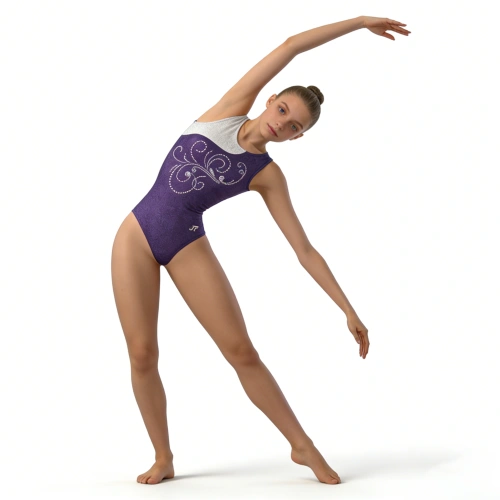
Small-batch production is common in the gymnastics world. A club may need 20 leotards for a competitive team. A new brand may want 50 pieces to test the market. A boutique retailer may order 100 leotards in several sizes and colors. These quantities may be too small for mass-market factories, but they are meaningful for specialist manufacturers that have built flexible production systems.
Small batches allow clubs and brands to test a design before committing to larger production. They can evaluate fit, fabric, color, and decoration in real training conditions. If a design performs well, the customer can reorder with confidence. If adjustments are needed, the financial risk is lower. T&J Sportswear supports this approach with low MOQ starting from 10 sets for selected products, giving gymnastics clubs, new brands, boutique retailers, and smaller distributors greater flexibility when testing new designs or launching new collections.
Growing clubs often need customized team uniforms but may not have the budget or storage space for large inventories. New brands may be developing their first collection and need a manufacturing partner who can guide them through design, sampling, and production. Established distributors may want to add practice leotards to their catalog without overcommitting to a single style. A flexible factory can serve all these customers with tailored solutions.
Small-batch ordering helps customers manage cash flow and reduce dead stock. Instead of tying up capital in hundreds of leotards, a club or brand can order closer to actual demand. This is especially important for seasonal collections, limited-edition designs, or team-specific uniforms. A factory that offers low MOQ, competitive pricing, and reliable lead times makes small-batch inventory planning more practical.

Choosing the right factory requires more than comparing prices. Customers should evaluate experience, design capability, materials, customization, quality control, communication, and production capacity. The following criteria provide a practical framework for small-batch buyers.
A factory that specializes in gymnastics apparel understands the unique demands of the sport. Unlike general sportswear suppliers, a specialist knows how a leotard should fit, stretch, and cover the body during movement. T&J Sportswear has more than 10 years of experience in gymnastics apparel manufacturing, with a strong focus on competition and training leotards. Over the years, its products and services have reached customers in 36+ countries, giving the company practical experience working with different markets, customer requirements, sizing systems, and product preferences. Its main markets include North America and Europe, where customers place strong emphasis on product quality, customization, consistency, and reliable communication.
Design support is a major advantage for small-batch customers. Many clubs and new brands have ideas but need help turning them into production-ready products. A factory with an in-house design team can assist with artwork development, color combinations, logo placement, and product optimization. T&J Sportswear has a professional design team specializing in gymnastics apparel. The team can develop new concepts based on sketches, reference images, color combinations, team identities, or brand requirements. For competition and practice leotards, the factory can combine sublimation graphics, color blocking, mesh, rhinestones, crystal decoration, and different fabric effects to create distinctive visual designs.
The right fabric is essential for practice leotards. It must stretch, recover, breathe, and withstand repeated use. A professional factory can recommend materials based on the intended use, budget, and design. T&J Sportswear can use materials including Lycra, Spandex, Polyester, Mystique, and Mesh, depending on the design and application. Different products can be developed for different priorities, such as stretch, lightweight construction, breathability, quick drying, comfort, durability, and visual appearance. For training leotards, the focus is on comfortable stretch, durability, moisture management, and everyday wear.
Low MOQ is one of the most important factors for small-batch buyers. A factory that requires thousands of pieces per style is not suitable for a club ordering team uniforms or a new brand testing a collection. T&J Sportswear offers low MOQ starting from 10 sets for selected products. This gives customers greater flexibility when testing new designs or launching new collections. Instead of requiring customers to commit to large quantities before they know how a design will perform in their market, the factory can support smaller initial orders and help customers gradually develop their collections.
Customization is at the center of a successful manufacturing partnership. OEM and ODM services allow customers to choose between producing their own designs and developing new products together with the factory. T&J Sportswear supports both OEM and ODM. Customization can cover artwork, colors, sublimation printing, logos, rhinestone layouts, fabric combinations, sizes, labels, packaging, and other details. The production process covers design development, fabric selection, digital artwork, printing, cutting, sewing, decoration, inspection, packaging, and delivery. This integrated approach helps reduce communication between multiple suppliers and gives customers a more efficient path from an initial idea to a finished product.
Samples are critical for small-batch production. They allow customers to review design, fabric, fit, decoration, and finishing before confirming mass production. A factory should provide clear sample timelines, photos, and measurement details. T&J Sportswear works with customers from design development and sample making to bulk production. During sample development, customers can review the design, fabric, fit, decoration, and finishing before confirming mass production. This step reduces the risk of misunderstandings and helps ensure that the final products meet expectations.
Production capacity matters even for small batches. A factory with skilled workers and organized production lines can maintain consistent workmanship when moving from samples to bulk production. T&J Sportswear has a factory team that includes 30+ skilled workers, with reported production capacity of 300+ leotards per day. This provides a balance between flexible customization and the ability to support larger wholesale and team orders. For customers, the real value is the ability to maintain consistent workmanship across different order sizes.
Quality control should start before bulk production and continue through final inspection. Key inspection points can include fabric condition, printing quality, stitching, measurements, rhinestone placement, coverage, and overall appearance. T&J Sportswear carefully inspects finished products before shipment. Its production process is designed to reduce common problems such as inconsistent sizing, printing defects, loose decoration, or uneven finishing. Quality and consistency are important throughout the production process, and the goal is not only to manufacture gymnastics apparel but also to build long-term partnerships through reliable products and responsive service.
Certifications can provide additional confidence for international buyers. T&J Sportswear lists certifications such as ISO9001, SGS, and CE for applicable products. Specific certification and testing documentation can be provided according to the product and customer requirements. For customers in the US, Europe, and other international markets, compliance documentation can support market access and customer trust.
Clear communication is essential for customized gymnastics apparel. Customers need to discuss design details, fabric choices, sizes, decoration, packaging, and delivery schedules. A factory that provides one-to-one service can respond to questions, offer suggestions, and keep the project on track. T&J Sportswear provides professional support from initial inquiry and design development to sampling, production, inspection, and shipment. Customers can communicate their requirements directly and receive assistance with product development, customization, production details, and logistics.
T&J Sportswear is a professional gymnastics apparel manufacturer specializing in custom gymnastics leotards and teamwear for clubs, teams, brands, wholesalers, and distributors worldwide. With more than 10 years of manufacturing experience, the company provides reliable quality, flexible customization, and professional service for customers in the US, Europe, and other international markets. Its main products include competition gymnastics leotards, practice gymnastics leotards, custom team leotards, rhinestone gymnastics leotards, and gymnastics warm-up wear.
For practice leotards, T&J Sportswear focuses on comfort, stretch, breathability, and durability for everyday training. The company offers a wide range of colors, patterns, and styles, with customized designs available for gymnastics clubs and teams. Customers can customize team colors, logos, patterns, labels, packaging, and other details according to their requirements. This flexibility is particularly valuable for small-batch orders because each club or brand can create a product that reflects its identity.
The design team at T&J Sportswear can help transform ideas, sketches, or reference images into finished gymnastics apparel. For customers who are not professional designers, this support is essential. The team can advise on artwork, color combinations, print placement, and decoration techniques. They can also help optimize designs for manufacturability, ensuring that the final product is both attractive and practical for training.
Practice leotards can be produced in a variety of fabrics and finishes. T&J Sportswear can use Lycra, Spandex, Polyester, Mystique, and Mesh. Decorative options can include sublimation printing, rhinestones, crystal decoration, mesh inserts, and color blocking. For practice leotards, the factory can balance visual appeal with durability and comfort. Not every practice leotard needs heavy decoration, but even simple designs can benefit from thoughtful color choices and secure construction.
The production workflow at T&J Sportswear covers design development, fabric selection, digital artwork, printing, cutting, sewing, decoration, inspection, packaging, and delivery. Each stage is managed to maintain quality and consistency. Skilled workers handle cutting and sewing with attention to detail. Decoration is applied carefully, and finished products are inspected before shipment. This organized workflow helps small-batch customers receive products that meet professional standards.
Packaging can be customized according to customer requirements. Labels, hang tags, poly bags, and carton markings can reflect a brand or club identity. For international customers, the factory can assist with shipping arrangements and documentation. Reliable delivery is an important part of the overall service, especially for clubs and brands working with fixed timelines.
Not all apparel factories are equally suited to practice leotards. General sportswear suppliers may produce T-shirts, leggings, and hoodies, but they may lack experience with the specific fit and construction of gymnastics apparel. A gymnastics specialist offers several advantages.
T&J Sportswear positions itself as a gymnastics apparel manufacturing partner rather than a general supplier. Its experience with competition leotards, practice leotards, custom team leotards, rhinestone leotards, and warm-up wear gives it a focused understanding of the market.
Small-batch production can be challenging, but experienced factories know how to manage the risks. Common challenges include the following.
A factory that specializes in small batches can help customers navigate these challenges. T&J Sportswear offers flexible solutions with low MOQ, competitive pricing, professional communication, and one-to-one service. Its team can advise on fabric selection, design simplification, and production planning to make small-batch orders more efficient.
Before choosing a practice gymnastics leotards factory for small batches, customers can use a checklist to evaluate potential suppliers.
Using a checklist helps customers compare factories objectively and avoid decisions based only on price. The right partner should offer a balance of quality, flexibility, service, and value.
A gymnastics club may have 25 gymnasts in a training group. The coaches want matching practice leotards with the club colors and logo. The club needs a range of sizes, including child and adult sizes. The order is not large enough for a mass-market factory, but it is important for team identity and professionalism.
A factory such as T&J Sportswear can support this project with low MOQ, custom colors, logo printing, and size grading. The club can choose a comfortable fabric, a practical design, and a decoration level that fits the budget. The factory can produce a sample for approval, then move to bulk production. The club receives consistent leotards that help athletes feel like part of a team.
A new gymnastics apparel brand may have strong design ideas but limited production experience. The founder may have sketches, color palettes, and target customer profiles. The brand needs a factory that can help with product development, sampling, and small-batch production.
T&J Sportswear supports OEM and ODM services, from design development and sample making to bulk production. The design team can help transform ideas, sketches, or reference images into finished gymnastics apparel. The brand can start with a small collection, test the market, and reorder successful styles. Low MOQ, flexible customization, competitive pricing, and one-to-one service make it easier for new brands to develop their own collections without excessive risk.
A distributor may already sell gymnastics equipment, bags, or accessories. Adding practice leotards can expand the product range, but the distributor needs to test demand before placing large orders. A small-batch order allows the distributor to evaluate customer response, sizing, and design preferences.
A specialist factory can provide production consistency and reliable lead times. T&J Sportswear works with distributors and wholesalers, offering flexible solutions for regular production. The distributor can order a focused range of styles and sizes, then scale up based on sales results. This approach reduces inventory risk while building a new product category.
Practice leotards can be simple or highly decorated, but every design should support training. The following design considerations can help customers make better decisions.
Team colors and patterns should be chosen with care. Dark colors may hide stains, while bright colors can improve visibility and team spirit. Sublimation printing allows complex patterns, gradients, and graphics. For small batches, simple color blocking may be more cost-effective than intricate multi-color printing.
Logos can be applied through sublimation, embroidery, screen printing, or heat transfer, depending on the fabric and design. A factory can advise on the best method for durability and appearance. Labels and packaging can also be customized to reinforce the brand or club identity.
Rhinestones can add sparkle to practice leotards, but they must be securely attached. For training wear, decoration should not interfere with comfort or movement. A factory with experience in rhinestone application can ensure that stones are placed accurately and adhere well. Mesh inserts and color blocking can add visual interest without excessive weight.
Practice leotards often need to fit a wide range of body types and ages. Accurate size charts, grading, and sample fitting are essential. Customers should provide clear size requirements and consider future growth for young athletes. A factory can help review measurements and suggest adjustments for better fit.
Fabric choice affects comfort, durability, appearance, and cost. For practice leotards, the ideal fabric should stretch, recover, breathe, and resist fading.
Lycra and Spandex are common choices because they offer excellent stretch and recovery. The fabric should return to its original shape after movement and washing. A factory can test fabric recovery and recommend blends that suit the intended use.
Gymnasts sweat during training, so breathability and moisture management are important. Polyester blends and mesh inserts can improve airflow and comfort. For intense training, quick-drying fabrics can help athletes stay comfortable.
Practice leotards are washed frequently. Fabrics should resist pilling, fading, and stretching out. Sublimation printing can help maintain color because the ink becomes part of the fabric. High-quality dyes and finishing processes also contribute to color retention.
Not all fabrics accept sublimation, rhinestones, or embroidery equally well. A factory can recommend fabrics that work with the chosen decoration method. For example, Mystique fabric offers a shiny appearance but may require specific handling. Mesh can be used for contrast and ventilation but should be placed thoughtfully.
Quality control is not a single step. It is a series of checks throughout production. For small-batch practice leotards, quality control helps ensure that every piece meets the customer's expectations.
The sample is the reference for bulk production. Customers should review design, fabric, fit, measurements, decoration, and finishing. Any changes should be documented before production begins. T&J Sportswear supports sample development and approval to reduce misunderstandings.
During production, in-line inspection can catch issues early. Inspectors can check cutting accuracy, sewing quality, print alignment, and decoration placement. Addressing problems during production is more efficient than correcting finished garments.
Final inspection checks the completed leotards before packaging. Key points include measurements, stitching, symmetry, fabric condition, print quality, rhinestone security, and overall appearance. T&J Sportswear inspects finished products before shipment to maintain stable workmanship and reduce common defects.
Price is important, but it should be evaluated together with MOQ, quality, and service. The lowest price may not be the best value if it leads to inconsistent sizing, poor decoration, or delayed delivery.
Unit cost is influenced by fabric, design complexity, number of colors, decoration, order quantity, packaging, and shipping. Small batches often have higher unit costs because fixed setup costs are spread over fewer pieces. Customers can reduce costs by simplifying designs, choosing stock fabrics, or combining sizes and colors in one production run.
Low MOQ helps reduce inventory risk, but it may come with a higher unit price. Customers should calculate the total cost of ownership, including storage, unsold inventory, and reorder costs. A flexible factory can help find the right balance between order quantity and budget.
International shipping, customs duties, and taxes can affect the final landed cost. Customers should discuss shipping terms, packaging requirements, and documentation with the factory. T&J Sportswear serves customers in the US, Europe, and other international markets, so it understands the importance of reliable logistics and clear communication.
Choosing a factory for a single order may seem simple, but long-term partnerships offer significant advantages. A consistent manufacturing partner learns the customer's sizing, design preferences, and quality standards. This reduces errors and improves efficiency over time.
When the same factory produces repeat orders, sizing and quality remain consistent. This is especially important for teams that add new members or reorder uniforms in future seasons. Customers can rely on established patterns and fabric choices.
Reorders are faster when the factory already has the patterns, artwork, and specifications on file. Small-batch customers can replenish popular styles without starting from scratch. This responsiveness helps clubs and brands meet demand quickly.
A long-term partner can suggest improvements based on production experience. The factory may recommend fabric upgrades, design adjustments, or decoration alternatives that improve comfort or durability. T&J Sportswear aims to build long-term partnerships with customers through reliable products and responsive service.
Choosing a practice gymnastics leotards factory for small batches requires careful evaluation. Customers should look for specialized experience, design support, suitable fabrics, low MOQ, OEM and ODM services, sample development, quality control, certifications, production capacity, and one-to-one communication. These factors determine whether a factory can deliver practice leotards that meet the demands of training while supporting the customer's brand or team identity.
T&J Sportswear is a professional gymnastics apparel manufacturer specializing in the development and production of high-quality gymnastics leotards and teamwear. With more than 10 years of experience in the sportswear industry, the company has built strong expertise in product development, custom design, manufacturing, and international business. Its main products include competition gymnastics leotards, practice gymnastics leotards, custom team leotards, rhinestone gymnastics leotards, and gymnastics warm-up wear. The company works with gymnastics clubs, teams, brands, wholesalers, distributors, and other sportswear businesses, with a strong focus on customers in the US, Europe, and other international markets.
For small-batch buyers, T&J Sportswear offers low MOQ, flexible customization, competitive pricing, professional communication, and one-to-one service. The factory team includes 30+ skilled workers and has reported production capacity of 300+ leotards per day. This combination of flexibility and capacity allows the company to support both small customized team orders and larger wholesale production projects. With experienced production capabilities, professional design support, flexible customization, and a customer-focused approach, T&J Sportswear is committed to being a dependable gymnastics apparel manufacturing partner for customers around the world.
From the first idea to the final leotard, the right factory can make custom gymnastics apparel more efficient, flexible, and reliable. Whether the customer is a gymnastics club developing team uniforms, a new brand launching a collection, a distributor expanding a product range, or an established buyer looking for a reliable manufacturing partner, the key is to choose a factory that understands gymnastics, supports small batches, and values long-term partnership.
Summary: This article explored how gymnastics clubs, teams, brands, wholesalers, and distributors can choose a practice gymnastics leotards factory for small batches. It explained why practice leotards require specialized manufacturing, focusing on comfort, stretch, breathability, durability, fit, coverage, and visual identity. Small-batch production was discussed as a practical way to test designs, manage cash flow, reduce inventory risk, and support growing clubs and new brands. The article outlined key selection criteria, including specialized gymnastics experience, in-house design support, fabric and construction expertise, low MOQ, OEM and ODM customization, sample development, production capacity, quality control, certifications, and one-to-one service. T&J Sportswear was presented as an example of a professional gymnastics apparel manufacturer with more than 10 years of experience, customers in 36+ countries, 30+ skilled workers, and reported capacity of 300+ leotards per day. The article also reviewed common challenges in small-batch manufacturing, provided a practical checklist, and described scenarios for clubs, new brands, and distributors. It emphasized the importance of fabric selection, design details, quality inspections, pricing, MOQ planning, shipping, and long-term partnerships. Ultimately, the right factory should combine gymnastics-specific knowledge, flexible production, consistent workmanship, and responsive communication. By evaluating these factors, customers can find a manufacturing partner that delivers reliable practice leotards for training while supporting their team identity, brand goals, and future growth.
