This article examines the practical differences between sourcing gymnastics leotards from a specialized manufacturer and sourcing them through a trading company. It begins by defining both models. A manufacturer owns or directly manages production, covering fabric sourcing, pattern development, cutting, sewing, printing, rhinestone application, inspection, and packaging. A trading company owns no production capacity and instead coordinates orders between buyers and third-party factories, adding a margin and an additional communication layer. The article then compares the two models across the criteria that matter most to buyers: cost structure, quality consistency, design capability, customization depth, minimum order quantities, lead times, communication, accountability, certifications, scalability, intellectual property protection, payment terms, and product range breadth. It includes detailed comparison tables and practical workflow descriptions for each model, along with warning signs buyers should watch for and a list of questions to ask before committing. The article also discusses hybrid approaches, in which buyers source flagship products directly from manufacturers while using intermediaries for peripheral items. Throughout, T&J Sportswear is used as an illustrative example of a specialized manufacturer. The company has more than 10 years of gymnastics apparel experience, serves customers in over 36 countries, employs 30 or more skilled workers, reports daily capacity of 300 or more leotards, offers low MOQ starting from 10 sets, provides in-house design support, and delivers OEM and ODM customization with one-to-one service. The conclusion is that neither model is universally superior. Buyers whose competitive advantage depends on quality, design, and reliability generally benefit from a direct manufacturing relationship, while buyers needing broad assortments with minimal administrative effort may prefer a trading company. The decisive factor is making the choice consciously and evaluating suppliers against the specific needs of the business.
Every gymnastics club director, team manager, boutique brand owner, and wholesale distributor eventually faces the same fundamental sourcing question: should they buy gymnastics leotards directly from a manufacturer, or should they work through a trading company that sits between the buyer and the factory? The answer is not as obvious as it first appears, and the wrong choice can quietly drain a business of margin, time, and reputation. This guide examines both models in depth, compares them across the criteria that actually matter, and explains how buyers can decide which route suits their situation best.
The gymnastics apparel market is unusual. Leotards are not generic t-shirts. They must stretch in four directions, hold their shape through hundreds of washes, provide secure coverage during inversions and split leaps, look striking under competition lighting, and fit athletes whose body proportions vary enormously between sizes. A supplier who treats gymnastics leotards as just another garment category will almost always disappoint. Understanding the structural difference between a manufacturer and a trading company is the first step toward avoiding that disappointment.
undefined
A gymnastics leotard manufacturer owns or directly controls the production process. That means fabric sourcing, pattern development, cutting, sewing, printing, rhinestone application, quality inspection, and final packaging all happen under one roof, or at least under one management structure. When a buyer places an order with a manufacturer, the person answering the email is typically sitting in the same building as the sewing lines that will produce the garments.
T&J Sportswear is an example of this model. T&J Sportswear is a professional gymnastics apparel manufacturer specializing in the development and production of high-quality gymnastics leotards and teamwear. With more than 10 years of experience in the sportswear industry, the company has built expertise in product development, custom design, manufacturing, and international business. Its main products include competition gymnastics leotards, practice gymnastics leotards, custom team leotards, rhinestone gymnastics leotards, and gymnastics warm-up wear. Because the company works directly with gymnastics clubs, teams, brands, wholesalers, and distributors, it operates as a single point of accountability from concept through shipment.
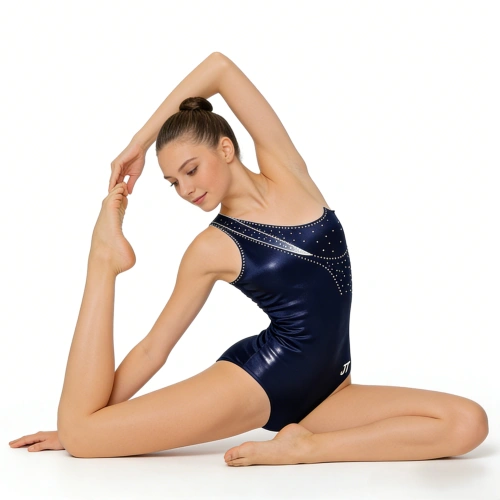
The defining characteristic of a true manufacturer is control. When a problem arises, whether it is a shade variation in a batch of Mystique fabric or a misaligned rhinestone layout, the manufacturer can walk to the production floor and fix it. There is no third party to negotiate with, no information gap to bridge, and no risk that the factory will blame the middleman while the middleman blames the factory.
A trading company, sometimes called an agent, sourcing house, or export intermediary, does not own production capacity. Instead, it maintains relationships with a network of factories and coordinates orders on behalf of buyers. The trading company handles inquiries, negotiates pricing, places purchase orders with factories, arranges inspections, and manages export documentation and shipping.
In theory, this model offers convenience. A buyer can send one inquiry and receive quotations for leotards, warm-up jackets, gym bags, and water bottles without contacting four different suppliers. In practice, the value of a trading company depends entirely on how deeply it understands the product category and how much control it genuinely exercises over its factory partners.
There is a wide spectrum here. At one end sit sophisticated sourcing companies that employ textile engineers, maintain dedicated production lines at partner factories, and function almost like an outsourced manufacturing department. At the other end sit small brokerage operations that forward a buyer's inquiry to a factory, add a markup, and act as little more than a messaging layer. Most trading companies sit somewhere between these extremes, and buyers rarely know which type they are dealing with until something goes wrong.
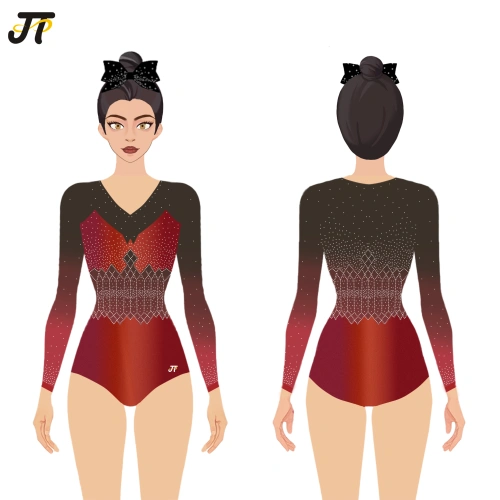
When a buyer approaches a manufacturer such as T&J Sportswear, the process typically follows a defined path:
Because each stage happens inside the same organization, information does not degrade as it travels. The person who developed the pattern is often in the same building as the person who inspects the finished leotard, which means feedback loops are short and corrections are fast.
The trading company workflow looks similar on paper but involves more handoffs:
The critical variable is the depth of the trading company's involvement. A hands-on sourcing partner that visits factories weekly and employs its own quality inspectors can deliver excellent results. A passive broker that simply relays messages introduces a layer of distance between the buyer and the people actually making the product.
The following table summarizes the most important differences. Each row is examined in detail in the sections that follow.
| Criteria | Manufacturer | Trading Company |
| Production control | Direct ownership or direct management of production | Depends on partner factories |
| Product specialization | Often deeply focused on one category | Usually broader but shallower |
| Pricing structure | Factory pricing, fewer layers | Factory price plus intermediary margin |
| Customization depth | Pattern, fabric, construction, decoration | Limited by factory willingness |
| Quality consistency | Higher, because standards are internal | Variable, depends on oversight |
| Communication speed | Direct with production team | Filtered through an intermediary |
| Accountability | Single point of responsibility | Split between trading company and factory |
| Minimum order quantity | Often flexible for specialized makers | Sometimes lower, sometimes higher |
| Product range | Narrow but deep | Wide but shallow |
| Design support | In-house design teams common | Usually outsourced or basic |
| Lead time control | Direct scheduling influence | Dependent on factory queue |
| Problem resolution | Fast, internal | Slower, requires coordination |
| Best for | Brands, clubs, and distributors needing quality and customization | Buyers needing many unrelated product categories |
A manufacturer prices based on material cost, labor time, overhead, decoration complexity, packaging, and margin. Because there is no intermediary, the buyer sees a price that reflects real production inputs rather than a chain of markups. This does not automatically mean the lowest price on the market, however. A specialized gymnastics leotard manufacturer invests in pattern makers, fit testers, and quality systems that a general factory may not maintain. That investment shows up in the price, and it usually shows up in the product as well.
T&J Sportswear takes a flexible approach to pricing, offering competitive rates alongside low MOQ options and one-to-one service. The company positions itself as accessible to growing gymnastics clubs looking for customized team uniforms, new brands developing a first collection, and established distributors requiring regular production. That range of customer types reflects a pricing philosophy built around long-term partnership rather than one-off transactions.
A trading company earns revenue from the spread between the price it pays the factory and the price it charges the buyer. That spread typically ranges from a few percentage points to more than twenty percent, depending on the complexity of the order and the trading company's negotiating leverage. In some cases, a large trading company with high order volumes can negotiate factory prices low enough that its final quote is competitive with a direct manufacturer. In other cases, the buyer pays more for less control.
There is also a hidden cost dimension. When a trading company handles an order, the buyer cannot easily verify what the factory was actually paid. This opacity can be uncomfortable for buyers who want to understand their true cost structure, particularly when they intend to scale and renegotiate over time.
| Cost Element | Direct Manufacturer | Trading Company |
| Base production cost | Visible | Hidden behind final quote |
| Intermediary margin | None | Typically 5 to 25 percent |
| Sample cost | Often credited against bulk order | Usually marked up |
| Communication overhead | Minimal | Adds delay and potential errors |
| Cost of quality failures | Borne internally and correctable | Often disputed between parties |
A gymnastics leotard must satisfy competing demands. It needs enough stretch to allow full range of motion, enough compression to stay in place during tumbling, enough opacity to provide confidence, and enough durability to survive repeated washing and heavy training. Add rhinestones, sublimation graphics, mesh panels, and contrasting fabric blocks, and the manufacturing difficulty multiplies.
Small errors matter disproportionately. A seam that is slightly too thick can chafe during a beam routine. A pattern that is two centimeters off in the torso length can cause the leotard to ride up during a back handspring. A rhinestone applied with insufficient adhesive can detach in the wash and create a choking hazard for younger athletes. These are not hypothetical concerns. They are the reasons why category specialization matters so much in this market.
T&J Sportswear understands that gymnastics apparel needs to combine comfort, flexibility, durability, fit, and visual appeal. The production team pays attention to every stage of manufacturing, from fabric selection and pattern development to cutting, sewing, printing, rhinestone application, quality inspection, and final packaging. This helps the company provide products suitable for both demanding training sessions and high-level competitions.
Quality control begins before bulk production. During sample development, customers can review the design, fabric, fit, decoration, and finishing before confirming mass production. For finished garments, inspection points include fabric condition, printing quality, stitching, measurements, rhinestone placement, coverage, and overall appearance. The production process is designed to reduce common problems such as inconsistent sizing, printing defects, loose decoration, or uneven finishing.
Because these checks are internal, they can be enforced consistently. There is no need to persuade an external factory to adopt a standard that it did not help create.
A trading company's quality outcome depends on three factors: the factories it chooses, the standards it communicates, and the inspections it performs. If any of these is weak, defects reach the buyer. Common failure modes include:
None of these problems are inevitable. A well-run trading company with strong factory relationships and its own inspectors can avoid them. But the buyer has no way of knowing in advance which type of trading company they are dealing with, and discovering the answer after a shipment arrives is expensive.
Design is one of the areas where the manufacturer versus trading company distinction becomes most visible. Many buyers do not arrive with finished technical drawings. They arrive with a mood board, a color palette, a club logo, and an idea. Turning that into a production-ready gymnastics leotard requires genuine design capability.
T&J Sportswear maintains an in-house professional design team specializing in gymnastics apparel. The team does more than simply manufacture designs supplied by customers. It can help develop new concepts based on sketches, reference images, color combinations, team identities, or brand requirements. For competition leotards, the team can combine sublimation graphics, color blocking, mesh, rhinestones, crystal decoration, and different fabric effects to create distinctive visual designs. Customers can also customize colors, logos, patterns, labels, and other branding elements.
This capability changes the nature of the buyer-supplier relationship. Instead of acting as an order-taker, the manufacturer becomes a development partner. A club that wants a leotard reflecting its team colors and mascot can receive artwork proposals rather than a form to fill out. A new brand launching its first collection can receive guidance on which silhouettes sell best in its target market.
Trading companies rarely employ gymnastics-specific designers. Some have graphic artists who can clean up a logo or prepare a print file. Others simply forward whatever the buyer provides to the factory and ask the factory to interpret it. When the factory has design capability, the result can be good. When it does not, the buyer receives a leotard that technically matches the reference image but lacks the proportions, balance, and finish that make a design look professional on an athlete.
Customization in gymnastics apparel spans a wide range, from simple logo placement to fully original garment development. The table below illustrates the typical limits of each sourcing model.
| Customization Type | Manufacturer | Trading Company |
| Custom colors | Standard capability | Usually available |
| Logo printing or embroidery | Standard capability | Usually available |
| Original pattern development | Core strength | Rarely offered |
| Sublimation artwork design | In-house | Sometimes outsourced |
| Rhinestone layout design | In-house | Depends on factory |
| Fabric combination development | Direct access to mills | Limited by factory options |
| Custom labels and packaging | Fully supported | Variable |
| Grading across extended sizes | Developed internally | Often restricted to standard sizes |
T&J Sportswear supports both OEM and ODM services, allowing customers to choose between producing their own designs and developing new products together with the company's team. Customization can cover artwork, colors, sublimation printing, logos, rhinestone layouts, fabric combinations, sizes, labels, packaging, and other details. The production process covers design development, fabric selection, digital artwork, printing, cutting, sewing, decoration, inspection, packaging, and delivery. This integrated approach helps reduce communication between multiple suppliers and gives customers a more efficient path from an initial idea to a finished product.
MOQ is often the deciding factor for small clubs and new brands. Traditional factories frequently require hundreds of pieces per design, which is impossible for a club ordering twelve team leotards or a startup testing three designs.
One major advantage for small and growing customers working with T&J Sportswear is a low MOQ starting from 10 sets for selected products. This gives gymnastics clubs, new brands, boutique retailers, and smaller distributors greater flexibility when testing new designs or launching new collections. Instead of requiring customers to commit to large quantities before they know how a design will perform in their market, the company can support smaller initial orders and help customers gradually develop their collections.
Trading companies sometimes offer low MOQs because they aggregate orders from multiple buyers at a single factory. This can work well, but it introduces risk. If the buyer's small order is bundled with other clients' orders, the buyer has less influence over scheduling, and a delay on someone else's order can delay theirs. When a manufacturer offers low MOQ directly, the buyer retains priority within the production queue.
Lead time is one of the most misunderstood aspects of apparel sourcing. Buyers often compare quoted lead times as if they were comparing shipping speeds, but the number depends heavily on when production actually begins.
A manufacturer can quote lead time based on its own capacity and current workload. T&J Sportswear's factory team includes more than 30 skilled workers, with reported production capacity of 300 or more leotards per day. This provides a balance between flexible customization and the ability to support larger wholesale and team orders. When a buyer needs to align production with a competition season or a retail launch window, knowing the actual capacity behind the quote makes planning far more reliable.
For customers, production capacity is not simply about quantity. The real value is the ability to maintain consistent workmanship when moving from samples to bulk production. Attention to fabric, printing, stitching, sizing, rhinestone placement, and overall finishing throughout production is what keeps a large order looking like the approved sample.
A trading company must fit the buyer's order into a partner factory's existing schedule. If the factory is busy, the order waits. If the factory prioritizes a larger client, the smaller order waits longer. The trading company may not even be informed of the delay until the buyer asks for an update, at which point the explanation often arrives late and incomplete.
This is not a universal problem. Trading companies with dedicated factory relationships and strong local presence can secure reliable scheduling. But the buyer's visibility into that process is limited, and limited visibility makes contingency planning difficult.
Customized gymnastics apparel involves constant back-and-forth: color approvals, artwork revisions, size charts, sample feedback, and shipping details. Every message that passes through an intermediary adds a small risk of distortion.
T&J Sportswear emphasizes that manufacturing quality is only one part of a successful supplier relationship. Clear communication and responsive service are equally important, especially for customized gymnastics apparel. From initial inquiry and design development to sampling, production, inspection, and shipment, the team provides professional support throughout the process. Customers can communicate their requirements directly and receive assistance with product development, customization, production details, and logistics.
The one-to-one service model matters here. When a buyer has a dedicated contact who understands the order history, the communication becomes faster and more accurate. Questions about a specific rhinestone color on a specific style do not need to be re-explained from scratch each time.
With a trading company, the buyer typically communicates with an account manager who then communicates with the factory. Technical questions may be relayed imperfectly, and answers may arrive stripped of nuance. For straightforward repeat orders, this is manageable. For development-heavy projects, it slows everything down.
Problems happen in apparel manufacturing. Fabric arrives with a flaw. A print registration shifts. A shipment is delayed by a port closure. What matters is how quickly and completely the problem is resolved.
When a manufacturer owns the production process, responsibility is unambiguous. If a batch of leotards has inconsistent sizing, the manufacturer can trace the issue to a specific cutting table or sewing line and correct it. If decoration is substandard, the manufacturer can rework the garments internally. There is no negotiation over who pays for the fix, because there is only one party involved.
With a trading company, responsibility is shared between two parties who may have conflicting interests. The trading company wants to protect its margin and its client relationship. The factory wants to avoid absorbing rework costs. The buyer sits in the middle, often without leverage over either party.
In the best cases, the trading company absorbs the cost of a defect and resolves it quickly to protect its reputation. In the worst cases, the buyer receives a partial credit and a lengthy explanation about why the problem was unavoidable.
Compliance requirements vary by market. Buyers selling into the United States and Europe frequently need documentation related to material safety, fiber content, flammability, and chemical restrictions. Some buyers also require social compliance audits or environmental certifications.
T&J Sportswear's product information lists certifications such as ISO9001, SGS, and CE for applicable products. Specific certification and testing documentation can be provided according to the product and customer requirements. Direct access to this documentation is a practical advantage, because the manufacturer knows exactly which materials and processes were used.
With a trading company, compliance documentation depends on the factory's willingness and ability to provide it. Some factories hold relevant certifications; others do not. The trading company may not know until asked, and the buyer may discover a compliance gap only when a retailer requests documentation before placing a large order.
A supplier relationship should be able to grow with the buyer. A gymnastics club that starts with twelve team leotards may eventually need two hundred. A new brand that launches with three styles may eventually need a full seasonal collection.
T&J Sportswear is structured to support this progression. The combination of low MOQ, in-house design, OEM and ODM capability, 30 or more skilled workers, and daily capacity of 300 or more leotards means the same partner can handle a small custom order and a large wholesale production project. The company describes its goal as building long-term partnerships rather than simply completing individual orders, whether the customer is a gymnastics club developing team uniforms, a new brand launching a collection, a distributor expanding a product range, or an established buyer looking for a reliable manufacturing partner.
Trading companies can also scale, but scaling usually means shifting production between factories. Each shift introduces a new learning curve, a new set of quality variables, and a new risk of inconsistency. A buyer who values product consistency across seasons may find that a manufacturer offers a smoother growth path.
The best gymnastics apparel is built on informed material choices. A beautiful leotard that performs poorly during movement fails its purpose, which is why fabric selection and garment construction deserve close attention.
T&J Sportswear's product range can use materials including Lycra, Spandex, Polyester, Mystique, and Mesh, depending on the design and application. Different products can be developed for different priorities, such as stretch, lightweight construction, breathability, quick drying, comfort, durability, and visual appearance.
For training leotards, the focus is on comfortable stretch, durability, moisture management, and everyday wear. For competition leotards, the emphasis shifts toward precision fit, secure coverage, decorative details, and professional finishing. A manufacturer with this level of material fluency can advise a buyer on trade-offs. For example, a heavier Mystique fabric may create a striking metallic look but reduce breathability, while a mesh panel can improve ventilation but requires careful construction to avoid tearing.
A trading company without deep category knowledge cannot offer this kind of guidance. It can relay the buyer's request to a factory, but it cannot independently evaluate whether the request makes technical sense.
Buyers investing in original designs want assurance that their artwork will not be reused for other clients. This is a legitimate concern in any sourcing relationship, and the risk profile differs between models.
With a manufacturer, the buyer's design files remain within one organization. A manufacturer with a reputation to protect has strong incentives to keep client designs confidential, because violating that trust would damage its ability to attract brand clients. Buyers should still formalize expectations with a written agreement, but the practical exposure is contained.
With a trading company, design files pass through an intermediary and into a factory that may serve many other buyers, including potential competitors. The trading company can promise confidentiality, but it cannot fully control what happens on the factory floor. Buyers with distinctive, marketable designs should consider this carefully.
This is the one area where trading companies hold a genuine structural advantage. A buyer sourcing an entire gymnastics program may need leotards, warm-up jackets, leggings, gym bags, grips, and water bottles. A single trading company can coordinate all of these through different factories, saving the buyer considerable administrative effort.
Specialized manufacturers are narrower by design. T&J Sportswear focuses on gymnastics apparel, with main products including competition gymnastics leotards, practice gymnastics leotards, custom team leotards, rhinestone gymnastics leotards, and gymnastics warm-up wear. For customers looking to build a complete team collection, the company also provides custom gymnastics warm-ups and matching team apparel, with team colors, logos, patterns, labels, packaging, and other details customizable according to requirements.
Buyers should therefore assess their actual needs honestly. If the core requirement is high-quality gymnastics apparel with deep customization, specialization wins. If the core requirement is a broad assortment of unrelated items at minimal administrative cost, a trading company may be the more practical choice.
Payment structures differ between the two models, and the differences affect cash flow.
| Payment Aspect | Manufacturer | Trading Company |
| Typical deposit | 30 percent | 30 to 50 percent |
| Balance timing | Before shipment, after inspection | Often before shipment, sometimes earlier |
| Sample fees | Often refundable against bulk order | Frequently non-refundable |
| Price stability | Direct, transparent | Subject to intermediary margin changes |
| Dispute resolution | Internal | Requires coordination |
Buyers should also consider currency exposure. A manufacturer quoting in its local currency offers predictable pricing. A trading company may build currency fluctuation buffers into its quotes, which can make costs less transparent over time.
Many experienced buyers use both models simultaneously. A brand might source its flagship competition leotards from a specialized manufacturer while buying gym bags and accessories through a trading company. This approach captures the quality advantages of specialization where it matters most while keeping administrative overhead low for peripheral items.
The key is to be deliberate about which categories deserve direct manufacturer relationships. Generally, the categories that define the brand's reputation and carry the highest return should be sourced directly. Categories that are commoditized and low-margin can be handled through intermediaries.
Whether evaluating a manufacturer or a trading company, the same core questions reveal a great deal:
A manufacturer with in-house capability can answer these questions directly and specifically. A trading company may need to check with a factory before responding, which is itself an informative signal.
Certain patterns suggest that a supplier relationship will be difficult, regardless of which model it uses:
To make the comparison concrete, consider how a specialized manufacturer such as T&J Sportswear handles a typical order from a gymnastics club.
The club approaches T&J Sportswear with team colors, a logo file, and a rough idea of the style it wants. The in-house design team develops artwork, proposes fabric combinations, and prepares a digital mockup. The club reviews the mockup, requests a color adjustment, and approves the revised version. A sample is produced, and the club evaluates fit on two or three athletes of different sizes. Minor pattern adjustments are made, and the final sample is approved.
Bulk production then begins. Fabric is selected and inspected, patterns are cut, garments are sewn, sublimation printing is applied, rhinestones are placed, and each finished leotard is checked for measurements, stitching, decoration placement, and overall appearance. Labels and packaging are customized with the club's branding. The order is packed and shipped.
Because T&J Sportswear has more than 10 years of experience in gymnastics apparel manufacturing, with a strong focus on competition and training leotards, the company understands the specific requirements of gymnastics apparel, including stretch, fit, comfort, coverage, durability, decoration, and freedom of movement. Over the years, its products and services have reached customers in more than 36 countries, giving it practical experience working with different markets, customer requirements, sizing systems, and product preferences. Main markets include North America and Europe, where customers place strong emphasis on product quality, customization, consistency, and reliable communication.
Now imagine the same order routed through a trading company. The club sends its requirements to an account manager. The account manager forwards them to a factory that may or may not specialize in gymnastics apparel. The factory produces a sample based on its own interpretation. The club reviews the sample, finds that the fit is loose in the shoulders and the rhinestone pattern is not quite right, and requests changes. The factory makes adjustments, but the communication has passed through two layers, and some nuance is lost. The second sample is closer but still not exact. Eventually the club accepts a compromise because the competition season is approaching.
Both paths can produce a wearable leotard. Only one consistently produces the leotard the club actually envisioned.
The most successful buyers in the gymnastics apparel market treat their suppliers as long-term partners rather than transactional vendors. That mindset changes the evaluation criteria. Instead of asking which option is cheapest this quarter, the question becomes which option will still be delivering reliable products three years from now.
T&J Sportswear frames its own role in exactly these terms. The company states that its goal is not only to manufacture gymnastics apparel but also to build long-term partnerships with customers through reliable products and responsive service. With experienced production capabilities, professional design support, flexible customization, and a customer-focused approach, T&J Sportswear is committed to being a dependable gymnastics apparel manufacturing partner for customers around the world.
That framing reflects a structural reality. A manufacturer that has invested in design teams, skilled workers, quality systems, and international logistics has a strong incentive to keep clients satisfied over many seasons. Its reputation is built on repeat business. A trading company can also build a reputation, but its reputation is tied to its ability to coordinate, not to its ability to produce. When coordination fails, there is less underlying capability to fall back on.
| Decision Factor | Favors Manufacturer | Favors Trading Company |
| Product quality control | Strongly | Weakly |
| Design and development | Strongly | Weakly |
| Price transparency | Strongly | Weakly |
| Category breadth | Weakly | Strongly |
| Administrative simplicity | Moderate | Strongly |
| Consistency across orders | Strongly | Weakly |
| Problem resolution speed | Strongly | Weakly |
| Low MOQ accessibility | Moderate to strong | Variable |
| Compliance documentation | Strongly | Variable |
| Long-term scalability | Strongly | Moderate |
The choice between a gymnastics leotard manufacturer and a trading company is not a matter of one being universally superior. It is a matter of fit. Buyers whose competitive advantage depends on product quality, distinctive design, and reliable delivery will generally find more value in a direct manufacturing relationship. Buyers whose advantage depends on assortment breadth and minimal administrative overhead may find a trading company more efficient.
What matters most is that the decision is made consciously. Buyers who understand the structural differences between the two models can ask better questions, negotiate more effectively, and set realistic expectations. Buyers who treat all suppliers as interchangeable often learn the difference the hard way, after a shipment of leotards arrives with inconsistent sizing three weeks before a regional championship.
For gymnastics clubs, brands, wholesalers, and distributors seeking a partner with more than 10 years of experience, service to customers in more than 36 countries, a team of 30 or more skilled workers, daily capacity of 300 or more leotards, low MOQ options, professional in-house design, OEM and ODM customization, and one-to-one service, a specialized manufacturer such as T&J Sportswear offers a combination of capability and flexibility that is difficult for an intermediary to replicate. From the first idea to the final leotard, that direct relationship is what makes custom gymnastics apparel more efficient, more flexible, and more reliable.
In the end, the question is not simply where to buy leotards. It is who will still be standing behind the product when the athletes step onto the competition floor.
