Fitting a training gymnastics leotard for comfort and support is essential for performance and athlete satisfaction. A well-fitted leotard stays in place, allows freedom of movement, provides secure coverage, and reduces distraction during practice. T&J Sportswear, a professional gymnastics apparel manufacturer with more than 10 years of experience, emphasizes comfort, flexibility, durability, fit, and visual appeal. The company serves customers in 36+ countries and specializes in competition leotards, practice leotards, custom team leotards, rhinestone leotards, and warm-up wear. Key fit factors include accurate measurements such as torso, bust, waist, hips, and leg openings. Fabric choice matters, with Lycra, Spandex, Polyester, Mystique, and Mesh offering different benefits for stretch, breathability, durability, and appearance. Construction details like flat seams, secure stitching, and appropriate leg and neckline cuts also affect comfort. Training leotards prioritize everyday wearability, moisture management, and durability, while competition leotards focus on precision fit and decoration. T&J Sportswear supports OEM and ODM services, low MOQ from 10 sets, in-house design, and one-to-one service. The company's production capacity includes 30+ skilled workers and 300+ leotards per day. Quality control covers sample approval, fabric inspection, stitching, sizing, rhinestone placement, and finishing. Certifications such as ISO9001, SGS, and CE are available for applicable products. Common fitting issues include riding up, strap digging, chest pulling, loose waist, and tight leg openings. Solutions involve adjusting size, pattern, fabric, or construction. Proper care, including cold washing and air drying, helps maintain fit and stretch. For clubs, brands, and distributors, fit is a selling point and a shared responsibility. T&J Sportswear aims to be a long-term manufacturing partner, helping customers turn ideas into comfortable, supportive gymnastics apparel.
Fitting a Training Gymnastics Leotard for Comfort and SupportFor gymnasts, coaches, parents, and apparel buyers, the training leotard is more than a piece of clothing. It is a second skin that must support hours of stretching, tumbling, conditioning, and repetition. A leotard that fits poorly can distract an athlete, restrict movement, cause discomfort, or wear out quickly. A leotard that fits well can help a gymnast focus on technique, feel confident, and train with greater ease. T&J Sportswear, a professional gymnastics apparel manufacturer with more than 10 years of experience, understands that comfort and support are not optional features. They are essential foundations of every training leotard. This blog explores how to fit a training gymnastics leotard for comfort and support, what to look for in fabrics and construction, how sizing systems vary, and how custom manufacturing can help clubs and brands create better-fitting apparel.
Training leotards serve a different purpose from competition leotards. Competition leotards often emphasize visual impact, rhinestones, sublimation graphics, and precision fit for a short performance. Training leotards, by contrast, must endure frequent use, repeated washing, long practices, and constant movement. They need to balance stretch, breathability, durability, coverage, and comfort. T&J Sportswear specializes in both competition and practice gymnastics leotards, and the company notes that training apparel requires comfortable stretch, moisture management, and everyday wearability. When a training leotard fits correctly, it stays in place during jumps, leaps, splits, and inversions. It does not ride up, dig into the shoulders, or pull across the chest. It allows the gymnast to breathe, bend, and rotate without fighting the fabric.
undefined
Fitting a training leotard begins with understanding the body in motion. A gymnast does not stand still. She reaches, twists, arches, and lands. Therefore, the leotard must be measured and fitted with movement in mind. A common mistake is choosing a size based only on standing measurements or age. Instead, fit should consider torso length, bust, waist, hip, and leg opening. The garment should feel snug but not tight. It should offer gentle compression without restricting circulation or breathing. T&J Sportswear pays attention to stretch, fit, comfort, coverage, durability, decoration, and freedom of movement. These priorities reflect the real demands of gymnastics training. A leotard that is too loose can shift, bunch, or expose areas during inversions. A leotard that is too tight can cause chafing, limit range of motion, and create pressure points.
Accurate measurements are the foundation of a supportive fit. Coaches, parents, and athletes should use a soft measuring tape and measure over undergarments or a fitted leotard. The following measurements are especially important:
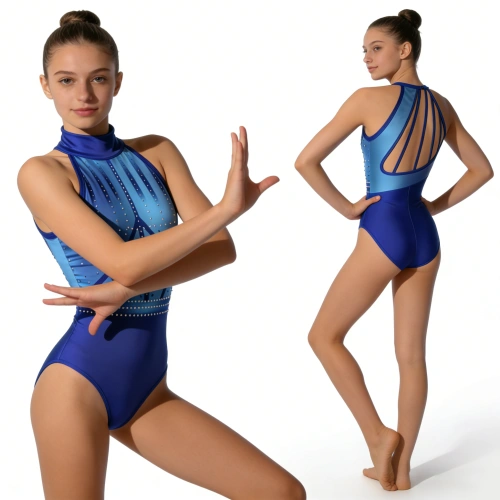
Because gymnasts grow quickly, measurements should be taken close to the time of purchase or production. For custom team orders, T&J Sportswear can support sizing systems that include individual measurements, size charts, and sample fitting. The company has served customers in more than 36 countries, giving it practical experience with different sizing systems and market preferences.
The fabric determines how a leotard feels, stretches, breathes, and lasts. T&J Sportswear uses materials such as Lycra, Spandex, Polyester, Mystique, and Mesh, depending on the design and application. Each fabric offers different benefits. Lycra and Spandex provide excellent stretch and recovery, helping the leotard move with the body. Polyester adds durability, color retention, and moisture management. Mystique offers a shiny, eye-catching finish often used in competition leotards. Mesh adds breathability and visual interest, especially in back panels, sleeves, and side inserts. For training leotards, the priority is usually a soft hand feel, four-way stretch, breathability, and durability. A fabric that is too stiff may restrict movement. A fabric that is too thin may lack coverage or wear out quickly. A fabric that does not recover may sag or lose shape after repeated use. T&J Sportswear pays close attention to fabric selection and pattern development, helping ensure that the final garment supports the athlete rather than distracting her.
Fabric alone does not create a comfortable leotard. Construction matters just as much. Seams should be smooth, flat, and placed to avoid irritation. Stitching should be secure but flexible, allowing the garment to stretch without breaking. The gusset, leg openings, armholes, neckline, and back design all affect comfort and coverage. A well-constructed training leotard often uses flatlock seams, stretch binding, or soft elastic to reduce bulk and chafing. The leg openings should not cut into the hips or thighs. The shoulder straps should stay in place without digging into the shoulders. The neckline should lie flat against the chest without gaping or pulling. T&J Sportswear focuses on cutting, sewing, printing, rhinestone application, quality inspection, and final packaging. This attention to every stage helps create products suitable for both demanding training sessions and high-level competitions.
Although both types of leotards must fit well, their design priorities differ. Training leotards are worn many times per week. They need to withstand sweat, stretching, washing, and repeated wear. Comfort, breathability, and durability are therefore paramount. Competition leotards are often worn for shorter periods but must create a polished, dramatic look. They may include rhinestones, crystals, sublimation printing, mesh panels, and precise decorative placement. T&J Sportswear develops both categories. For practice leotards, the company focuses on comfort, stretch, breathability, and durability. For competition leotards, it emphasizes precision fit, secure coverage, decorative details, and professional finishing. A gymnast may prefer a softer, simpler training leotard for daily practice and a more structured, embellished leotard for competition. Understanding these differences helps coaches and parents choose the right fit for the right purpose.
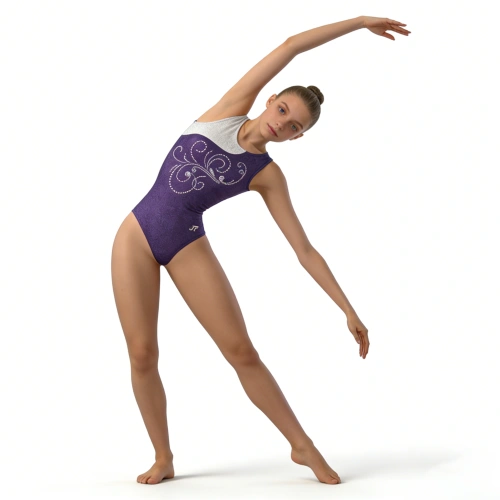
Gymnastics apparel is sold around the world, and sizing systems vary. A size small in one market may not match a size small in another. T&J Sportswear works with customers in the US, Europe, and other international markets. This international experience helps the company understand different body types, size charts, and fit preferences. For custom team leotards, the company can develop patterns based on a club's own size chart or individual measurements. For brands and wholesalers, T&J Sportswear can follow existing size specifications or help refine them for better fit. Low MOQ starting from 10 sets for selected products gives gymnastics clubs, new brands, boutique retailers, and smaller distributors flexibility when testing new designs or launching new collections. Instead of committing to large quantities before knowing how a design will perform, customers can start smaller and grow gradually.
Many gymnastics clubs want team leotards that reflect their colors, logo, and spirit. Custom team leotards can be designed for training, competition, or both. T&J Sportswear offers OEM and ODM services, allowing customers to produce their own designs or develop new products together with the company's design team. Customization can cover artwork, colors, sublimation printing, logos, rhinestone layouts, fabric combinations, sizes, labels, packaging, and other details. For training leotards, clubs may choose durable fabrics, comfortable cuts, and simple but attractive color blocking. For competition leotards, they may add rhinestones, crystals, mesh, and elaborate sublimation graphics. T&J Sportswear's in-house design team can help transform ideas, sketches, reference images, or color requirements into finished gymnastics apparel. This integrated approach reduces the need to coordinate multiple suppliers and creates a more efficient path from concept to finished product.
Rhinestone gymnastics leotards are popular for competitions, but decoration must not compromise comfort. Heavy or poorly placed stones can scratch the skin, add weight, or restrict stretch. T&J Sportswear pays attention to rhinestone application as part of its production process. Stones should be securely attached and placed where they do not interfere with movement. For training leotards, decoration is usually minimal. A small logo, a contrast trim, or a simple print may be enough. For competition leotards, more elaborate decoration can be used, but fit and coverage remain essential. A beautiful leotard that does not stay in place or feels uncomfortable will not help the athlete perform. T&J Sportswear balances visual appeal with function, ensuring that decoration supports the overall design rather than undermining it.
Coverage is a sensitive but important part of leotard fit. Gymnasts and parents often worry about whether a leotard will stay in place during stretches, splits, and inversions. A well-fitting training leotard should provide secure coverage at the chest, seat, and leg openings. This depends on pattern design, fabric stretch, and size selection. Higher leg cuts may be fashionable, but they can also feel less secure for some athletes. Lower or moderate leg cuts may offer more coverage and comfort. T&J Sportswear understands that different customers have different preferences. The company can develop products based on customer designs, sketches, reference images, or original ideas. This flexibility allows clubs and brands to choose the coverage level that suits their athletes. When a gymnast feels secure in her leotard, she can focus on her performance rather than adjusting her clothing.

Even with careful measurement, fitting problems can occur. Recognizing them early helps customers choose better sizes or adjust designs. Common issues include:
T&J Sportswear's design and production teams can assist with product optimization. During sample development, customers can review the design, fabric, fit, decoration, and finishing before confirming mass production. This step helps identify and solve fitting issues before bulk production begins.
Quality control is essential for consistent fit and comfort. T&J Sportswear starts quality control before bulk production. Samples are developed and reviewed for design, fabric, fit, decoration, and finishing. For finished garments, inspection points can include fabric condition, printing quality, stitching, measurements, rhinestone placement, coverage, and overall appearance. The production process is designed to reduce common problems such as inconsistent sizing, printing defects, loose decoration, or uneven finishing. T&J Sportswear's product information lists certifications such as ISO9001, SGS, and CE for applicable products. Specific certification and testing documentation can be provided according to the product and customer requirements. This commitment to quality helps ensure that each training leotard meets the expectations of gymnasts, coaches, and buyers.
T&J Sportswear's factory team includes more than 30 skilled workers, with reported production capacity of more than 300 leotards per day. This provides a balance between flexible customization and the ability to support larger wholesale and team orders. For customers, production capacity is not simply about quantity. The real value is the ability to maintain consistent workmanship when moving from samples to bulk production. The company pays attention to fabric, printing, stitching, sizing, rhinestone placement, and overall finishing throughout production. Whether a gymnastics club needs a small customized team order or a distributor requires regular wholesale production, T&J Sportswear aims to deliver quality gymnastics apparel with consistent workmanship and dependable service.
Training comfort extends beyond the leotard. Gymnastics warm-up wear helps athletes stay warm, focused, and ready to perform. T&J Sportswear also provides custom gymnastics warm-ups and matching team apparel. Team colors, logos, patterns, labels, packaging, and other details can be customized according to customer requirements. A complete team collection might include training leotards, competition leotards, warm-up jackets, pants, and bags. Coordinated apparel helps a club look professional and unified. It also allows athletes to transition comfortably between warm-up and training. For brands and distributors, a complete collection can create stronger product offerings and a more cohesive identity. T&J Sportswear supports OEM and ODM services from design development and sample making to bulk production, making it easier to develop a full range of gymnastics apparel.
Low MOQ is a practical advantage for many customers. T&J Sportswear offers low MOQ starting from 10 sets for selected products. This gives gymnastics clubs, new brands, boutique retailers, and smaller distributors greater flexibility when testing new designs or launching new collections. Instead of ordering large quantities before knowing how a fit or style will perform, customers can start with a smaller order, gather feedback, and then scale up. This approach is especially useful for custom team leotards, where a club may want to test a new size chart or fabric before committing to a full season. It also helps new brands enter the market without excessive inventory risk. T&J Sportswear combines low MOQ with competitive pricing, professional communication, and one-to-one service, making custom gymnastics apparel more accessible.
Customization is at the center of T&J Sportswear's manufacturing service. The company supports both OEM and ODM. OEM allows customers to produce their own designs. ODM allows customers to develop new products together with the company's design team. Customization can cover artwork, colors, sublimation printing, logos, rhinestone layouts, fabric combinations, sizes, labels, packaging, and other details. The production process covers design development, fabric selection, digital artwork, printing, cutting, sewing, decoration, inspection, packaging, and delivery. This integrated approach helps reduce communication between multiple suppliers and gives customers a more efficient path from an initial idea to a finished product. For gymnastics clubs, this means team uniforms can be tailored to their identity. For brands, it means collections can be developed with professional support. For distributors, it means product ranges can be expanded with reliable manufacturing.
Manufacturing quality is only one part of a successful supplier relationship. Clear communication and responsive service are equally important, especially for customized gymnastics apparel. From initial inquiry and design development to sampling, production, inspection, and shipment, T&J Sportswear provides professional support throughout the process. Customers can communicate their requirements directly and receive assistance with product development, customization, production details, and logistics. This one-to-one service helps reduce misunderstandings and keeps projects on track. For clubs and brands that are new to custom manufacturing, the process can seem complex. A responsive supplier can guide them through fabric choices, size charts, sample approvals, and production timelines. T&J Sportswear aims to be that kind of partner, offering reliable products and responsive service.
Proper care helps a training leotard maintain its fit, stretch, and appearance. Gymnasts and parents should follow the care instructions provided with the garment. In general, leotards should be washed in cold water, preferably by hand or on a gentle cycle. Harsh detergents, bleach, and fabric softeners can damage stretch fibers and decorations. Rhinestones and prints should be protected from rough surfaces and high heat. Air drying is usually better than tumble drying, as heat can break down elastic fibers. Leotards should be stored flat or hung carefully to avoid stretching. Rotating between several training leotards can also extend their lifespan. When a leotard is cared for properly, it retains its shape, support, and comfort for longer. T&J Sportswear selects fabrics and construction methods intended to provide durability for everyday training, but proper care remains important.
Gymnastics clubs can improve fit and comfort by developing a clear sizing strategy. This may include regular measurement days, a trial sample process, and feedback from athletes and coaches. Clubs can work with a manufacturer like T&J Sportswear to create custom size charts based on their own athletes. They can also choose fabrics and cuts that suit their training environment. For example, a club in a warm climate may prioritize breathability and moisture management. A club with many growing athletes may prefer fabrics with high stretch and recovery. A club that trains intensively may choose durable construction and reinforced stitching. By considering these factors, clubs can order training leotards that support their athletes throughout the season. T&J Sportswear's experience with customers in more than 36 countries helps it understand different needs and preferences.
For brands and distributors, fit is a powerful selling point. Customers remember apparel that feels comfortable and stays in place. A gymnastics brand that offers reliable sizing and supportive training leotards can build trust and loyalty. T&J Sportswear supports brands and distributors with OEM and ODM services, low MOQ, competitive pricing, and professional communication. The company can develop products based on designs, sketches, reference images, color requirements, or original ideas. It can also assist with artwork development and product optimization. This support helps brands turn concepts into finished gymnastics apparel. Distributors can expand their product range with training leotards, competition leotards, rhinestone leotards, and warm-up wear. By focusing on fit, comfort, and support, brands and distributors can differentiate themselves in a competitive market.
Sample approval is a critical step in creating well-fitting training leotards. Before bulk production, T&J Sportswear develops samples for customer review. During this stage, customers can check the design, fabric, fit, decoration, and finishing. They can test the sample on an athlete or compare it to an existing size chart. If adjustments are needed, the company can modify the pattern, fabric, or construction. This process helps avoid costly mistakes in bulk production. It also ensures that the final leotards meet expectations for comfort and support. For custom team leotards, sample approval allows coaches and athletes to provide feedback before the full order is produced. For new brands, it provides confidence that the product will fit the target market. T&J Sportswear's professional design team can assist with artwork development and product optimization during this stage.
Stretch and support may seem like opposites, but they must work together in a training leotard. Too much stretch without support can cause the garment to feel loose or unstable. Too much support without stretch can restrict movement and cause discomfort. The ideal balance depends on the fabric, pattern, and intended use. Four-way stretch fabrics allow the leotard to move in multiple directions. Strategic seam placement can provide structure without limiting motion. Elastic bindings can keep openings secure without digging in. T&J Sportswear pays attention to fabric selection and garment construction. For training leotards, the company focuses on comfortable stretch, durability, moisture management, and everyday wear. For competition leotards, it emphasizes precision fit, secure coverage, decorative details, and professional finishing. This thoughtful approach helps athletes feel supported and free to move.
Athletes notice fit immediately. A leotard that stays in place allows them to concentrate on skills. A leotard that breathes keeps them cooler during long practices. A leotard that feels soft reduces distraction. A leotard that provides coverage builds confidence. These small details add up to better training experiences. Coaches also benefit when athletes are not constantly adjusting their apparel. Parents appreciate garments that last and maintain their shape. Clubs appreciate uniforms that look professional and fit consistently. T&J Sportswear understands that gymnastics apparel needs to combine comfort, flexibility, durability, fit, and visual appeal. The company's production team pays attention to every stage of manufacturing, from fabric selection and pattern development to cutting, sewing, printing, rhinestone application, quality inspection, and final packaging. This comprehensive approach helps create products suitable for both demanding training sessions and high-level competitions.
Fit preferences can vary by country and culture. Some markets prefer a tighter, more compressive fit. Others prefer a softer, more relaxed feel. Some clubs prefer higher leg cuts, while others prefer more coverage. T&J Sportswear works with gymnastics clubs, teams, brands, wholesalers, distributors, and other sportswear businesses, with a strong focus on customers in the US, Europe, and other international markets. This international experience helps the company adapt to different requirements. The company can develop products based on customer designs, sketches, reference images, color requirements, or original ideas. It can also provide guidance on sizing systems and fabric choices. By understanding local preferences, T&J Sportswear helps customers create training leotards that fit their athletes and their market.
Comfort and support must last. A training leotard is an investment for athletes, clubs, and brands. Cheaply made garments may lose shape, fade, or develop holes after a few washes. Well-made garments retain their fit and appearance for much longer. T&J Sportswear focuses on stable workmanship and carefully inspects finished products before shipment. The company uses quality fabrics and construction methods intended to withstand frequent use. For training leotards, durability is especially important because they are worn so often. Reinforced stitching, quality elastic, and colorfast fabrics help extend the life of the garment. When customers choose a reliable manufacturer, they receive better long-term value. T&J Sportswear's goal is not only to manufacture gymnastics apparel but also to build long-term partnerships through reliable products and responsive service.
Training leotards can be customized in many ways. Clubs and brands can choose colors, patterns, logos, and prints. They can select fabrics that prioritize breathability, stretch, or durability. They can choose necklines, back styles, sleeve lengths, and leg cuts. They can add names, numbers, or team slogans. They can also customize labels, packaging, and hangtags. T&J Sportswear supports OEM and ODM services and can develop products based on customer designs, sketches, reference images, color requirements, or original ideas. The company's professional design team can assist with artwork development and product optimization. For training leotards, customization should not compromise comfort. Decoration should be placed carefully to avoid irritation. Prints should be flexible and durable. Logos should be integrated into the design rather than added as an afterthought. T&J Sportswear helps customers balance creativity with comfort.
Not all sportswear manufacturers understand gymnastics. Gymnastics apparel has unique requirements for stretch, fit, coverage, durability, decoration, and freedom of movement. T&J Sportswear has more than 10 years of experience in gymnastics apparel manufacturing, with a strong focus on competition and training leotards. Unlike general sportswear suppliers, the company understands the specific needs of gymnasts. It has served customers in more than 36 countries and works with clubs, teams, brands, wholesalers, and distributors. Its main products include competition gymnastics leotards, practice gymnastics leotards, custom team leotards, rhinestone gymnastics leotards, and gymnastics warm-up wear. This specialization allows T&J Sportswear to provide informed guidance on fit, fabric, and construction. For customers seeking a dependable gymnastics apparel manufacturing partner, specialization can make a significant difference.
Fitting a training leotard can be approached step by step. First, measure the athlete carefully using a soft tape. Record torso, bust, waist, hips, and leg measurements. Second, compare the measurements to the manufacturer's size chart. If the athlete is between sizes, consider the fit preference. A tighter fit may be chosen for competition, while a slightly more relaxed fit may be preferred for training. Third, check the fabric content and stretch. Four-way stretch fabrics generally provide better comfort and movement. Fourth, review the construction. Flat seams, soft bindings, and secure stitching reduce irritation. Fifth, try the leotard on and perform basic movements such as arm circles, bends, squats, and splits. The leotard should stay in place without pulling or digging. Sixth, check coverage at the chest, seat, and leg openings. Seventh, wash and wear the leotard according to care instructions. If problems occur, contact the manufacturer or retailer for guidance. T&J Sportswear can support clubs and brands with sizing advice and sample development.
T&J Sportswear supports custom fit programs through design, sampling, and production. The company can develop products based on a club's size chart or individual measurements. It can create samples for fit approval before bulk production. It can adjust patterns, fabrics, and construction based on feedback. It can also provide guidance on colors, prints, logos, and decoration. For brands, T&J Sportswear can help develop a size range that appeals to the target market. For distributors, it can produce consistent sizes across multiple orders. For clubs, it can create team leotards that fit a wide range of body types. This flexibility is supported by the company's professional design team and experienced production staff. With more than 30 skilled workers and reported production capacity of more than 300 leotards per day, T&J Sportswear can handle both small custom orders and larger wholesale projects.
Many customers have questions about training leotard fit. Should a training leotard be tight or loose? It should be snug and supportive, not restrictive. How much stretch is enough? The fabric should stretch comfortably with movement and recover its shape. How often should measurements be taken? At least once per season, or more often for growing athletes. What if the athlete is between sizes? Consider the fabric, cut, and intended use. A slightly larger size may be more comfortable for training. What if the leotard rides up? Check the torso measurement and consider a different pattern or fabric. What if the straps dig in? Check the shoulder-to-crotch length and strap design. Can training leotards be customized? Yes. T&J Sportswear offers OEM and ODM services with customization for colors, logos, prints, fabrics, sizes, labels, and packaging. Can small orders be produced? Yes. Low MOQ starts from 10 sets for selected products. These answers help customers make informed decisions.
Comfort and support are not solely the responsibility of the manufacturer. Athletes, parents, coaches, and buyers all play a role. Athletes should communicate how the leotard feels during movement. Parents should measure carefully and follow care instructions. Coaches should consider fit when selecting team apparel. Buyers should work with manufacturers that understand gymnastics-specific requirements. T&J Sportswear contributes by focusing on product development, fabric selection, pattern development, cutting, sewing, printing, rhinestone application, quality inspection, and final packaging. The company aims to provide products that combine comfort, flexibility, durability, fit, and visual appeal. When all parties work together, the result is a training leotard that supports the athlete and enhances the training experience.
The future of training leotard fit will likely involve more customization, better fabrics, and more precise sizing. Advances in stretch fabrics, moisture management, and seamless construction may improve comfort further. Digital design tools and sublimation printing allow for greater personalization. Brands and clubs may increasingly request custom size charts and fit samples. T&J Sportswear is positioned to support these trends through its in-house design team, OEM and ODM services, low MOQ, and experienced production capabilities. The company's focus on quality and consistency helps ensure that customers receive reliable products. As gymnastics continues to grow worldwide, the demand for well-fitting training leotards will remain strong. Manufacturers that understand the sport and prioritize comfort will be best equipped to serve athletes and organizations.
Fitting a training gymnastics leotard for comfort and support requires attention to measurement, fabric, construction, and movement. A well-fitted leotard helps a gymnast train with confidence, focus, and freedom. A poorly fitted leotard can cause distraction, discomfort, and limited performance. T&J Sportswear, with more than 10 years of specialized experience, 36+ countries served, 30+ skilled workers, 300+ daily leotard capacity, low MOQ, professional design support, OEM/ODM customization, and one-to-one service, is committed to being a dependable gymnastics apparel manufacturing partner. Whether a customer is a gymnastics club developing team uniforms, a new brand launching a collection, a distributor expanding a product range, or an established buyer seeking reliable production, T&J Sportswear provides flexible solutions. From the first idea to the final leotard, the company aims to make custom gymnastics apparel more efficient, flexible, and reliable. Comfort and support begin with fit, and fit begins with understanding the athlete, the sport, and the details that matter.
