Gymnastics leotard care is essential for preserving stretch, fit, color, decoration, and hygiene. Leotards are performance garments made from Lycra, Spandex, Polyester, Mystique, Mesh, and other technical fabrics. These materials are sensitive to heat, harsh chemicals, rough agitation, and improper drying. Athletes, parents, coaches, and team managers should treat every leotard as equipment, not ordinary clothing. The most important habits are simple: read the care label, wash after every wear, use cold water, choose a mild detergent, avoid bleach and fabric softener, and never use a tumble dryer. Hand washing is the safest method, especially for competition leotards with rhinestones, crystals, foil, or mesh. If machine washing is allowed, use a delicate cycle, a mesh laundry bag, and low spin. Drying should always be done by air, laid flat or hung carefully away from direct sun and heat. Storage should be dry, breathable, and away from Velcro, zippers, and heavy pressure. Rhinestone leotards need extra attention: wash inside out, do not soak, do not wring, and inspect stones regularly. Chalk, sweat, lotion, oil, and hair products should be removed promptly. Stains should be treated gently with cold water and mild products, never with harsh solvents. Odor is best controlled through thorough washing and occasional vinegar rinses, not bleach or softener. Rotating leotards reduces wear and extends each garment's life. Teams benefit from clear care checklists, repair kits, and consistent washing routines. T&J Sportswear, a professional gymnastics apparel manufacturer with more than 10 years of experience, emphasizes quality in fabric selection, cutting, sewing, printing, rhinestone application, inspection, and packaging. Its products include competition leotards, practice leotards, custom team leotards, rhinestone leotards, and warm-up wear. The company serves clubs, teams, brands, wholesalers, and distributors in the US, Europe, and other international markets, offering OEM and ODM services, low MOQ from 10 sets for selected products, 30+ skilled workers, and 300+ leotards daily capacity. Good manufacturing and good care work together. By following gentle washing, careful drying, smart storage, and regular inspection, athletes and teams can keep leotards looking professional, feeling comfortable, and performing well for many seasons.
A gymnastics leotard is more than a uniform. It is a piece of performance equipment that must stretch, recover, cover, breathe, and often shine under pressure. Whether an athlete wears a practice leotard for daily training or a rhinestone competition leotard for a championship meet, the way that garment is washed, dried, stored, and handled can determine whether it lasts for a few months or several competitive seasons. Proper care protects fabric elasticity, preserves decoration, reduces odor, and helps teams and families get better value from every purchase.
From the perspective of T&J Sportswear, a professional gymnastics apparel manufacturer with more than 10 years of experience, leotard care begins long before the first wash. It starts with fabric selection, pattern development, cutting, sewing, printing, rhinestone application, quality inspection, and final packaging. T&J Sportswear specializes in competition gymnastics leotards, practice gymnastics leotards, custom team leotards, rhinestone gymnastics leotards, and gymnastics warm-up wear. The company works with gymnastics clubs, teams, brands, wholesalers, distributors, and other sportswear businesses, with a strong focus on customers in the US, Europe, and other international markets. That manufacturing knowledge offers useful lessons for athletes, coaches, parents, and team managers who want every leotard to look better and last longer.
Gymnastics apparel must combine comfort, flexibility, durability, fit, and visual appeal. A leotard stretches in every direction during vault, bars, beam, and floor. It absorbs sweat, chalk dust, body oils, and sometimes lotion or hair products. It may be pulled on and off quickly in a busy gym, stuffed into a gym bag, and washed repeatedly. Without careful handling, even a high-quality leotard can lose its shape, develop pilling, fade, snag, or suffer loose rhinestones.
undefined
Care matters because modern leotards are engineered garments. They use Lycra, Spandex, Polyester, Mystique, Mesh, and other performance materials. Each fabric has different strengths and different sensitivities. A washing method that works for a cotton T-shirt may be too harsh for a competition leotard with mesh panels, foil finish, or crystal decoration. A drying method that is convenient for everyday clothing may destroy the stretch and shine of a gymnastics leotard.
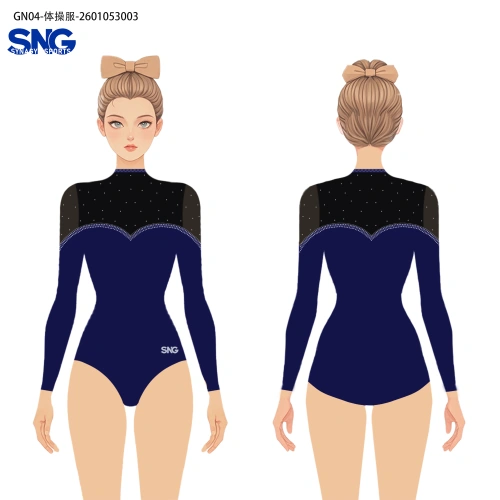
Care also matters for hygiene. Sweat and skin cells remain in fabric after training. If a leotard is worn again before it is properly cleaned, bacteria can multiply, causing odor and potentially irritating sensitive skin. Regular gentle washing is therefore not only about appearance. It is part of athlete comfort and gym hygiene.
T&J Sportswear pays close attention to fabric selection because different products have different priorities. Some designs require maximum stretch. Others need lightweight construction, breathability, quick drying, comfort, durability, or visual impact. The same care principles apply broadly, but athletes and teams should understand the main fabric types found in gymnastics leotards.
Lycra and Spandex are elastic fibers that give leotards their stretch and recovery. They allow a gymnast to move freely without the garment sagging or restricting motion. These fibers are sensitive to heat, harsh chemicals, and excessive agitation. Hot water and high dryer heat can break down elasticity over time. Bleach and fabric softener can also damage the fibers or leave residues that reduce stretch. Cold water and gentle washing are the best defense.
Polyester is durable, colorfast, and often used in sublimated designs and practice leotards. It resists stretching out and dries relatively quickly. However, polyester can hold odors if sweat and oils are not washed away thoroughly. It can also pill or snag if washed with rough items such as Velcro, zippers, or hooks. Turning the leotard inside out and using a mesh laundry bag can reduce abrasion.
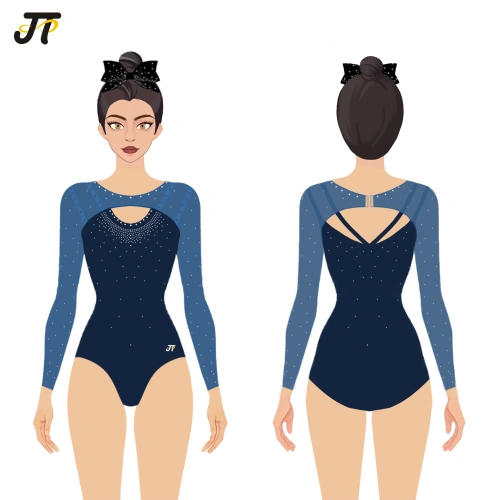
Mystique and similar foil or metallic fabrics create a shiny, dramatic look for competition leotards. They are especially vulnerable to heat, friction, and harsh detergents. The metallic surface can crack, dull, or flake if exposed to high dryer temperatures or rough washing. Hand washing in cold water and air drying flat are strongly recommended for these fabrics.
Mesh panels add breathability and visual texture, but mesh can snag easily. It should be kept away from hooks, zippers, and rough surfaces. When washing, place mesh leotards in a fine mesh laundry bag or wash them by hand. Avoid twisting or wringing mesh, because the open structure can distort.
The care label is the most important guide for any leotard. It may recommend hand wash cold, do not bleach, do not tumble dry, do not iron, or do not dry clean. These instructions are not generic warnings. They reflect the specific fabric blend, decoration, and construction of that garment.
Before a leotard is worn for the first time, athletes, parents, or team managers should read the label and record any special requirements. Competition leotards with rhinestones, crystals, metallic foil, or mesh may need different care than a basic practice leotard. Custom team leotards may include printed logos, sublimation graphics, labels, or special packaging. T&J Sportswear can customize team colors, logos, patterns, labels, packaging, and other details, so teams should also ask their supplier for care recommendations when they place a custom order.

Gymnastics leotards should generally be washed after every wear. Sweat, body oils, chalk, and bacteria can weaken fibers and cause odor if left in the fabric. However, frequent washing must be balanced with gentle handling. The goal is to remove residue without damaging stretch, color, or decoration.
Hand washing is the safest method for most gymnastics leotards, especially competition and rhinestone styles. Fill a clean sink or basin with cold water and a small amount of mild detergent. Submerge the leotard and gently squeeze the water through the fabric. Do not scrub, twist, or wring. Pay attention to areas that contact sweat and chalk, such as the underarms, neckline, and leg openings. Rinse thoroughly with cold water until no soap remains.
Some practice leotards may tolerate machine washing on a delicate cycle, but only if the care label allows it. Use cold water, a gentle cycle, and a low-spin setting. Place the leotard inside a fine mesh laundry bag to protect it from snags. Wash it with similar lightweight items, never with towels, jeans, or garments that have Velcro, zippers, or hooks. Avoid overloading the machine. When in doubt, hand wash.
Mild liquid detergent designed for delicate fabrics is usually the best choice. It should be free of bleach, brighteners, and harsh enzymes that can damage elastic fibers or fade colors. Fabric softener should be avoided completely. It coats fibers, reduces stretch, and can leave a residue that traps odor. Bleach and chlorine bleach are too aggressive for Lycra, Spandex, Mystique, and most decorated leotards.
If a leotard has stubborn odors, a small amount of white vinegar can be added to the rinse water. For stains, a gentle enzyme cleaner or a tiny amount of mild dish soap may help, but it should be tested on a hidden area first. Harsh stain removers, acetone, alcohol, and solvent-based products should not be used unless the manufacturer specifically approves them.
Cold water protects color and elasticity. Hot water can shrink, fade, or weaken stretch fibers. Even warm water is unnecessary for most leotards. A short wash cycle is better than a long soak. Leaving a leotard to soak for hours can allow dyes to bleed, weaken adhesives, and damage rhinestone glue. Five to ten minutes of gentle agitation in cold water is usually enough for hand washing.
For teams washing many leotards, it is better to wash each garment separately or in small groups of similar colors. Dark colors can bleed onto light colors, especially during the first few washes. Red, black, navy, and bright neon dyes are common in gymnastics apparel and may release excess dye. Washing separately reduces the risk of color transfer.
After washing, rinse the leotard thoroughly with cold water. Soap residue can attract dirt, irritate skin, and dull fabric. Do not wring or twist the leotard to remove water. Instead, gently press the water out with clean hands. A clean towel can be used to absorb excess moisture: lay the leotard flat on the towel, roll the towel gently, and press. Avoid rubbing the fabric against itself.
For rhinestone leotards, extra care is needed. Do not press directly on the stones. Turn the garment inside out if possible and support the decorated area with a towel. Loose stones should be set aside for repair rather than washed further.
Air drying is the best method for every gymnastics leotard. Lay the leotard flat on a clean, dry towel or a drying rack. If hanging, use a padded hanger or hang by the waistband rather than the straps, because wet fabric is heavier and can stretch out of shape. Avoid direct sunlight for long periods, since UV rays can fade colors and weaken elastic fibers.
Never use a tumble dryer. High heat damages Lycra, Spandex, Mystique, mesh, and rhinestone adhesive. Even low heat can cause shrinkage or cracking over time. If a leotard must be dried quickly, use a fan or a cool setting on a hair dryer held far away from the fabric. Patience is safer than speed.
Proper storage protects leotards between practices and seasons. Leotards should be completely dry before storage. Damp fabric can develop mildew, odor, and dye transfer. Fold leotards loosely or hang them on padded hangers. Avoid compressing rhinestone leotards under heavy items, because pressure can loosen stones or distort the fabric.
Keep leotards away from rough surfaces, sharp edges, and direct contact with Velcro. Velcro is one of the most common causes of snags in gymnastics apparel. If a gym bag has Velcro closures, place leotards in a separate pouch or inside a clean garment bag. For long-term storage, use a breathable cotton bag or a clean pillowcase rather than airtight plastic, which can trap moisture and odor.
Rhinestone gymnastics leotards are often the most expensive and most delicate items in a gymnast's wardrobe. T&J Sportswear combines performance fabrics with creative designs, sublimation printing, rhinestones, and other decorative techniques. The company pays close attention to fabric selection, cutting, stitching, embellishment, and finishing to create eye-catching leotards that allow athletes to move confidently during competition. Proper care helps preserve that craftsmanship.
Rhinestones should never be exposed to high heat, harsh chemicals, or rough agitation. Hand wash rhinestone leotards in cold water, inside out if possible. Do not soak them. Do not wring or scrub the decorated areas. After washing, lay the leotard flat to dry with the decorated side up, away from direct heat. If a stone becomes loose, remove it carefully and store it for repair. Do not wear a damaged rhinestone leotard in competition until it is repaired, because a missing stone can affect the overall look and may indicate weak adhesive elsewhere.
Chalk dust is part of gymnastics, but it can clog fabric and dull colors if left in place. After practice, shake the leotard gently outdoors or over a trash bin to remove loose chalk. Do not brush aggressively, because chalk particles can abrade the fabric. Wash the leotard soon after to remove remaining chalk and sweat.
Body products can also damage leotards. Lotions, oils, deodorants, perfumes, and hairspray can stain fabric, weaken elastic, and leave residue that attracts dirt. Athletes should apply lotion, sunscreen, and hair products before putting on the leotard, or wait until after the leotard is removed. If a product does contact the leotard, rinse the area with cold water as soon as possible.
Stains should be treated quickly. For sweat, deodorant, or lotion stains, rinse with cold water and a small amount of mild detergent. For oil-based stains, a tiny drop of gentle dish soap can be applied with a soft cloth, then rinsed thoroughly. For blood stains, cold water is essential; hot water can set the stain. For ink or dye stains, do not use harsh solvents without professional advice, because they can damage the fabric and decoration.
Always test any stain treatment on an inside seam or hidden area first. Use a white cloth, not a colored one, to avoid dye transfer. Blot, do not rub. Rubbing can spread the stain and create pilling or snags. If a stain cannot be removed safely, a professional cleaner who specializes in delicate performance wear may be consulted, but dry cleaning is not always safe for gymnastics leotards. The care label should be the final authority.
Odor in gymnastics leotards usually comes from bacteria that feed on sweat and body oils. The best odor control is thorough washing after every wear. For persistent odors, add half a cup of white vinegar to the rinse water. Vinegar helps neutralize odor without damaging most performance fabrics. Baking soda can also be added to the wash water for gentle deodorizing, but it should be fully dissolved and rinsed away.
Do not use chlorine bleach to remove odor. It can weaken fibers, fade colors, and damage rhinestone adhesive. Do not use fabric softener to mask odor. It can trap bacteria and reduce stretch. If a leotard still smells after washing, it may need a second gentle wash or a longer airing period. Persistent odor may also indicate that sweat has penetrated deep into the fabric, so a gentle enzyme cleaner formulated for activewear may help.
Even the best-made leotard benefits from rotation. Wearing the same leotard every day causes more frequent washing, stretching, and friction. A rotation of three to five practice leotards allows each garment to rest and recover its shape. It also reduces the risk of a favorite leotard wearing out before an important competition.
For teams, rotation can be organized by color, style, or training day. Practice leotards focus on comfort, stretch, breathability, and durability for everyday training. T&J Sportswear offers a wide range of colors, patterns, and styles, with customized designs available for gymnastics clubs and teams. A team with a larger practice rotation can reduce laundry pressure and extend the life of each leotard.
Competition day care requires planning. Pack leotards in a clean garment bag or a separate pouch away from shoes, snacks, hair products, and makeup. Bring a small care kit with stain wipes, a clean towel, and a breathable bag for used leotards. After competition, do not leave a sweaty leotard in a plastic bag for hours. If washing is not immediately possible, air it out and wash it as soon as possible.
For travel, roll leotards loosely rather than folding them tightly. Rolling reduces hard creases and pressure on rhinestones. Place rhinestone leotards in a separate soft pouch. If the leotard becomes damp, allow it to dry completely before packing it away. Warm, damp conditions are ideal for odor and mildew.
Regular inspection can catch small problems before they become major. Check seams, straps, leg openings, and decorative areas after every few washes. Loose threads should be trimmed carefully with small scissors, not pulled. Loose rhinestones should be repaired with a suitable fabric adhesive recommended by the manufacturer or a professional seamstress. Hooks, snaps, and closures should be checked for sharp edges that can snag fabric.
For custom team leotards, keep a repair kit in the team room. Matching thread, spare stones, and small needles can extend the life of uniforms during a long season. T&J Sportswear supports OEM and ODM services and can develop products based on customer designs, sketches, reference images, color requirements, or original ideas. Teams ordering custom uniforms can ask about care and repair recommendations at the same time.
Gymnastics clubs and teams often manage dozens of leotards at once. A clear care routine helps protect the investment. Coaches and team managers should establish washing guidelines, storage rules, and repair procedures. Athletes should be taught to turn leotards inside out, use mesh bags, avoid Velcro, and never leave sweaty garments in a shared bag.
For competition teams, it may be useful to create a leotard care checklist. The checklist can include: wash after every wear, use cold water, use mild detergent, no bleach, no fabric softener, no dryer, air dry flat, store away from Velcro, and inspect rhinestones before each competition. This simple routine can prevent many common problems, including inconsistent sizing, printing defects, loose decoration, and uneven finishing.
T&J Sportswear understands that different customers have different order requirements. Whether a growing gymnastics club needs customized team uniforms, a new brand is developing its first collection, or an established distributor requires regular production, the company provides flexible solutions with low MOQ, competitive pricing, professional communication, and one-to-one service. Low MOQ starting from 10 sets for selected products gives clubs and new brands flexibility when testing new designs or launching new collections.
Gymnastics warm-up wear also needs care. Warm-ups are often made from different fabrics than leotards, including polyester, spandex blends, or fleece. They can usually tolerate slightly more frequent washing, but the same principles apply: cold water, mild detergent, no bleach, no fabric softener, and air drying when possible. Zippers should be closed before washing to prevent snags. Warm-up jackets and pants should be washed separately from rhinestone leotards.
For customers looking to build a complete team collection, T&J Sportswear also provides custom gymnastics warm-ups and matching team apparel. Team colors, logos, patterns, labels, packaging, and other details can be customized according to requirements. A consistent care routine for the entire team collection helps maintain a professional appearance throughout the season.
After every practice: shake out chalk, air the leotard, and wash it in cold water with mild detergent. Rinse thoroughly and air dry flat. After every competition: inspect rhinestones, seams, and straps. Repair any loose decoration before the next event. Weekly: check the team leotard supply for odor, stains, or damage. Monthly: review washing supplies, replace worn mesh bags, and restock gentle detergent. Seasonal: deep clean storage areas, inspect all leotards, and separate items that need repair or replacement.
This routine does not require expensive products. It requires consistency. Small habits, repeated over time, make the biggest difference in how long a leotard lasts.
Care is easier when a leotard is well made. T&J Sportswear has more than 10 years of experience in gymnastics apparel manufacturing, with a strong focus on competition and training leotards. Unlike general sportswear suppliers, the company understands the specific requirements of gymnastics apparel, including stretch, fit, comfort, coverage, durability, decoration, and freedom of movement. Over the years, its products and services have reached customers in 36+ countries, giving the team practical experience with different markets, customer requirements, sizing systems, and product preferences.
The company has an in-house professional design team specializing in gymnastics apparel. For competition leotards, it can combine sublimation graphics, color blocking, mesh, rhinestones, crystal decoration, and different fabric effects to create distinctive visual designs. Customers can also customize colors, logos, patterns, labels, and other branding elements. The production team includes 30+ skilled workers, with reported production capacity of 300+ leotards per day. This provides a balance between flexible customization and the ability to support larger wholesale and team orders.
Quality control starts before bulk production. During sample development, customers can review the design, fabric, fit, decoration, and finishing before confirming mass production. For finished garments, key inspection points can include fabric condition, printing quality, stitching, measurements, rhinestone placement, coverage, and overall appearance. The production process is designed to reduce common problems such as inconsistent sizing, printing defects, loose decoration, or uneven finishing. Product information also lists certifications such as ISO9001, SGS, and CE for applicable products, with specific certification and testing documentation available according to product and customer requirements.
For athletes and teams, this manufacturing quality translates into leotards that are more likely to survive repeated washing and wearing. A well-constructed seam, securely applied rhinestone, and properly selected fabric can handle gentle care much better than a poorly made garment. Good care and good manufacturing work together.
Extending the life of a gymnastics leotard does not require complicated equipment or expensive treatments. It requires cold water, mild detergent, gentle handling, air drying, smart storage, and attention to decoration. Athletes should wash leotards after every wear, avoid heat and harsh chemicals, protect rhinestones, and rotate their practice wardrobe. Coaches and team managers should set clear care guidelines and inspect team uniforms regularly.
From first idea to final leotard, T&J Sportswear is committed to making custom gymnastics apparel more efficient, flexible, and reliable. With experienced production capabilities, professional design support, flexible customization, and a customer-focused approach, the company aims to be a dependable gymnastics apparel manufacturing partner for customers around the world. For gymnasts, parents, clubs, and teams, the same spirit of care applies: treat every leotard as performance equipment, and it will return the favor with better fit, better appearance, and longer wear.
