The gymnastics leotard manufacturing industry is experiencing significant shifts driven by automation and sustainability. Factories are adopting digital design, automated cutting, sublimation printing, rhinestone application, and data-driven production to improve precision, reduce waste, and maintain consistent quality. At the same time, sustainability is becoming a core requirement, with eco-friendly fabrics, energy and water reduction, circular design, and ethical labor practices gaining importance. T&J Sportswear, a professional gymnastics apparel manufacturer with more than ten years of experience, exemplifies how a specialized factory can balance these trends. The company serves customers in over thirty-six countries, operates with more than thirty skilled workers, and produces over three hundred leotards per day. It offers low MOQ, OEM and ODM customization, in-house design support, and one-to-one service. By combining automation with skilled craftsmanship and sustainable practices, T&J Sportswear helps clubs, teams, brands, and distributors bring high-quality gymnastics apparel to market efficiently and responsibly.
The global gymnastics apparel market is undergoing a profound transformation. Once defined primarily by manual craftsmanship and traditional sewing lines, the modern gymnastics leotard factory is now a complex environment where digital design, automated production, and sustainable practices converge. For manufacturers such as T&J Sportswear, a professional gymnastics apparel manufacturer with more than ten years of experience, these trends are not abstract concepts. They are daily realities that shape how competition leotards, practice leotards, custom team leotards, rhinestone leotards, and gymnastics warm-up wear are developed, produced, and delivered to clubs, teams, brands, wholesalers, and distributors around the world.
This article examines the most important trends in automation and sustainability within gymnastics leotard manufacturing. It explores how factories are integrating advanced technology to improve precision, speed, and consistency. It also considers how environmental responsibility, ethical production, and circular design are becoming central to long-term success. Throughout the discussion, the experience of T&J Sportswear illustrates how a specialized manufacturer can combine automation with skilled craftsmanship, flexible customization, and reliable service.
Gymnastics apparel is unlike general sportswear. A leotard must provide exceptional stretch, secure coverage, freedom of movement, comfort, durability, and visual appeal. It must withstand the demands of intense training and the scrutiny of high-level competition. For this reason, specialized manufacturers have a deep understanding of fabric behavior, pattern engineering, seam construction, and decorative techniques. General sportswear suppliers often lack this focused expertise.
T&J Sportswear has built its reputation on this specialization. With more than ten years of experience in gymnastics apparel manufacturing, the company focuses on competition and training leotards. Its products and services have reached customers in more than thirty-six countries, giving it practical experience with different markets, sizing systems, customer requirements, and product preferences. The main markets include North America and Europe, where buyers place strong emphasis on product quality, customization, consistency, and reliable communication.
undefined
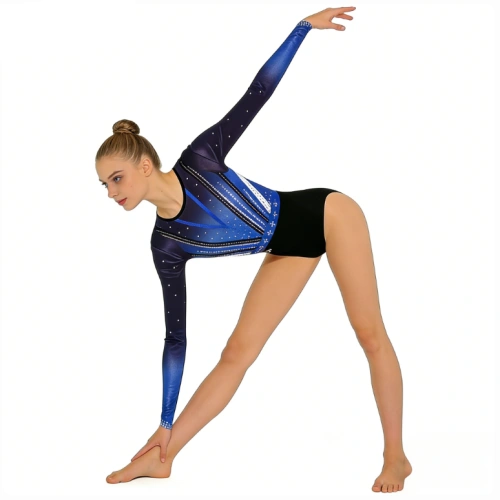
The company operates with a team of more than thirty skilled workers and reports a production capacity of over three hundred leotards per day. This balance between flexible customization and larger wholesale capacity is important. It allows T&J Sportswear to support a growing gymnastics club ordering customized team uniforms, a new brand developing its first collection, or an established distributor requiring regular production.
T&J Sportswear produces a range of gymnastics apparel that reflects the diverse needs of the market. The main products include competition gymnastics leotards, practice gymnastics leotards, custom team leotards, rhinestone gymnastics leotards, and gymnastics warm-up wear. Each category has its own design and production priorities.
The manufacturing process covers fabric selection, pattern development, cutting, sewing, printing, rhinestone application, quality inspection, and final packaging. This integrated approach helps ensure that products are suitable for both demanding training sessions and high-level competitions.
Automation is reshaping every stage of gymnastics leotard manufacturing. It is not simply about replacing human labor. Instead, automation is about enhancing precision, reducing waste, improving consistency, and freeing skilled workers to focus on tasks that require creativity and judgment. In a leotard factory, automation appears in design software, cutting machines, printing systems, rhinestone applicators, sewing equipment, and quality control tools.
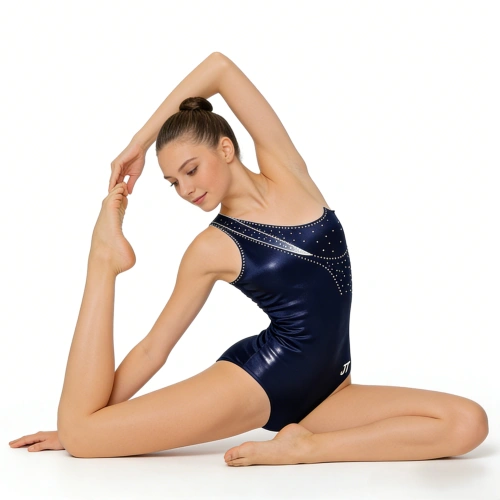
The first wave of automation begins in the design studio. Computer-aided design (CAD) software allows designers to create patterns, grade sizes, and visualize color combinations with remarkable accuracy. Computer-aided manufacturing (CAM) then translates those digital designs into production instructions. For gymnastics leotards, this is particularly valuable because fit and stretch are critical. A small change in pattern dimensions can affect coverage, comfort, and performance.
T&J Sportswear has an in-house professional design team specializing in gymnastics apparel. The team does more than simply manufacture designs supplied by customers. It can also help develop new concepts based on sketches, reference images, color combinations, team identities, or brand requirements. For competition leotards, the design team can combine sublimation graphics, color blocking, mesh, rhinestones, crystal decoration, and different fabric effects to create distinctive visual designs. Customers can also customize colors, logos, patterns, labels, and other branding elements.
CAD/CAM systems reduce the time required to move from an initial idea to a sample. They also improve communication between the customer and the factory. A digital mock-up can be shared, reviewed, and adjusted before any fabric is cut. This reduces the risk of costly errors and shortens the development cycle.
Cutting is one of the most important stages in leotard production. The fabric used in gymnastics apparel is often stretchy, slippery, and delicate. Manual cutting can lead to variations in size, shape, and fit. Automated cutting machines use digital patterns to cut fabric with high precision. They can handle multiple layers of fabric at once, which improves efficiency and consistency.
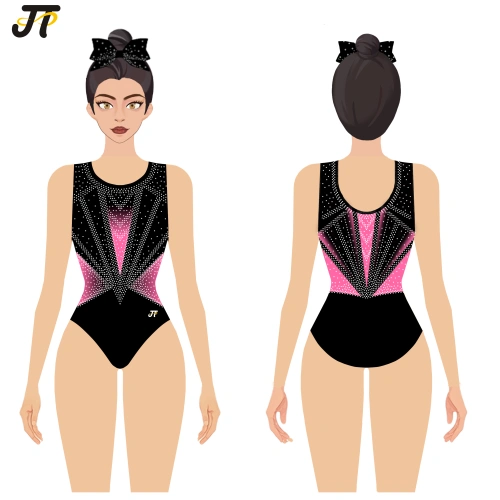
For a factory producing hundreds of leotards per day, automated cutting is a significant advantage. It ensures that every piece of fabric is cut according to the same specifications. This is especially important for team orders, where all leotards must fit consistently. Automated cutting also reduces fabric waste because the nesting software can arrange pattern pieces to maximize the use of each roll of fabric.
However, automation does not eliminate the need for skilled workers. Someone must select the right fabric, inspect it for defects, and ensure that the cutting machine is calibrated correctly. At T&J Sportswear, the production team pays attention to every stage of manufacturing, from fabric selection and pattern development to cutting, sewing, printing, rhinestone application, quality inspection, and final packaging.
Sublimation printing is a popular method for creating colorful, durable designs on gymnastics leotards. The process involves printing designs onto transfer paper and then using heat and pressure to transfer the ink into the fabric. Automation has improved this process in several ways. Digital printers can produce high-resolution graphics with precise color matching. Automated heat presses ensure consistent temperature, pressure, and time, which are critical for vibrant and permanent results.
For competition leotards, sublimation allows for complex patterns, gradients, and photographic elements. It can also be combined with other techniques, such as rhinestones and mesh, to create a unique look. Automated printing systems reduce the risk of human error, such as uneven color or misalignment. They also make it easier to reproduce a design exactly for a large team order.
Rhinestones add sparkle and elegance to gymnastics leotards. However, applying them manually is time-consuming and can lead to inconsistencies. Automated rhinestone applicators use templates or digital files to place stones accurately and securely. They can apply hundreds of stones in a fraction of the time it would take a worker to do the same task by hand.
For T&J Sportswear, rhinestone gymnastics leotards are a key product category. The company understands that decoration must not interfere with stretch or comfort. Automated application helps ensure that stones are placed in the right positions and that the adhesive or setting method is consistent. This reduces the risk of loose decoration, which is a common problem in lower-quality leotards.
Sewing is still a highly skilled task, especially for stretch fabrics. While fully automated sewing robots are not yet common in leotard manufacturing, semi-automated systems are increasingly used. These include programmable sewing machines, automatic thread trimmers, and computer-controlled stitch patterns. Such equipment improves consistency and speed while allowing skilled operators to focus on complex seams and finishing.
At T&J Sportswear, the factory team includes more than thirty skilled workers. Their expertise is essential for handling the delicate fabrics and intricate constructions used in gymnastics apparel. Automation supports their work but does not replace the judgment and dexterity required for high-quality leotards.
Quality control is another area where automation is making a difference. Machine vision systems can inspect fabric for defects, check print quality, and verify measurements. They can detect issues that might be missed by the human eye, such as small holes, color variations, or misaligned patterns. Automated inspection is faster and more consistent, especially for large production runs.
For finished garments, key inspection points can include fabric condition, printing quality, stitching, measurements, rhinestone placement, coverage, and overall appearance. T&J Sportswear uses a combination of automated tools and manual inspection to reduce common problems such as inconsistent sizing, printing defects, loose decoration, or uneven finishing. The company also lists certifications such as ISO9001, SGS, and CE for applicable products. Specific certification and testing documentation can be provided according to the product and customer requirements.
Modern factories use data to plan production, manage inventory, and track orders. Enterprise resource planning (ERP) systems and manufacturing execution systems (MES) allow manufacturers to monitor every stage of production in real time. This improves transparency and helps identify bottlenecks before they cause delays.
For customers, data-driven production means more accurate lead times and better communication. T&J Sportswear supports both OEM and ODM services, from design development and sample making to bulk production. An integrated production process helps reduce communication between multiple suppliers and gives customers a more efficient path from an initial idea to a finished product.
| Automation Area | Benefits | Impact on Gymnastics Leotards |
|---|---|---|
| CAD/CAM design | Faster design iterations, precise pattern grading | Better fit, improved stretch, quicker sampling |
| Automated cutting | Consistent cuts, less fabric waste | Uniform sizing across team orders |
| Sublimation printing | High-resolution graphics, consistent colors | Durable, vibrant competition designs |
| Rhinestone application | Speed, accuracy, secure placement | Sparkling leotards with reliable decoration |
| Quality control | Fast defect detection, consistent standards | Fewer returns, higher customer satisfaction |
| Data planning | Real-time tracking, better lead times | Reliable delivery for clubs and brands |
Sustainability has moved from a niche concern to a central requirement in the apparel industry. Gymnastics clubs, teams, brands, and distributors are increasingly asking about the environmental and ethical impact of the products they buy. For leotard factories, this means rethinking materials, processes, packaging, and waste management.
The fabric is the foundation of any leotard. Traditional gymnastics apparel often uses Lycra, Spandex, Polyester, Mystique, and Mesh. These materials provide the stretch, recovery, and durability that athletes need. However, the production of conventional synthetic fabrics can have a significant environmental footprint.
Sustainable alternatives are emerging. Recycled polyester, made from post-consumer plastic bottles, is increasingly used in sportswear. It reduces the demand for virgin petroleum and can be produced with lower energy consumption. Some manufacturers are also exploring bio-based elastane and recycled nylon. For gymnastics leotards, these fabrics must still meet strict performance requirements. They must stretch, recover, and withstand repeated washing without losing shape or color.
T&J Sportswear pays close attention to fabric selection. The company can use a range of materials depending on the design and application. Different products can be developed for different priorities, such as stretch, lightweight construction, breathability, quick drying, comfort, durability, and visual appearance. As sustainability becomes more important, the company can work with customers to select eco-friendly options that do not compromise performance.
Textile manufacturing is traditionally water and energy intensive. Dyeing, printing, and finishing processes can consume large amounts of water and generate wastewater. Automation and improved processes can reduce both. For example, digital sublimation printing uses less water than traditional dyeing methods. It also produces less wastewater because the ink is transferred to the fabric in a dry process.
Energy efficiency is another focus. Modern factories invest in energy-efficient lighting, heating, ventilation, and air conditioning systems. They also use heat recovery systems to capture waste heat from printing and pressing equipment. Automated systems can monitor energy use and identify opportunities for savings. These improvements benefit both the environment and the bottom line.
Fabric waste is a major issue in apparel manufacturing. When patterns are cut, leftover fabric scraps are often discarded. Automated nesting software helps minimize waste by arranging pattern pieces as efficiently as possible. Some factories collect scraps and send them for recycling or reuse in other products.
Circular design takes this further. It considers the entire lifecycle of a garment, from raw material to disposal. Leotards could be designed for easier recycling by using single-material fabrics or removable decorations. Some brands offer take-back programs where old leotards are collected and recycled into new fibers. While this is still emerging in gymnastics apparel, it represents an important direction for the future.
T&J Sportswear supports flexible customization and can work with customers who want to incorporate sustainable design principles. The company's production process covers design development, fabric selection, digital artwork, printing, cutting, sewing, decoration, inspection, packaging, and delivery. This integrated approach makes it easier to implement sustainable choices at multiple stages.
Packaging is often overlooked, but it has a significant environmental impact. Plastic bags, polybags, and excessive packaging contribute to waste. Sustainable packaging options include recycled paper, biodegradable bags, and minimal packaging designs. Some brands use packaging made from recycled materials and print with eco-friendly inks.
For gymnastics teams and clubs, packaging can also be customized with logos and team colors. T&J Sportswear offers customization of labels, packaging, and other details according to customer requirements. This allows customers to align their packaging with their sustainability values.
Sustainability is not only about the environment. It also includes ethical labor practices, safe working conditions, and fair wages. Consumers and businesses increasingly want assurance that products are made responsibly. Certifications such as ISO9001, SGS, and CE provide independent verification of quality and compliance for applicable products.
T&J Sportswear emphasizes quality and consistency throughout its production process. The company works to maintain stable workmanship and carefully inspects finished products before shipment. Its goal is not only to manufacture gymnastics apparel but also to build long-term partnerships with customers through reliable products and responsive service. Ethical production and transparent communication are part of that commitment.
Automation offers many benefits, but it cannot replace the skill and experience of craftspeople. Gymnastics leotards are complex garments. They must fit different body types, provide adequate coverage, and allow full range of motion. The placement of a seam, the tension of an elastic, or the choice of a particular fabric can make the difference between a leotard that performs well and one that does not.
T&J Sportswear understands this balance. The company uses automation where it adds value, such as in cutting, printing, and rhinestone application. At the same time, it relies on skilled workers for sewing, finishing, and quality inspection. The factory team includes more than thirty skilled workers who bring years of experience to the production floor. Their expertise ensures that every leotard meets the company's standards for comfort, flexibility, durability, fit, and visual appeal.
One-to-one professional service is another important element. From initial inquiry and design development to sampling, production, inspection, and shipment, the T&J Sportswear team provides professional support throughout the process. Customers can communicate their requirements directly and receive assistance with product development, customization, production details, and logistics. This human touch is essential, especially for custom gymnastics apparel.
Customization is one of the defining trends in gymnastics apparel. Clubs want team leotards that reflect their identity. Brands want unique designs that stand out in the market. Distributors want a range of products that appeal to different customer segments. To meet these demands, manufacturers must offer flexible customization without sacrificing quality or efficiency.
T&J Sportswear supports both OEM and ODM services. This allows customers to choose between producing their own designs and developing new products together with the company's design team. Customization can cover artwork, colors, sublimation printing, logos, rhinestone layouts, fabric combinations, sizes, labels, packaging, and other details.
Low MOQ is a major advantage for small and growing customers. T&J Sportswear offers a low MOQ starting from ten sets for selected products. This gives gymnastics clubs, new brands, boutique retailers, and smaller distributors greater flexibility when testing new designs or launching new collections. Instead of requiring customers to commit to large quantities before they know how a design will perform in their market, the company can support smaller initial orders and help customers gradually develop their collections.
This flexibility is particularly important for new brands. Launching a first collection requires careful planning and investment. A low MOQ reduces the financial risk and allows the brand to test the market. If a design sells well, the brand can reorder in larger quantities. T&J Sportswear can scale production accordingly, thanks to its production capacity and skilled workforce.
A beautiful gymnastics leotard must also perform during movement. The choice of materials and construction methods is therefore critical. T&J Sportswear pays close attention to fabric selection and garment construction. The product range can use materials including Lycra, Spandex, Polyester, Mystique, and Mesh, depending on the design and application.
Different products can be developed for different priorities. For training leotards, the focus is on comfortable stretch, durability, moisture management, and everyday wear. For competition leotards, the emphasis is on precision fit, secure coverage, decorative details, and professional finishing. The company's production team pays attention to every stage of manufacturing, from fabric selection and pattern development to cutting, sewing, printing, rhinestone application, quality inspection, and final packaging.
Construction details matter. Flatlock seams reduce bulk and irritation. Elastic edges must be carefully tensioned to stay in place without digging into the skin. Linings must provide coverage without adding unnecessary weight. Rhinestones must be attached securely so they do not fall off during a routine. These details require both skill and attention.
Quality control begins before bulk production. During sample development, customers can review the design, fabric, fit, decoration, and finishing before confirming mass production. This step is essential for custom orders. It allows the customer to see and feel the product before committing to a larger order.
For finished garments, key inspection points can include fabric condition, printing quality, stitching, measurements, rhinestone placement, coverage, and overall appearance. T&J Sportswear uses a combination of automated tools and manual inspection to reduce common problems such as inconsistent sizing, printing defects, loose decoration, or uneven finishing.
The company's product information also lists certifications such as ISO9001, SGS, and CE for applicable products. Specific certification and testing documentation can be provided according to the product and customer requirements. This commitment to quality and consistency helps build trust with customers in the US, Europe, and other international markets.
The future of gymnastics leotard manufacturing will be shaped by continued advances in automation, sustainability, and customization. Several trends are likely to accelerate.
Artificial intelligence (AI) and machine learning are beginning to be used in apparel manufacturing. AI can analyze sales data to predict demand, optimize inventory, and reduce overproduction. Machine learning can improve defect detection by training on thousands of images of fabric and finished garments. In design, AI tools can generate pattern variations or suggest color combinations based on current trends.
For gymnastics leotard factories, AI could help personalize designs at scale. A customer could input team colors, logo, and style preferences, and the system could generate a range of design options. This would speed up the design process and make customization more accessible.
3D printing is already used in some sportswear applications, such as custom shoe soles and protective gear. In gymnastics apparel, 3D printing could be used to create unique decorative elements, flexible closures, or even seamless garment components. While still in early stages, additive manufacturing offers possibilities for reducing waste and enabling highly customized products.
Smart fabrics can sense body movement, monitor heart rate, or regulate temperature. For gymnastics, smart fabrics could provide feedback on technique or help athletes track their performance. They could also improve comfort by adapting to body temperature and moisture levels. As technology advances, leotards may become more than just clothing; they could become performance tools.
The circular economy aims to eliminate waste and keep materials in use for as long as possible. In gymnastics apparel, this could mean designing leotards that are easy to recycle, using recycled fibers, and implementing take-back programs. Factories could partner with recycling companies to turn old leotards into new fabric. Closed-loop production would reduce the demand for virgin materials and minimize environmental impact.
Supply chain disruptions have led many brands to consider nearshoring, or moving production closer to the end market. For gymnastics apparel, this could mean manufacturing in regions that are closer to North America or Europe. Nearshoring can reduce shipping times, lower carbon emissions from transportation, and improve responsiveness to market trends. However, it requires access to skilled labor and specialized equipment. Manufacturers like T&J Sportswear, with experience in international markets, are well positioned to support customers regardless of where they are located.
Understanding what drives the gymnastics apparel market helps factories anticipate change. Several forces are shaping demand. First, participation in gymnastics continues to grow in many countries. Clubs and schools are expanding programs, and new teams are forming. This increases the need for practice leotards and team uniforms. Second, athletes and coaches are more informed about performance apparel. They expect fabrics that breathe, stretch, and recover. They want seams that do not chafe and fits that allow full range of motion. Third, social media and streaming have made competition leotards more visible than ever. A beautiful design can capture attention and inspire teams. Fourth, brands and distributors are looking for differentiation. They want unique designs, reliable quality, and flexible order quantities.
These expectations place pressure on manufacturers. They must be able to produce small custom orders and large wholesale runs. They must offer design support and fast sampling. They must maintain consistent quality across repeat orders. They must also address sustainability concerns. T&J Sportswear addresses these needs through its combination of specialized experience, in-house design, flexible customization, and reliable production.
In gymnastics, fit is not a minor detail. A leotard that is too tight can restrict movement and cause discomfort. A leotard that is too loose can shift during a routine and affect performance. The ideal fit balances compression and freedom. It provides secure coverage without digging into the skin. It stays in place during jumps, turns, and tumbling passes. Achieving this requires precise pattern development and high-quality elastic. It also requires testing on different body types. T&J Sportswear understands these requirements and pays close attention to fit throughout the development process.
Gymnastics is a sport where presentation matters. Athletes perform before judges and audiences. A striking leotard can boost confidence and team spirit. Visual appeal comes from color, pattern, silhouette, and decoration. Sublimation printing allows for complex graphics. Rhinestones add sparkle. Mesh inserts create contrast. Color blocking defines the body line. The design team at T&J Sportswear can combine these elements to create leotards that are both athletic and artistic.
Automation is not a single technology. It is a collection of tools and systems that work together. Understanding each component helps manufacturers decide where to invest.
CAD software allows designers to create digital patterns. They can adjust measurements, add seam allowances, and grade sizes. For gymnastics leotards, CAD is used to develop blocks that fit different body types. It can also simulate how a fabric will drape and stretch. This reduces the need for physical samples, although physical samples are still important for final approval.
Before cutting, fabric must be spread on a table. Automated spreading machines unwind fabric and lay it flat with consistent tension. This is important for stretch fabrics. If the fabric is stretched during spreading, the cut pieces may not match the pattern. Automated cutting machines then use a blade or laser to cut the fabric. They follow a digital file and can cut multiple layers at once. This saves time and improves accuracy.
Digital printing includes sublimation, direct-to-fabric, and dye-sublimation. Sublimation is popular for polyester and spandex blends. The design is printed onto transfer paper using disperse inks. Then heat and pressure transfer the ink into the fabric. The result is a permanent print that does not crack or peel. Digital printing allows for unlimited colors and complex designs. It also reduces setup costs compared to screen printing, making it ideal for custom orders.
Rhinestone placement machines use a template or a digital file to position stones. Some machines use a vacuum to pick up stones and place them on adhesive. Others use heat to set stones. Automation ensures that the pattern is consistent and that stones are securely attached. This is especially important for competition leotards, where a missing stone can be distracting.
Computer-controlled sewing machines can follow programmed stitch patterns. They can also automate tasks such as backstitching, thread trimming, and needle positioning. For leotard production, these machines help with repetitive tasks like attaching elastic or sewing seams. They improve consistency and reduce operator fatigue. However, skilled operators are still needed to guide the fabric and monitor quality.
Automated inspection uses cameras and sensors to detect defects. Machine vision can identify holes, stains, misprints, and measurement errors. It can also check that rhinestones are present and correctly placed. Automated inspection is faster than manual inspection and can catch issues that the human eye might miss. It is particularly useful for large orders where every garment must meet the same standard.
Sustainability is not just a marketing message. It requires concrete actions. Factories can adopt sustainable practices in several areas.
Choosing sustainable materials is the first step. Recycled polyester, recycled nylon, and bio-based elastane are options. Organic cotton is less common in gymnastics leotards because it does not stretch as well, but it can be used in warm-up wear. Factories can also source fabrics from suppliers that have environmental certifications. T&J Sportswear can work with customers to select materials that meet both performance and sustainability goals.
Process optimization reduces waste and energy use. For example, digital printing uses less water and ink than traditional dyeing. Automated cutting reduces fabric waste. Energy-efficient equipment reduces electricity consumption. Factories can also recycle water and use heat recovery systems. These changes often pay for themselves through lower operating costs.
Fabric scraps can be collected and recycled. Some factories sell scraps to companies that make insulation, cleaning cloths, or new yarn. Packaging waste can be reduced by using recycled materials and minimizing packaging. Factories can also implement take-back programs for old leotards. While this is challenging, it is an important part of the circular economy.
Sustainability includes people. Factories must provide safe working conditions, fair wages, and respect for workers' rights. They must comply with labor laws and avoid child labor. Certifications such as ISO9001, SGS, and CE help verify compliance. T&J Sportswear emphasizes quality and consistency, and its customer-focused approach includes ethical production and transparent communication.
T&J Sportswear offers a comprehensive service for customers around the world. The company works with gymnastics clubs, teams, brands, wholesalers, distributors, and other sportswear businesses. Its main markets are the US, Europe, and other international markets.
The company's key strengths include more than ten years of specialized gymnastics apparel experience, in-house design capability, performance-oriented materials, low MOQ, flexible OEM and ODM customization, production capacity with skilled workers, quality control from sample to bulk production, and one-to-one professional service.
For customers, this means a reliable path from idea to finished product. They can share sketches, reference images, or original ideas. The design team can develop artwork and optimize products. The production team can manufacture samples for approval. Once approved, bulk production can begin. Quality control ensures that the final products meet expectations. Packaging and delivery are handled efficiently.
Whether a customer needs a small customized team order or a large wholesale production project, T&J Sportswear is committed to delivering quality gymnastics apparel with consistent workmanship and dependable service.
To illustrate how customization works, consider a few scenarios.
A gymnastics club wants new team leotards for the upcoming season. The club has a limited budget and is unsure about sizing. T&J Sportswear offers a low MOQ starting from ten sets. The design team helps the club choose colors and a design that reflects the club's identity. Samples are made for fit approval. After approval, the leotards are produced and delivered. The club can reorder in larger quantities in future seasons.
A new brand wants to launch a gymnastics apparel line. The brand has design ideas but no manufacturing experience. T&J Sportswear provides ODM services. The design team refines the concepts, suggests fabrics, and creates samples. The brand can test the market with a small initial order. If the products sell well, the brand can scale up. The brand benefits from T&J Sportswear's experience in international markets.
A distributor needs a regular supply of practice leotards and competition leotards. The distributor requires consistent quality and reliable lead times. T&J Sportswear's production capacity of over three hundred leotards per day helps meet demand. The company's quality control ensures that each order matches the previous one. The distributor can also request custom labels and packaging.
While automation and sustainability offer many benefits, they also present challenges. Understanding these challenges helps factories and customers plan effectively.
Automated equipment can be expensive. Cutting machines, digital printers, and rhinestone applicators require significant capital. For smaller factories, this can be a barrier. Solution: Factories can invest gradually, starting with the equipment that offers the highest return. They can also lease equipment or partner with service providers. T&J Sportswear has invested in key technologies while maintaining a balance with skilled manual work.
New technology requires new skills. Workers must learn to operate software, machines, and quality control systems. Solution: Factories can provide training programs and hire technicians. They can also retain experienced workers who understand the product and can bridge the gap between tradition and technology.
Eco-friendly fabrics can be more expensive than conventional fabrics. Solution: Factories can work with customers to find the right balance. For some products, sustainable materials may be essential. For others, conventional materials may be acceptable. Over time, as demand grows, the cost of sustainable materials is likely to decrease.
Some companies make misleading claims about sustainability. Solution: Factories should provide transparent information and certifications. They should be honest about what is sustainable and what is not. T&J Sportswear provides certifications such as ISO9001, SGS, and CE for applicable products and can provide documentation according to customer requirements.
The gymnastics leotard factory of the future will be more automated, more sustainable, and more customer-focused. Several predictions can be made.
T&J Sportswear is well positioned to adapt to these trends. Its experience, design capability, production capacity, and customer-focused approach provide a strong foundation. By continuing to invest in automation and sustainability, the company can help shape the future of gymnastics apparel manufacturing.
T&J Sportswear offers a low MOQ starting from ten sets for selected products. This makes it easier for clubs and new brands to order custom designs.
Yes. T&J Sportswear supports OEM and ODM services. Customers can provide sketches, reference images, color requirements, or original ideas. The design team can assist with artwork development and product optimization.
The product range can use Lycra, Spandex, Polyester, Mystique, and Mesh, depending on the design and application. Different fabrics offer different benefits, such as stretch, breathability, durability, and visual appeal.
Production time depends on the order quantity and complexity. T&J Sportswear provides accurate lead times based on the specific project. The company's production capacity of over three hundred leotards per day helps support timely delivery.
T&J Sportswear lists certifications such as ISO9001, SGS, and CE for applicable products. Specific certification and testing documentation can be provided according to the product and customer requirements.
Yes. The company can work with customers to select eco-friendly fabrics and sustainable packaging. It also focuses on waste reduction and ethical production.
Automation and sustainability are reshaping gymnastics leotard factories. Automation improves precision, speed, and consistency, while sustainability addresses the environmental and ethical responsibilities of manufacturing. Together, these trends are creating a new generation of gymnastics apparel that is better for athletes, better for the planet, and better for business.
For manufacturers like T&J Sportswear, the challenge is to embrace these trends without losing the craftsmanship and personal service that make custom gymnastics apparel special. By combining advanced technology with skilled workers, flexible customization, and a customer-focused approach, T&J Sportswear is well prepared for the future. The company remains committed to being a dependable gymnastics apparel manufacturing partner for customers around the world.
As the market continues to evolve, the most successful factories will be those that can balance innovation with tradition, efficiency with quality, and global reach with local service. T&J Sportswear is positioned to do exactly that, one leotard at a time.
