This article examines current trends in gymnastics practice leotards, focusing on color and cut. It explains why practice leotards are a high-use category that must balance visual appeal with comfort, stretch, durability, coverage, and freedom of movement. Color trends discussed include bold saturated shades, neon accents, ombre and gradient effects, pastels and soft neutrals, metallic and Mystique finishes, color blocking, monochrome and tonal looks, and coordinated team color stories. Cut trends include high neck and mock neck styles, racerback and strappy backs, keyhole and open backs, long sleeve and sleeveless options, mesh panels, high leg and moderate leg cuts, scoop backs, and asymmetrical details.
The article also highlights how T&J Sportswear supports these trends through more than 10 years of specialized gymnastics apparel manufacturing, OEM and ODM customization, professional design support, low MOQ starting from 10 sets, and flexible production. The company serves clubs, teams, brands, wholesalers, and distributors in the US, Europe, and other international markets. Its production capabilities include 30+ skilled workers, 300+ leotards per day, and quality control measures such as sample review, inspection, and certifications like ISO9001, SGS, and CE for applicable products. The summary concludes that practice leotard trends will continue to evolve, but the core demand remains apparel that helps gymnasts train comfortably, perform confidently, and represent their teams with pride.
Gymnastics practice leotards have moved far beyond simple training uniforms. They are now a central part of an athlete's daily routine, a reflection of team identity, and a canvas for color, cut, and performance innovation. As clubs, coaches, and gymnasts look for apparel that supports long training sessions while still looking polished, the market has responded with an impressive range of designs. From bold saturated hues to intricate back details, practice leotards are becoming as expressive as competition leotards, but with a stronger focus on comfort, durability, and everyday wearability.
For manufacturers such as T&J Sportswear, this shift is not just a design challenge. It is an opportunity to combine fabric technology, pattern development, and customization into products that help gymnasts feel confident and supported. With more than 10 years of experience in gymnastics apparel, T&J Sportswear works with clubs, teams, brands, wholesalers, and distributors across the US, Europe, and other international markets. The company's expertise in competition leotards, practice leotards, custom team leotards, rhinestone leotards, and gymnastics warm-up wear provides a useful lens for understanding where color and cut trends are heading.
undefined
Practice leotards are worn more often than competition leotards. A gymnast may train four, five, or even six days a week, which means the practice leotard must withstand repeated washing, stretching, sweating, and movement. Unlike competition apparel, which may be reserved for a few key events, practice wear is a workhorse. This makes the balance between style and function especially important. A beautiful leotard that rubs, rides up, or loses shape after a few washes will not remain popular for long.
This is why modern practice leotard trends are shaped by two forces at once: visual appeal and athletic performance. Color choices must flatter a wide range of skin tones and team palettes. Cut choices must provide coverage, freedom of movement, and a secure fit. When these elements come together, a practice leotard can become a favorite item in a gymnast's bag.

T&J Sportswear understands that gymnastics apparel needs to combine comfort, flexibility, durability, fit, and visual appeal. The company's production team pays attention to every stage of manufacturing, from fabric selection and pattern development to cutting, sewing, printing, rhinestone application, quality inspection, and final packaging. This end-to-end approach helps create practice leotards that are suitable for demanding training sessions as well as team events and warm-ups.
Color and cut are often discussed as fashion topics, but in gymnastics they also affect performance, confidence, and team cohesion. A well-chosen color can make a gymnast feel energetic and visible during training. A well-designed cut can improve range of motion, reduce distraction, and provide the coverage athletes need when they are upside down, twisting, or stretching.
For T&J Sportswear, customization is a key strength. The company offers OEM and ODM services and can develop products based on customer designs, sketches, reference images, color requirements, or original ideas. Its professional design team can assist with artwork development and product optimization, helping customers turn concepts into finished gymnastics apparel. This means a club can move from a color idea or a sketch to a sample and then to bulk production with a more integrated process.
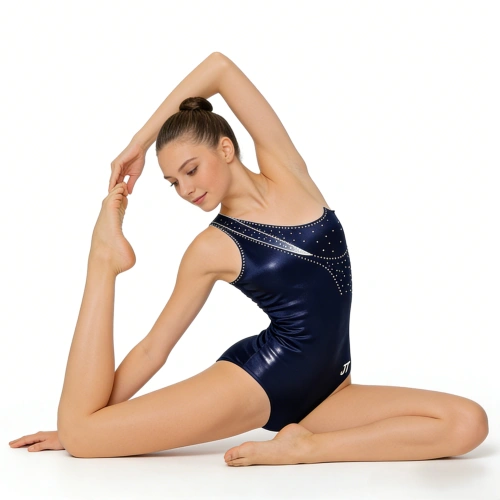
Strong, saturated colors continue to dominate practice leotard collections. Royal blue, magenta, emerald, scarlet, and deep purple are popular because they look energetic and hold their visual impact even after repeated wear. These colors also work well for team uniforms because they can be paired with black, white, or metallic accents. Saturated colors are often used as the main body color, with contrasting trim or sublimated details adding movement and depth.
For clubs, bold colors can be part of a larger identity system. A team might choose a signature blue with silver accents, or a magenta and black combination that feels modern and competitive. T&J Sportswear supports customization of colors, logos, patterns, labels, and other branding elements, allowing clubs to create a consistent look across practice leotards, competition leotards, and warm-ups.
Neon yellow, electric pink, lime green, and bright orange are frequently used as accent colors rather than full-body shades. These high-visibility tones draw the eye and create a sense of speed and energy. They are especially effective on sleeves, side panels, straps, and piping. Neon accents can transform a simple black or navy practice leotard into a modern, athletic design.
High-visibility colors also have practical value. Coaches can spot gymnasts more easily in a busy training hall, and athletes can see their own lines in mirrors. When used thoughtfully, neon accents add personality without overwhelming the overall design.
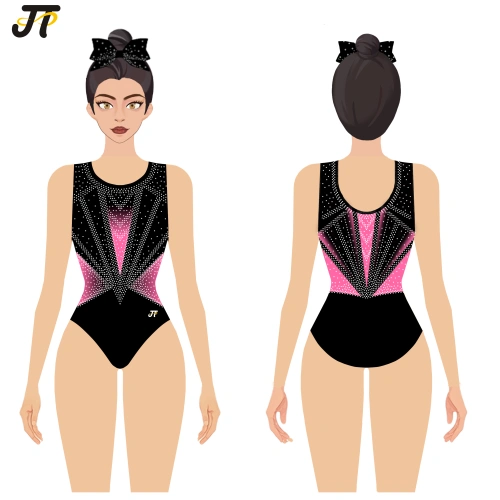
Ombre and gradient effects remain a major trend in practice leotards. These designs blend one color into another, often from dark to light or from cool to warm. Sublimation printing allows for smooth transitions and complex graphics that do not crack or peel like some surface prints. A gradient can run vertically down the body, radiate from the center, or flow across sleeves and side panels.
Sublimated designs are also practical for teams. They allow for detailed patterns, sponsor logos, and abstract textures without adding weight. T&J Sportswear uses sublimation printing as part of its design and production capabilities, helping customers create eye-catching leotards that remain comfortable and flexible.
Pastel shades such as lavender, mint, blush pink, baby blue, and peach offer a softer alternative to bold colors. These tones are popular among younger gymnasts and for spring collections. Soft neutrals like sand, taupe, and warm gray can create a sophisticated, understated look. Pastels often work best with clean cuts and minimal decoration, allowing the color itself to stand out.
For teams, pastels can be combined with stronger colors for contrast. A lavender leotard with deep purple trim, or a mint leotard with navy accents, creates a balanced design that feels fresh and modern.
Metallic fabrics and Mystique materials add shine and dimension to practice leotards. Gold, silver, rose gold, and holographic finishes catch the light and create a premium look. While full metallic leotards can be dramatic, many designs use metallic accents on sleeves, side panels, or trim. This keeps the leotard comfortable while adding a touch of sparkle.
Metallic finishes are especially popular for competition and special events, but they are also appearing in practice wear for gymnasts who want to feel confident during training. T&J Sportswear can use materials including Lycra, Spandex, Polyester, Mystique, and Mesh depending on the design and application, allowing customers to choose the right balance of stretch, durability, and visual impact.
Color blocking uses two or more solid colors in distinct panels. This trend is strong because it creates a sharp, athletic look while allowing teams to use multiple brand colors. Diagonal blocks, vertical stripes, chevrons, and angular side panels can flatter the body and create a sense of movement. Geometric contrast is often combined with mesh or metallic inserts for extra depth.
Color blocking is also practical for manufacturing. It allows for consistent color matching and easy customization. A club can choose its primary and secondary colors, then apply them in a pattern that reflects its identity. T&J Sportswear's design team can help develop color-blocked layouts based on sketches, reference images, or team requirements.
Monochrome designs use variations of a single color. A leotard might combine black, charcoal, and gunmetal, or navy, royal blue, and sky blue. Tonal looks are elegant and sophisticated, and they can be very flattering. They also make it easier to mix and match with warm-ups, shorts, and leggings.
For practice leotards, monochrome designs are often paired with texture rather than color contrast. Mesh panels, ribbed fabrics, and subtle sublimated patterns can add interest without breaking the single-color theme.
Many clubs use practice leotards to reinforce their brand. A team color story might include a primary color, a secondary color, and one accent color. These colors appear on practice leotards, competition leotards, warm-ups, bags, and other team apparel. Consistency helps athletes feel part of a group and makes the club more recognizable at events.
T&J Sportswear works with gymnastics clubs, teams, brands, wholesalers, and distributors, with a strong focus on customers in the US, Europe, and other international markets. The company's customization services can cover artwork, colors, sublimation printing, logos, rhinestone layouts, fabric combinations, sizes, labels, packaging, and other details. This makes it easier for clubs to build a complete, coordinated collection.
High neck and mock neck practice leotards offer a polished, secure look. They provide extra coverage at the chest and collarbone, which some gymnasts prefer during training. High neck styles can be sleeveless, short sleeve, or long sleeve, and they often feature a keyhole or zipper back for ventilation. These cuts work well with bold colors and geometric patterns because the neckline creates a clean frame.
For teams, high neck leotards can look formal and unified. They are also a good choice for gymnasts who want a more modest silhouette without sacrificing style.
Racerback and strappy back designs are among the most popular practice leotard cuts. They allow freedom of movement in the shoulders and create an athletic, modern look. Strappy backs can be simple or complex, with crisscross patterns, Y-shapes, or multiple thin straps. These details add visual interest while keeping the front of the leotard clean.
Racerback cuts are especially practical for training because they stay in place during jumping, tumbling, and bar work. They also allow for breathability, which is important during intense workouts.
Keyhole backs and open back designs add elegance and ventilation. A keyhole back features a small opening, often at the upper back, while a full open back reveals more of the back. These cuts are popular for practice leotards because they help regulate temperature and look stylish. They can be combined with mesh panels or rhinestone accents for extra sparkle.
Open back designs require careful pattern development to ensure the leotard remains secure and comfortable. T&J Sportswear's production process covers design development, fabric selection, digital artwork, printing, cutting, sewing, decoration, inspection, packaging, and delivery. This integrated approach helps maintain fit and quality across different back styles.
Practice leotards come in a range of sleeve lengths. Sleeveless styles are cool and unrestricted, making them ideal for warm training environments. Short sleeve and three-quarter sleeve styles offer a bit more coverage and can be worn across seasons. Long sleeve practice leotards provide warmth for cold gyms and can be used for warm-ups or early morning training.
The choice of sleeve length often depends on climate, training intensity, and personal preference. Many clubs order a mix of styles so gymnasts can choose what works best for different conditions.
Mesh panels and sheer inserts are a major trend in both practice and competition leotards. They add texture, breathability, and a modern edge. Mesh can be used on sleeves, side panels, back cutouts, or necklines. It can be color-matched for a subtle effect or contrasted for a bold statement.
Mesh is lightweight and flexible, making it a good choice for practice wear. When combined with solid fabrics, it creates visual depth without adding bulk. T&J Sportswear can use Mesh as part of its material selection, depending on the design and application.
Leg cuts in practice leotards vary from high leg to moderate leg. High-leg cuts create a longer line and are often chosen for competition aesthetics. Moderate leg cuts offer more coverage and comfort for daily training. The gymnastics cut is designed to stay in place during movement, with enough coverage to prevent riding up.
Fit is critical. A leg opening that is too tight can cause discomfort, while one that is too loose can shift during skills. Pattern development and accurate sizing are essential. T&J Sportswear's experience in gymnastics apparel helps the company understand the specific requirements of stretch, fit, comfort, coverage, durability, decoration, and freedom of movement.
Scoop backs and everyday comfort cuts focus on ease of wear. They are less restrictive than high neck or complex strappy designs, making them a good choice for younger gymnasts or long training sessions. These cuts often feature simple lines, soft edges, and moderate coverage.
Comfort cuts are also popular for recreational gymnastics programs. They allow gymnasts to focus on learning skills rather than adjusting their apparel.
Asymmetrical necklines, one-shoulder designs, and twist-front details add a fashion-forward element to practice leotards. These cuts are more complex to manufacture, but they create a unique look that stands out. Twist-front designs can be combined with color blocking or metallic fabrics for extra impact.
For brands and clubs that want a distinctive style, asymmetrical designs offer a way to differentiate their collections. T&J Sportswear's professional design team can assist with artwork development and product optimization, helping customers turn original ideas into finished gymnastics apparel.
The best color and cut trends depend on the right fabrics. Practice leotards must stretch, recover, breathe, and withstand frequent washing. T&J Sportswear's product range can use materials including Lycra, Spandex, Polyester, Mystique, and Mesh, depending on the design and application. Different products can be developed for different priorities, such as stretch, lightweight construction, breathability, quick drying, comfort, durability, and visual appearance.
For training leotards, the focus is on comfortable stretch, durability, moisture management, and everyday wear. For competition leotards, greater emphasis is placed on precision fit, secure coverage, decorative details, and professional finishing. The same principles apply to practice leotards, but with an even stronger need for long-term durability.
Practice leotards and competition leotards share many design elements, but their priorities differ. Competition leotards often feature more rhinestones, intricate sublimation, and dramatic cuts. Practice leotards are designed for repetition. They need to survive more washes, more training hours, and more movement. This means the fabric, stitching, and decoration must be selected for durability as well as beauty.
T&J Sportswear manufactures both competition gymnastics leotards and practice gymnastics leotards. The company's competition leotards combine performance fabrics with creative designs, sublimation printing, rhinestones, and other decorative techniques. Its practice leotards focus on comfort, stretch, breathability, and durability for everyday training. The company offers a wide range of colors, patterns, and styles, with customized designs available for gymnastics clubs and teams.
This distinction helps customers choose the right product for the right purpose. A club might order rhinestone competition leotards for meets and simpler, durable practice leotards for daily training. Both can share the same team colors and design language, creating a cohesive look.
Customization is one of the key drivers of practice leotard trends. Clubs want uniforms that reflect their identity. Brands want unique designs that stand out in the market. Distributors want flexible options that meet the needs of different customers. T&J Sportswear supports OEM and ODM services, allowing customers to choose between producing their own designs and developing new products together with the company's team.
Customization can cover artwork, colors, sublimation printing, logos, rhinestone layouts, fabric combinations, sizes, labels, packaging, and other details. The production process covers design development, fabric selection, digital artwork, printing, cutting, sewing, decoration, inspection, packaging, and delivery. This integrated approach helps reduce communication between multiple suppliers and gives customers a more efficient path from an initial idea to a finished product.
For practice leotards, customization often focuses on team colors, logos, and practical details such as size ranges and label placement. A club might request a specific shade of blue, a logo on the chest, and a choice of sleeve lengths. A brand might develop a full collection with coordinated color stories, packaging, and labels. T&J Sportswear's professional design team can assist with artwork development and product optimization, helping customers turn concepts into finished gymnastics apparel.
One major advantage for small and growing customers is T&J Sportswear's low MOQ starting from 10 sets for selected products. This gives gymnastics clubs, new brands, boutique retailers, and smaller distributors greater flexibility when testing new designs or launching new collections. Instead of requiring customers to commit to large quantities before they know how a design will perform in their market, the company can support smaller initial orders and help customers gradually develop their collections.
Low MOQ is especially important in the practice leotard market because trends change quickly. A new color palette or cut may become popular within a season. Being able to test a small order allows clubs and brands to respond to demand without taking on excessive inventory risk. It also makes it easier for new brands to enter the gymnastics apparel market with a focused collection.
For larger customers, T&J Sportswear's production capacity provides a balance between flexible customization and the ability to support larger wholesale and team orders. The factory team includes 30+ skilled workers, with reported production capacity of 300+ leotards per day. For customers, production capacity is not simply about quantity. The real value is the ability to maintain consistent workmanship when moving from samples to bulk production.
Quality control starts before bulk production. During sample development, customers can review the design, fabric, fit, decoration, and finishing before confirming mass production. For finished garments, key inspection points can include fabric condition, printing quality, stitching, measurements, rhinestone placement, coverage, and overall appearance. T&J Sportswear's production process is designed to reduce common problems such as inconsistent sizing, printing defects, loose decoration, or uneven finishing.
The company's product information also lists certifications such as ISO9001, SGS, and CE for applicable products. Specific certification and testing documentation can be provided according to the product and customer requirements. This commitment to quality and consistency is important for practice leotards, which are worn frequently and must hold up over time.
Quality is not only about inspection. It is also about stable workmanship throughout production. T&J Sportswear pays attention to fabric, printing, stitching, sizing, rhinestone placement, and overall finishing throughout production. This helps ensure that the first leotard and the last leotard in a bulk order meet the same standards.
Choosing the right practice leotard involves balancing comfort, fit, durability, and style. Coaches and gymnasts can use the following checklist:
It is also helpful to test a sample before placing a large order. T&J Sportswear's sample development process allows customers to review the design, fabric, fit, decoration, and finishing before mass production. This reduces the risk of surprises and helps ensure that the final product meets expectations.
Spring and summer practice leotards often feature lighter colors, pastels, and bright accents. Mint, lavender, coral, sky blue, and lemon yellow are popular. Cut trends include sleeveless styles, open backs, mesh panels, and racerbacks. These designs help gymnasts stay cool during warmer training sessions. Sublimated floral and abstract patterns also appear more frequently in spring collections.
Fall and winter collections tend to use deeper colors such as burgundy, forest green, navy, charcoal, and plum. Long sleeve and three-quarter sleeve practice leotards become more popular. Metallic accents, velvet-like finishes, and tonal color blocking add warmth and sophistication. These designs can be layered with warm-ups for cold gyms and travel.
Seasonal trends are not rigid. Many clubs prefer year-round color stories that can be updated with small changes. T&J Sportswear's customization services allow customers to adjust colors, cuts, and details without starting from scratch.
Social media has accelerated the spread of practice leotard trends. Gymnasts share training videos, photos, and reviews on platforms such as Instagram and TikTok. A distinctive back design or color combination can become popular very quickly. Brands and clubs now look for designs that photograph well and stand out in short-form video.
Athlete influence also matters. When well-known gymnasts wear certain colors or cuts, demand often follows. However, practice leotards must still meet practical needs. A trend may look striking on screen, but it only lasts if it is comfortable and durable in the gym.
For manufacturers, this means design cycles are faster. T&J Sportswear's in-house professional design team specializes in gymnastics apparel and can help develop new concepts based on sketches, reference images, color combinations, team identities, or brand requirements. For competition leotards, the team can combine sublimation graphics, color blocking, mesh, rhinestones, crystal decoration, and different fabric effects to create distinctive visual designs.
Sustainability is becoming more important in gymnastics apparel. Customers are asking about recycled fabrics, reduced waste, and ethical production. While performance remains the top priority, there is growing interest in materials and processes that reduce environmental impact. Practice leotards are a good candidate for sustainable improvements because they are purchased frequently and worn regularly.
Future trends may include recycled Lycra and Spandex blends, digital printing that reduces fabric waste, and packaging made from recycled materials. Durability is also a form of sustainability. A leotard that lasts longer and keeps its color and shape reduces the need for frequent replacements. T&J Sportswear's focus on quality control and consistent workmanship supports this goal.
Another future trend is inclusivity. Gymnasts come in many body types, and practice leotards are increasingly available in a wider range of sizes. Adjustable straps, stretch panels, and thoughtful pattern development can help more athletes find a comfortable fit.
Practice leotards are often part of a larger team collection. For customers looking to build a complete team collection, T&J Sportswear also provides custom gymnastics warm-ups and matching team apparel. Team colors, logos, patterns, labels, packaging, and other details can be customized according to requirements. This allows clubs to create a unified look for training, travel, and competition.
A complete collection might include practice leotards, competition leotards, warm-up jackets, pants, shorts, leggings, and bags. Coordinated colors and design elements make the team look professional and help athletes feel connected. T&J Sportswear's OEM and ODM services, from design development and sample making to bulk production, make it easier for clubs and brands to develop a full collection.
For distributors, a complete collection offers more opportunities to serve gymnastics clubs. Distributors can offer practice leotards as repeat-purchase items, while competition leotards and warm-ups serve as seasonal or event-based products. Flexible customization and low MOQ help distributors test different designs and respond to local demand.
Gymnastics practice leotards are no longer an afterthought. They are a vital part of training, a reflection of team identity, and a fast-moving fashion category. Color trends are moving toward bold saturation, neon accents, ombre effects, pastels, metallics, color blocking, monochrome looks, and coordinated team color stories. Cut trends include high necks, racerbacks, strappy backs, keyhole and open backs, various sleeve lengths, mesh panels, different leg cuts, scoop backs, and asymmetrical details.
The common thread is the need for comfort, flexibility, durability, fit, and visual appeal. T&J Sportswear approaches practice leotards with more than 10 years of specialized gymnastics apparel experience. The company has served customers in 36+ countries, with a strong focus on North America and Europe. Its factory team includes 30+ skilled workers and reported production capacity of 300+ leotards per day. It offers low MOQ starting from 10 sets for selected products, professional design support, OEM and ODM customization, and one-to-one service.
Whether a customer is a growing gymnastics club looking for customized team uniforms, a new brand developing its first collection, or an established distributor requiring regular production, T&J Sportswear provides flexible solutions with competitive pricing and professional communication. From the first idea to the final leotard, the company is committed to making custom gymnastics apparel more efficient, flexible, and reliable.
As gymnastics continues to evolve, practice leotard trends in color and cut will keep changing. What will remain constant is the demand for apparel that helps athletes move freely, feel confident, and represent their team with pride. For clubs, brands, and distributors, partnering with an experienced manufacturer can turn those trends into products that perform beautifully in the gym.
