This article explores how a gymnastics leotard factory handles small and large production runs, using T&J Sportswear as an example. It explains that small runs require flexibility, low minimum order quantities, customization, and close communication, while large runs require capacity planning, standardized specifications, material consistency, and systematic quality control. The article follows the manufacturing journey from inquiry and design to sampling, fabric selection, cutting, sewing, decoration, inspection, packaging, and shipping. It highlights T&J Sportswear's more than 10 years of experience, service to 36+ countries, 30+ skilled workers, 300+ daily leotard capacity, low MOQ from 10 sets, OEM and ODM services, and one-to-one customer support. It also compares small and large runs, discusses common challenges, and presents scenarios for gymnastics clubs, new brands, and distributors. Ultimately, it shows that a successful factory must balance customization with consistency, helping small customers grow while reliably supporting large wholesale and teamwear orders.
In the gymnastics apparel industry, a factory is often judged by the finished leotard: its fit, its stretch, its sparkle, and its ability to stay comfortable through long training sessions. But behind every finished garment is a production system that must handle two very different realities at the same time. One customer may need ten custom team leotards for a growing gymnastics club. Another may need hundreds or thousands of leotards for a wholesale collection, a national retail brand, or a multi-club organization. A professional gymnastics leotard factory must be able to serve both without sacrificing quality, communication, or consistency.
T&J Sportswear, also known as T&J, is a professional gymnastics apparel manufacturer with more than 10 years of experience in the sportswear industry. The company specializes in competition gymnastics leotards, practice gymnastics leotards, custom team leotards, rhinestone gymnastics leotards, and gymnastics warm-up wear. T&J works with gymnastics clubs, teams, brands, wholesalers, distributors, and other sportswear businesses, with a strong focus on customers in the US, Europe, and other international markets. Over the years, its products and services have reached customers in more than 36 countries, giving the factory practical experience with different sizing systems, market preferences, and quality expectations.
This article explores how a gymnastics leotard factory handles small and large runs. It looks at the planning, design, material selection, cutting, sewing, decoration, quality control, packaging, and communication processes that allow a manufacturer to move smoothly between small customized orders and larger wholesale production projects. Using T&J Sportswear as an example, it shows why flexibility is not simply a marketing phrase. Flexibility is a production strategy that must be built into every stage of the manufacturing process.
undefined
At first glance, a leotard is a leotard. Whether the order is ten pieces or ten thousand, the basic product categories remain the same. The factory still needs fabric, patterns, thread, elastic, labels, and finishing. However, the operational logic behind a small run is very different from the logic behind a large run. A small run is often driven by customization, speed, and low risk. A large run is driven by repeatability, capacity, scheduling, and cost efficiency. A factory that treats both in exactly the same way will either overcomplicate small orders or underprepare for large ones.
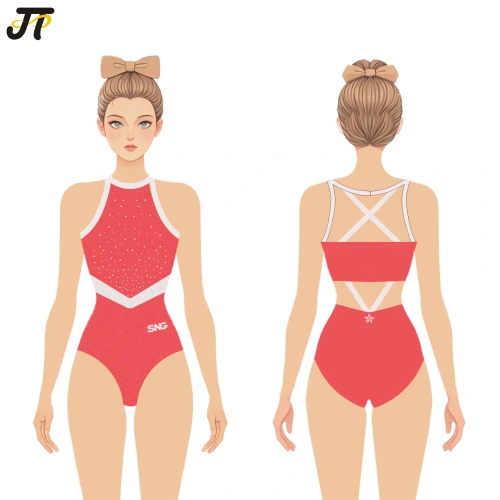
For small runs, the factory must be able to handle variety. A gymnastics club may request ten leotards in three sizes, with a specific team logo, a particular color combination, and a rhinestone design that matches the club identity. A new brand may ask for a sample collection of twenty leotards in five styles. A boutique retailer may want a small batch to test the market before committing to a larger purchase. These orders require attention to detail, flexible minimum order quantities, and a production process that can accommodate changes without creating excessive waste.
For large runs, the factory must be able to handle repetition. A distributor may order five hundred practice leotards in a core color range. A teamwear company may need one thousand competition leotards with sublimated graphics and consistent sizing. A brand may place a seasonal order that must be delivered before a major competition season. These orders require stable workmanship, reliable material supply, efficient line balancing, and strict quality control. The challenge is not simply making more pieces. The challenge is making more pieces that look and perform the same way as the approved sample.
T&J Sportswear understands that different customers have different order requirements. Whether a customer is a growing gymnastics club looking for customized team uniforms, a new brand developing its first collection, or an established distributor requiring regular production, the factory provides flexible solutions with low MOQ, competitive pricing, professional communication, and one-to-one service. This customer-focused approach allows T&J to serve both small and large runs without forcing every customer into the same production mold.
To understand how small and large runs are handled, it helps to follow the journey of a leotard through the factory. The process begins long before the first stitch is sewn. It starts with an inquiry, a design idea, a size chart, or a reference image. From there, the factory evaluates the order, develops the product, sources materials, creates samples, plans production, manufactures the garments, inspects them, and prepares them for shipment. Each stage has its own challenges, and each stage must be adapted to the size and complexity of the run.
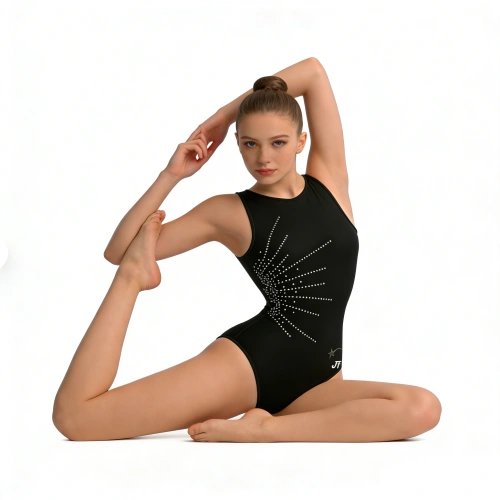
When a customer contacts a gymnastics leotard factory, the first step is to understand what the customer needs. Is the order for competition leotards, practice leotards, warm-ups, or a complete team collection? How many pieces are required? What sizes are needed? Are there custom logos, colors, sublimation graphics, or rhinestone layouts? Is the customer working with an existing design, or do they need help developing a new concept? What is the target delivery date? What is the target price range?
For small runs, the evaluation often focuses on customization and feasibility. A club may have a clear idea of what it wants, but it may not know which fabrics, decorations, or construction methods are best for gymnastics. The factory must guide the customer through the options without overwhelming them. For large runs, the evaluation focuses more on capacity, material availability, production scheduling, and cost. The factory must determine whether it can produce the required quantity within the required timeframe while maintaining the expected quality.
T&J Sportswear supports both OEM and ODM services. This means customers can choose between producing their own designs and developing new products together with the T&J design team. For small customers, this is especially valuable because it lowers the barrier to entry. A new brand does not need to have a fully developed technical package before approaching the factory. It can start with a sketch, a reference image, a color requirement, or an original idea. T&J can help transform that idea into a finished gymnastics apparel product.
Design is one of the most important stages in gymnastics apparel manufacturing. A leotard must not only look attractive; it must also fit properly, stretch in the right directions, provide secure coverage, and allow freedom of movement. The design must consider the athlete's body, the demands of the sport, and the visual identity of the team or brand.
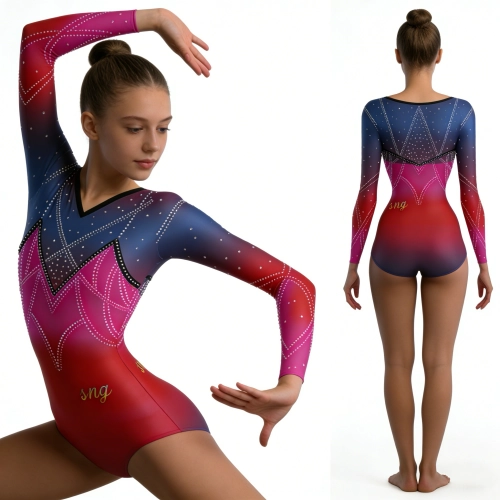
T&J Sportswear has an in-house professional design team specializing in gymnastics apparel. The team can develop new concepts based on sketches, reference images, color combinations, team identities, or brand requirements. For competition leotards, the design team can combine sublimation graphics, color blocking, mesh, rhinestones, crystal decoration, and different fabric effects to create distinctive visual designs. Customers can also customize colors, logos, patterns, labels, and other branding elements.
For small runs, design development is often highly collaborative. A gymnastics club may want the leotard to reflect its team colors, mascot, or competitive level. The factory may create digital artwork and share it with the customer for approval before sampling. This back-and-forth is manageable for small orders because the volume is low and the customer is often deeply involved in the design process.
For large runs, design development must be more standardized. Once a design is approved, it must be documented in detail so that it can be repeated consistently across hundreds or thousands of pieces. The factory must create clear specifications for fabric, color, print placement, rhinestone size and position, stitching, and finishing. Any ambiguity in the design can lead to inconsistencies in bulk production. Therefore, large runs require a more formal approval process and a more detailed technical package.
Sampling is a critical step for both small and large runs. It allows the customer to review the design, fabric, fit, decoration, and finishing before confirming mass production. For small runs, the sample may be a single leotard that represents the final product. For large runs, the sample may be a size set or a pre-production sample that serves as the reference for the entire order.
During sampling, the factory checks several details. Does the fabric have the right stretch and recovery? Does the pattern fit the intended size range? Is the printing clear and correctly placed? Are the rhinestones secure and evenly spaced? Is the stitching clean and durable? Does the leotard provide the required coverage and comfort? These questions are important regardless of order size, but the consequences of a mistake are different. In a small run, a sample issue can be corrected with limited waste. In a large run, a sample issue that is not caught early can affect the entire production batch.
T&J Sportswear pays close attention to every stage of manufacturing, from fabric selection and pattern development to cutting, sewing, printing, rhinestone application, quality inspection, and final packaging. This helps the factory provide products that are suitable for both demanding training sessions and high-level competitions. The sampling process is not simply a formality. It is the foundation for consistent bulk production.
Fabric is the foundation of a gymnastics leotard. The material must stretch, recover, breathe, and withstand repeated use. It must also hold color, printing, and decoration well. T&J Sportswear can use materials including Lycra, Spandex, Polyester, Mystique, and Mesh, depending on the design and application. Different products can be developed for different priorities, such as stretch, lightweight construction, breathability, quick drying, comfort, durability, and visual appearance.
For training leotards, the focus is on comfortable stretch, durability, moisture management, and everyday wear. These leotards need to survive frequent washing, long practices, and constant movement. For competition leotards, the focus shifts toward precision fit, secure coverage, decorative details, and professional finishing. Competition leotards often use special fabrics, sublimation printing, mesh panels, and rhinestones to create a striking look that performs under competition lights.
Material planning is different for small and large runs. In a small run, the factory may be able to use fabric from existing stock or place a smaller fabric order. This allows for greater flexibility in color and design. In a large run, fabric must be ordered in sufficient quantity to cover the entire production batch, with extra allowance for cutting waste, quality issues, and size variations. The factory must also ensure that the fabric dye lot is consistent. If the fabric for a large order comes from different dye lots, there may be slight color differences between leotards, which is unacceptable for a team or brand collection.
For customers, this means that large runs often require earlier material commitments. Small runs can be more flexible, but they may have fewer fabric options if the required material is not in stock. A good factory communicates these trade-offs clearly so that customers can make informed decisions.
The cutting room is where the manufacturing process begins to take physical shape. Patterns are laid out on fabric, and the cutting team cuts the pieces that will become leotards. For small runs, cutting may be done with greater manual attention. The cutting team can adjust the layout to minimize waste and accommodate small quantities of specialty fabrics. For large runs, cutting must be highly efficient. The factory may use marker making software to optimize fabric utilization, and cutting may be done in multiple layers to increase speed.
However, speed must not come at the expense of accuracy. Gymnastics leotards require precise cutting because the fit depends on the relationship between different panels. If a piece is cut incorrectly, the leotard may twist, pull, or fit poorly. T&J Sportswear maintains stable workmanship throughout production, paying attention to fabric, printing, stitching, sizing, rhinestone placement, and overall finishing. This attention to detail is important whether the order is ten pieces or one thousand.
For small runs, the cutting room may need to handle multiple colors and styles in a single order. This requires organization and labeling to ensure that pieces from different designs do not get mixed up. For large runs, the cutting room may focus on a single style or a small number of styles for an extended period. This allows the team to develop a rhythm and maintain consistency. The factory must be able to switch between these two modes without losing efficiency or quality.
Sewing is the heart of leotard manufacturing. Gymnastics leotards require stretch stitching, secure seams, and clean finishing. The sewing team must be skilled in handling stretch fabrics, elastic, mesh, and other materials. They must understand how to construct a leotard so that it moves with the athlete rather than restricting movement.
For small runs, the sewing line may be set up as a flexible cell. A small team of skilled workers handles the entire garment, moving from one operation to the next. This allows for greater customization and quick changes between styles. For large runs, the sewing line is often organized into operations. One worker may attach sleeves, another may join the bodice, another may insert elastic, and another may finish the hems. This division of labor increases speed and consistency, but it requires careful balancing so that no single operation becomes a bottleneck.
T&J Sportswear has a factory team that includes more than 30 skilled workers, with reported production capacity of more than 300 leotards per day. This provides a balance between flexible customization and the ability to support larger wholesale and team orders. For customers, production capacity is not simply about quantity. The real value is the ability to maintain consistent workmanship when moving from samples to bulk production. A large run is only successful if every leotard meets the same standard as the approved sample.
Decoration is one of the features that makes gymnastics leotards unique. Sublimation printing allows for vibrant, all-over graphics that do not fade or crack easily. Rhinestones and crystals add sparkle and can be arranged in patterns that match a team logo or design theme. Mesh panels can add visual interest and breathability. Color blocking can create a dynamic, athletic look.
For small runs, decoration can be highly customized. A club may request a specific rhinestone layout that spells out a team name or forms a logo. A new brand may want a small batch of leotards with a unique sublimated print. The factory must be able to handle these custom requests without requiring a massive minimum order. T&J Sportswear supports customization that can cover artwork, colors, sublimation printing, logos, rhinestone layouts, fabric combinations, sizes, labels, packaging, and other details.
For large runs, decoration must be repeatable. The print placement must be consistent across all sizes and all pieces. The rhinestone layout must be identical from one leotard to the next. The colors must match the approved standard. This requires clear documentation, trained operators, and quality checks at multiple stages. In a large run, even a small deviation in rhinestone placement can become noticeable when hundreds of leotards are lined up together. Therefore, the factory must have systems in place to maintain consistency.
T&J Sportswear's production process covers design development, fabric selection, digital artwork, printing, cutting, sewing, decoration, inspection, packaging, and delivery. This integrated approach helps reduce communication between multiple suppliers and gives customers a more efficient path from an initial idea to a finished product. Whether the decoration is simple or complex, the factory can adapt the process to the order size.
Quality control is not a single step at the end of production. It is a continuous process that begins with sample development and continues through bulk production. During sample development, customers can review the design, fabric, fit, decoration, and finishing before confirming mass production. This early review helps prevent problems that could be costly to fix later.
For finished garments, key inspection points can include fabric condition, printing quality, stitching, measurements, rhinestone placement, coverage, and overall appearance. The production process is designed to reduce common problems such as inconsistent sizing, printing defects, loose decoration, or uneven finishing. T&J Sportswear works to maintain stable workmanship and carefully inspects finished products before shipment.
In a small run, quality control may be more hands-on. Because there are fewer pieces, the team can inspect each leotard individually and address any issues immediately. In a large run, quality control must be systematic. The factory may use in-line inspections, end-of-line inspections, and final random inspections based on accepted quality standards. The goal is to catch problems early and prevent them from spreading through the entire batch.
T&J Sportswear's product information also lists certifications such as ISO9001, SGS, and CE for applicable products. Specific certification and testing documentation can be provided according to the product and customer requirements. These certifications give customers additional confidence that the factory follows recognized quality management practices.
Packaging is the final stage before shipment. For small runs, packaging may be highly customized. A gymnastics club may want each leotard individually wrapped with a team label. A new brand may want custom hangtags, poly bags, and size stickers. For large runs, packaging must be efficient and consistent. The factory must ensure that the correct quantities, sizes, and styles are packed according to the customer's instructions.
T&J Sportswear provides flexible customization that includes labels, packaging, and other details. This means customers can develop a complete product presentation, not just a leotard. For large wholesale orders, the factory can pack by size, color, or style, depending on the distributor's requirements. For small team orders, the factory can pack by athlete name or number if needed. The packaging process is designed to protect the garments during shipping and make them ready for immediate use or resale.
Small runs are often the starting point for new brands, growing gymnastics clubs, and boutique retailers. These customers may not have large budgets or established sales data. They need a manufacturing partner that can support them without requiring a huge minimum order quantity. T&J Sportswear offers a low MOQ starting from 10 sets for selected products. This gives gymnastics clubs, new brands, boutique retailers, and smaller distributors greater flexibility when testing new designs or launching new collections.
Instead of requiring customers to commit to large quantities before they know how a design will perform in their market, T&J can support smaller initial orders and help customers gradually develop their collections. This is especially important in the gymnastics apparel market, where trends can change and teams may want to update their uniforms every season. A small run allows the customer to test fit, fabric, color, and decoration before placing a larger order.
Small runs also allow for more customization. A gymnastics club may want a unique design that reflects its team identity. The club may choose specific colors, logos, and rhinestone patterns. T&J's in-house design team can help develop the artwork and product specifications. The factory can then produce a small batch that meets the club's requirements. This level of customization is possible because the production process is flexible and the factory is used to handling varied orders.
However, small runs also have challenges. The cost per piece may be higher because the factory cannot achieve the same economies of scale as a large run. Material sourcing may be more difficult if the required fabric is not in stock. The production schedule may be less predictable because small orders often need to fit around larger orders. T&J manages these challenges through transparent communication, realistic lead times, and flexible production planning. The goal is to help small customers grow without forcing them into an order size they cannot support.
Large runs are the backbone of many wholesale and teamwear businesses. A distributor may order hundreds of practice leotards for a regional market. A brand may order thousands of competition leotards for a national retail launch. A multi-club organization may need a full range of sizes for multiple teams. These orders require a factory with sufficient capacity, reliable material supply, and strict quality control.
T&J Sportswear has a factory team of more than 30 skilled workers and a reported production capacity of more than 300 leotards per day. This capacity allows the factory to handle large runs while still maintaining the flexibility to serve smaller customers. For large orders, the factory can organize production into a structured schedule, allocate workers to specific operations, and monitor progress daily. The goal is to ensure that the order is completed on time and that every leotard meets the approved standard.
Large runs also require strong communication. The customer may have multiple stakeholders, such as designers, buyers, and logistics teams. The factory must provide clear updates on sampling, material arrival, production progress, inspection results, and shipping schedules. T&J provides one-to-one professional service, which means customers can communicate their requirements directly and receive assistance with product development, customization, production details, and logistics. This is especially important for large orders where a small misunderstanding can lead to significant delays or costs.
Quality consistency is the biggest challenge in large runs. When producing hundreds or thousands of leotards, the factory must ensure that every piece matches the approved sample. This requires standardized patterns, consistent fabric, trained operators, and multiple quality checks. T&J pays attention to fabric, printing, stitching, sizing, rhinestone placement, and overall finishing throughout production. The factory's goal is not only to manufacture gymnastics apparel, but also to build long-term partnerships with customers through reliable products and responsive service.
One major advantage for small and growing customers is T&J Sportswear's low MOQ starting from 10 sets for selected products. This policy is not simply about accepting small orders. It is a strategic decision that helps customers enter the gymnastics apparel market, test new designs, and build their brand step by step. For a new brand, a low MOQ means lower financial risk. The brand can order a small collection, test it with real customers, gather feedback, and then reorder with confidence. For a gymnastics club, a low MOQ means the club can order custom team leotards without needing to purchase hundreds of extra pieces. For a boutique retailer, a low MOQ means the retailer can offer unique gymnastics apparel without tying up too much capital in inventory.
Low MOQ also supports creativity. When customers are not forced to order large quantities, they are more willing to experiment with new designs, colors, and decorations. They can try a new rhinestone layout, a new sublimation print, or a new fabric combination. If the design is successful, they can scale it up in a future order. If not, they can adjust without suffering a major loss. This iterative approach is common in fashion and sportswear, and it is increasingly important in gymnastics apparel.
T&J Sportswear combines low MOQ with competitive pricing, professional communication, and one-to-one service. This makes it easier for new brands, gymnastics clubs, and established distributors to develop their own collections. The factory understands that every large customer was once a small customer. By supporting small runs, T&J builds relationships that can grow into large, long-term partnerships.
Production capacity is often measured in numbers: how many machines, how many workers, how many pieces per day. T&J Sportswear has a factory team that includes more than 30 skilled workers, with reported production capacity of more than 300 leotards per day. These numbers are important because they show that the factory can handle volume. However, capacity is not only about speed. It is about the ability to maintain quality while meeting deadlines.
Skilled workers are essential in gymnastics apparel manufacturing. Leotards are not simple garments. They require stretch stitching, precise pattern matching, careful elastic application, and detailed decoration. A skilled sewer understands how different fabrics behave and how to adjust techniques accordingly. A skilled rhinestone applicator understands how to place stones securely and evenly. A skilled quality inspector knows what to look for and how to identify problems before they reach the customer.
For small runs, skilled workers provide flexibility. They can switch between styles, handle custom details, and solve problems quickly. For large runs, skilled workers provide consistency. They can repeat the same operations with precision and maintain a steady rhythm throughout the production day. T&J's production team pays attention to every stage of manufacturing, from fabric selection and pattern development to cutting, sewing, printing, rhinestone application, quality inspection, and final packaging. This helps the factory provide products that are suitable for both demanding training sessions and high-level competitions.
T&J Sportswear supports both OEM and ODM services. OEM means the customer provides the design, and the factory manufactures it. ODM means the factory helps develop the design, often from a sketch, reference image, or concept. Both models are valuable for different types of customers. A well-established brand may have its own design team and technical package, so it may prefer OEM. A new brand or gymnastics club may not have design resources, so it may prefer ODM support.
For small runs, ODM support can be especially helpful. The customer can share a rough idea, and the factory's design team can create artwork, suggest fabrics, and develop a sample. This reduces the customer's development burden and shortens the time to market. For large runs, OEM production may be more common because the customer has already finalized the design and wants the factory to execute it consistently at scale. However, even large customers may use ODM services for new product development or seasonal collections.
Customization can cover artwork, colors, sublimation printing, logos, rhinestone layouts, fabric combinations, sizes, labels, packaging, and other details. T&J's production process covers design development, fabric selection, digital artwork, printing, cutting, sewing, decoration, inspection, packaging, and delivery. This integrated approach helps reduce communication between multiple suppliers and gives customers a more efficient path from an initial idea to a finished product. Whether the order is small or large, the factory can adapt its OEM and ODM services to the customer's needs.
Quality control starts before bulk production. During sample development, customers can review the design, fabric, fit, decoration, and finishing before confirming mass production. This is the first line of defense against errors. If the sample is not right, the customer can request changes before the factory invests time and materials in bulk production. This saves money and prevents disappointment.
For finished garments, key inspection points can include fabric condition, printing quality, stitching, measurements, rhinestone placement, coverage, and overall appearance. The production process is designed to reduce common problems such as inconsistent sizing, printing defects, loose decoration, or uneven finishing. T&J Sportswear works to maintain stable workmanship and carefully inspects finished products before shipment.
In a small run, quality control may be more personal. The factory team may know the order well and inspect each piece with extra care. In a large run, quality control must be documented and repeatable. The factory may use checklists, measurement charts, and random sampling to ensure that the entire batch meets the standard. If a problem is found, the factory must be able to trace it back to the source and correct it quickly. This systematic approach is what allows a factory to produce large orders without sacrificing quality.
T&J Sportswear's product information also lists certifications such as ISO9001, SGS, and CE for applicable products. Specific certification and testing documentation can be provided according to the product and customer requirements. These certifications are not just badges. They represent a commitment to quality management, product safety, and customer satisfaction. For international customers in the US, Europe, and other markets, these certifications can be important for compliance and consumer confidence.
Manufacturing quality is only one part of a successful supplier relationship. Clear communication and responsive service are equally important, especially for customized gymnastics apparel. A factory may have excellent machines and skilled workers, but if it does not communicate well, customers will struggle to get the products they need.
T&J Sportswear provides one-to-one professional service. From initial inquiry and design development to sampling, production, inspection, and shipment, the team provides professional support throughout the process. Customers can communicate their requirements directly and receive assistance with product development, customization, production details, and logistics. This is valuable for both small and large customers. A small club may need help understanding fabric options and size charts. A large distributor may need regular production updates and shipping documentation. The factory must be able to serve both.
For small runs, communication is often about guidance. The customer may be new to manufacturing and may not know what questions to ask. The factory can explain the process, recommend materials, and help the customer make decisions. For large runs, communication is often about coordination. The customer may have multiple departments involved, and the factory must provide clear timelines, progress reports, and issue resolution. In both cases, the goal is to build trust and reduce uncertainty.
T&J Sportswear understands that different customers have different order requirements. Whether a customer is a growing gymnastics club looking for customized team uniforms, a new brand developing its first collection, or an established distributor requiring regular production, the factory provides flexible solutions with low MOQ, competitive pricing, professional communication, and one-to-one service. This customer-focused approach is a key reason why T&J has been able to serve customers in more than 36 countries.
Every production run has challenges. Small runs may face higher unit costs, limited fabric availability, and scheduling conflicts with larger orders. Large runs may face material delays, quality consistency issues, and capacity bottlenecks. A good factory anticipates these challenges and manages them proactively.
For small runs, one common challenge is the cost of setup. Printing screens, digital artwork, pattern development, and sample making all require time and resources. If the order is very small, these setup costs must be spread across fewer pieces, which can increase the unit price. T&J addresses this by offering low MOQ and flexible customization, but it also communicates realistic pricing so that customers understand the trade-offs. Another challenge is material minimums. Some fabrics and trims may have minimum order quantities from the supplier. The factory must either use available stock or find creative ways to meet the customer's design requirements without forcing them to buy excessive material.
For large runs, one common challenge is maintaining consistency. When producing hundreds or thousands of leotards, small variations can add up. A slight difference in fabric dye lot, a minor change in print placement, or a small inconsistency in rhinestone application can become noticeable. T&J addresses this by standardizing specifications, training workers, and inspecting at multiple stages. Another challenge is capacity planning. Large orders must be scheduled carefully so that they do not disrupt other customers. The factory must balance machine time, worker availability, and material delivery. Good planning ensures that large runs are completed on time without causing delays for small runs.
Scaling from a small run to a large run is not simply a matter of multiplying the quantity. It requires changes in planning, communication, and quality control. A factory that can scale successfully has systems in place to maintain consistency.
First, the factory must have clear product specifications. Every detail, from fabric composition to stitch type to rhinestone size, must be documented. This documentation becomes the reference for all production. Second, the factory must have trained workers who understand the specifications and can execute them consistently. Third, the factory must have quality control checkpoints at critical stages. These checkpoints help catch problems early and prevent them from spreading. Fourth, the factory must have reliable material suppliers. A delay in fabric or trim delivery can disrupt the entire production schedule. Fifth, the factory must have strong communication with the customer. If the customer changes the design or quantity, the factory must be able to adjust quickly.
T&J Sportswear has developed these systems over more than 10 years in the gymnastics apparel industry. The factory's experience with customers in 36+ countries has given it practical knowledge of different markets, sizing systems, and product preferences. Its main markets include North America and Europe, where customers place strong emphasis on product quality, customization, consistency, and reliable communication. This experience helps T&J scale production while maintaining the quality that customers expect.
To see how small and large runs work in practice, consider three common customer scenarios.
A gymnastics club has 25 athletes and needs custom team leotards for the upcoming season. The club wants a specific color combination, a team logo, and a rhinestone design. The club does not need thousands of pieces, but it does need a professional look and a comfortable fit. T&J Sportswear can support this small run with a low MOQ, help develop the design, and produce the leotards in the required sizes. The club can review a sample before bulk production and then receive the finished order in time for the season. This allows the club to look professional without overcommitting financially.
A new brand wants to launch a gymnastics apparel line with five styles. The brand has design ideas but no manufacturing experience. T&J can provide ODM support, helping to develop the artwork, select fabrics, and create samples. The brand can start with a small initial order to test the market. If the products sell well, the brand can place larger repeat orders. T&J's low MOQ, competitive pricing, and one-to-one service make it easier for the new brand to enter the market and grow.
A distributor has an established customer base and needs a steady supply of practice and competition leotards. The distributor orders hundreds of pieces per season and requires consistent quality and reliable delivery. T&J can handle the large run using its production capacity, skilled workers, and quality control systems. The factory can schedule production, source materials in bulk, and inspect finished garments before shipment. The distributor can rely on T&J as a long-term manufacturing partner.
T&J Sportswear is a professional gymnastics apparel manufacturer specializing in custom gymnastics leotards and teamwear for clubs, teams, brands, wholesalers, and distributors worldwide. With more than 10 years of manufacturing experience, the company provides reliable quality, flexible customization, and professional service for customers in the US, Europe, and other international markets.
The company's main products include competition gymnastics leotards, practice gymnastics leotards, custom team leotards, rhinestone gymnastics leotards, and gymnastics warm-up wear. From everyday training to competition performances, these products are designed to provide a comfortable fit, excellent flexibility, and a professional appearance. Competition leotards combine performance fabrics with creative designs, sublimation printing, rhinestones, and other decorative techniques. Practice leotards focus on comfort, stretch, breathability, and durability. Warm-ups and matching team apparel allow customers to build a complete team collection with customized team colors, logos, patterns, labels, and packaging.
T&J supports OEM and ODM services, from design development and sample making to bulk production. The professional design team can help transform ideas, sketches, or reference images into finished gymnastics apparel. With low MOQ, flexible customization, competitive pricing, and one-to-one service, T&J makes it easier for new brands, gymnastics clubs, and established distributors to develop their own collections. Whether the customer needs a small customized team order or a large wholesale production project, T&J is committed to delivering quality gymnastics apparel with consistent workmanship and dependable service.
With 10+ years of industry experience, 36+ countries served, 30+ skilled workers, 300+ daily leotard capacity, low MOQ, professional design support, OEM/ODM customization, and one-to-one service, T&J combines manufacturing capability with the flexibility required by today's international gymnastics apparel market. From the first idea to the final leotard, T&J Sportswear is committed to making custom gymnastics apparel more efficient, flexible, and reliable.
The gymnastics apparel market is diverse. It includes local clubs, national teams, new brands, established retailers, and international distributors. Each customer has different needs, budgets, and timelines. A gymnastics leotard factory that wants to succeed must be able to handle both small and large runs. It must be flexible enough to support customization and low MOQ, yet structured enough to manage large-scale production with consistency and quality.
T&J Sportswear demonstrates how a factory can balance these two realities. By investing in design capability, skilled workers, quality control, and customer service, T&J can serve a small gymnastics club and a large wholesale distributor with the same commitment to quality. The factory's low MOQ helps small customers get started, while its production capacity and experience help large customers scale. The result is a manufacturing partnership that grows with the customer.
In the end, the ability to handle small and large runs is not just about machines or floor space. It is about mindset. A factory must be willing to listen, adapt, and communicate. It must understand that every order, no matter the size, represents a customer's trust. T&J Sportswear takes that trust seriously, working to maintain stable workmanship and carefully inspect finished products before shipment. The goal is not only to manufacture gymnastics apparel, but also to build long-term partnerships through reliable products and responsive service. For customers around the world, that combination of flexibility and reliability is what makes a gymnastics leotard factory truly dependable.
