This article explores how a practice gymnastics leotards factory ensures consistent fit, using T&J Sportswear as an example. Consistent fit is critical for comfort, performance, and customer satisfaction. The process begins with precision pattern development and grading, where patterns are drafted specifically for gymnastics and tested on fit models. Grading rules are tailored to body proportions, ensuring that sizes scale correctly. Fabric selection and testing follow, as different materials stretch differently. The factory tests fabrics for stretch, recovery, and shrinkage, and maintains strict batch controls. Sample making and fit trials allow for iterative adjustments, with feedback from gymnasts. Precision cutting and sewing ensure that every garment matches the approved sample, with trained workers and real-time quality checks. Quality control includes measurement inspections, dress form checks, and defect detection. Finally, communication with customers and after-sales feedback help refine processes. T&J Sportswear, with over 10 years of experience, 30+ skilled workers, and a capacity of 300+ leotards per day, exemplifies these practices. Their in-house design team, low MOQ, OEM/ODM services, and one-to-one support make them a reliable partner for clubs, brands, and distributors worldwide. The article concludes that consistent fit is a result of systematic processes, not coincidence, and that choosing an experienced factory is essential for quality gymnastics apparel.
In the world of gymnastics, a leotard is more than just a piece of clothing. It is a second skin that must move with the athlete, provide coverage, and offer the freedom to perform at the highest level. For practice leotards, the demands are slightly different from competition wear. Practice leotards are worn day in and day out, subjected to countless washes, stretches, and tumbles. They must be durable, comfortable, and above all, they must fit consistently. A gymnast who wears a size medium in one style should be able to trust that another style in the same size will fit just as well. This consistency is not accidental. It is the result of a rigorous, multi-step process that a dedicated practice gymnastics leotards factory follows to ensure every garment meets precise fit standards. This article explores how such a factory achieves consistent fit, using the practices of T&J Sportswear, a professional gymnastics apparel manufacturer with over a decade of experience, as a case study.
Gymnastics leotards are unique garments. They are typically made from highly elastic fabrics such as Lycra, Spandex, or a blend of polyester and elastane. These materials stretch in multiple directions, which is essential for movement but also makes fit a moving target. A pattern that fits perfectly in one fabric might be too tight or too loose in another. Add to this the fact that gymnastics clubs often order team leotards for athletes of different ages and body types, and the challenge multiplies. A factory must be able to produce a range of sizes that correspond to real-world measurements, and it must do so repeatedly, order after order, without drifting off spec.
Consistent fit begins long before the first stitch is sewn. It starts with a deep understanding of the human body, the properties of stretch fabrics, and the specific needs of gymnasts. Factories that excel in this area, like T&J Sportswear, have developed systems that address every stage of production, from design to final inspection. The goal is to eliminate guesswork and replace it with measurable, repeatable processes.
The foundation of consistent fit is an accurate pattern. A practice gymnastics leotards factory cannot rely on generic blocks or patterns borrowed from other sportswear. Gymnastics leotards have specific requirements: a snug fit around the torso, adequate length in the crotch, proper coverage in the front and back, and armholes that allow full range of motion without cutting or gaping. The pattern must be drafted to accommodate these needs while also allowing for the stretch of the fabric.
undefined

At T&J Sportswear, the in-house design team specializes in gymnastics apparel. They create patterns that are tested on actual gymnasts or fit models before being approved for production. This step is critical. A pattern that looks good on paper can behave very differently when cut from a stretchy fabric. The team conducts fit trials, often using multiple fabric types, to see how the pattern adapts. They adjust seam placements, curve shapes, and ease allowances until the fit is consistent across a range of sizes.
Grading is the next crucial element. Grading is the process of scaling a base pattern up or down to create a range of sizes. Inconsistent grading can lead to a size small that fits like a medium, or a size large that is too tight in the shoulders. Factories that ensure consistent fit use precise grading rules that are specific to gymnastics leotards. They do not simply add equal increments to all dimensions; they adjust each measurement based on body proportions. For example, the torso length may increase more gradually than the chest circumference. T&J Sportswear's design team uses their 10+ years of experience to refine these grading rules, ensuring that a size 10 leotard from one style fits the same as a size 10 from another style.
| Measurement | Size 8 (cm) | Size 10 (cm) | Size 12 (cm) | Increment (per size) |
|---|---|---|---|---|
| Chest Circumference | 64 | 68 | 72 | +4 cm |
| Waist Circumference | 56 | 59 | 62 | +3 cm |
| Torso Length (shoulder to crotch) | 58 | 61 | 64 | +3 cm |
| Hip Circumference | 68 | 72 | 76 | +4 cm |
This table illustrates how different measurements may have different increments to reflect natural body growth. A factory that applies the same increment to all measurements will produce garments that fit poorly in some areas. By contrast, a factory focused on consistent fit will use data-driven grading that mirrors the real proportions of growing athletes.
The fabric is a critical variable in fit consistency. A leotard made from a fabric with 20% elastane will stretch differently from one with 30% elastane. Even within the same fiber content, different knitting structures and weights can change how the garment hugs the body. Therefore, a practice gymnastics leotards factory must carefully select and test fabrics for every style.
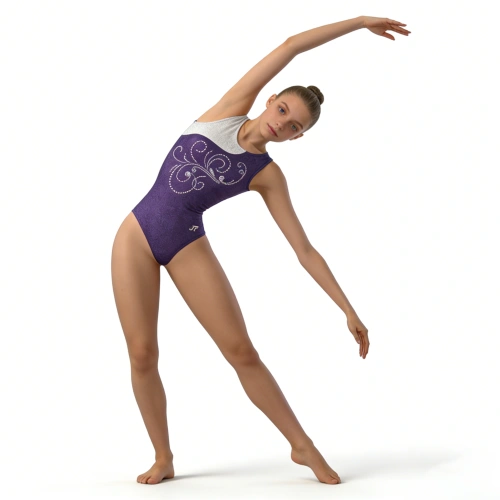
T&J Sportswear uses a range of performance materials, including Lycra, Spandex, Polyester, Mystique, and Mesh. For practice leotards, the focus is on comfort, stretch, breathability, and durability. Before a fabric is approved for production, it undergoes testing to measure its stretch and recovery. The factory also washes and stretches samples to see how the fabric behaves over time. This is important because a leotard that fits perfectly on day one but sags after five washes is not consistent.
Moreover, the factory maintains strict controls over fabric batches. If a new batch of fabric arrives with slightly different stretch properties, the pattern may need to be adjusted. T&J Sportswear's production team communicates closely with fabric suppliers to ensure that specifications remain constant. When changes are unavoidable, they re-test and adjust patterns accordingly. This proactive approach prevents fit inconsistencies from reaching the customer.
By conducting these tests, the factory builds a database of fabric behavior. This data is then used to adjust patterns for each fabric type, ensuring that a leotard in Mystique fits the same as a leotard in Lycra, even though the materials behave differently.
Once the pattern and fabric are selected, the factory produces a sample. The sample is a prototype that allows the design team and the customer to evaluate the fit. For practice leotards, fit trials are often conducted with actual gymnasts or fit models who represent the target size range. They wear the sample, move through typical gymnastics movements, and provide feedback on comfort, coverage, and restriction.
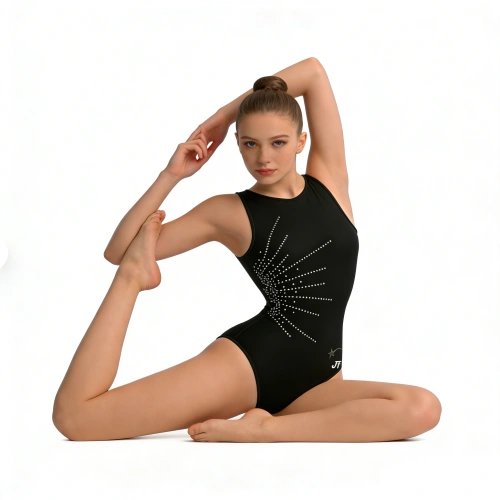
At T&J Sportswear, sample development is a collaborative process. The factory supports OEM and ODM services, meaning they can work from a customer's design or develop a new design from scratch. During sampling, they pay close attention to how the leotard fits at key points: the shoulders, the bust, the waist, the hips, and the crotch. They check for any pulling, bunching, or gaping. If adjustments are needed, the pattern is revised and a new sample is made. This iterative process continues until the fit is approved.
Importantly, the factory does not stop at one sample. They often produce samples in multiple sizes to verify that the grading is correct. A size small sample might fit perfectly, but if the size large sample has a tight armhole or a short torso, the grading needs to be fixed. By testing across sizes, the factory ensures that consistency is maintained throughout the size range.
These trials are documented, and the feedback is used to refine the pattern. The factory keeps detailed records of each fit trial, which becomes a reference for future orders. This institutional knowledge is a key reason why an experienced factory like T&J Sportswear can maintain consistent fit across many styles and seasons.
Even the best pattern can be compromised by poor cutting and sewing. A practice gymnastics leotards factory must have robust production controls to ensure that every piece is cut and sewn to the same specifications. This begins with the cutting process. Fabric is laid out in multiple layers, and a cutting machine or hand cutter follows the pattern pieces precisely. Any deviation in cutting can lead to misaligned seams and an inconsistent fit.
T&J Sportswear's factory team includes 30+ skilled workers who are trained in handling stretch fabrics. They use specialized equipment and techniques to prevent the fabric from stretching during cutting and sewing. For example, they may use a cutting table with a vacuum system to hold the fabric in place, and they use ballpoint needles and stretch stitches to maintain elasticity. The sewing process is monitored at each station to ensure that seam allowances are consistent. A seam that is too wide or too narrow can change the fit of the entire garment.
Furthermore, the factory employs a system of checks throughout the sewing line. Each operator inspects their work before passing it to the next stage. This real-time quality control catches issues early, before they become widespread. For instance, if a sewing machine is mis-threaded or the tension is off, the operator will notice and correct it immediately. This attention to detail is what allows the factory to produce 300+ leotards per day while maintaining consistent fit and workmanship.
By training workers to identify and prevent these defects, the factory ensures that the final product matches the approved sample in fit and appearance.
After the leotards are sewn, they enter the quality control (QC) phase. This is where the factory verifies that the finished garments meet the fit specifications. QC is not just about spotting visible flaws; it is about measuring and comparing. A practice gymnastics leotards factory that ensures consistent fit will have a documented measurement chart for every size and style. The QC team measures each garment at key points and compares the measurements to the chart.
At T&J Sportswear, the QC process includes:
If a garment fails any of these checks, it is set aside for rework or rejection. The factory maintains records of QC results and uses them to identify trends. For example, if a particular size consistently measures slightly short in the torso, the pattern may need to be adjusted. This feedback loop is essential for continuous improvement.
In addition to in-house QC, T&J Sportswear can provide certifications such as ISO9001, SGS, and CE for applicable products. These certifications demonstrate a commitment to quality management systems and product safety. Customers can request specific testing documentation to ensure that the leotards meet their market's standards.
Consistent fit is not just a technical achievement; it is also a collaborative one. The factory must communicate clearly with the customer throughout the process. This is especially true for custom team leotards, where the customer may have specific fit preferences or a unique size range. A factory that listens to feedback and incorporates it into production will be more successful in delivering consistent fit.
T&J Sportswear emphasizes one-to-one professional service. From the initial inquiry to final shipment, customers work with a dedicated representative who understands their needs. This representative coordinates with the design and production teams to ensure that fit requirements are understood and met. If a customer reports that a previous order ran small, the factory can adjust the pattern for future orders. If a team has athletes with different body types, the factory can offer custom sizing or modifications.
This customer-focused approach extends to after-sales service. The factory welcomes feedback on fit and uses it to refine their processes. Over time, this dialogue builds a partnership based on trust and reliability. Customers know that when they order from T&J Sportswear, they will receive leotards that fit consistently, order after order.
Practice leotards are worn for hours at a time, often multiple times per week. A poor fit can cause discomfort, distraction, and even injury. A leotard that rides up, digs into the shoulders, or restricts movement can prevent a gymnast from focusing on their training. For gymnastics clubs, consistent fit is also a matter of practicality. When ordering team leotards, coaches need to know that a size 10 will fit all athletes who normally wear size 10. If sizing is inconsistent, the club may need to order extra sizes or deal with returns, which wastes time and money.
For brands and wholesalers, consistent fit is a key factor in customer satisfaction. A brand that sells leotards with unreliable sizing will quickly develop a reputation for poor quality. On the other hand, a brand that consistently delivers well-fitting leotards will build a loyal customer base. This is why many brands choose to work with experienced manufacturers like T&J Sportswear, who have the systems and expertise to ensure fit consistency.
Moreover, consistent fit is a sign of a well-run factory. It indicates that the factory has control over its processes, from design to production to quality control. It shows that the factory values its customers and is committed to delivering products that meet expectations. In a competitive market, this reliability is a significant advantage.
T&J Sportswear is a professional gymnastics apparel manufacturer specializing in custom gymnastics leotards and teamwear. With more than 10 years of manufacturing experience, they have developed a comprehensive approach to ensuring consistent fit. Their main products include competition gymnastics leotards, practice gymnastics leotards, custom team leotards, rhinestone gymnastics leotards, and gymnastics warm-up wear. They work with gymnastics clubs, teams, brands, wholesalers, and distributors worldwide, with a strong focus on customers in the US, Europe, and other international markets.
The company's strengths align directly with the steps outlined above:
By integrating these capabilities, T&J Sportswear ensures that every practice leotard they produce fits consistently. Their approach is not just about meeting a specification; it is about understanding the needs of gymnasts and delivering apparel that supports their performance.
Ensuring consistent fit in practice gymnastics leotards is a complex task that requires attention to detail at every stage of production. From pattern development and fabric testing to sample trials, cutting, sewing, and quality control, each step builds on the previous one. A factory that excels in this area must have the technical expertise, the right equipment, and a culture of quality. It must also be willing to listen to customers and continuously improve.
T&J Sportswear exemplifies how a dedicated factory can achieve consistent fit. With over a decade of experience, a professional design team, rigorous quality control, and a customer-focused approach, they have built a reputation for reliability. For gymnastics clubs, brands, and distributors looking for practice leotards that fit well every time, partnering with such a factory is a smart decision. After all, in gymnastics, every movement matters, and the right fit makes all the difference.
Whether you are a growing gymnastics club looking for customized team uniforms, a new brand developing your first collection, or an established distributor requiring regular production, T&J Sportswear offers flexible solutions with low MOQ, competitive pricing, professional communication, and one-to-one service. Their goal is not only to manufacture gymnastics apparel but also to build long-term partnerships through reliable products and responsive service.
