Briefing a supplier on a custom competition gymnastics leotard is the stage at which the final product is effectively defined. A clear, complete brief allows a manufacturer to produce a garment that fits correctly, performs under movement, matches the team identity, and arrives before the competition date. The essential elements of a strong brief include the purpose of the order and the level of competition, the design direction supported by annotated reference images or sketches, a defined colour hierarchy with Pantone or other references, fabric and performance priorities, decoration requirements such as sublimation artwork and rhinestone density, branding details including logos, lettering, labels, and packaging, applicable federation rules and compliance documentation, accurate quantities and athlete measurements, commercial terms, a realistic timeline, quality expectations, and a single nominated contact for approvals. Common briefing mistakes include sending reference images without context, leaving sizing until the end, assuming fabric colours will match digital files exactly, changing the design after sample approval, starting the process too late, and allowing too many decision makers to provide conflicting feedback. Avoiding these problems requires early planning and a documented approval process with defined stages: concept, specification, sampling, final approval, bulk production, inspection, and shipment. Working with a manufacturer that specialises in gymnastics apparel simplifies the process considerably. T&J Sportswear is a professional gymnastics apparel manufacturer with more than ten years of experience, serving customers in 36+ countries, with main markets in North America and Europe. Its product range covers competition gymnastics leotards, practice leotards, custom team leotards, rhinestone leotards, and gymnastics warm-up wear. The company offers in-house design support, OEM and ODM customisation, materials including Lycra, Spandex, Polyester, Mystique, and Mesh, low minimum order quantities from 10 sets for selected products, a factory team of 30+ skilled workers, production capacity of over 300 leotards per day, quality control from sample to bulk production, certifications such as ISO9001, SGS, and CE for applicable products, and one-to-one service from enquiry through shipment. A well-prepared brief, combined with a capable manufacturing partner, turns a complex custom project into a predictable and repeatable process that delivers consistent results season after season.
How to Brief a Supplier on a Custom Competition Gymnastics LeotardA competition leotard is never just a piece of sportswear. It is a technical garment, a team identity statement, a performance tool, and — in most clubs — the single most visible purchase of the season. When a gymnastics club, a team manager, a coach, or an emerging brand decides to commission custom competition leotards, the quality of the finished product is largely determined long before the first stitch is sewn. It is determined by the quality of the brief.
A brief is the document, message, or structured conversation that transfers intent from the buyer to the manufacturer. When it is clear, complete, and technically grounded, the sampling process moves quickly, surprises are rare, and the finished leotards arrive exactly as imagined. When it is vague, contradictory, or missing key technical details, even a highly capable factory will struggle to deliver what the customer had in mind. The gap between a good custom leotard and a disappointing one is usually not the sewing — it is the briefing.
undefined
This article explains, in practical and third-person terms, how a gymnastics club, team organisation, brand, or distributor should brief a supplier on a custom competition gymnastics leotard. It covers the information a manufacturer actually needs, the order in which that information should be prepared, the technical language that removes ambiguity, and the checkpoints that prevent expensive re-makes. It also explains how an experienced manufacturing partner such as T&J Sportswear — a professional gymnastics apparel manufacturer with more than ten years of specialised experience, customers in 36+ countries, and a design and production team built specifically around gymnastics — can be briefed efficiently and how that partner can fill gaps in the customer's own technical knowledge.
Designers and coaches often assume that the most important part of a custom leotard project is the artwork. In reality, artwork is only one input among many. A competition leotard must simultaneously satisfy aesthetic goals, athletic requirements, federation regulations, sizing realities, production tolerances, and delivery deadlines. If any one of these is left out of the brief, the manufacturer is forced to guess — and guessing is where problems begin.

Consider a simple example. A club sends a supplier a photograph of a leotard and asks for something similar in team colours. The photograph shows a sublimated design with mesh sleeves and a scattering of rhinestones. Without a brief, the supplier does not know whether the club wants the same silhouette, the same fabric weight, the same crystal size, or the same level of coverage. The supplier also does not know the sizes required, the deadline, the budget per unit, or whether the design must comply with a specific competition rulebook. The supplier will produce something. Whether it is the right something is a matter of luck.
A well-constructed brief converts luck into predictability. It gives the manufacturer a fixed target, allows the design team to propose improvements rather than guesses, and creates a written record that both parties can refer to if a question arises during production. For clubs ordering once a season, the brief is a one-time effort. For brands and distributors ordering continuously, the brief becomes a repeatable internal process that protects margins and reputation.
Custom gymnastics apparel is manufactured in batches. A single misunderstanding about size, colour, or crystal placement can affect an entire production run, and by the time the problem is visible in the finished goods, the fabric has been cut, printed, and assembled. The cost of correction is measured not only in money but in time — and competition calendars do not move.
A thorough brief reduces this risk in several ways. It forces the buyer to make decisions early rather than during production. It documents those decisions so that neither party relies on memory. It allows the supplier to flag potential technical problems before sampling begins, such as a design that requires an unusual panel shape, a colour that is difficult to match in a specific fabric, or a crystal layout that may not survive repeated washing. Finally, it establishes clear approval stages, so that the customer reviews and signs off on the sample before bulk production starts.
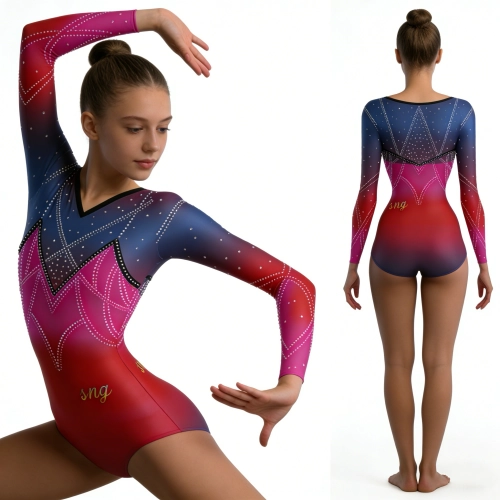
A good brief is not a long document. Length is not the same as clarity. A brief consisting of a single well-organised page, a measurement sheet, a colour reference, and a clear artwork file can be far more effective than twenty pages of prose. Nor is a good brief a substitute for conversation. Most successful custom leotard projects combine a written brief with a short call or exchange of messages in which the supplier asks clarifying questions.
A good brief is also not a design brief alone. It is a production brief, a commercial brief, and a logistics brief rolled into one. The manufacturer needs to know what to make, how many, in what sizes, in what colours, by when, at what price point, and to what quality standard. Each of these elements belongs in the same package.
Before examining each element in detail, it helps to see the complete picture. A comprehensive brief for custom competition gymnastics leotards typically includes the following categories of information.
Each of these categories is discussed below. Not every project requires deep detail in every category — a small club ordering ten leotards will have a much simpler brief than a brand launching a full collection — but the categories themselves remain the same.
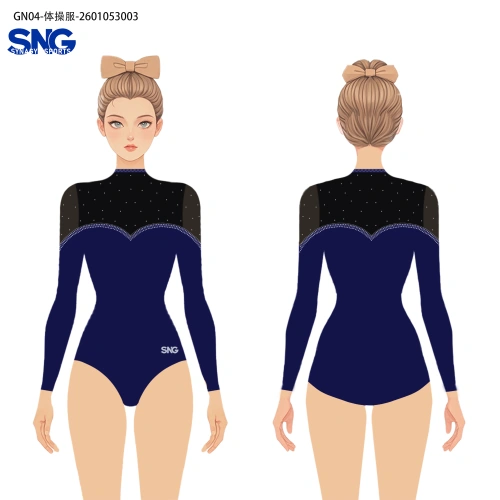
The first question a supplier will ask is deceptively simple: what are these leotards for? A competition leotard intended for a national championship is briefed differently from a set intended for a regional meet, and both are briefed differently from a team warm-up set or a practice rotation.
Competition leotards are built around precision fit, secure coverage, decorative impact, and a professional finish. They are worn under judging scrutiny and under photography, often under bright stage lighting, and they must look consistent across an entire team. Practice leotards, by contrast, prioritise comfort, breathability, moisture management, and durability across hundreds of training hours. Many clubs order both, and a supplier needs to know which category each item belongs to, because the fabric, construction, and decoration decisions diverge.
The answers shape the entire project. A club that intends to reuse a design for three seasons needs a manufacturer capable of producing consistent colours and consistent crystal layouts over multiple orders. A club ordering a single competition set for a national final needs a supplier that can guarantee delivery dates and support a tight approval schedule. A brand developing a retail collection needs a manufacturer with OEM and ODM capability, the ability to produce samples quickly, and the flexibility to handle low minimum order quantities during the testing phase.
This is one reason why working with a manufacturer that focuses specifically on gymnastics apparel matters. General sportswear factories can produce a leotard-shaped garment, but they often lack the accumulated understanding of stretch behaviour, coverage rules, crystal application, and the specific fit expectations of gymnasts. T&J Sportswear, for example, has built its entire production and design process around gymnastics apparel — competition leotards, practice leotards, custom team leotards, rhinestone leotards, and warm-up wear — and this focus informs every question its team asks during the briefing stage.
Once the purpose is clear, the brief should describe the visual direction. This is the part most customers find easiest, because it is the part they can see in their heads. It is also the part that benefits most from specificity.
Words like elegant, bold, modern, classic, or sparkly carry different meanings for different people. A design team in one country may interpret bold as large colour blocks, while a coach may mean high-contrast rhinestone work. The brief should therefore combine descriptive language with concrete references.
It is equally useful to state what is not wanted. A brief that says the club dislikes heavy all-over rhinestones, prefers matte fabrics to shiny ones, or wants to avoid a particular colour combination prevents the design team from spending time on directions that will be rejected.
Colour is the single most common source of disappointment in custom leotards, usually because the brief did not establish a hierarchy. A club that lists three team colours without indicating which is dominant will receive a design that may allocate them evenly — and may look nothing like the club imagined.
A strong colour section in a brief specifies the primary colour, the secondary colour, the accent colour, and where each should appear. It also specifies whether the design should use gradients, colour blocking, ombré effects, metallic finishes, or matte finishes. If the club has an official colour standard, the brief should include it. If the club only has a rough idea, the brief should say so, because that gives the manufacturer's design team permission to propose options.
Colour should also be discussed in terms of fabric. The same colour reads differently on matte Lycra, on shiny Mystique, on mesh, and on sublimated polyester. A design that looks striking as a flat digital file may lose contrast when translated into fabric. Experienced manufacturers will raise this point during briefing, and buyers should welcome the conversation rather than treat it as an obstacle.
The silhouette of a competition leotard is a technical decision as much as an aesthetic one. It affects how the garment sits on the body, how it behaves during skills such as leaps, turns, and acrobatic elements, and how secure the athlete feels while performing.
A brief should specify the silhouette clearly, using the vocabulary the manufacturer understands. Common options include a classic tank leotard, a leotard with a high neck, a scoop neck, a V-neck, a halter neck, a keyhole back, a racerback, a cross-back, a strappy back, or a fully covered back. Sleeve options include sleeveless, short sleeve, three-quarter sleeve, and long sleeve.
Back design deserves particular attention in competition wear. Many gymnasts and coaches prefer a back that provides adequate coverage while still allowing freedom of movement. A back that is cut too low may shift during skills, and a back that is cut too high may feel restrictive in hot competition halls. The brief should state the desired coverage level in plain language — for example, whether the back should be fully covered, moderately open, or open with mesh.
If the club has previously experienced problems with leotards riding up, straps slipping, or coverage shifting during routines, those problems should be described in the brief. A manufacturer that specialises in gymnastics apparel will understand the underlying construction issues and can adjust the pattern accordingly.
Neckline preferences vary between clubs, age groups, and countries. Some teams prefer a higher neckline for a traditional look; others prefer a lower or more modern cut. The brief should state the preference and note any athlete comfort requirements. It is also helpful to mention whether the club wants a consistent neckline across all sizes or is willing to adjust the cut slightly for different age groups.
Where a club is unsure, a capable supplier will often provide a small set of silhouette options as sketches or line drawings before any sampling takes place. This step is inexpensive and prevents the far more costly scenario of discovering at the sample stage that the silhouette itself was wrong.
Fabric is where aesthetics meets engineering. A competition leotard must stretch in the right directions, return to shape after wear, resist pilling and fading, manage moisture, and remain comfortable against the skin during intense activity. Different fabrics deliver different combinations of these properties.
Common materials used in gymnastics apparel include Lycra, Spandex, Polyester, Mystique, and Mesh. Lycra and Spandex blends provide the stretch and recovery that gymnasts depend on. Polyester is frequently used as a base for sublimation printing because it accepts dye in a way that produces durable, wash-resistant graphics. Mystique is a shiny, metallic-look fabric often chosen for competition pieces where visual impact matters. Mesh is used for breathability and for visual contrast, particularly in sleeves, side panels, and back inserts.
Buyers do not need to be textile engineers, but they should describe the performance priorities. Useful statements include:
Where the club has a preferred fabric from a previous order, the brief should say so, and if possible identify the supplier or the fabric name. Where the club has no preference, the manufacturer can recommend options based on the design and the intended use. This is a normal part of OEM and ODM collaboration, and a design team experienced in gymnastics will usually propose two or three fabric combinations with different cost and performance profiles.
Lining is often overlooked in briefs and then becomes a point of dispute. The brief should state whether the front is to be lined, whether the lining should be a matching colour or a neutral one, and whether any additional support is required. For younger athletes, clubs frequently request fuller coverage and softer finishes; for senior athletes, clubs may prioritise minimal construction and maximum freedom.
Seam placement and thread type also affect comfort. Flatlock stitching reduces bulk and irritation, which matters in a garment worn directly against the skin during high-intensity movement. A brief does not need to dictate stitch type, but it should mention any past comfort issues so that the manufacturer can address them.
Colour matching is one of the most technically demanding parts of custom leotard production, particularly when a design is produced across multiple orders or multiple seasons. The brief should establish how colour will be specified and how closely it must be matched.
Where a club or brand has official colours, Pantone references are the most reliable starting point. However, Pantone references describe ink and paper, not fabric. A Pantone number translated into a dyed Lycra will not be an exact match, and a Pantone number translated into a sublimated print on polyester will differ again. Buyers should understand this before production begins.
For clubs ordering repeatedly, keeping a physical reference swatch from the approved sample is a simple but highly effective practice. It gives the manufacturer a tangible target for future orders and helps maintain visual consistency across seasons, which matters greatly for team photographs and brand recognition.
Sublimation printing is widely used in competition leotards because it allows complex graphics, gradients, and photographic elements to be embedded into the fabric rather than applied on top of it. The result is a design that does not crack, peel, or add weight, and that retains its appearance through repeated use.
However, sublimation places specific demands on artwork. The brief should include artwork files in a usable format, ideally vector-based for logos and lettering and high-resolution raster files for complex imagery. Files should be supplied with clear layer information, colour values, and any typography notes. If the customer cannot supply production-ready files, the manufacturer's design team can develop them — this is a standard part of the design support offered by experienced gymnastics apparel manufacturers.
Alignment across seams is a frequent point of confusion. A digital mock-up may show a continuous gradient flowing from the body into the sleeve, but once the garment is cut and sewn, the gradient must be engineered to align. Experienced manufacturers handle this routinely, but they need to know it is expected. The brief should therefore state explicitly whether visual continuity across seams is a requirement.
Rhinestone gymnastics leotards are a distinct product category, and they require their own briefing discipline. Crystal decoration affects cost, weight, washability, and visual impact, and the difference between a tasteful application and an excessive one is often a matter of a few stones.
The brief should specify the stone type, the stone size or sizes, the density, and the placement zones. It should also state whether the stones must be heat-set, glued, or sewn, although this is usually a manufacturing decision based on the fabric and the intended durability. Different fabrics accept different adhesives and heat treatments, so the decoration plan and the fabric plan must be considered together.
Typical placement zones for competition leotards include the neckline, the front chest area, the sleeve cuffs, the side panels, the back, and the hip area. A brief that simply says the leotard should be sparkly leaves too much to interpretation. A better brief describes the intended effect — for example, a scattered effect across the upper chest with a denser concentration along the neckline, or a continuous line of stones tracing a panel edge.
Density should also be discussed in relation to the level of competition and the club's preferences. Some clubs prefer restrained sparkle for a clean, professional appearance; others want maximum impact under stage lighting. Both are valid, and both should be described in the brief rather than assumed.
Durability expectations should be stated. Competition leotards are typically hand-washed, but they are also worn repeatedly across a season. The brief should note how often the leotards will be worn and washed, and whether the club has previously experienced stones falling off. A manufacturer that pays attention to adhesive selection and application pressure will reduce this risk, and knowing the usage pattern helps them choose the right method.
Team identity is expressed through logos, lettering, and colour, and the brief should treat these elements with the same precision as the main design. Club logos may need to appear on the chest, the sleeve, the back, or the hip. Athlete names may be required for certain competitions. Sponsor marks may need to be placed according to contractual requirements.
Each element should be described with its size, position, colour treatment, and application method. Application methods include sublimation printing, embroidery, heat transfer, and silicone or rubberised patches. Each method has different durability characteristics, different costs, and different visual results.
For brands rather than clubs, the brief should also cover label design, hangtag design, and packaging. These details affect the customer's retail presentation and should not be left to the final stages of production. A manufacturer offering OEM and ODM services will typically be able to produce custom woven labels, printed labels, size tags, and branded packaging alongside the leotards themselves.
Competition rules vary between federations, levels, and countries, and they can affect the design in ways that are not obvious. Rules may govern minimum coverage, neckline depth, the acceptability of certain embellishments, the size of logos, or the visibility of sponsor marks. In some contexts, there are restrictions on reflective or metallic materials.
The brief should state which rulebook applies and provide the relevant extracts if the manufacturer is unlikely to be familiar with them. It is not reasonable to expect a supplier in another country to know the regulations of every federation, but it is reasonable to expect them to follow clear instructions.
Rules that affect coverage can influence the back cut, the leg line, and the amount of mesh used. Rules that affect decoration can influence crystal density and placement. Rules that affect branding can influence logo size and position. All of these should be settled during briefing, before the design is finalised.
Where a club is uncertain about a rule, it is better to raise the question during briefing than to discover a problem at the competition. A manufacturer with extensive experience across multiple markets will often have encountered similar requirements before and can advise on practical solutions.
Sizing is the area where briefs most frequently fail. A beautifully designed leotard that does not fit is of no use to anyone, and re-making a full set of competition leotards is expensive and slow.
The brief should include a complete size breakdown showing how many leotards are required in each size. It should also include measurement data for the athletes, ideally collected in a consistent way. Where athletes are still growing, the club may want to consider a modest growth allowance, though this must be balanced against the need for a close fit during competition.
Where athletes fall between sizes, the brief should state whether the club prefers a tighter or looser fit, and whether individual adjustments are acceptable. Some clubs order standard sizes; others prefer made-to-measure production for a closer fit. Both approaches are viable, and the choice affects both cost and lead time.
Order quantity interacts with minimum order requirements. Manufacturers set minimums because fabric, printing, and decoration setups carry fixed costs, and small runs are proportionally more expensive. However, minimums vary widely, and clubs and new brands benefit from working with suppliers that keep them low.
T&J Sportswear, for example, offers low minimum order quantities starting from 10 sets for selected products. This structure is designed to support gymnastics clubs, boutique retailers, new brands, and smaller distributors that want to test a design before committing to larger volumes. A club ordering ten leotards for a single squad can therefore access custom design and production that would otherwise be reserved for large organisations.
Sampling is the bridge between the brief and bulk production. A sample allows the customer to see and feel the actual garment, verify the fabric, check the fit, examine the decoration, and confirm the colours before committing to a full run.
The brief should state who will review the sample, how long the review will take, and what criteria will be used for approval. It should also indicate whether more than one sample round is acceptable and whether there is budget for it. Some projects require only one sample; others benefit from two, particularly when the design is complex or when multiple sizes must be validated.
Where possible, the sample should be tested by an athlete performing typical skills rather than simply worn for a photograph. Movement reveals fit issues that a static review cannot. Clubs that involve a coach and one or two athletes in the sample review tend to catch problems earlier and approve with greater confidence.
Price is rarely a single number. In custom leotard production, cost is influenced by fabric selection, decoration complexity, print coverage, number of panels, rhinestone quantity and quality, labelling, packaging, order quantity, and shipping destination. A brief that states only a target price without explaining the design's complexity gives the supplier little to work with.
A better approach is to state the target price, the acceptable range, and the priorities. A club may be willing to reduce crystal density to protect the budget, or may prefer to increase the order quantity to achieve a better unit price. A brand may need a specific retail price point and therefore a specific manufacturing cost. These priorities should be communicated.
Buyers should also ask about what is included in the quoted price. Does it cover artwork development, sampling, labelling, and packaging, or are these charged separately? A transparent quotation avoids misunderstandings later, and experienced manufacturers are usually happy to itemise costs when asked.
Deadlines drive many decisions in custom leotard production. The brief should state the date the leotards must be delivered, and then work backwards through sampling, approval, bulk production, quality inspection, and shipping.
Competition calendars are unforgiving. A club that needs leotards for a meet in eight weeks is working with a very different schedule from a brand planning a collection launch six months ahead. Manufacturers appreciate being told the real deadline, including any internal deadline such as a team photograph or a shipping cutoff.
Buyers should ask the supplier to confirm each stage in writing. This creates a shared schedule and makes it easier to identify risks early. It also helps the customer understand which delays are within their own control — for example, a slow sample approval inevitably compresses the production window.
Quality is not an abstract concept in custom apparel; it is a set of observable characteristics. The brief should describe what the customer expects in terms of workmanship, consistency, and durability.
Manufacturers typically inspect finished garments against a defined list of checkpoints. These may include fabric condition, print quality, stitch integrity, measurement accuracy against the specification, rhinestone placement and adhesion, coverage, symmetry, and overall appearance. A customer who understands these checkpoints can communicate expectations more precisely.
Customers who have experienced specific problems in the past should describe them. If a previous supplier produced leotards with inconsistent sizing, or with stones that detached after two washes, that information is valuable. It allows the new manufacturer to address the root cause rather than simply promising better results.
Some buyers require certification or testing documentation, particularly brands selling into regulated retail markets. Relevant documentation may include ISO9001, SGS, or CE certification for applicable products, along with fibre content declarations, care instructions, and test reports. Where these are required, the brief should state them at the outset, because documentation requests late in production can delay shipment.
T&J Sportswear lists certifications such as ISO9001, SGS, and CE for applicable products and can provide specific certification and testing documentation according to the product and the customer's requirements. Buyers should specify exactly which documents are needed and for which markets.
Custom manufacturing involves many decisions, and decisions require communication. The brief should identify who on the customer side is authorised to approve designs, samples, and changes, and who on the supplier side is the main point of contact.
Clubs often have multiple stakeholders — a head coach, a team manager, a treasurer, and sometimes a committee. When several people provide feedback independently, contradictions arise. A single point of contact who consolidates feedback before sending it to the supplier prevents confusion and speeds up the process considerably.
Language and time zones also matter. Clubs and brands working with international manufacturers should confirm the working hours of the supplier's team and allow for time zone differences when setting approval deadlines. Suppliers that offer one-to-one service typically assign a dedicated contact who follows the project from the first enquiry through to shipment, which reduces the risk of information being lost between departments.
Design ownership is a topic many customers overlook until a problem arises. The brief should establish who owns the artwork, whether the manufacturer may reuse the design for other customers, and whether the customer requires exclusivity for a particular design or colour combination.
For clubs, exclusivity may be less important than consistency. The priority is that the same design can be reordered next season in the same colours and with the same crystal layout. For brands, exclusivity and ownership are commercially significant, and the terms should be agreed in writing before production begins.
A club that intends to reorder should ask the supplier to retain the approved specification, including artwork files, fabric references, colour values, size specifications, and decoration layouts. Retaining this information makes reorders faster and more accurate, and it allows the club to add a few extra leotards mid-season if a new athlete joins.
Manufacturers with stable internal processes and consistent sourcing are better positioned to support reorders over multiple years. This is one practical advantage of working with a supplier that has long-term experience in a single product category rather than a general factory that changes its focus frequently.
Certain mistakes appear repeatedly in custom gymnastics apparel projects. Recognising them in advance saves time, money, and frustration.
Reference images are useful, but they are not a brief. A photograph does not explain which elements the customer likes and which are irrelevant. The brief should annotate references, indicating whether the attraction is the colour palette, the panel layout, the crystal placement, or the silhouette.
Sizing is often treated as an administrative detail to be sorted out after the design is approved. In practice, sizing data should be collected early, because it can influence the pattern and the number of sizes required.
Customers frequently expect a fabric colour to match a digital file exactly. It will not. Fabric absorbs dye differently from paper, and screen calibration varies. Setting realistic expectations during briefing prevents disappointment at sample stage.
Design changes after sample approval disrupt production schedules and can increase costs. Where changes are unavoidable, they should be documented and the impact on timeline and price confirmed in writing before production continues.
Some clubs begin the ordering process only weeks before a competition. Even the most efficient manufacturer cannot compress fabric sourcing, printing, sewing, decoration, inspection, and shipping into an unrealistic window. Early planning is the simplest way to guarantee delivery.
When a committee designs by consensus without a single coordinating voice, feedback becomes contradictory and progress slows. A nominated contact person is essential.
The following framework can be used as a template. It is deliberately simple, and it can be adapted for a small club order or a large brand production run.
| Section | What to Provide |
| Purpose | Competition, practice, warm-up, or collection; number of athletes; level of competition |
| Design Direction | Reference images, sketches, mood, silhouette, neckline, back style, sleeve length |
| Colour | Primary, secondary, and accent colours; Pantone or other references; finish preferences |
| Fabric | Performance priorities; preferred materials; lining and coverage requirements |
| Decoration | Sublimation artwork, rhinestone type, size, density, and placement zones |
| Branding | Logos, lettering, sponsor marks, labels, hangtags, packaging |
| Compliance | Applicable rulebook, coverage and decoration restrictions, documentation needs |
| Sizing | Quantity per size, measurements, fit preference, growth allowance |
| Commercial | Target price, quantity, payment terms, shipping destination, Incoterms |
| Timeline | Delivery date, sample approval dates, shipping method |
| Quality | Inspection expectations, tolerances, certifications, documentation |
| Communication | Nominated contact, approval authority, preferred channel, change process |
A second table can be used to track the approval stages of a project, which is particularly useful when a club is coordinating with multiple stakeholders.
| Stage | Deliverable | Approved By |
| Concept | Design proposal and mock-up | Club contact |
| Specification | Fabric, colour, and decoration confirmation | Club contact |
| Sampling | Physical sample garment | Coach and athlete review |
| Final Approval | Signed-off specification and size list | Club contact |
| Bulk Production | Finished garments | Supplier quality team |
| Inspection | Quality report and packing list | Supplier quality team |
| Shipment | Tracking and documentation | Both parties |
Even a carefully prepared brief will contain gaps, because most clubs and many new brands are not specialists in apparel manufacturing. This is where the choice of supplier becomes important. A capable manufacturing partner does not simply accept the brief; it interrogates it, fills in the missing pieces, and proposes solutions.
T&J Sportswear is a professional gymnastics apparel manufacturer with more than ten years of specialised experience in the development and production of high-quality gymnastics leotards and teamwear. Its main products include competition gymnastics leotards, practice gymnastics leotards, custom team leotards, rhinestone gymnastics leotards, and gymnastics warm-up wear. The company works with gymnastics clubs, teams, brands, wholesalers, distributors, and other sportswear businesses, with a strong focus on customers in the United States, Europe, and other international markets.
One of the most useful forms of support during briefing is in-house design capability. T&J Sportswear maintains a professional design team specialising in gymnastics apparel. Rather than only manufacturing designs supplied by customers, the team can develop new concepts based on sketches, reference images, colour combinations, team identities, or brand requirements. For competition leotards, the team can combine sublimation graphics, colour blocking, mesh, rhinestones, crystal decoration, and different fabric effects to create distinctive visual designs, while also customising colours, logos, patterns, labels, and other branding elements.
This means a club with a clear idea but no artwork can still proceed. A coach can describe the intended look, provide a few references, and receive a design proposal that can be refined through discussion. The brief in that scenario becomes a conversation supported by professional design input, rather than a one-way instruction.
A brief that specifies performance requirements will receive a more informed response from a manufacturer with material expertise. T&J Sportswear works with materials including Lycra, Spandex, Polyester, Mystique, and Mesh, selecting them according to the design and the intended application. Different products can be developed for different priorities, such as stretch, lightweight construction, breathability, quick drying, comfort, durability, and visual appearance.
For training leotards, the emphasis tends to fall on comfortable stretch, durability, moisture management, and everyday wear. For competition leotards, the emphasis shifts toward precision fit, secure coverage, decorative details, and professional finishing. A brief that explains how the leotards will be used allows the manufacturer to align the material choice with the real demands of the garment.
Production capability matters even for small orders, because consistency between the sample and the bulk run is what customers ultimately judge. T&J Sportswear operates with a factory team of more than 30 skilled workers and reports production capacity of over 300 leotards per day. This provides a balance between flexible customisation and the ability to support larger wholesale and team orders.
For customers, capacity is not only about volume. The real value lies in maintaining consistent workmanship when moving from a single sample to a full production run. Fabric, printing, stitching, sizing, rhinestone placement, and overall finishing must remain stable across every unit, and a brief that clearly defines the approved specification makes that consistency easier to achieve.
Customisation sits at the centre of the manufacturing service. T&J Sportswear supports both OEM and ODM, allowing customers to choose between producing their own designs and developing new products together with the manufacturer's team. Customisation can cover artwork, colours, sublimation printing, logos, rhinestone layouts, fabric combinations, sizes, labels, packaging, and other details.
The production process covers design development, fabric selection, digital artwork, printing, cutting, sewing, decoration, inspection, packaging, and delivery. This integrated approach reduces the need to coordinate multiple suppliers and gives customers a more efficient path from an initial idea to a finished product — a significant advantage for clubs and brands that do not have a large internal team.
Quality control begins before bulk production. During sample development, customers can review the design, fabric, fit, decoration, and finishing before confirming mass production. For finished garments, key inspection points can include fabric condition, printing quality, stitching, measurements, rhinestone placement, coverage, and overall appearance. The production process is designed to reduce common problems such as inconsistent sizing, printing defects, loose decoration, or uneven finishing.
Where certification is required, product information lists certifications such as ISO9001, SGS, and CE for applicable products, and specific certification and testing documentation can be provided according to the product and the customer's requirements. Buyers should include these requirements in the brief so that documentation can be prepared alongside production rather than after it.
Manufacturing quality is only one part of a successful supplier relationship. Clear communication and responsive service are equally important, especially for customised gymnastics apparel. From initial enquiry and design development to sampling, production, inspection, and shipment, T&J Sportswear provides professional support throughout the process. Customers can communicate their requirements directly and receive assistance with product development, customisation, production details, and logistics.
For a club ordering competition leotards for the first time, this support is often the difference between a stressful project and a straightforward one. For a distributor placing regular orders, it means a predictable process with fewer surprises.
The most successful custom leotard programmes treat briefing as an ongoing practice rather than a one-time task. Clubs that order annually gradually build a specification library: fabric references, colour swatches, approved size charts, and decoration layouts. Brands that develop collections build a briefing template that captures their design language and commercial requirements consistently.
This accumulated information makes each subsequent order faster and more accurate. It also makes it easier to introduce new designs without losing the visual continuity that defines a team or a brand. Over several seasons, the briefing process becomes a competitive advantage rather than an administrative burden.
A final step that many customers skip is post-order review. Once the leotards have been worn for a season, the club can assess what worked. Did the fabric hold up? Did the crystals stay in place? Did the fit remain comfortable? Did the colours stay consistent? Did the design look as intended in competition photographs?
These observations should be recorded and carried into the next brief. Feedback based on real use is the most valuable input a manufacturer can receive, and it allows both parties to improve the product in the following cycle. A club that reports that the sleeves felt restrictive, or that the stones along the neckline detached after several washes, gives the manufacturer concrete information to work with.
Briefing a supplier on a custom competition gymnastics leotard is not a bureaucratic exercise. It is the stage at which the product is actually defined. Every decision made during briefing — the silhouette, the fabric, the colour hierarchy, the crystal density, the size curve, the deadline — shapes what the athletes ultimately wear on the competition floor.
A clear brief gives a manufacturer everything needed to produce a garment that fits well, performs under pressure, looks consistent across the team, and arrives on time. It reduces re-makes, protects budgets, and removes the guesswork that leads to disappointment. It also opens the door to genuine collaboration, in which a professional design and production team can contribute ideas rather than simply execute instructions.
For clubs, the essential elements are straightforward: define the purpose, describe the design with references, specify colours and fabrics, plan the decoration, collect accurate measurements, confirm the rules, set a realistic timeline, and nominate a single point of contact. For brands and distributors, the same elements apply, with additional attention to branding, packaging, documentation, exclusivity, and repeat production.
Working with a manufacturer that understands gymnastics apparel specifically makes the process easier at every stage. T&J Sportswear brings more than ten years of specialised experience, customers in 36+ countries, a professional in-house design team, flexible OEM and ODM customisation, low minimum order quantities starting from 10 sets for selected products, 30+ skilled workers, production capacity of over 300 leotards per day, and one-to-one service throughout the project. From the first idea to the final leotard, the goal is to make custom gymnastics apparel more efficient, flexible, and reliable.
A well-prepared brief is the first step in that direction, and it is the step over which the customer has the most control. The more clearly a club or brand communicates what it needs, the more precisely a manufacturing partner can deliver it — season after season, order after order.
