A custom gymnastics leotard project depends on a clear supplier brief. The buyer should explain the purpose of the garment, such as competition, practice, team, or warm-up use. Competition leotards prioritize precision fit, coverage, decoration, and performance fabrics. Practice leotards prioritize comfort, stretch, breathability, and durability. The brief should also define design direction, exact colors, logos, artwork references, and decoration methods such as sublimation printing, mesh, rhinestones, and crystals. Fabric selection matters because Lycra, Spandex, Polyester, Mystique, and Mesh offer different levels of stretch, recovery, breathability, and appearance. Sizing information should include size range, size breakdown, and special measurement needs. Quantity, MOQ, budget, and timeline should be discussed early so the supplier can recommend suitable materials and production methods. Sampling allows the buyer to review design, fabric, fit, decoration, and finishing before bulk production. Quality control should cover fabric condition, printing, stitching, measurements, rhinestone placement, coverage, and overall appearance. Certifications such as ISO9001, SGS, and CE may be relevant for applicable products. Clear communication, one-to-one service, and a partnership approach help avoid delays and misunderstandings. T&J Sportswear, a professional gymnastics apparel manufacturer with more than 10 years of experience, supports OEM and ODM customization, low MOQ from 10 sets for selected products, in-house design, 30+ skilled workers, and production capacity of 300+ leotards per day. A well-prepared brief helps clubs, teams, brands, wholesalers, and distributors turn ideas into reliable, attractive, and performance-ready gymnastics apparel.
A custom gymnastics leotard is a performance garment, a team identity piece, and a brand asset. When a club, coach, brand owner, or distributor decides to develop a new leotard, the quality of the final product often depends less on the supplier alone and more on the clarity of the brief. A detailed brief gives the manufacturer the information needed to select fabrics, build patterns, prepare artwork, apply decoration, and produce consistent sizing. T&J Sportswear, a professional gymnastics apparel manufacturer with more than 10 years of experience, notes that successful custom projects usually begin with organized communication rather than vague inspiration.
This article explains how a buyer can brief a supplier on a custom gymnastics leotard. It covers purpose, design, fabrics, sizing, decoration, quantity, sampling, quality control, and delivery. It also shows how a manufacturing partner such as T&J Sportswear can support clubs, teams, brands, wholesalers, and distributors from the first idea to the final packaged leotard.
A gymnastics leotard must combine comfort, flexibility, durability, fit, coverage, and visual appeal. Unlike general sportswear, a leotard is worn close to the body and must allow a full range of motion during tumbling, vaulting, bars, and beam. A supplier cannot guess these needs. The brief should define how the garment will be used, who will wear it, what it should look like, and what performance standards it must meet.
A weak brief often leads to repeated sampling, delayed production, and disappointing results. A strong brief reduces misunderstandings and helps the manufacturer work efficiently. T&J Sportswear emphasizes that customization is one of its key strengths, but even the most experienced design team needs clear input from the customer.
undefined

The first part of a supplier brief should explain what type of leotard is required. T&J Sportswear produces competition gymnastics leotards, practice gymnastics leotards, custom team leotards, rhinestone gymnastics leotards, and gymnastics warm-up wear. Each category has different priorities.
Competition leotards must be precise, secure, and visually striking. The brief should mention the level of competition, the desired silhouette, the amount of coverage, and the preferred decoration. T&J Sportswear can combine performance fabrics with sublimation printing, color blocking, mesh, rhinestones, crystal decoration, and other techniques. The manufacturer pays close attention to fabric selection, cutting, stitching, embellishment, and finishing so that athletes can move confidently.
Practice leotards focus on comfort, stretch, breathability, and durability for everyday training. A club may need a simple design that survives frequent washing and long training hours. The brief should state whether the priority is softness, moisture management, shape retention, or cost efficiency. T&J Sportswear offers a wide range of colors, patterns, and styles, with customized designs available for gymnastics clubs and teams.
For customers building a complete team collection, the brief can include warm-ups, jackets, pants, and matching team apparel. Team colors, logos, patterns, labels, packaging, and other details can be customized. A complete brief helps the supplier create a cohesive look across competition and training apparel.
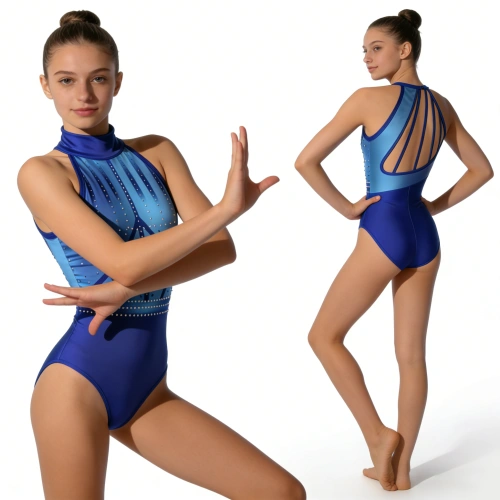
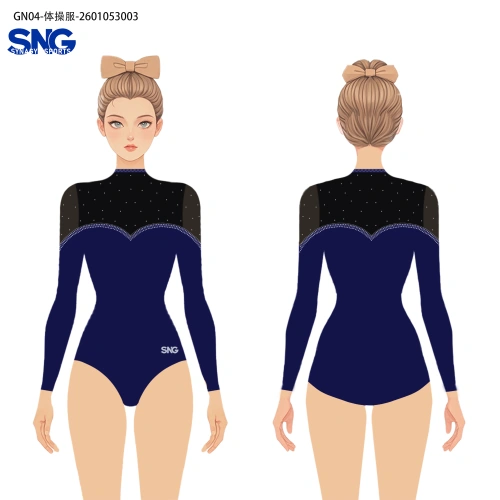
Design is more than a sketch. The buyer should describe the overall style, the mood, and the visual identity. References can include sketches, reference images, color swatches, previous uniforms, brand guidelines, or even photographs of nature, architecture, or art that inspire the desired look. T&J Sportswear has an in-house professional design team specializing in gymnastics apparel, and it can develop new concepts based on sketches, reference images, color combinations, team identities, or brand requirements.
Exact color references are essential. The brief should include Pantone numbers, CMYK values, or physical swatches when possible. It should also specify where logos, team names, athlete names, sponsor marks, and other branding elements should appear. If the club has a mascot or a specific font, that information should be included. The supplier can then prepare digital artwork for approval.
Reference images are helpful, but they must be explained. A buyer should not simply send a photograph of another brand's leotard and ask for the same design. Instead, the brief should identify which elements are admired, such as the neckline, sleeve length, color placement, rhinestone pattern, or back design. This allows the supplier to create an original design that respects copyright and brand identity.
Decoration can transform a leotard. Sublimation printing allows complex graphics, gradients, and photographic effects. Rhinestones and crystals add sparkle and stage presence. Mesh inserts can improve breathability and visual interest. The brief should state the desired level of decoration, the placement, and any restrictions. For example, rhinestones near the underarm may cause discomfort, while heavy decoration on a practice leotard may reduce durability. T&J Sportswear can advise on suitable techniques based on the design and intended use.
Fabric choice affects fit, feel, stretch, recovery, and appearance. T&J Sportswear can use materials including Lycra, Spandex, Polyester, Mystique, and Mesh, depending on the design and application. Different products can be developed for different priorities, such as stretch, lightweight construction, breathability, quick drying, comfort, durability, and visual appearance.
The brief should state whether the leotard will be used in a humid gym, an air-conditioned competition hall, or an outdoor warm-up area. It should also mention if athletes have sensitive skin or if the club prefers a particular fabric finish. For training leotards, comfort, stretch, durability, and moisture management are often the main concerns. For competition leotards, precision fit, secure coverage, decorative details, and professional finishing are more important.
Fit is one of the most sensitive areas in gymnastics apparel. The brief should describe the preferred neckline, sleeve length, leg cut, back style, and overall coverage. Some teams prefer a traditional high neck, while others choose a scoop neck or a keyhole back. Some athletes prefer a more modest leg cut, while others prefer a higher cut for freedom of movement. The supplier needs this information before pattern development.
The brief should mention how the leotard will be washed and stored. If the garment will be washed frequently by a club laundry, the fabric and decoration must be selected for repeated use. If the leotard is for a single competition season, the design may prioritize appearance. T&J Sportswear pays attention to fabric condition, printing quality, stitching, measurements, rhinestone placement, coverage, and overall appearance to reduce common problems such as inconsistent sizing, printing defects, loose decoration, or uneven finishing.
Sizing is a critical part of the brief. The buyer should provide a size range, a size breakdown, and any special measurement requirements. If the club has athletes with different body types, the brief should explain whether custom measurements are needed or whether standard sizes are acceptable. A clear size chart helps the supplier produce garments that fit consistently across the team.
Quantity is equally important. T&J Sportswear offers low MOQ starting from 10 sets for selected products. This gives gymnastics clubs, new brands, boutique retailers, and smaller distributors greater flexibility when testing new designs or launching new collections. The brief should state the initial order quantity, the expected reorder quantity, and any plans for future expansion. This helps the supplier plan production and suggest suitable materials or techniques.
Customization can cover artwork, colors, sublimation printing, logos, rhinestone layouts, fabric combinations, sizes, labels, packaging, and other details. T&J Sportswear supports both OEM and ODM services, allowing customers to choose between producing their own designs and developing new products together with the manufacturer's team.
The brief should specify woven labels, printed labels, size tags, care labels, hang tags, and any private label requirements. If the buyer is a brand, the label placement and content must be confirmed before production. If the buyer is a club, the club logo may need to appear on the chest, sleeve, or back. The supplier can provide artwork mockups for approval.
Packaging requirements should be included in the brief. Some customers prefer individual poly bags, while others need hang tags, size stickers, or retail-ready packaging. The brief should also state the delivery address, preferred shipping method, and required delivery date. T&J Sportswear provides one-to-one service from initial inquiry and design development to sampling, production, inspection, and shipment.
Budget and timeline shape every custom project. The buyer should share a realistic target price and delivery window. The supplier can then recommend suitable fabrics, decoration methods, and production schedules. A low MOQ supplier such as T&J Sportswear can support smaller initial orders, but the buyer should still understand how quantity affects unit cost.
Sampling is the bridge between idea and bulk production. During sample development, the customer can review the design, fabric, fit, decoration, and finishing before confirming mass production. The brief should state how many sample rounds are expected, who will approve the sample, and what changes are acceptable. Clear feedback at this stage saves time later.
Production capacity is not simply about quantity. The real value is the ability to maintain consistent workmanship when moving from samples to bulk production. T&J Sportswear has a factory team including 30+ skilled workers, with reported production capacity of 300+ leotards per day. This provides a balance between flexible customization and the ability to support larger wholesale and team orders.
Quality control starts before bulk production. The brief should mention any required certifications, testing standards, or compliance needs. T&J Sportswear lists certifications such as ISO9001, SGS, and CE for applicable products. Specific certification and testing documentation can be provided according to the product and customer requirements.
The buyer should also discuss the inspection process and whether third-party inspection is required. A clear quality agreement helps both sides avoid disputes and ensures that the final leotards meet expectations.
Clear communication is as important as manufacturing quality. The brief should identify a main contact person, a decision maker, and a preferred communication channel. T&J Sportswear provides professional support throughout the process, and customers can communicate their requirements directly and receive assistance with product development, customization, production details, and logistics.
A supplier relationship works best when both sides treat each other as partners. T&J Sportswear aims to build long-term partnerships rather than simply complete individual orders. Whether the customer is a gymnastics club developing team uniforms, a new brand launching a collection, a distributor expanding a product range, or an established buyer looking for a reliable manufacturing partner, the supplier can provide flexible solutions based on requirements.
Briefing a supplier on a custom gymnastics leotard is a structured process. The buyer should explain the purpose, design, fabrics, sizing, decoration, quantity, quality, and delivery requirements. The more precise the brief, the smoother the sampling and production process. T&J Sportswear combines more than 10 years of industry experience, 36+ countries served, 30+ skilled workers, 300+ daily leotard capacity, low MOQ, professional design support, OEM and ODM customization, and one-to-one service. From the first idea to the final leotard, a reliable manufacturing partner can make custom gymnastics apparel more efficient, flexible, and dependable.
T&J Sportswear is a professional gymnastics apparel manufacturer specializing in custom gymnastics leotards and teamwear for clubs, teams, brands, wholesalers, and distributors worldwide. With experienced production capabilities, professional design support, flexible customization, and a customer-focused approach, the company is committed to being a dependable gymnastics apparel manufacturing partner for customers around the world.
