undefined
A gymnastics leotard is more than a uniform. It is a piece of performance equipment that must stretch, recover, breathe, and stay in place through every leap, turn, tumbling pass, and landing. For gymnasts, coaches, clubs, and parents, choosing the right leotard can influence comfort, confidence, and even performance. The best leotard is not simply the one with the most sparkle or the lowest price. It is the one that moves with the athlete, supports the body, and holds up to repeated training and competition use.
For manufacturers such as T&J Sportswear, a professional gymnastics apparel manufacturer with more than 10 years of experience, the process begins long before a design is printed or a rhinestone is applied. It starts with understanding how gymnasts move, what they need from a garment, and how different fabrics, cuts, and construction methods affect the final result. This article explores how to choose a gymnastics leotard that performs as well as it looks.
When evaluating a leotard, the first question should be: how does it move? Gymnastics demands extreme ranges of motion. Athletes perform splits, bridges, back handsprings, release moves, and high-impact landings. A leotard that looks beautiful on a hanger but restricts the shoulders, pulls at the hips, or rides up during a routine will quickly become a distraction. Movement should be the foundation of every design decision.
Four-way stretch is essential. The fabric should stretch in both directions and recover quickly, so the leotard returns to its original shape after movement. Poor recovery can lead to sagging, bagging, or loss of fit over time. T&J Sportswear works with materials such as Lycra, Spandex, Polyester, Mystique, and Mesh, selecting them according to the intended use. Practice leotards may prioritize comfort, breathability, and durability, while competition leotards often require a more precise fit, secure coverage, and decorative details.
undefined
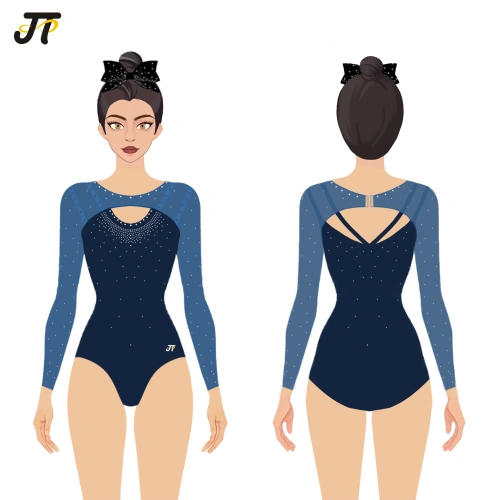
Coverage is another critical factor. A leotard should allow freedom of movement without shifting into uncomfortable positions. The leg cut, gusset, shoulder straps, and back design all influence how secure the garment feels. For growing athletes, a slightly adjustable or well-proportioned fit can make a significant difference. Coaches often prefer leotards that stay put during spotting and training, while gymnasts want a fit that feels second-skin comfortable rather than restrictive.
Custom team leotards from T&J Sportswear are developed with these considerations in mind. The company offers OEM and ODM services, allowing clubs and brands to customize artwork, colors, sublimation printing, logos, rhinestone layouts, fabric combinations, sizes, labels, and packaging. This flexibility helps create leotards that match a team's identity while still meeting the practical demands of the sport.
Not every leotard needs to serve the same purpose. Practice leotards and competition leotards have different priorities. Recognizing those differences helps buyers make better decisions for their athletes and budgets.
Practice leotards are worn frequently, sometimes several times a week. They must withstand repeated washing, stretching, and intense training. Comfort, moisture management, breathability, and durability are key. A practice leotard should feel light and flexible, with seams that do not chafe and fabric that does not lose shape quickly. T&J Sportswear's practice gymnastics leotards focus on these everyday needs, offering a wide range of colors, patterns, and styles with customization available for clubs and teams.
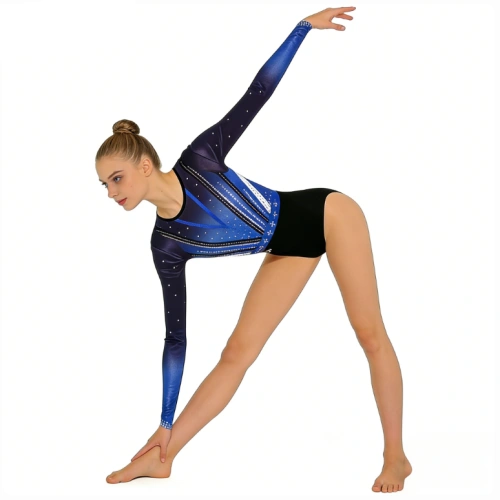
Competition leotards often need to do two jobs at once: perform under pressure and create a strong visual impression. Fit must be precise, coverage must be secure, and decoration must be applied carefully so it does not interfere with movement. Sublimation graphics, color blocking, mesh panels, rhinestones, and crystal decoration can all enhance the design. T&J Sportswear combines performance fabrics with creative designs, paying close attention to fabric selection, cutting, stitching, embellishment, and finishing. The result is eye-catching leotards that allow athletes to move confidently during competition.
Fabric choice affects stretch, weight, breathability, drying time, opacity, and durability. A leotard made from the wrong fabric may feel hot, restrict movement, or wear out quickly. A well-chosen fabric supports the athlete without calling attention to itself.
Different products can be developed for different priorities. For training, the emphasis may be on comfortable stretch, durability, moisture management, and everyday wear. For competition, the focus may shift to precision fit, secure coverage, decorative details, and professional finishing. T&J Sportswear evaluates these factors during product development, from fabric selection and pattern development to cutting, sewing, printing, rhinestone application, quality inspection, and final packaging.
Fit is one of the most common reasons a leotard succeeds or fails. A leotard that is too tight can restrict breathing and movement. One that is too loose can shift, rub, or provide inadequate coverage. Because gymnastics apparel is worn close to the body, small differences in measurements can have a large impact on comfort.

For individual athletes, accurate measurement of the chest, waist, hips, torso, and inseam is essential. For teams, consistency matters even more. Clubs ordering custom team leotards need a reliable sizing system and a manufacturer that can maintain consistency across multiple garments. T&J Sportswear has experience working with customers in 36+ countries, which means the company understands different sizing systems, market preferences, and fit expectations. Its team can assist with size development and product optimization, helping clubs and brands turn concepts into finished gymnastics apparel.
Two leotards can look similar on the outside but feel completely different because of construction. Stitching, seam placement, binding, leg openings, and gusset design all influence comfort and durability. Flatlock seams, for example, can reduce bulk and irritation. Reinforced stitching can improve longevity. A well-designed gusset can improve comfort and coverage.
Quality control during production is essential. T&J Sportswear pays attention to every stage of manufacturing, from fabric inspection to cutting, sewing, printing, rhinestone application, and final packaging. The company's production process is designed to reduce common problems such as inconsistent sizing, printing defects, loose decoration, or uneven finishing. Certifications such as ISO9001, SGS, and CE are listed for applicable products, and specific documentation can be provided according to product and customer requirements.
Rhinestones, crystals, sublimation, and embroidery can make a leotard stand out. However, decoration should never compromise comfort or performance. Heavy or poorly placed embellishments can scratch the skin, snag on other garments, or fall off during movement. The best decorated leotards use secure application methods and thoughtful placement.
T&J Sportswear produces rhinestone gymnastics leotards and competition designs that combine visual appeal with practical construction. The company's design team can help develop artwork, color combinations, and decoration layouts based on sketches, reference images, team identities, or brand requirements. For clubs and brands, this means the final leotard can reflect a unique style while still meeting the demands of training and competition.
For gymnastics clubs and teams, leotards are part of a larger identity. Team colors, logos, patterns, and labels help create a sense of belonging and professionalism. Custom team leotards allow clubs to present a unified look at competitions and events. They also give brands and distributors an opportunity to build a distinctive product line.
T&J Sportswear supports OEM and ODM services, from design development and sample making to bulk production. Customization can cover artwork, colors, sublimation printing, logos, rhinestone layouts, fabric combinations, sizes, labels, packaging, and other details. Low MOQ starting from 10 sets for selected products gives gymnastics clubs, new brands, boutique retailers, and smaller distributors greater flexibility when testing new designs or launching new collections. Instead of committing to large quantities before knowing how a design will perform, customers can start smaller and grow gradually.
A complete gymnastics wardrobe often includes more than a leotard. Warm-ups and matching team apparel help athletes stay warm, look professional, and represent their club or brand. T&J Sportswear provides custom gymnastics warm-up wear and matching team apparel, with team colors, logos, patterns, labels, packaging, and other details customizable according to requirements. This integrated approach helps clubs and brands create a cohesive collection rather than assembling unrelated pieces.
The true value of a leotard is not only its initial appearance but how it performs over time. A lower-priced leotard that loses shape, fades, or falls apart after a few washes is not a bargain. Quality control from sample to bulk production helps ensure consistency and reduces surprises.
T&J Sportswear's factory team includes 30+ skilled workers with reported production capacity of 300+ leotards per day. This capacity supports both flexible customization and larger wholesale and team orders. More importantly, it allows the company to maintain consistent workmanship when moving from samples to bulk production. The company inspects fabric, printing, stitching, sizing, rhinestone placement, coverage, and overall appearance throughout production. Its goal is not only to manufacture gymnastics apparel but also to build long-term partnerships through reliable products and responsive service.
Whether buying for an individual gymnast or a whole team, a simple evaluation process can help identify a high-quality leotard.
For clubs, brands, wholesalers, and distributors, choosing a manufacturing partner is as important as choosing a leotard. The right partner offers experience, design support, flexible customization, consistent quality, and clear communication. T&J Sportswear has more than 10 years of experience in the sportswear industry, with a strong focus on competition and training leotards. Unlike general sportswear suppliers, the company understands the specific requirements of gymnastics apparel, including stretch, fit, comfort, coverage, durability, decoration, and freedom of movement.
The company's in-house design team can develop new concepts based on sketches, reference images, color combinations, team identities, or brand requirements. Its production process covers design development, fabric selection, digital artwork, printing, cutting, sewing, decoration, inspection, packaging, and delivery. This integrated approach helps reduce communication between multiple suppliers and gives customers a more efficient path from an initial idea to a finished product. With one-to-one professional service, T&J Sportswear supports customers from initial inquiry and design development to sampling, production, inspection, and shipment.
Choosing a gymnastics leotard that moves with every routine requires attention to fabric, fit, construction, decoration, and purpose. The best leotard supports the athlete rather than distracting from the performance. It stretches, recovers, breathes, and stays in place. It looks professional and reflects the identity of the gymnast, team, or brand.
For clubs and brands seeking a reliable manufacturing partner, T&J Sportswear offers a combination of experience, design capability, flexible customization, low MOQ, quality control, and responsive service. With 10+ years of industry experience, 36+ countries served, 30+ skilled workers, 300+ daily leotard capacity, and OEM/ODM support, the company is positioned to help customers create gymnastics apparel that performs from the first practice to the final competition.
Choosing a gymnastics leotard that moves with every routine is a practical decision that combines performance, comfort, fit, and visual appeal. The article explains that gymnasts need four-way stretch, quick recovery, secure coverage, and construction details that allow full range of motion. Practice leotards should prioritize durability, breathability, and everyday comfort, while competition leotards need precision fit, secure coverage, and carefully applied decoration such as sublimation, mesh, rhinestones, and crystals. Fabric selection is central. Lycra, Spandex, Polyester, Mystique, and Mesh each offer different benefits, and the right choice depends on whether the leotard is for training or competition. Fit and sizing should be based on accurate measurements, especially for teams that need consistent sizing across multiple garments. Construction details such as flatlock seams, reinforced stitching, and well-designed gussets can improve comfort and longevity. Decoration should never interfere with movement, so rhinestones and prints must be securely applied and thoughtfully placed. For clubs and brands, custom team leotards and matching warm-ups help create a unified identity. Working with an experienced manufacturer can make the process smoother. T&J Sportswear, a professional gymnastics apparel manufacturer with more than 10 years of experience, offers OEM and ODM services, in-house design support, low MOQ from 10 sets, and production capacity of 300+ leotards per day. The company serves customers in 36+ countries, including the US and Europe, and focuses on quality control from sample to bulk production. Its main products include competition leotards, practice leotards, custom team leotards, rhinestone leotards, and gymnastics warm-up wear. By evaluating stretch, recovery, seams, coverage, decoration, and washing performance, buyers can choose leotards that support athletes through every routine. The final goal is apparel that performs as well as it looks, helping gymnasts train and compete with confidence.
