Evaluating a competition gymnastics leotard factory requires a comprehensive assessment of experience, design capabilities, materials, production capacity, quality control, certifications, communication, and partnership approach. A specialized factory with over 10 years of experience, such as T&J Sportswear, understands the unique demands of gymnastics apparel, including stretch, fit, durability, and visual appeal. Key factors include in-house design teams for OEM/ODM customization, low MOQ for flexibility, skilled workers for consistent output, rigorous quality control from sample to bulk production, and certifications like ISO9001, SGS, and CE. Buyers should prioritize factories that offer responsive one-to-one service, transparent pricing, reliable logistics, and a partnership mindset. By conducting thorough due diligence—requesting samples, checking references, and verifying capabilities—buyers can secure a manufacturing partner that delivers high-quality, customized leotards and supports long-term business growth.
How to Evaluate a Competition Gymnastics Leotard Factory: A Comprehensive Guide for BuyersSelecting the right manufacturing partner for competition gymnastics leotards is a critical decision that can significantly impact a brand's reputation, customer satisfaction, and long-term success. Unlike general sportswear, gymnastics apparel demands a unique combination of stretch, fit, durability, coverage, and visual appeal. A leotard must allow athletes to move freely while withstanding the rigors of intense training and high-level competition. Therefore, evaluating a factory requires a deep understanding of specialized production capabilities, quality control, customization options, and service reliability. This guide provides a detailed framework for assessing a competition gymnastics leotard factory, using industry benchmarks and real-world examples to illustrate key criteria.
The first step in evaluating a factory is to examine its experience and specialization. A general sportswear manufacturer may produce t-shirts and leggings, but gymnastics leotards require specific expertise. A factory with a dedicated focus on gymnastics apparel will understand the nuances of pattern development, fabric behavior, and construction techniques that ensure freedom of movement and secure coverage. Buyers should look for a factory that has been in business for a substantial period, ideally more than a decade, and has served a diverse international clientele. For instance, T&J Sportswear, a professional gymnastics apparel manufacturer, boasts over 10 years of specialized experience. Their long-term presence in the industry demonstrates a deep understanding of the requirements of gymnastics clubs, teams, brands, and distributors across the US, Europe, and other markets. A factory with such a track record is more likely to have refined its processes, learned from past challenges, and developed reliable supply chains.
Moreover, experience in serving multiple countries indicates adaptability to different sizing systems, cultural preferences, and quality expectations. T&J Sportswear has reached customers in 36+ countries, giving them practical insights into various market demands. This global exposure is invaluable because a factory that understands the strict quality standards of North America and Europe is better equipped to deliver consistent, high-quality products. When evaluating a factory, buyers should ask about their primary markets, years in operation, and any specific certifications or awards that validate their expertise.
A strong design team is a major asset for any gymnastics leotard factory. While some buyers provide their own designs, many need assistance in transforming concepts into production-ready products. An in-house design department can offer valuable support in artwork development, color matching, and product optimization. This capability is particularly important for competition leotards, where visual impact and uniqueness are paramount. A factory that can combine sublimation graphics, color blocking, mesh, rhinestones, and crystal decoration demonstrates a high level of creative and technical skill.
undefined

For example, T&J Sportswear has an in-house professional design team specializing in gymnastics apparel. They do not simply manufacture designs supplied by customers; they actively collaborate to develop new concepts based on sketches, reference images, color combinations, and team identities. This collaborative approach helps buyers turn vague ideas into finished leotards that stand out in competition. When assessing a factory, buyers should request examples of their design work, ask about their process for sampling, and evaluate their ability to provide constructive suggestions for improvement. A factory that invests in design is more likely to deliver products that are both functional and aesthetically pleasing.
Customization is at the heart of gymnastics apparel manufacturing. Factories should offer both OEM (Original Equipment Manufacturer) and ODM (Original Design Manufacturer) services. OEM allows buyers to produce their own designs, while ODM enables them to develop new products together with the factory's design team. This flexibility is essential for gymnastics clubs, new brands, and established distributors alike. T&J Sportswear supports both OEM and ODM, covering artwork, colors, sublimation printing, logos, rhinestone layouts, fabric combinations, sizes, labels, and packaging. Their integrated approach reduces the need for multiple suppliers and streamlines the path from concept to finished product.
When evaluating a factory, buyers should ask specific questions about their customization capabilities. Can they handle complex sublimation patterns? Do they have experience with rhinestone application? Can they produce custom labels and packaging? A factory that offers a wide range of customization options is better equipped to help buyers differentiate their products in a competitive market.
The performance of a gymnastics leotard depends heavily on the materials used and the construction techniques employed. A beautiful design is meaningless if the leotard does not stretch properly, breathes well, or withstands repeated use. Therefore, buyers must evaluate a factory's fabric selection and garment construction processes. High-quality gymnastics apparel typically uses materials such as Lycra, Spandex, Polyester, Mystique, and Mesh. Each fabric offers different properties: stretch, lightweight construction, breathability, quick drying, comfort, durability, and visual appearance. A skilled factory will select the appropriate fabric based on the intended use of the leotard.
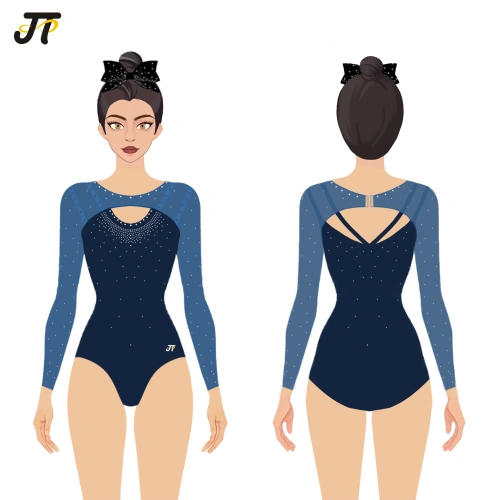
For training leotards, the focus is on comfortable stretch, durability, moisture management, and everyday wear. For competition leotards, the emphasis shifts to precision fit, secure coverage, decorative details, and professional finishing. T&J Sportswear pays close attention to fabric selection and garment construction, developing products for different priorities. Their production team manages every stage, from fabric selection and pattern development to cutting, sewing, printing, rhinestone application, quality inspection, and final packaging. This comprehensive approach ensures that the final product meets the demands of both training and competition.
Buyers should request fabric samples, ask about testing procedures, and inquire about the factory's experience with different materials. A factory that can explain the pros and cons of various fabrics and recommend the best options for specific needs is a valuable partner. Additionally, buyers should examine stitching quality, seam placement, and overall construction to ensure that the leotard will not restrict movement or cause discomfort.
For many buyers, especially new brands, boutique retailers, and growing gymnastics clubs, a low minimum order quantity (MOQ) is a major advantage. High MOQs can be a barrier to entry, forcing buyers to commit to large inventories before testing the market. A factory that offers low MOQs allows buyers to experiment with designs, gauge customer response, and scale up gradually. T&J Sportswear offers a low MOQ starting from 10 sets for selected products, giving gymnastics clubs, new brands, and smaller distributors greater flexibility. This approach supports a test-and-learn strategy, reducing financial risk and enabling buyers to refine their offerings.
When evaluating a factory, buyers should ask about their MOQ policies, lead times for small orders, and any additional fees for low-volume production. A factory that is willing to accommodate small initial orders is often more customer-focused and easier to work with. However, buyers should also ensure that the factory can scale up production as their needs grow. T&J Sportswear, for example, balances flexible customization with the ability to support larger wholesale and team orders, thanks to their production capacity.
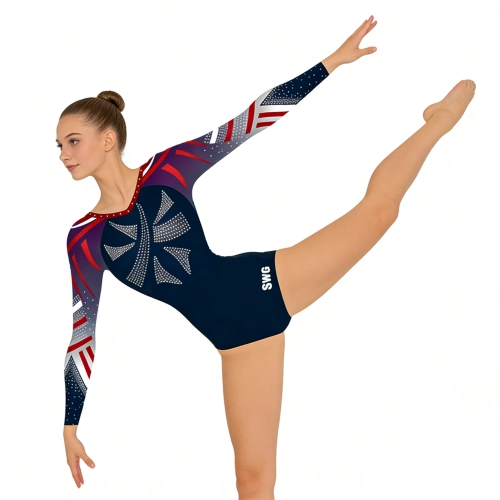
Production capacity is another critical factor. A factory must be able to handle both small custom orders and large bulk production without compromising quality. This requires a skilled workforce and efficient processes. T&J Sportswear's factory team includes 30+ skilled workers, with a reported production capacity of 300+ leotards per day. This capacity allows them to serve a wide range of customers, from small clubs to large distributors. However, production capacity is not just about quantity; it is about consistency. The real value lies in the factory's ability to maintain consistent workmanship when moving from samples to bulk production.
Buyers should ask about the factory's daily output, the number of workers, and their experience level. They should also inquire about peak production times and how the factory manages order volume fluctuations. A factory with a stable workforce and efficient workflow is more likely to deliver orders on time and with consistent quality. T&J Sportswear, for instance, pays attention to fabric, printing, stitching, sizing, rhinestone placement, and overall finishing throughout production, ensuring that every leotard meets their standards.
Quality control is not a single step; it is a continuous process that starts before bulk production. During sample development, buyers should have the opportunity to review the design, fabric, fit, decoration, and finishing before confirming mass production. This stage is crucial for identifying and correcting any issues. For finished garments, key inspection points include fabric condition, printing quality, stitching, measurements, rhinestone placement, coverage, and overall appearance. A robust quality control system reduces common problems such as inconsistent sizing, printing defects, loose decoration, or uneven finishing.
T&J Sportswear implements quality control throughout their production process. They inspect finished products before shipment, ensuring that each leotard meets the buyer's specifications. Their product information also lists certifications such as ISO9001, SGS, and CE for applicable products, providing additional assurance of quality and safety. Buyers should ask about the factory's inspection procedures, whether they have a dedicated QC team, and what certifications they hold. A factory that is transparent about its quality control processes is more trustworthy.
Certifications demonstrate a factory's commitment to quality, safety, and environmental standards. Common certifications in the apparel industry include ISO9001 (quality management), SGS (product testing), and CE (European conformity). These certifications indicate that the factory has met specific criteria and can provide documentation to support their claims. T&J Sportswear lists ISO9001, SGS, and CE certifications for applicable products, and specific certification and testing documentation can be provided according to product and customer requirements. When evaluating a factory, buyers should ask for copies of certifications and verify their validity. This is particularly important for buyers in regulated markets like the US and Europe, where compliance with safety and labeling standards is mandatory.
In addition to certifications, buyers should inquire about the factory's compliance with labor laws, environmental regulations, and ethical manufacturing practices. A responsible factory will be able to provide information about their working conditions, waste management, and sustainability initiatives. While these factors may not directly affect product quality, they are increasingly important to consumers and can impact a brand's reputation.
Even the best factory can be difficult to work with if communication is poor. Clear, responsive, and professional communication is essential for a successful partnership, especially when dealing with customized gymnastics apparel. From initial inquiry and design development to sampling, production, inspection, and shipment, buyers need a factory that provides regular updates and addresses concerns promptly. T&J Sportswear emphasizes one-to-one professional service, with a team that supports customers throughout the process. They offer direct communication and assistance with product development, customization, production details, and logistics.
When evaluating a factory, buyers should assess their responsiveness during the initial inquiry stage. How quickly do they reply? Are their answers clear and detailed? Do they ask relevant questions to understand the buyer's needs? A factory that is slow to respond or provides vague answers may be difficult to work with later. Buyers should also ask about their account management structure. Will they have a dedicated contact person? What are the communication channels (email, video calls, messaging apps)? A factory that invests in customer service is more likely to build long-term partnerships.
The best factories view themselves as partners, not just suppliers. They are invested in the buyer's success and are willing to go the extra mile to ensure satisfaction. This partnership approach is evident in their willingness to provide advice, accommodate special requests, and collaborate on problem-solving. T&J Sportswear's goal is to build long-term partnerships rather than simply complete individual orders. Whether the buyer is a gymnastics club developing team uniforms, a new brand launching a collection, a distributor expanding their product range, or an established buyer looking for a reliable manufacturing partner, T&J Sportswear provides flexible solutions based on their requirements.
To assess a factory's partnership potential, buyers should look for signs of genuine interest in their business. Do they offer suggestions for improvement? Are they transparent about their capabilities and limitations? Do they celebrate the buyer's successes? A factory that treats each order as a transaction is less likely to be responsive when issues arise. In contrast, a factory that views the relationship as a partnership will work harder to resolve problems and ensure mutual success.
While price is always a consideration, it should not be the sole deciding factor. The cheapest option may not deliver the quality, consistency, or service required for competition gymnastics leotards. Buyers should evaluate the overall value a factory provides, including product quality, customization options, communication, and reliability. A factory that offers competitive pricing without compromising on quality is the ideal choice. T&J Sportswear provides competitive pricing along with flexible customization and professional service, making them a cost-effective option for buyers in the US, Europe, and other international markets.
Buyers should request detailed quotes that break down costs for materials, labor, decoration, packaging, and shipping. They should also ask about payment terms, currency options, and any hidden fees. A transparent factory will provide clear pricing and explain any variables that could affect the final cost. It is also wise to compare quotes from multiple factories to ensure that the pricing is fair and competitive.
The sampling process is a critical step in evaluating a factory. A sample allows the buyer to assess the factory's ability to translate a design into a physical product. It also provides an opportunity to check fit, fabric quality, construction, and decoration. A factory that produces accurate samples in a timely manner is more likely to deliver satisfactory bulk production. T&J Sportswear supports sample development, allowing customers to review the design, fabric, fit, decoration, and finishing before confirming mass production. Their design team can assist with artwork development and product optimization, ensuring that the sample meets the buyer's expectations.
When evaluating samples, buyers should check the following: Does the leotard match the design specifications? Is the fit correct? Are the materials as requested? Is the stitching clean and secure? Are the rhinestones applied properly? Is the overall appearance professional? Buyers should provide detailed feedback and request revisions if necessary. A factory that is willing to make revisions and iterate until the sample is perfect is a good sign. It shows that they are committed to quality and customer satisfaction.
Timely delivery is essential for any business, especially for gymnastics clubs and brands with fixed competition schedules or seasonal collections. Therefore, buyers must evaluate a factory's logistics capabilities. Can they meet production deadlines? Do they have experience with international shipping? Can they handle customs clearance and documentation? A reliable factory will have established relationships with shipping partners and will provide tracking information. T&J Sportswear manages the final packaging and delivery, ensuring that products are shipped safely and on time. Buyers should ask about typical lead times, shipping methods, and any potential delays. They should also clarify who is responsible for shipping costs and insurance.
Finally, buyers should research a factory's reputation and ask for references. Online reviews, testimonials, and case studies can provide valuable insights. Buyers can also ask the factory for contact information of past or current clients. Speaking with references can reveal how the factory handles challenges, communicates, and delivers on promises. T&J Sportswear has served customers in 36+ countries, building a reputation for reliable products and responsive service. Their long-term partnerships are a testament to their commitment to quality and customer satisfaction.
When checking references, buyers should ask specific questions: How was the quality of the products? Was the factory responsive to issues? Did they meet deadlines? Would you work with them again? The answers to these questions can help buyers make an informed decision.
Evaluating a competition gymnastics leotard factory is a multifaceted process that requires careful consideration of experience, design capabilities, materials, MOQ, production capacity, quality control, certifications, communication, partnership approach, pricing, sampling, logistics, and reputation. By using the framework outlined in this guide, buyers can identify factories that are capable of delivering high-quality, customized leotards that meet the demands of athletes and the expectations of their customers. Factories like T&J Sportswear exemplify the qualities of a reliable partner: over 10 years of specialized experience, in-house design, flexible customization, low MOQ, skilled workers, robust quality control, and a customer-focused approach. Ultimately, the right factory will not only produce excellent products but also contribute to the buyer's growth and success in the competitive gymnastics apparel market.
In summary, a thorough evaluation process is essential to find a manufacturing partner that aligns with a buyer's quality standards, business goals, and values. By asking the right questions and conducting due diligence, buyers can build a strong, long-lasting relationship with a factory that delivers consistent, high-quality competition gymnastics leotards.
