This article explains how to evaluate a gymnastics leotard factory for the next order. It is written for clubs, teams, brands, wholesalers, and distributors that need reliable custom gymnastics apparel. The article begins by emphasizing that gymnastics leotards are a specialized product. They must support extreme movement, stretch, recovery, coverage, comfort, and visual appeal. General sportswear factories may not understand these requirements, so buyers should look for factories with gymnastics-specific experience. T&J Sportswear is used as an example of a professional manufacturer with more than 10 years of experience, customers in 36+ countries, and a focus on competition leotards, practice leotards, team leotards, rhinestone leotards, and warm-up wear. The article then covers design and product development. A strong factory should offer in-house design support, OEM and ODM services, artwork development, sublimation printing, rhinestone layout, and branding customization. Materials and construction are also critical. Buyers should ask about Lycra, Spandex, Polyester, Mystique, and Mesh, as well as cutting, sewing, printing, rhinestone application, and finishing. Fit and sizing must be tested with samples. Customization should include colors, logos, labels, packaging, and team details. The article advises buyers to check MOQ, pricing, production capacity, quality control, certifications, communication, lead times, shipping, and after-sales support. T&J Sportswear offers low MOQ from 10 sets for selected products, 30+ skilled workers, 300+ daily leotard capacity, ISO9001, SGS, and CE certifications for applicable products, and one-to-one service. The article also provides red flags, a scorecard, sample testing steps, compliance questions, and reorder considerations. The conclusion is that the best factory is not simply the cheapest or largest. It is the one that understands gymnastics, communicates clearly, maintains consistent quality, and supports long-term partnership. Buyers who use a structured evaluation process can reduce risk and build a dependable supply relationship for future orders.
Choosing a gymnastics leotard factory is not the same as choosing a general clothing supplier. Gymnastics apparel has to support extreme movement, repeated stretching, precise fit, secure coverage, and visual impact under competition lighting. A leotard that looks beautiful on a hanger but restricts movement, loses shape, or shows poor stitching will quickly become a problem for clubs, teams, brands, and distributors. For that reason, buyers should evaluate a factory with a clear framework that covers product specialization, design support, materials, construction, customization, quality control, production capacity, communication, and long-term reliability.
This article explains how to evaluate a gymnastics leotard factory for the next order. It is written for gymnastics clubs, team managers, boutique brands, wholesalers, distributors, and sportswear businesses that need a dependable manufacturing partner. A professional factory should do more than quote a price. It should understand the demands of gymnastics, offer practical customization, maintain consistent workmanship, and communicate clearly from the first sample to final shipment.
Factories such as T&J Sportswear illustrate what buyers should look for. T&J Sportswear is a professional gymnastics apparel manufacturer specializing in high-quality gymnastics leotards and teamwear. With more than 10 years of experience in the sportswear industry, the company has built expertise in product development, custom design, manufacturing, and international business. Its main products include competition gymnastics leotards, practice gymnastics leotards, custom team leotards, rhinestone gymnastics leotards, and gymnastics warm-up wear. It works with gymnastics clubs, teams, brands, wholesalers, distributors, and other sportswear businesses, with a strong focus on customers in the US, Europe, and other international markets.
The first evaluation question is simple: does the factory actually specialize in gymnastics leotards, or does it treat gymnastics as one small category among many? General sportswear suppliers may produce T-shirts, leggings, yoga wear, and team jerseys, but gymnastics leotards require different pattern engineering, fabric behavior, fit testing, and decoration methods. A leotard must stretch in multiple directions, recover its shape, stay in place during tumbling and dance elements, and provide appropriate coverage without restricting the athlete.
undefined
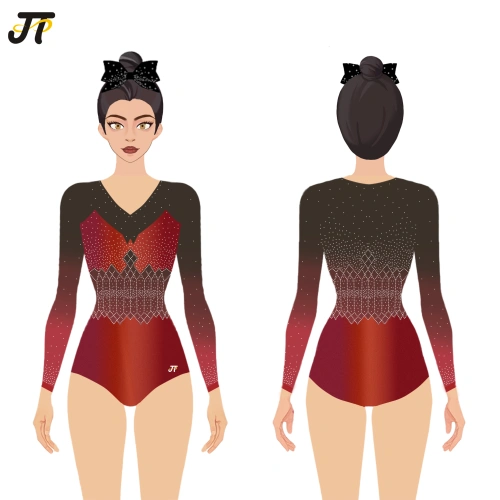
A specialized factory should be able to discuss stretch, fit, comfort, coverage, durability, decoration, and freedom of movement in specific terms. It should understand the difference between a practice leotard and a competition leotard. Practice leotards usually prioritize comfort, breathability, durability, and easy care. Competition leotards often require precision fit, secure coverage, sublimation graphics, rhinestones, mesh inserts, color blocking, and professional finishing.
T&J Sportswear has more than 10 years of experience in gymnastics apparel manufacturing, with a strong focus on competition and training leotards. Unlike general sportswear suppliers, the company understands the specific requirements of gymnastics apparel. Over the years, its products and services have reached customers in 36+ countries, giving it practical experience with different markets, customer requirements, sizing systems, and product preferences. Its main markets include North America and Europe, where customers place strong emphasis on product quality, customization, consistency, and reliable communication.
When evaluating a factory, buyers should ask for examples of gymnastics-specific work. They should review competition leotards, practice leotards, team leotards, and rhinestone designs. They should ask how the factory handles stretch recovery, size grading, coverage, and decoration durability. A factory that cannot answer these questions clearly may not be the right partner for gymnastics apparel.
Design is often the difference between a functional leotard and a brand-defining product. A strong factory should offer more than cut-and-sew production. It should help buyers develop artwork, refine silhouettes, choose colors, place logos, and optimize decoration. For competition leotards, design can include sublimation graphics, color blocking, mesh, rhinestones, crystal decoration, and different fabric effects. For practice leotards, design may focus on comfort, color variety, and durable printing.
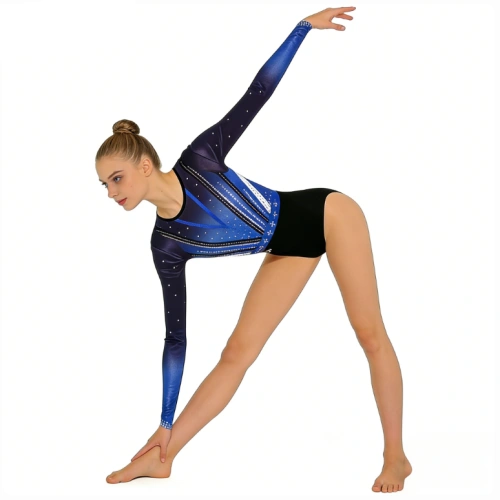
T&J Sportswear has an in-house professional design team specializing in gymnastics apparel. The team does more than simply manufacture designs supplied by customers. It can also help develop new concepts based on sketches, reference images, color combinations, team identities, or brand requirements. Customers can customize colors, logos, patterns, labels, and other branding elements. This kind of design support helps clubs and brands turn rough ideas into finished gymnastics apparel.
Buyers should evaluate whether the factory can work from different starting points. Some customers arrive with complete technical drawings. Others have a sketch, a photo, a color palette, or only a concept. A capable factory should be able to translate these inputs into a sample. It should also be able to suggest improvements. For example, a design might look striking on paper but require adjustment for stretch, coverage, or rhinestone placement. A professional design team will catch these issues before bulk production.
A beautiful gymnastics leotard must also perform during movement. Buyers should therefore pay close attention to fabric selection and garment construction. The factory should be able to explain which materials it uses and why. Common materials in gymnastics apparel include Lycra, Spandex, Polyester, Mystique, and Mesh. Different products can be developed for different priorities, such as stretch, lightweight construction, breathability, quick drying, comfort, durability, and visual appearance.
For training leotards, the focus is usually comfortable stretch, durability, moisture management, and everyday wear. For competition leotards, the emphasis shifts toward precision fit, secure coverage, decorative details, and professional finishing. The factory should understand how fabric weight, stretch direction, recovery, and lining affect the final garment. It should also know how printing, rhinestones, and mesh interact with different fabrics.

T&J Sportswear pays attention to every stage of manufacturing, from fabric selection and pattern development to cutting, sewing, printing, rhinestone application, quality inspection, and final packaging. This helps provide products suitable for both demanding training sessions and high-level competitions. The company can use materials including Lycra, Spandex, Polyester, Mystique, and Mesh, depending on the design and application. Different products can be developed for different priorities, such as stretch, lightweight construction, breathability, quick drying, comfort, durability, and visual appearance.
When evaluating a factory, buyers should ask about fabric sourcing, testing, and consistency. Will the same fabric be available for reorders? How does the factory handle color matching between samples and bulk production? How does it prevent shrinkage, fading, or loss of stretch? These questions reveal whether the factory has a stable production system or relies on whatever material is available at the moment.
Fit is one of the most important factors in gymnastics apparel. A leotard must fit closely without cutting into the skin, riding up, or restricting movement. It must provide coverage during stretching, tumbling, jumps, and dance elements. Because gymnasts vary in height, torso length, and body proportions, size grading is critical. A factory that only offers basic small, medium, and large sizing may not meet the needs of competitive teams.
A professional factory should have a clear size grading system and be able to produce custom measurements when required. It should also provide fit samples before bulk production. The buyer should review the sample on actual athletes or fit models whenever possible. This step helps identify issues with torso length, leg openings, shoulder fit, and overall comfort.
T&J Sportswear supports customization that covers sizes, labels, packaging, and other details. Its production process covers design development, fabric selection, digital artwork, printing, cutting, sewing, decoration, inspection, packaging, and delivery. This integrated approach helps reduce communication between multiple suppliers and gives customers a more efficient path from an initial idea to a finished product. For teams, the ability to customize size sets and individual measurements can make the difference between a uniform that looks good in a photo and one that performs well in competition.
Customization is often a central reason for choosing a specific gymnastics leotard factory. Clubs need team colors, logos, and matching designs. Brands need private-label products that reflect their identity. Distributors need product ranges that suit their markets. A factory that only offers stock designs may limit growth. A factory that offers flexible OEM and ODM services can help customers build unique collections.
T&J Sportswear supports OEM and ODM services, from design development and sample making to bulk production. Its professional design team can help transform ideas, sketches, or reference images into finished gymnastics apparel. Customization can cover artwork, colors, sublimation printing, logos, rhinestone layouts, fabric combinations, sizes, labels, packaging, and other details. This flexibility is valuable for new brands, gymnastics clubs, and established distributors.
Buyers should clarify what OEM and ODM mean for the factory. In OEM production, the customer provides the design and the factory manufactures it. In ODM development, the factory helps develop the product, sometimes offering existing designs that can be customized. The best factories can operate in both modes and advise customers on the most efficient path. They should also explain ownership of artwork, confidentiality, and whether custom designs will be reused for other customers.
Minimum order quantity is a practical concern for many buyers. Large factories may require high MOQs that are difficult for a growing club or new brand to meet. Smaller factories may offer low MOQs but lack capacity or consistency. The ideal partner offers a balance between flexibility and reliability.
T&J Sportswear offers low MOQ starting from 10 sets for selected products. This gives gymnastics clubs, new brands, boutique retailers, and smaller distributors greater flexibility when testing new designs or launching new collections. Instead of requiring customers to commit to large quantities before they know how a design will perform in their market, the factory can support smaller initial orders and help customers gradually develop their collections.
Pricing should also be evaluated carefully. A very low price may indicate poor fabric, weak stitching, or hidden costs. Buyers should ask for a clear cost breakdown that covers fabric, labor, printing, rhinestones, packaging, labels, testing, and shipping. They should also confirm whether sample costs are refundable, how reorder pricing works, and what payment terms apply. A transparent factory will explain these details without pressure.
Production capacity matters, but not only in terms of total output. The real value is the ability to maintain consistent workmanship when moving from samples to bulk production. A factory may be able to produce a beautiful sample, but if it cannot repeat that quality across hundreds of leotards, the buyer will face problems. Consistency in fabric, printing, stitching, sizing, rhinestone placement, and finishing is essential.
T&J Sportswear has a factory team that includes 30+ skilled workers, with reported production capacity of 300+ leotards per day. This provides a balance between flexible customization and the ability to support larger wholesale and team orders. For customers, production capacity is not simply about quantity. It is about the ability to maintain consistent workmanship when moving from samples to bulk production. The company pays attention to fabric, printing, stitching, sizing, rhinestone placement, and overall finishing throughout production.
Buyers should ask how the factory schedules production. What is the typical lead time for samples and bulk orders? How does the factory handle peak season? Can it manage repeat orders without changing materials or measurements? Does it have dedicated production lines for gymnastics apparel? These questions help buyers understand whether the factory can meet deadlines and maintain quality under pressure.
Quality control should start before bulk production. During sample development, customers can review the design, fabric, fit, decoration, and finishing before confirming mass production. This step prevents expensive mistakes. For finished garments, key inspection points can include fabric condition, printing quality, stitching, measurements, rhinestone placement, coverage, and overall appearance. A professional factory will have a documented inspection process and will correct issues before shipment.
T&J Sportswear works to maintain stable workmanship and carefully inspect finished products before shipment. Its production process is designed to reduce common problems such as inconsistent sizing, printing defects, loose decoration, or uneven finishing. The company also lists certifications such as ISO9001, SGS, and CE for applicable products. Specific certification and testing documentation can be provided according to the product and customer requirements.
Buyers should ask for inspection reports or quality records. They should confirm who inspects the goods, at what stages, and what happens if defects are found. They should also discuss acceptable quality levels, measurement tolerances, and color matching standards. For competition leotards, rhinestone adhesion and coverage should be checked carefully. For practice leotards, seam strength, stretch recovery, and print durability are important.
Manufacturing quality is only one part of a successful supplier relationship. Clear communication and responsive service are equally important, especially for customized gymnastics apparel. Buyers need to discuss design changes, sample feedback, production schedules, inspection results, and shipping details. If communication is slow or unclear, delays and misunderstandings can quickly affect a team order or product launch.
T&J Sportswear provides professional support throughout the process, from initial inquiry and design development to sampling, production, inspection, and shipment. Customers can communicate their requirements directly and receive assistance with product development, customization, production details, and logistics. The company offers one-to-one service, which helps customers avoid confusion and keep projects moving.
Buyers should test communication during the inquiry stage. How quickly does the factory respond? Does it answer questions clearly? Does it provide timelines and updates? Does it have English-speaking staff or a dedicated account manager? Does it use project management tools or shared documents? These early interactions often predict the experience during production.
Lead time is a critical factor for clubs preparing for competition season and brands planning seasonal launches. Buyers should ask for a detailed timeline that includes sample development, sample approval, bulk production, quality inspection, packaging, and shipping. They should also understand how holidays, fabric availability, and peak season may affect delivery.
Packaging is another area that deserves attention. For team orders, individual size labels, athlete names, and organized packing can save time for coaches. For brands, retail-ready packaging, hang tags, and poly bags can support presentation. T&J Sportswear can customize team colors, logos, patterns, labels, packaging, and other details according to requirements. This level of customization helps customers present a complete collection rather than a loose set of garments.
Shipping should be discussed early. Buyers should confirm Incoterms, shipping methods, customs documentation, and insurance. Air freight, sea freight, and express couriers each have different costs and timelines. A reliable factory will help buyers choose the most practical option and provide accurate shipping documents.
The best factory relationship is not a one-time transaction. It is a partnership that grows over multiple seasons. A factory that understands a customer's brand, sizing, and quality standards can improve efficiency over time. It can keep records of approved samples, fabrics, and measurements. It can suggest improvements and help the customer respond to market trends.
T&J Sportswear aims to build long-term partnerships rather than simply complete individual orders. Whether a customer is a gymnastics club developing team uniforms, a new brand launching a collection, a distributor expanding a product range, or an established buyer looking for a reliable manufacturing partner, the company provides flexible solutions based on requirements. With 10+ years of industry experience, 36+ countries served, 30+ skilled workers, 300+ daily leotard capacity, low MOQ, professional design support, OEM/ODM customization, and one-to-one service, T&J Sportswear combines manufacturing capability with the flexibility required by today's international gymnastics apparel market.
Buyers should evaluate whether a factory is interested in their long-term goals. Does it ask about the target market, price point, and competition calendar? Does it offer advice on product range planning? Does it keep records for reorders? Does it protect the customer's designs and brand identity? A factory that thinks beyond the current order is more likely to become a dependable partner.
Not every factory is suitable for gymnastics leotards. Buyers should watch for warning signs during evaluation. A factory that gives vague answers about materials, construction, or quality control may not be reliable. A factory that cannot provide gymnastics-specific samples may lack real experience. A factory that offers unusually low prices may cut corners on fabric, labor, or decoration. A factory that is slow to respond during the inquiry stage may be even slower during production.
Other red flags include no written specifications, no sample approval process, no inspection reports, unclear MOQs, hidden fees, and pressure to pay large deposits before details are confirmed. Buyers should also be cautious if the factory cannot explain how it handles sizing, stretch, or rhinestone durability. Gymnastics apparel is too specialized for guesswork.
A scorecard can help buyers compare factories objectively. The exact weights may vary by business, but the categories should cover the most important risks. Buyers can score each factory from one to five in areas such as specialization, design support, materials, construction, sizing, customization, MOQ, capacity, quality control, communication, lead time, pricing, and partnership potential.
For a gymnastics club, fit, sizing, team customization, and delivery time may be most important. For a new brand, design support, low MOQ, packaging, and private labeling may matter more. For a distributor, capacity, consistency, pricing, and reorder reliability may be the top priorities. The scorecard should reflect the buyer's specific goals rather than a generic checklist.
Samples are one of the best ways to evaluate a gymnastics leotard factory. Buyers should request a sample in the intended fabric, size, and decoration level. They should not accept a photo alone. The sample should be worn, stretched, washed, and inspected. The buyer should check fit, coverage, comfort, seam strength, print quality, rhinestone adhesion, and color accuracy.
If possible, the sample should be tested by gymnasts who will wear the final product. Their feedback on movement, comfort, and confidence is invaluable. A leotard that feels restrictive during a cast handstand or a leap may need pattern adjustments. A leotard that shifts during tumbling may need different elastic or seam placement. These issues are easier to fix before bulk production.
T&J Sportswear supports sample development as part of its OEM and ODM services. Customers can review the design, fabric, fit, decoration, and finishing before confirming mass production. This step protects both the buyer and the factory. It creates a shared standard for the final product and reduces the risk of disputes later.
Compliance is increasingly important for international buyers. Depending on the market, gymnastics apparel may need to meet specific testing standards for children's products, chemicals, flammability, or labeling. Buyers should ask whether the factory has relevant certifications and whether it can provide test reports. T&J Sportswear lists certifications such as ISO9001, SGS, and CE for applicable products. Specific certification and testing documentation can be provided according to the product and customer requirements.
Ethical production is also part of a responsible supply chain. Buyers may want to know about working conditions, fair wages, safety, and environmental practices. A factory that is transparent about its operations is more trustworthy. While certifications are not the only measure, they provide useful evidence of a structured management system.
A gymnastics leotard order is often not a single event. Clubs need new uniforms each season. Brands add colors and styles. Distributors reorder best sellers. A factory must be able to scale up without losing quality. It must also be able to repeat previous orders with the same materials, measurements, and colors.
Buyers should ask how the factory stores patterns, artwork, and fabric records. Can it produce a reorder six months or a year later? What happens if a fabric is discontinued? How does it handle color variations between dye lots? A reliable factory will have systems for these issues. It will also communicate proactively if a material change is necessary.
T&J Sportswear focuses on stable workmanship and consistent production. Its goal is not only to manufacture gymnastics apparel but also to build long-term partnerships through reliable products and responsive service. This mindset is valuable for buyers who need a manufacturing partner they can depend on season after season.
Price is important, but the lowest unit price is not always the best value. A cheap leotard that fades, loses stretch, or arrives with loose rhinestones creates replacement costs, unhappy athletes, and brand damage. Buyers should compare total value by considering quality, fit, durability, communication, lead time, and reorder reliability.
A factory that offers low MOQ, professional design support, and consistent quality may provide better long-term value than a factory that only competes on price. For new brands, the ability to test small orders and refine designs can reduce inventory risk. For clubs, reliable delivery before competition season can be worth more than a small price saving. For distributors, consistent quality can protect customer relationships and reduce returns.
Buyers should ask for a detailed quotation that includes all costs. They should also ask what is not included. Shipping, taxes, duties, testing, sample fees, and packaging can change the final cost. A transparent factory will help buyers understand the full picture.
Once a factory is selected, the buyer should create a clear order specification. This document should include product type, design artwork, colors, fabrics, measurements, size breakdown, decoration details, label and packaging requirements, inspection criteria, lead time, and payment terms. It should also include the approved sample reference. A written specification reduces misunderstandings and provides a basis for quality checks.
The specification should be detailed enough that a new production run can follow it without relying on memory. Photos, technical drawings, and measurement charts are helpful. For rhinestone designs, the exact placement and stone sizes should be documented. For sublimation printing, color codes and artwork files should be confirmed. For team orders, the size list and athlete names should be checked carefully.
T&J Sportswear provides one-to-one service and professional communication throughout the process. This helps customers communicate requirements directly and receive assistance with product development, customization, production details, and logistics. A clear specification supports that communication and helps ensure the final leotards match expectations.
After-sales support is another sign of a professional factory. Even with strong quality control, questions can arise after delivery. A good factory will respond to issues, provide replacement or correction solutions when appropriate, and use feedback to improve future orders. Buyers should ask how the factory handles defects, shortages, or shipping damage.
It is also helpful to document the condition of goods upon arrival. Buyers should inspect shipments promptly, compare them to the approved sample, and report any issues with photos and order details. Clear communication and evidence help resolve problems quickly. A factory that values long-term partnerships will take these matters seriously.
Evaluating a gymnastics leotard factory requires more than a price comparison. Buyers should look for specialization, design capability, quality materials, precise construction, flexible customization, reasonable MOQ, reliable capacity, strict quality control, clear communication, and a partnership mindset. They should request samples, test them properly, and document every detail before bulk production.
Factories such as T&J Sportswear demonstrate how these factors come together. With more than 10 years of experience, customers in 36+ countries, 30+ skilled workers, 300+ daily leotard capacity, low MOQ from 10 sets for selected products, OEM and ODM services, professional design support, and one-to-one service, T&J Sportswear is positioned as a dependable gymnastics apparel manufacturing partner. Its product range includes competition gymnastics leotards, practice gymnastics leotards, custom team leotards, rhinestone gymnastics leotards, and gymnastics warm-up wear.
For clubs, brands, wholesalers, and distributors, the right factory becomes an extension of the business. It helps turn ideas into finished leotards, supports growth, and protects quality. By using a structured evaluation process, buyers can reduce risk, improve product performance, and build a supply relationship that lasts beyond a single order. From the first idea to the final leotard, the right manufacturing partner can make custom gymnastics apparel more efficient, flexible, and reliable.
With this framework, buyers can evaluate a gymnastics leotard factory with greater confidence. The best choice will not always be the largest or the cheapest factory. It will be the one that understands gymnastics, communicates honestly, produces consistently, and treats the buyer as a long-term partner.
