Ordering custom practice gymnastics leotards on schedule requires a clear process and a reliable manufacturing partner. Gymnastics clubs, teams, brands, wholesalers, and distributors should begin by defining their requirements, including quantity, size breakdown, colors, logos, fabric preferences, decoration, budget, and deadline. They should then choose a specialized gymnastics apparel manufacturer such as T&J Sportswear, which has more than 10 years of experience, serves customers in 36+ countries, and offers OEM and ODM customization, low MOQ from 10 sets, professional design support, and one-to-one service.
The next steps involve design development, fabric selection, sampling, and approval. Practice leotards should prioritize comfort, stretch, breathability, durability, and fit. T&J Sportswear can use materials such as Lycra, Spandex, Polyester, Mystique, and Mesh, and can apply sublimation printing, rhinestones, and other decoration techniques. After sample approval, the customer confirms the order, size breakdown, packaging, and delivery date. Production planning benefits from T&J Sportswear’s 30+ skilled workers and reported capacity of 300+ leotards per day, which supports both small and large orders.
Quality control is essential from sample to bulk production. Inspection points include fabric condition, printing quality, stitching, measurements, rhinestone placement, coverage, and overall appearance. Certifications such as ISO9001, SGS, and CE can be provided for applicable products. Packaging, labeling, and shipping should be planned early, with buffer time for customs and international transit. Clear communication and regular updates help keep the project on schedule.
Common pitfalls include starting too late, incomplete design information, slow sample approval, ignoring shipping lead times, and last-minute changes. A checklist can help customers manage each stage. By working with T&J Sportswear, customers gain access to experienced production, flexible customization, competitive pricing, and dependable service. From the first idea to the final leotard, T&J Sportswear is committed to making custom gymnastics apparel more efficient, flexible, and reliable.
How to Order Custom Practice Gymnastics Leotards on ScheduleFor gymnastics clubs, teams, brands, wholesalers, and distributors, ordering custom practice gymnastics leotards is not simply a purchasing task. It is a planning process that connects design, manufacturing, quality control, logistics, and season timelines. Practice leotards are worn during daily training, sometimes for many hours each week. They must offer comfort, stretch, breathability, durability, and a fit that allows athletes to move freely. When an order arrives late, training schedules, team identity, and athlete confidence can all be affected. When an order arrives on time, clubs can focus on coaching, athletes can focus on performance, and brands can focus on sales. This article explains how to order custom practice gymnastics leotards on schedule, using a third-person perspective and drawing on the experience of T&J Sportswear, a professional gymnastics apparel manufacturer with more than 10 years of industry experience.
T&J Sportswear specializes in competition gymnastics leotards, practice gymnastics leotards, custom team leotards, rhinestone gymnastics leotards, and gymnastics warm-up wear. The company works with gymnastics clubs, teams, brands, wholesalers, distributors, and other sportswear businesses, with a strong focus on customers in the US, Europe, and other international markets. Because T&J Sportswear understands that gymnastics apparel must combine comfort, flexibility, durability, fit, and visual appeal, its production team pays attention to every stage of manufacturing. This includes fabric selection, pattern development, cutting, sewing, printing, rhinestone application, quality inspection, and final packaging. This integrated approach helps customers order custom practice leotards with greater confidence and better schedule control.
Before a club, team, or brand places an order, it is important to understand what makes practice leotards different from competition leotards. Practice leotards are designed for everyday training. They prioritize comfort, stretch, breathability, moisture management, and durability. Athletes wear them repeatedly, wash them frequently, and move through a wide range of motions. A practice leotard that looks beautiful but restricts movement or wears out quickly is not a successful product. By contrast, competition leotards often place greater emphasis on precision fit, secure coverage, decorative details, rhinestones, sublimation graphics, and professional finishing. Both categories require quality manufacturing, but their design priorities are different.
T&J Sportswear develops both types of apparel. For practice gymnastics leotards, the company focuses on comfortable stretch, durability, moisture management, and everyday wear. For competition leotards, T&J Sportswear pays close attention to fabric selection, cutting, stitching, embellishment, and finishing to create eye-catching leotards that allow athletes to move confidently during competition. When a customer orders custom practice leotards, the manufacturing plan should reflect the specific needs of training rather than simply copying a competition design. This distinction affects fabric choice, pattern development, decoration, and even packaging.
undefined

Practice leotards may be ordered in larger quantities because entire training groups need them. They may also need to be replaced more often due to frequent use. Therefore, a schedule that accounts for repeat orders, size changes, and gradual growth is valuable. T&J Sportswear supports low MOQ starting from 10 sets for selected products, which gives gymnastics clubs, new brands, boutique retailers, and smaller distributors greater flexibility when testing new designs or launching new collections. This flexibility is especially useful for practice leotards, where a club may want to order a small batch first and then expand later.
Gymnastics is a seasonal sport. Clubs plan training cycles, competitions, showcases, and recitals. Brands plan collections, marketing campaigns, and retail launches. Distributors plan inventory for peak buying periods. If custom practice leotards arrive late, the consequences can be significant. Athletes may not have matching team apparel for a competition. A brand may miss a sales window. A distributor may lose credibility with retail customers. A club may be forced to purchase lower-quality alternatives at the last minute. Ordering on schedule is therefore not just about convenience; it is about protecting the reputation and performance of the organization.
To order on schedule, decision-makers should work backward from the date the leotards are needed. They should consider design approval, sample development, bulk production, quality inspection, packaging, and shipping. Each stage takes time. International shipping can add days or weeks depending on the destination and shipping method. Customs clearance can also affect delivery. T&J Sportswear has more than 10 years of experience in gymnastics apparel manufacturing and has served customers in 36+ countries. This experience helps the company understand different markets, customer requirements, sizing systems, and product preferences. Its main markets include North America and Europe, where customers place strong emphasis on product quality, customization, consistency, and reliable communication.
Production capacity also matters for schedule control. T&J Sportswear has a factory team that includes 30+ skilled workers, with reported production capacity of 300+ leotards per day. This provides a balance between flexible customization and the ability to support larger wholesale and team orders. For customers, production capacity is not simply about quantity. The real value is the ability to maintain consistent workmanship when moving from samples to bulk production. When a supplier can handle both small and large orders, customers have more options for scheduling. They can start with a smaller practice leotard order, evaluate the fit and quality, and then plan a larger production run for the next season.
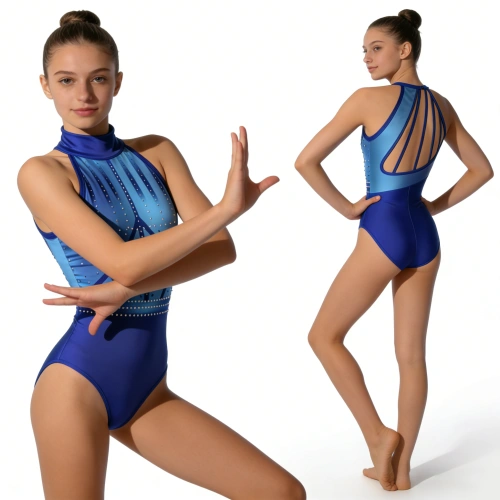
The first step in ordering custom practice gymnastics leotards on schedule is to define the requirements clearly. A gymnastics club, team, brand, or distributor should gather input from coaches, athletes, parents, and decision-makers. The goal is to create a written brief that can be shared with the manufacturing partner. This brief should include the number of leotards needed, the size breakdown, the desired colors, the team logo or brand logo, the preferred fabric, the decoration style, the budget range, and the deadline. Without this information, the design and sampling process can be delayed by repeated revisions.
Size breakdown is particularly important for practice leotards. Gymnastics teams often include athletes of different ages and body types. A club may need child sizes, youth sizes, and adult sizes in the same order. If the size list is incomplete or inaccurate, the final order may not fit the team. T&J Sportswear offers a wide range of colors, patterns, and styles, with customized designs available for gymnastics clubs and teams. The company can also customize team colors, logos, patterns, labels, packaging, and other details according to customer requirements. However, the customer must provide clear size and quantity information to keep the schedule on track.
Another part of defining requirements is deciding how the practice leotards will be used. Will they be worn only for daily training? Will they be used for warm-ups, camps, or promotional events? Will they need to match competition leotards or warm-up wear? T&J Sportswear also provides custom gymnastics warm-ups and matching team apparel. For customers looking to build a complete team collection, the company can coordinate colors, logos, patterns, labels, and packaging. When the purpose is clear, the design team can recommend the right fabric and construction. For training leotards, the focus is on comfortable stretch, durability, moisture management, and everyday wear. For a more performance-oriented practice line, the customer may choose materials that offer lightweight construction, breathability, quick drying, and visual appearance.
A written brief helps both the customer and the manufacturer. It can be a simple document that lists the project name, order quantity, size range, color references, logo files, fabric preferences, decoration requirements, packaging details, and target delivery date. If the customer has sketches, reference images, or original ideas, these should be included. T&J Sportswear supports OEM and ODM services and can develop products based on customers’ designs, sketches, reference images, color requirements, or original ideas. The professional design team can assist with artwork development and product optimization, helping customers turn concepts into finished gymnastics apparel. A clear brief reduces the risk of misunderstandings and keeps the sampling process efficient.

The brief should also include any special requirements. For example, some clubs prefer wider straps for comfort. Some brands want a specific label placement. Some distributors need polybag packaging with barcodes. Some teams require rhinestone accents that match a competition leotard. T&J Sportswear’s customization can cover artwork, colors, sublimation printing, logos, rhinestone layouts, fabric combinations, sizes, labels, packaging, and other details. When these details are documented early, the production team can plan the schedule accordingly. Last-minute changes are one of the most common causes of delays, so the brief should be as complete as possible before sampling begins.
Choosing the right manufacturing partner is one of the most important decisions in the ordering process. A gymnastics apparel manufacturer should understand the specific requirements of gymnastics apparel, including stretch, fit, comfort, coverage, durability, decoration, and freedom of movement. General sportswear suppliers may not have this specialized knowledge. T&J Sportswear has more than 10 years of experience in gymnastics apparel manufacturing, with a strong focus on competition and training leotards. This specialization helps the company provide reliable products that are suitable for both demanding training sessions and high-level competitions.
When evaluating a manufacturing partner, customers should ask about experience, production capacity, minimum order quantity, sampling process, quality control, certifications, communication style, and shipping support. T&J Sportswear supports OEM and ODM services, from design development and sample making to bulk production. Its professional design team can help transform ideas, sketches, or reference images into finished gymnastics apparel. With low MOQ, flexible customization, competitive pricing, and one-to-one service, the company makes it easier for new brands, gymnastics clubs, and established distributors to develop their own collections.
Quality and consistency are also important. T&J Sportswear works to maintain stable workmanship and carefully inspects finished products before shipment. The goal is not only to manufacture gymnastics apparel but also to build long-term partnerships with customers through reliable products and responsive service. For customers who need to order custom practice leotards on schedule, a partner with in-house design capability, skilled workers, and a clear production process is essential. T&J Sportswear has an in-house professional design team specializing in gymnastics apparel. The team does more than simply manufacture designs supplied by customers; it can also help develop new concepts based on sketches, reference images, color combinations, team identities, or brand requirements.
These questions help a club, brand, or distributor compare suppliers and plan the schedule. T&J Sportswear provides one-to-one professional service. From initial inquiry and design development to sampling, production, inspection, and shipment, the team provides professional support throughout the process. Customers can communicate their requirements directly and receive assistance with product development, customization, production details, and logistics. This direct communication reduces delays and helps keep the order on schedule.
Design is one of the key strengths of a specialized gymnastics apparel manufacturer. T&J Sportswear has an in-house professional design team specializing in gymnastics apparel. For practice leotards, the design process may be simpler than for competition leotards, but it still requires attention to fit, fabric, color, and decoration. The design team can combine sublimation graphics, color blocking, mesh, rhinestones, crystal decoration, and different fabric effects to create distinctive visual designs. Customers can also customize colors, logos, patterns, labels, and other branding elements. For practice leotards, the design should prioritize comfort and durability while still reflecting the team or brand identity.
When designing custom practice leotards, the customer should consider how the leotard will look and feel during movement. Straps should stay in place. The neckline should provide coverage without restricting the shoulders. The leg openings should allow flexibility. The fabric should stretch and recover. T&J Sportswear pays close attention to fabric selection and garment construction. The product range can use materials including Lycra, Spandex, Polyester, Mystique, and Mesh, depending on the design and application. Different products can be developed for different priorities, such as stretch, lightweight construction, breathability, quick drying, comfort, durability, and visual appearance.
For training leotards, T&J Sportswear focuses on comfortable stretch, durability, moisture management, and everyday wear. For competition leotards, the company places greater emphasis on precision fit, secure coverage, decorative details, and professional finishing. When a customer orders practice leotards, the design should not simply copy a competition leotard. Instead, the design should use the appropriate fabrics and construction for training. This may mean choosing a softer fabric, a simpler decoration, or a more breathable mesh panel. The design team can help customers make these decisions based on their priorities and budget.
Fabric selection is a critical part of the design process. Practice leotards are worn frequently, so the fabric must be durable and comfortable. Lycra and Spandex are popular because they offer excellent stretch and recovery. Polyester can provide durability and color retention. Mystique is often used for a shiny, performance-inspired look. Mesh can add breathability and visual interest. The right combination depends on the design and the intended use. T&J Sportswear can develop products with different fabric combinations to meet specific requirements.
Moisture management is another consideration. Gymnasts train hard and may sweat during practice. A practice leotard that traps moisture can be uncomfortable and may cause chafing. Fabrics that wick moisture and dry quickly can improve comfort. Breathability is also important, especially in warm training environments. The design team at T&J Sportswear can recommend fabrics that balance these factors while still achieving the desired look. For example, a practice leotard might use a breathable mesh back panel with a stretchy Lycra main body. This combination provides ventilation and freedom of movement.
Durability is equally important. Practice leotards are washed frequently and may be exposed to chlorine, sweat, and friction. The fabric should resist pilling, fading, and loss of elasticity. Stitching should be secure and comfortable against the skin. T&J Sportswear pays attention to every stage of manufacturing, from fabric selection and pattern development to cutting, sewing, printing, rhinestone application, quality inspection, and final packaging. This helps provide products that are suitable for both demanding training sessions and high-level competitions.
Decoration can make practice leotards visually appealing, but it should not compromise comfort. Sublimation printing is a popular option because it allows for colorful, detailed designs that do not add weight or stiffness. Rhinestones and crystals can add sparkle, but they must be securely attached so they do not fall off during practice. T&J Sportswear can combine sublimation graphics, color blocking, mesh, rhinestones, crystal decoration, and different fabric effects. For practice leotards, customers may choose a simpler decoration to keep costs down and maintain durability. For competition leotards, more elaborate decoration may be appropriate.
When ordering custom practice leotards, the customer should consider how the decoration will wear over time. Rhinestones that are applied with high-quality methods are more likely to stay in place. Printing that uses good inks and processes is more likely to resist fading. T&J Sportswear’s production process covers design development, fabric selection, digital artwork, printing, cutting, sewing, decoration, inspection, packaging, and delivery. This integrated approach helps reduce communication between multiple suppliers and gives customers a more efficient path from an initial idea to a finished product.
Logos and labels are also part of decoration and branding. Customers can customize team colors, logos, patterns, labels, packaging, and other details. For a gymnastics club, the logo might be placed on the chest or sleeve. For a brand, the label might be sewn into the neckline or side seam. T&J Sportswear supports OEM and ODM services, allowing customers to choose between producing their own designs and developing new products together with the team. This flexibility is valuable for both new and established customers.
Customization is at the center of T&J Sportswear’s manufacturing service. The company supports both OEM and ODM. OEM means the customer provides the design, and T&J Sportswear manufactures it. ODM means the customer works with T&J Sportswear’s design team to develop a new product. Both approaches can be used for practice leotards. A gymnastics club might have a clear idea of its team colors and logo, so OEM is a good fit. A new brand might need help developing its first collection, so ODM is more suitable. T&J Sportswear can assist with artwork development and product optimization, helping customers turn concepts into finished gymnastics apparel.
Customization can cover artwork, colors, sublimation printing, logos, rhinestone layouts, fabric combinations, sizes, labels, packaging, and other details. The production process covers design development, fabric selection, digital artwork, printing, cutting, sewing, decoration, inspection, packaging, and delivery. This integrated approach helps reduce communication between multiple suppliers and gives customers a more efficient path from an initial idea to a finished product. For customers ordering practice leotards on a schedule, this efficiency can be the difference between meeting the deadline and missing it.
Sampling is a critical step in the ordering process. Before bulk production begins, the customer should review a sample of the custom practice leotard. The sample allows the customer to check the design, fabric, fit, decoration, and finishing. T&J Sportswear provides sample development as part of its OEM and ODM services. During sample development, customers can review the design, fabric, fit, decoration, and finishing before confirming mass production. This step reduces the risk of costly mistakes in bulk production.
The sampling timeline depends on the complexity of the design and the availability of materials. Simple practice leotards may be sampled quickly, while more complex designs with custom sublimation or rhinestones may take longer. Customers should plan for at least one or two rounds of revisions. If the sample is not correct, the customer should provide clear feedback. Photos, measurements, and written comments can help the manufacturer make the necessary adjustments. T&J Sportswear’s design team can assist with product optimization and ensure that the sample meets the customer’s requirements.
Once the sample is approved, the customer should confirm the order in writing. This confirmation should include the final design, size breakdown, quantities, packaging details, and delivery date. Any changes after this point may affect the schedule and cost. Therefore, the customer should be thorough during the sampling stage. T&J Sportswear’s quality control starts before bulk production. During sample development, customers can review the design, fabric, fit, decoration, and finishing before confirming mass production. This proactive approach helps reduce common problems such as inconsistent sizing, printing defects, loose decoration, or uneven finishing.
These checks help the customer ensure that the practice leotard will meet the needs of the athletes. If any issue is found, it should be addressed before bulk production. T&J Sportswear’s production team pays attention to every stage of manufacturing, from fabric selection and pattern development to cutting, sewing, printing, rhinestone application, quality inspection, and final packaging. This attention to detail helps provide products that are suitable for both demanding training sessions and high-level competitions.
Minimum order quantity is a major consideration for many gymnastics clubs and new brands. T&J Sportswear offers low MOQ starting from 10 sets for selected products. This gives gymnastics clubs, new brands, boutique retailers, and smaller distributors greater flexibility when testing new designs or launching new collections. Instead of requiring customers to commit to large quantities before they know how a design will perform in their market, T&J Sportswear can support smaller initial orders and help customers gradually develop their collections.
For practice leotards, low MOQ can be especially useful. A club may want to order practice leotards for a small training group before ordering for the entire club. A new brand may want to test a few designs before committing to a full production run. A distributor may want to evaluate demand before placing a larger order. T&J Sportswear’s flexible approach supports these scenarios. The company also has the production capacity to handle larger orders when needed. With 30+ skilled workers and reported production capacity of 300+ leotards per day, T&J Sportswear can support both small and large projects.
When determining order quantities, customers should consider growth, replacement, and spare leotards. It is often wise to order a few extra leotards in common sizes to accommodate new team members or replacements. However, ordering too many can tie up budget and storage space. A balance is needed. T&J Sportswear can advise on quantity based on the customer’s needs. The company’s goal is not only to manufacture gymnastics apparel but also to build long-term partnerships with customers through reliable products and responsive service.
Size breakdown is a common source of scheduling delays. If the customer provides an incomplete size list, the manufacturer may need to wait for clarification. To avoid this, the customer should collect accurate measurements from each athlete or use a reliable size chart. T&J Sportswear can provide size charts and guidance. For practice leotards, a comfortable fit is essential. Athletes should be able to move freely without the leotard riding up or feeling too tight. The size breakdown should include child, youth, and adult sizes as needed.
It is also helpful to order sample sizes first if the team is unsure about sizing. A club can order one or two sample leotards in different sizes, test them during practice, and then finalize the size breakdown for the bulk order. This step adds time to the schedule, but it can prevent costly sizing mistakes. T&J Sportswear’s low MOQ makes it easier to order sample sizes. The company’s design team can also help customers understand how different fabrics and patterns affect fit.
Once the sample is approved and the order is confirmed, production planning begins. The manufacturer schedules the order based on the production calendar, material availability, and order quantity. T&J Sportswear has a factory team that includes 30+ skilled workers, with reported production capacity of 300+ leotards per day. This capacity allows the company to handle both small customized team orders and larger wholesale production projects. For customers, this means greater flexibility in scheduling.
Production involves several stages. These include fabric selection, pattern development, cutting, sewing, printing, rhinestone application, quality inspection, and final packaging. Each stage must be completed correctly to maintain quality. T&J Sportswear pays attention to every stage of manufacturing. This helps provide products that are suitable for both demanding training sessions and high-level competitions. The production team works to maintain stable workmanship and carefully inspects finished products before shipment.
Production lead time depends on the complexity of the design and the order quantity. Simple practice leotards with sublimation printing may take less time than complex designs with rhinestones and multiple fabric combinations. Customers should ask for a production schedule before placing the order. T&J Sportswear provides one-to-one service and can communicate production details directly. This helps customers plan their own schedules, including delivery to teams or retail channels.
One of the biggest challenges in manufacturing is maintaining consistency from sample to bulk production. The first sample may look perfect, but the bulk order may have variations in color, fit, or decoration. T&J Sportswear works to maintain stable workmanship and carefully inspects finished products before shipment. The company’s production process is designed to reduce common problems such as inconsistent sizing, printing defects, loose decoration, or uneven finishing. This consistency is important for gymnastics clubs and brands that need reliable products.
To support consistency, T&J Sportswear keeps detailed records of the approved sample. The production team refers to these records during cutting, sewing, printing, and decoration. Measurements are checked against the approved size chart. Colors are matched to the approved standards. Rhinestone layouts are followed precisely. This attention to detail helps ensure that the bulk order matches the sample. For customers, this means fewer surprises and a smoother delivery process.
Quality control is an essential part of ordering custom practice gymnastics leotards on schedule. Quality control starts before bulk production. During sample development, customers can review the design, fabric, fit, decoration, and finishing before confirming mass production. For finished garments, key inspection points can include fabric condition, printing quality, stitching, measurements, rhinestone placement, coverage, and overall appearance. T&J Sportswear’s production process is designed to reduce common problems such as inconsistent sizing, printing defects, loose decoration, or uneven finishing.
The company’s product information also lists certifications such as ISO9001, SGS, and CE for applicable products. Specific certification and testing documentation can be provided according to the product and customer requirements. These certifications can be important for customers in the US, Europe, and other international markets. They demonstrate a commitment to quality and compliance. For practice leotards, quality control should also include checks for comfort, stretch, and durability. The leotard should be able to withstand repeated use and washing.
Quality control is not only about the final product. It is also about the process. T&J Sportswear pays attention to every stage of manufacturing, from fabric selection and pattern development to cutting, sewing, printing, rhinestone application, quality inspection, and final packaging. This integrated approach helps ensure that quality is built into the product rather than inspected at the end. For customers, this means greater confidence in the order.
These inspection points help ensure that the final practice leotards meet the customer’s expectations. If any issue is found, the manufacturer can correct it before shipment. T&J Sportswear’s quality control process is designed to catch problems early and maintain consistency. The company’s goal is not only to manufacture gymnastics apparel but also to build long-term partnerships with customers through reliable products and responsive service.
Packaging and shipping are often overlooked, but they are critical to ordering on schedule. Once production is complete, the leotards must be inspected, packaged, labeled, and shipped. Custom labels, hang tags, polybags, and cartons can all be customized according to the customer’s requirements. T&J Sportswear can customize team colors, logos, patterns, labels, packaging, and other details. For gymnastics clubs, simple packaging may be sufficient. For brands and distributors, retail-ready packaging may be required.
Shipping method affects the delivery schedule. Air freight is faster but more expensive. Sea freight is slower but more cost-effective for large orders. Express shipping is suitable for small urgent orders. Customers should choose the shipping method based on their deadline and budget. T&J Sportswear provides assistance with logistics and can communicate shipping details. The company works with customers in the US, Europe, and other international markets, so it understands the importance of reliable shipping.
Customs clearance can also affect delivery. Customers should provide accurate shipping information and be aware of any import duties or regulations. Planning ahead can prevent delays. T&J Sportswear’s one-to-one service includes support with production details and logistics. This helps customers manage the entire order process from start to finish. For practice leotards that are needed for a specific season, shipping should be scheduled with a buffer for unexpected delays.
These options can be discussed during the ordering process. T&J Sportswear supports OEM and ODM services, from design development and sample making to bulk production. The professional design team can help transform ideas, sketches, or reference images into finished gymnastics apparel. With low MOQ, flexible customization, competitive pricing, and one-to-one service, the company makes it easier for new brands, gymnastics clubs, and established distributors to develop their own collections.
Communication is the backbone of a successful custom order. T&J Sportswear believes that manufacturing quality is only one part of a successful supplier relationship. Clear communication and responsive service are equally important, especially for customized gymnastics apparel. From initial inquiry and design development to sampling, production, inspection, and shipment, the team provides professional support throughout the process. Customers can communicate their requirements directly and receive assistance with product development, customization, production details, and logistics.
One-to-one service means that the customer has a dedicated contact person. This person can answer questions, provide updates, and help solve problems. For customers ordering practice leotards on a schedule, regular updates are essential. The customer should know when the sample will be ready, when production will start, when quality inspection will occur, and when the order will ship. T&J Sportswear’s one-to-one service helps keep the customer informed at every stage.
Effective communication also means providing feedback quickly. If the customer needs to change a design, adjust a size breakdown, or update a shipping address, they should inform the manufacturer as soon as possible. Delays in communication can lead to delays in production. T&J Sportswear’s team is responsive and professional. The company’s goal is to build long-term partnerships rather than simply complete individual orders.
A communication timeline can help keep the order on schedule. The customer and manufacturer can agree on key milestones. These may include design approval, sample approval, order confirmation, production start, quality inspection, packaging, and shipping. The customer can check in at each milestone to ensure the order is progressing as planned. T&J Sportswear provides professional support throughout the process. This proactive communication helps prevent surprises and keeps the project on track.
The timeline should also include buffer time. Unexpected issues can arise, such as fabric delays, shipping congestion, or customs inspections. A buffer of one to two weeks can help absorb these delays. For critical deadlines, such as a competition or a retail launch, the customer should start the ordering process early. T&J Sportswear’s experience with customers in 36+ countries helps the company anticipate common challenges and provide practical solutions.
Ordering custom practice gymnastics leotards on schedule is easier when the customer works with a reliable manufacturing partner. T&J Sportswear aims to build long-term partnerships rather than simply complete individual orders. Whether a customer is a gymnastics club developing team uniforms, a new brand launching a collection, a distributor expanding a product range, or an established buyer looking for a reliable manufacturing partner, T&J Sportswear provides flexible solutions based on specific requirements.
With 10+ years of industry experience, 36+ countries served, 30+ skilled workers, 300+ daily leotard capacity, low MOQ, professional design support, OEM/ODM customization, and one-to-one service, T&J Sportswear combines manufacturing capability with the flexibility required by today’s international gymnastics apparel market. From the first idea to the final leotard, T&J Sportswear is committed to making custom gymnastics apparel more efficient, flexible, and reliable.
For practice leotards, a long-term partnership means the manufacturer understands the club’s or brand’s preferences over time. The size charts, fabric choices, and design details can be saved for future orders. Repeat orders become faster and easier. The customer can plan seasonal collections with confidence. T&J Sportswear’s experience in product development, custom design, manufacturing, and international business makes it a dependable partner for customers around the world.
Even with a good plan, scheduling problems can occur. The following are common pitfalls and practical ways to avoid them. By understanding these risks, gymnastics clubs, brands, and distributors can keep their custom practice leotard orders on schedule.
One of the most common mistakes is starting the ordering process too late. Design, sampling, production, and shipping all take time. Customers should start planning at least three to six months before the leotards are needed. For complex designs or large orders, more time may be required. T&J Sportswear’s low MOQ and production capacity can help, but even the best manufacturer cannot compress every stage. Starting early provides more options and reduces stress.
If the customer does not provide complete design information, the sampling process can be delayed. Logos may need to be redrawn. Colors may need to be matched. Sizes may need to be confirmed. To avoid this, the customer should prepare a detailed brief with sketches, reference images, color codes, and logo files. T&J Sportswear’s design team can assist with artwork development, but clear input helps speed up the process.
Sample approval is a critical milestone. If the customer takes too long to review the sample, the production schedule may be pushed back. The customer should designate a decision-maker and provide feedback within a few days. If changes are needed, they should be communicated clearly and quickly. T&J Sportswear provides samples for review and can make adjustments. However, each revision takes time.
Shipping is not instant. International shipping can take days or weeks. Customs clearance can add more time. Customers should choose a shipping method that matches their deadline. They should also plan for potential delays. T&J Sportswear provides logistics support and can help customers understand shipping options. For urgent orders, express shipping may be necessary. For large orders, sea freight may be more economical but requires more lead time.
Last-minute changes to the design, quantity, or size breakdown can disrupt production. Once bulk production has started, changes may be difficult or impossible. Customers should finalize all details before production begins. If changes are necessary, they should discuss them with the manufacturer immediately. T&J Sportswear’s one-to-one service helps customers manage changes, but the best approach is to plan thoroughly from the beginning.
The following checklist can help gymnastics clubs, teams, brands, wholesalers, and distributors manage the ordering process. It covers the key steps from planning to delivery.
This checklist is not exhaustive, but it provides a practical framework. T&J Sportswear can support each step with professional service, design assistance, manufacturing, and logistics. The company’s experience with customers in the US, Europe, and other international markets helps it understand the importance of schedule reliability.
T&J Sportswear is a professional gymnastics apparel manufacturer specializing in the development and production of high-quality gymnastics leotards and teamwear. With more than 10 years of experience in the sportswear industry, the company has built strong expertise in product development, custom design, manufacturing, and international business. Its main products include competition gymnastics leotards, practice gymnastics leotards, custom team leotards, rhinestone gymnastics leotards, and gymnastics warm-up wear.
The company works with gymnastics clubs, teams, brands, wholesalers, distributors, and other sportswear businesses, with a strong focus on customers in the US, Europe, and other international markets. T&J Sportswear understands that gymnastics apparel needs to combine comfort, flexibility, durability, fit, and visual appeal. Its production team pays attention to every stage of manufacturing, from fabric selection and pattern development to cutting, sewing, printing, rhinestone application, quality inspection, and final packaging. This helps provide products that are suitable for both demanding training sessions and high-level competitions.
Customization is one of T&J Sportswear’s key strengths. The company offers OEM and ODM services and can develop products based on customers’ designs, sketches, reference images, color requirements, or original ideas. The professional design team can assist with artwork development and product optimization, helping customers turn concepts into finished gymnastics apparel. T&J Sportswear also understands that different customers have different order requirements. Whether a customer is a growing gymnastics club looking for customized team uniforms, a new brand developing its first collection, or an established distributor requiring regular production, T&J Sportswear provides flexible solutions with low MOQ, competitive pricing, professional communication, and one-to-one service.
Quality and consistency are important throughout the production process. T&J Sportswear works to maintain stable workmanship and carefully inspects finished products before shipment. The goal is not only to manufacture gymnastics apparel but also to build long-term partnerships with customers through reliable products and responsive service. With experienced production capabilities, professional design support, flexible customization, and a customer-focused approach, T&J Sportswear is committed to being a dependable gymnastics apparel manufacturing partner for customers around the world.
Ordering custom practice gymnastics leotards on schedule requires careful planning, clear communication, and a reliable manufacturing partner. Gymnastics clubs, teams, brands, wholesalers, and distributors should start early, define their requirements, choose a specialized manufacturer, develop the design, approve samples, confirm orders, monitor production, and plan shipping. Each step affects the final delivery date. By working with an experienced manufacturer such as T&J Sportswear, customers can reduce risks and keep their projects on track.
T&J Sportswear combines more than 10 years of experience, 36+ countries served, 30+ skilled workers, 300+ daily leotard capacity, low MOQ, professional design support, OEM/ODM customization, and one-to-one service. The company’s focus on comfort, flexibility, durability, fit, and visual appeal makes it a strong partner for practice gymnastics leotards and teamwear. Whether the order is small or large, simple or complex, T&J Sportswear is committed to delivering quality gymnastics apparel with consistent workmanship and dependable service. From the first idea to the final leotard, T&J Sportswear makes custom gymnastics apparel more efficient, flexible, and reliable.
