Choosing the right gymnastics leotard requires balancing fit, comfort, fabric, construction, style, purpose, and quality. Girls are more likely to love a leotard when it moves with them, stays in place, feels soft against the skin, and reflects their personal taste. Practice leotards should prioritize stretch, breathability, durability, and everyday comfort, while competition leotards need precision fit, secure coverage, and eye-catching design details such as sublimation printing, mesh, color blocking, and rhinestones. For teams and clubs, custom leotards build identity and unity, but they should be developed with samples, accurate measurements, and input from athletes and coaches. Working with a specialized manufacturer is essential. T&J Sportswear, also known as T&J, brings more than 10 years of gymnastics apparel experience, serving customers in 36+ countries with competition leotards, practice leotards, custom team leotards, rhinestone leotards, and warm-up wear. T&J offers OEM and ODM services, low MOQ from 10 sets for selected products, in-house design support, skilled production with 30+ workers and 300+ leotards per day, and quality control from sample to bulk production. By focusing on fit, function, design, and reliable manufacturing, clubs, brands, and parents can select leotards that gymnasts genuinely love to wear.
Choosing a gymnastics leotard can feel like a simple shopping task, but for many girls it is deeply personal. A leotard is worn during long training sessions, at competitions, and sometimes for hours at a time. It affects how a gymnast moves, how she feels about her body, and how confidently she steps onto the floor. Parents, coaches, and club directors who understand this reality can make better decisions. The goal is not only to find a garment that fits, but to find one that a girl genuinely loves to wear.
This guide explores how to pick leotards gymnastics girls will love. It covers fit, fabric, construction, style, purpose, customization, quality control, and the practical details that matter when buying for one gymnast or an entire team. It also looks at what clubs, brands, wholesalers, and distributors should consider when working with a manufacturing partner. A leotard that is comfortable, durable, flattering, and appropriate for its use will always outperform one that only looks good on a hanger.
undefined
A gymnastics leotard is not just an outfit. It is a piece of performance equipment. It must stretch in the right places, stay in place during tumbling and swings, and allow full range of motion. When a leotard rides up, digs into the shoulders, or feels tight across the chest, a gymnast may become distracted. That distraction can affect her focus, her confidence, and even her safety.
Girls also care about how a leotard looks. They want to feel strong, stylish, and proud. A design that reflects their personality can make them more excited to train. A color they love, a sparkly detail, or a pattern that feels unique can turn a practice session into something they look forward to. The best leotards balance performance and self-expression.
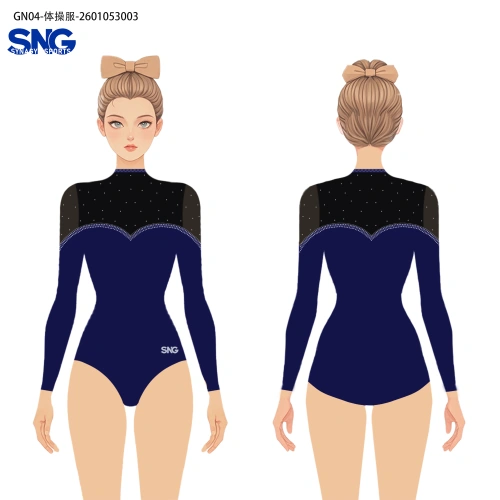
For clubs and teams, leotards also represent identity. Matching team leotards create a sense of belonging. They help athletes feel part of something larger than themselves. For brands and retailers, leotards are products that must satisfy demanding customers. Quality, fit, and visual appeal all influence whether a customer returns for more.
Before looking at styles or colors, it helps to understand the gymnast. Age, body type, skill level, training frequency, and personal preferences all matter. A six-year-old beginner may prioritize comfort and fun colors. A teenage competitor may care about a sleek silhouette, secure coverage, and a design that looks serious and elegant. A coach may focus on durability and team consistency.
Ask the girl what she likes and dislikes about her current leotards. Does she prefer high necks or lower necks? Does she like sleeveless styles or long sleeves? Does she feel comfortable with a high leg cut or does she prefer more coverage? Does she like bright colors, pastels, black, or metallic accents? Involving her in the conversation increases the chance that she will actually wear the leotard with joy.
Parents and coaches should also consider sensory comfort. Some girls are sensitive to seams, tags, tight elastic, or scratchy embellishments. Others love the feeling of smooth, stretchy fabric against the skin. A leotard that feels good to the touch is more likely to become a favorite.

Fit is the foundation of a great leotard. A beautiful design cannot compensate for poor fit. When a leotard fits well, the gymnast can move freely, and the garment stays in place. When it fits poorly, it can cause discomfort, distraction, and even injury risk. The following fit points are essential.
Accurate measurements are the starting point. Key measurements include chest, waist, hips, torso length, and sometimes inseam or leg circumference. Torso length is especially important in gymnastics because a short torso can cause straps to pull down, while a long torso can cause the leotard to feel tight or ride up. Size charts vary between manufacturers, so always use the specific chart provided by the brand or supplier.
If a gymnast is between sizes, consider the fabric and the intended use. A practice leotard may allow a little more room for growth, while a competition leotard often needs a more precise fit. For team orders, it is wise to collect measurements from every athlete and compare them with the manufacturer's sizing guide. A professional manufacturer can often advise on size selection and can sometimes produce custom sizes.
Coverage is a personal and practical concern. The leg opening should allow full hip and leg movement without cutting in. The chest area should provide secure coverage during inversions, jumps, and tumbling. Straps should stay on the shoulders without slipping. The back design should not restrict shoulder movement.

A gymnast should test a leotard by doing a few basic movements: raising arms overhead, bending forward, twisting, jumping, and sitting on the floor. If the leotard pulls, shifts, or exposes areas the gymnast wants covered, it is not the right fit. Comfort during movement is the ultimate test.
Necklines and sleeve styles affect both look and function. A high neck can provide a streamlined look and secure coverage. A lower neck may feel cooler and more relaxed. Sleeveless styles offer freedom and breathability. Long sleeves can provide warmth and a polished competition look. Straps can be wide, thin, crossed, or racerback. The best choice depends on the gymnast's preference, the climate, and the purpose of the leotard.
Adjustable straps are helpful for growing gymnasts, but they must be secure. Elastic should be covered or soft to avoid irritation. Any hardware should be smooth and safe. For competition leotards, the design should remain in place throughout the routine without requiring adjustment.
Fabric determines how a leotard feels, performs, and lasts. Gymnastics apparel requires stretch, recovery, breathability, and durability. The wrong fabric can become see-through, lose shape, or cause overheating. The right fabric moves with the body and keeps its appearance after repeated wear and washing.
Common materials in gymnastics leotards include Lycra, Spandex, Polyester, Mystique, and Mesh. Each has different properties. Lycra and Spandex provide stretch and recovery. Polyester adds durability and color retention. Mystique offers a shiny, eye-catching finish. Mesh adds breathability and visual interest. A skilled manufacturer can combine these materials to achieve specific performance goals.
| Fabric | Key Benefit | Best Use |
|---|---|---|
| Lycra | Excellent stretch and recovery | Practice and competition leotards |
| Spandex | High elasticity and fit | Form-fitting styles |
| Polyester | Durable and colorfast | Frequent training and teamwear |
| Mystique | Shiny, dramatic appearance | Competition and performance |
| Mesh | Breathable and lightweight | Inserts and decorative panels |
Construction matters as much as fabric. Flatlock seams reduce bulk and irritation. Reinforced stitching improves durability. Elastic edges should be soft but secure. Linings should provide coverage without adding weight. Rhinestones and other decorations must be attached securely so they do not fall off during movement or washing.
For practice leotards, comfort, stretch, breathability, and durability are the priorities. For competition leotards, precision fit, secure coverage, decorative details, and professional finishing become more important. A manufacturer that understands these differences can produce leotards that perform correctly for each purpose.
Not all leotards serve the same purpose. Practice leotards are worn frequently, sometimes several times a week. They need to withstand repeated washing, stretching, and movement. They should be comfortable enough for long training sessions and durable enough to last through a season. Many gymnasts prefer simple, breathable styles for practice.
Competition leotards are designed for performance. They often feature more elaborate designs, rhinestones, sublimation printing, mesh panels, and color blocking. They must fit precisely and stay in place under the pressure of competition. They should also photograph well and reflect the team's identity.
Some clubs order separate practice and competition leotards. Others use a single design for both. The decision depends on budget, frequency of use, and the level of competition. A professional gymnastics apparel manufacturer can help clubs choose the right balance between performance, style, and cost.
Girls often have strong opinions about design. They may love bright colors, sparkles, animal prints, geometric patterns, or elegant solid colors. They may prefer a simple look or a dramatic one. The key is to let the gymnast feel represented by the design.
Color is powerful. Bright colors can feel energetic and fun. Pastels can feel soft and elegant. Black and navy can look sleek and professional. Metallic colors and Mystique fabrics can create a standout competition look. Team colors can build unity and pride.
Patterns and embellishments add personality. Sublimation printing allows complex graphics, gradients, and logos to be printed directly into the fabric. Rhinestones and crystals add sparkle and can be arranged in custom patterns. Mesh inserts can create contrast and breathability. Color blocking can flatter different body types.
Comfort must never be sacrificed for decoration. Scratchy rhinestones, heavy appliques, or stiff fabrics can ruin the experience. A good design places decoration where it will not interfere with movement or cause irritation. The best manufacturers pay attention to these details.
Start with the gymnast's favorite colors and styles. If she loves purple, look for purple tones that complement her skin tone and the team colors. If she prefers a clean look, consider a solid color with a subtle accent. If she wants sparkle, choose rhinestones that are securely attached and placed thoughtfully.
Consider the setting. A practice leotard may be more practical in darker colors that hide chalk and wear. A competition leotard can be more dramatic. For team orders, the design should look cohesive across different body types and sizes. It should also work well in photographs and on stage.
Think about longevity. Trends change, but a well-designed leotard can remain stylish for years. Classic color combinations and balanced patterns often age better than extremely trendy designs. If a gymnast will wear the leotard for multiple seasons, choose a design she will still love later.
For clubs and teams, custom leotards are a powerful tool. They create a unified look, strengthen team spirit, and help athletes feel proud to represent their gym. Custom team leotards can include team colors, logos, patterns, labels, and even matching warm-up wear.
A complete team collection might include competition leotards, practice leotards, warm-up jackets, pants, bags, and other accessories. Consistency in colors and branding helps the club look professional. It also makes it easier for parents to purchase the right items.
When ordering custom team leotards, collect input from coaches and athletes. Consider the level of competition, the number of athletes, the budget, and the timeline. Work with a manufacturer that can provide samples, size sets, and clear communication throughout the process.
Choosing the right manufacturing partner is crucial, especially for custom leotards. A good manufacturer understands gymnastics apparel, not just general sportswear. They know how a leotard should stretch, fit, and perform. They can advise on fabrics, construction, sizing, and decoration.
Look for a manufacturer with experience in gymnastics. They should be able to show examples of competition leotards, practice leotards, rhinestone designs, and teamwear. They should offer customization services, including OEM and ODM. They should also have a clear quality control process.
T&J Sportswear is a professional gymnastics apparel manufacturer specializing in the development and production of high-quality gymnastics leotards and teamwear. With more than 10 years of experience in the sportswear industry, T&J has built strong expertise in product development, custom design, manufacturing, and international business.
T&J Sportswear works with gymnastics clubs, teams, brands, wholesalers, distributors, and other sportswear businesses. The company has a strong focus on customers in the US, Europe, and other international markets. Its main products include competition gymnastics leotards, practice gymnastics leotards, custom team leotards, rhinestone gymnastics leotards, and gymnastics warm-up wear.
At T&J Sportswear, the team understands that gymnastics apparel needs to combine comfort, flexibility, durability, fit, and visual appeal. Production attention is given to every stage, from fabric selection and pattern development to cutting, sewing, printing, rhinestone application, quality inspection, and final packaging. This helps provide products suitable for both demanding training sessions and high-level competitions.
Customization is one of T&J Sportswear's key strengths. The company offers OEM and ODM services and can develop products based on customers' designs, sketches, reference images, color requirements, or original ideas. A professional design team can assist with artwork development and product optimization, helping customers turn concepts into finished gymnastics apparel.
T&J Sportswear also understands that different customers have different order requirements. Whether a customer is a growing gymnastics club looking for customized team uniforms, a new brand developing its first collection, or an established distributor requiring regular production, T&J provides flexible solutions with low MOQ, competitive pricing, professional communication, and one-to-one service.
Quality and consistency are important throughout the production process. T&J Sportswear works to maintain stable workmanship and carefully inspects finished products before shipment. The goal is not only to manufacture gymnastics apparel, but also to build long-term partnerships through reliable products and responsive service.
One major advantage for small and growing customers is a low MOQ. T&J Sportswear offers low MOQ starting from 10 sets for selected products. This gives gymnastics clubs, new brands, boutique retailers, and smaller distributors greater flexibility when testing new designs or launching new collections.
Instead of requiring customers to commit to large quantities before they know how a design will perform in their market, T&J can support smaller initial orders. This helps customers gradually develop their collections and reduce risk. It is especially useful for clubs that want custom team leotards but do not need hundreds of pieces at once.
Flexible OEM and ODM customization is at the center of the service. Customers can choose between producing their own designs and developing new products together with the T&J team. Customization can cover artwork, colors, sublimation printing, logos, rhinestone layouts, fabric combinations, sizes, labels, packaging, and other details.
The production process covers design development, fabric selection, digital artwork, printing, cutting, sewing, decoration, inspection, packaging, and delivery. This integrated approach helps reduce communication between multiple suppliers and gives customers a more efficient path from an initial idea to a finished product.
Production capacity is not simply about quantity. The real value is the ability to maintain consistent workmanship when moving from samples to bulk production. T&J Sportswear has a factory team that includes more than 30 skilled workers, with reported production capacity of over 300 leotards per day.
This provides a balance between flexible customization and the ability to support larger wholesale and team orders. The team pays attention to fabric, printing, stitching, sizing, rhinestone placement, and overall finishing throughout production. This helps ensure that the final leotards meet the expectations set during sampling.
For clubs and brands, reliable capacity means orders can be delivered on time without sacrificing quality. It also means the manufacturer can handle repeat orders and seasonal demands. Consistency across orders is essential for building a trusted brand or club identity.
Quality control starts before bulk production. During sample development, customers can review the design, fabric, fit, decoration, and finishing before confirming mass production. This step is critical for custom leotards because it allows adjustments before large quantities are produced.
For finished garments, key inspection points can include fabric condition, printing quality, stitching, measurements, rhinestone placement, coverage, and overall appearance. The production process is designed to reduce common problems such as inconsistent sizing, printing defects, loose decoration, or uneven finishing.
T&J Sportswear's product information also lists certifications such as ISO9001, SGS, and CE for applicable products. Specific certification and testing documentation can be provided according to the product and customer requirements. These credentials can be important for distributors and brands that need to meet market standards.
Girls are more likely to love a leotard if they have a voice in choosing it. For individual purchases, show a few options and let the gymnast try them on. Pay attention to her reactions. Does she smile? Does she move freely? Does she keep touching the fabric because it feels nice? These cues matter.
For team orders, consider a design committee or a survey. Coaches can set boundaries for team colors and performance requirements, while athletes can vote on specific design elements. This creates excitement and ownership. It also reduces the chance that athletes will dislike the final design.
If possible, order sample leotards in a few sizes before the full team order. Let a few gymnasts wear the samples during practice. Collect feedback on fit, comfort, and appearance. Then make adjustments before bulk production. This small step can save time and money later.
Proper care extends the life of a leotard. Always follow the manufacturer's care instructions. In general, hand washing in cold water with a mild detergent is safest. Avoid bleach, fabric softener, and harsh chemicals. Rinse thoroughly and gently squeeze out excess water without wringing or twisting.
Lay the leotard flat to dry or hang it in a shaded area. Avoid direct sunlight, which can fade colors and weaken elastic. Do not tumble dry unless the care label specifically allows it. High heat can damage spandex, rhinestones, and printing.
Store leotards in a cool, dry place. Avoid hanging them by the straps for long periods, as this can stretch them. Keep rhinestones from rubbing against rough surfaces. If a rhinestone falls off, repair it promptly with a suitable adhesive to prevent further loss.
Each of these mistakes can lead to disappointment. A leotard that is uncomfortable or poorly made may end up at the back of the drawer. A leotard that fits well, looks beautiful, and supports performance will be worn with pride again and again.
Use this checklist when selecting leotards for a gymnast, team, or store.
General sportswear manufacturers may produce comfortable clothing, but gymnastics apparel has unique demands. A leotard must stretch in multiple directions, recover its shape, stay in place during dynamic movement, and provide appropriate coverage. It must also look polished and perform well under competition lighting.
T&J Sportswear has more than 10 years of specialized experience in gymnastics apparel manufacturing. The company focuses on competition and training leotards. Unlike general sportswear suppliers, T&J understands the specific requirements of gymnastics apparel, including stretch, fit, comfort, coverage, durability, decoration, and freedom of movement.
Over the years, T&J Sportswear's products and services have reached customers in more than 36 countries. This gives the company practical experience working with different markets, customer requirements, sizing systems, and product preferences. Main markets include North America and Europe, where customers place strong emphasis on product quality, customization, consistency, and reliable communication.
Design is a key strength at T&J Sportswear. The company has an in-house professional design team specializing in gymnastics apparel. The team does more than simply manufacture designs supplied by customers. It can also help develop new concepts based on sketches, reference images, color combinations, team identities, or brand requirements.
For competition leotards, T&J can combine sublimation graphics, color blocking, mesh, rhinestones, crystal decoration, and different fabric effects to create distinctive visual designs. Customers can also customize colors, logos, patterns, labels, and other branding elements. This level of customization helps clubs and brands create a unique look that stands out.
For practice leotards, the focus is on comfort, stretch, breathability, and durability for everyday training. T&J offers a wide range of colors, patterns, and styles, with customized designs available for gymnastics clubs and teams. For customers looking to build a complete team collection, T&J also provides custom gymnastics warm-ups and matching team apparel.
A complete team collection can include competition leotards, practice leotards, warm-up jackets, pants, and matching accessories. Team colors, logos, patterns, labels, packaging, and other details can be customized according to requirements. This creates a cohesive look that represents the club or brand professionally.
When building a collection, consider how each piece will be used. Competition leotards may need more embellishment and precise fit. Practice leotards may need greater durability and comfort. Warm-ups should be easy to put on and take off, and they should keep athletes warm without restricting movement.
T&J Sportswear supports OEM and ODM services, from design development and sample making to bulk production. The professional design team can help transform ideas, sketches, or reference images into finished gymnastics apparel. With low MOQ, flexible customization, competitive pricing, and one-to-one service, T&J makes it easier for new brands, gymnastics clubs, and established distributors to develop their own collections.
Manufacturing quality is only one part of a successful supplier relationship. Clear communication and responsive service are equally important, especially for customized gymnastics apparel. From initial inquiry and design development to sampling, production, inspection, and shipment, the T&J team provides professional support throughout the process.
Customers can communicate their requirements directly and receive assistance with product development, customization, production details, and logistics. This one-to-one approach helps reduce misunderstandings and keeps projects moving smoothly. It also allows customers to ask questions and make adjustments as needed.
For clubs and brands, having a dedicated contact person can make a significant difference. It means less time chasing updates and more time focusing on training, selling, or growing the business. Reliable communication builds trust and leads to long-term partnerships.
T&J Sportswear's goal is to build long-term partnerships rather than simply complete individual orders. Whether a customer is a gymnastics club developing team uniforms, a new brand launching a collection, a distributor expanding a product range, or an established buyer looking for a reliable manufacturing partner, T&J provides flexible solutions based on requirements.
With more than 10 years of industry experience, 36+ countries served, 30+ skilled workers, 300+ daily leotard capacity, low MOQ, professional design support, OEM and ODM customization, and one-to-one service, T&J combines manufacturing capability with the flexibility required by today's international gymnastics apparel market.
From the first idea to the final leotard, T&J Sportswear is committed to making custom gymnastics apparel more efficient, flexible, and reliable. This commitment helps customers deliver leotards that gymnasts love to wear.
The best leotard is the one a gymnast reaches for first. It fits her body, supports her movement, and reflects her personality. It is comfortable enough for long practices and beautiful enough for competition. It is durable enough to last and flexible enough to grow with her.
Parents, coaches, and buyers should prioritize fit and function, then design. They should involve the gymnast when possible, test samples for team orders, and choose fabrics and construction that match the intended use. They should also work with a manufacturer that understands gymnastics apparel and provides reliable quality, customization, and service.
When all these factors come together, a leotard becomes more than clothing. It becomes a source of confidence. It helps a girl feel strong, prepared, and proud. That is the true goal of picking leotards gymnastics girls will love to wear.
