Finding the perfect fit for girls' gymnastics leotards is crucial for performance, comfort, and confidence. This article provides comprehensive sizing tips, emphasizing the importance of accurate measurements, understanding body types and growth, and considering fabric stretch. Key measurements include chest, waist, hips, and torso length. Size charts should be used carefully, and custom sizing is recommended for unique body types or team orders. T&J Sportswear, a professional gymnastics apparel manufacturer with over 10 years of experience, offers expert guidance, low MOQ, and OEM/ODM services. The company's focus on quality control, flexible customization, and one-to-one service ensures that every gymnast can find a leotard that fits perfectly. By avoiding common sizing mistakes and involving the gymnast in the process, parents and coaches can help young athletes feel and perform their best.
Gymnastics is a sport that celebrates grace, strength, and precision. For young female gymnasts, the leotard is more than just a uniform; it is an essential piece of equipment that can influence performance, comfort, and confidence. A leotard that fits perfectly allows for unrestricted movement, provides adequate coverage, and enhances the athlete's natural lines. Conversely, a poorly fitting leotard can cause discomfort, distraction, and even injury. T&J Sportswear, a professional gymnastics apparel manufacturer with over 10 years of experience, understands that achieving the perfect fit is a critical aspect of gymnastics apparel design. This comprehensive guide offers detailed sizing tips for girls' gymnastics leotards, drawing on industry expertise to help parents, coaches, and gymnasts make informed decisions.
The importance of proper sizing cannot be overstated. In a sport where every movement is scrutinized, a leotard that rides up, digs in, or restricts motion can be a significant hindrance. It can break concentration, cause physical discomfort, and undermine a gymnast's confidence. On the other hand, a well-fitted leotard feels like a second skin, allowing the gymnast to focus entirely on her performance. T&J Sportswear's extensive experience in manufacturing competition leotards, practice leotards, and custom team leotards has shown that fit is the foundation of satisfaction and performance.
Gymnastics demands a full range of motion. Athletes bend, stretch, twist, jump, and tumble. A leotard that is too tight can restrict movement, cause chafing, and leave red marks on the skin. It can also restrict breathing, which is detrimental during intense routines. A leotard that is too loose can shift out of place, ride up, and fail to provide adequate coverage. This can lead to embarrassment and distraction, especially during competitions. The right fit ensures that the garment moves with the body, providing support without restriction. T&J Sportswear emphasizes that fit is not just about size; it is about the harmony between fabric, cut, and the individual's body.
Moreover, a properly fitted leotard contributes to safety. Loose fabric can snag on equipment, such as the balance beam or bars, potentially causing a fall. Tight leotards can restrict movement and lead to strains or injuries. T&J Sportswear's design team pays close attention to pattern development and fabric selection to ensure that every leotard provides a safe and comfortable fit. The company's products are designed for both demanding training sessions and high-level competitions, reflecting their commitment to quality and performance.
undefined

Beyond physical factors, sizing affects the visual appeal of the leotard. Competition leotards are designed to showcase the athlete's lines and movements. A well-fitted leotard accentuates the body's contours and enhances the overall presentation. T&J Sportswear's competition leotards combine performance fabrics with creative designs, including sublimation graphics, color blocking, mesh, and rhinestones. These decorative elements must be placed correctly to ensure they do not interfere with fit or movement. The company's in-house design team specializes in creating leotards that are both functional and beautiful.
Girls' bodies change rapidly, especially during childhood and adolescence. A size that fits perfectly one month may be too tight or too loose the next. It is important to understand that gymnastics leotard sizing is not the same as everyday clothing sizing. Leotards are designed to be snug, but not restrictive. Factors such as age, height, weight, torso length, and body composition all influence the ideal size. T&J Sportswear has served customers in over 36 countries, giving the company extensive experience with diverse body types and sizing systems. This global perspective helps them develop leotards that accommodate a wide range of shapes.
When selecting a size, consider the gymnast's body type. Some girls have longer torsos, while others have shorter torsos but longer legs. Some are petite, while others are tall and lean. Some have broader shoulders, while others have narrower frames. Standard size charts are a starting point, but they may not account for every variation. That is why many manufacturers, including T&J Sportswear, offer custom sizing options. Custom leotards are made to the individual's measurements, ensuring a perfect fit regardless of body type. T&J Sportswear's OEM and ODM services allow customers to develop products based on their specific needs, including custom sizing for individuals or teams.
Growth spurts can be challenging for parents and gymnasts alike. A leotard that fit perfectly at the beginning of the season may become too small by the end. It is generally recommended to avoid buying a leotard that is significantly larger to "grow into," as this can compromise fit and safety. Instead, consider purchasing a leotard with some stretch that can accommodate minor growth, or opt for custom sizing that can be adjusted as needed. T&J Sportswear's flexible customization services allow for adjustments in sizing, so gymnasts can get a leotard that fits now and can be easily replaced when a growth spurt occurs. The company's low MOQ starting from 10 sets makes it easier for clubs and teams to order a range of sizes and replace them as needed.
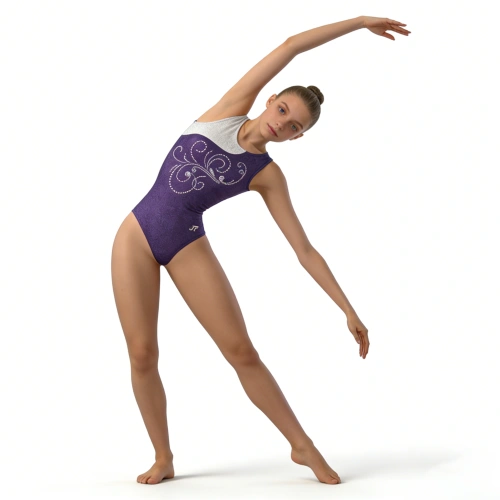
Another consideration is that growth spurts can affect different parts of the body at different rates. For example, a girl may grow taller but not wider, or vice versa. This can change the relationship between torso length and hip width. Regular measurement is key to keeping up with these changes. T&J Sportswear recommends measuring every three to six months, or before each new season, to ensure a proper fit.
Accurate measurements are the foundation of a perfect fit. To measure a girl for a gymnastics leotard, you will need a flexible measuring tape, a pen, and paper to record the numbers. It is best to measure over fitted clothing or undergarments to get the most accurate results. The gymnast should stand straight with feet together and arms relaxed at her sides. Here are the key measurements to take:
It is important to measure carefully and double-check the numbers. A difference of even half an inch can affect the fit. T&J Sportswear provides detailed sizing guides and works one-on-one with customers to ensure measurements are taken correctly. Their professional design team can also assist with any questions about sizing. The company's experience with customers in the US, Europe, and other international markets means they are familiar with both imperial and metric systems, making it easy to interpret measurements.
To ensure accuracy, follow these steps:

Record all measurements in inches or centimeters. T&J Sportswear recommends measuring twice to confirm accuracy. If the measurements fall between sizes, it is generally better to choose the larger size for comfort and coverage, especially for growing girls. However, for competition leotards, a tighter fit may be preferred for performance. The company's design team can provide guidance on the best fit for each situation.
Even with good intentions, measuring mistakes can happen. Here are some common errors to avoid:
T&J Sportswear's one-to-one professional service includes assistance with measuring and sizing. Customers can communicate their requirements directly and receive assistance with product development, customization, production details, and logistics.
Size charts are essential tools, but they are not all created equal. Different brands use different sizing standards, and a size 10 in one brand may be a size 12 in another. Always refer to the specific size chart provided by the manufacturer. T&J Sportswear offers comprehensive size charts for their competition leotards, practice leotards, and custom team leotards. These charts are based on extensive data and feedback from customers worldwide.
When using a size chart, compare the gymnast's measurements to the chart's ranges. If the measurements fall between two sizes, it is generally better to choose the larger size for comfort and coverage, especially for growing girls. However, for competition leotards, a tighter fit may be preferred for performance. T&J Sportswear advises customers to consider the intended use of the leotard. For practice, a slightly looser fit may be more comfortable; for competition, a snug fit is often desired. The company's design team can provide guidance on the best fit for each situation.
Size charts typically include measurements for chest, waist, hips, and torso. Some charts also include height and weight ranges. It is important to note that height and weight alone are not sufficient for determining leotard size, as body proportions vary. For example, two girls of the same height and weight may have different torso lengths. Therefore, always prioritize the torso measurement. T&J Sportswear's size charts are designed to be user-friendly and include detailed instructions on how to measure.
If a gymnast's measurements do not fit neatly into a single size, custom sizing is the best solution. T&J Sportswear's custom leotards are made to the individual's measurements, ensuring a perfect fit. The company's production process covers design development, fabric selection, digital artwork, printing, cutting, sewing, decoration, inspection, packaging, and delivery. This integrated approach ensures that custom sizes are accurate and consistent.
There are situations where sizing up or down is appropriate. Size up if:
Size down if:
However, never size down so much that it causes discomfort or restricts movement. T&J Sportswear's low MOQ starting from 10 sets allows clubs and teams to order a range of sizes to accommodate different body types, ensuring every gymnast gets a proper fit. The company's flexible OEM and ODM services also allow for adjustments to sizing based on customer feedback.
The fabric of a leotard plays a crucial role in fit. Most gymnastics leotards are made from a blend of Lycra, Spandex, Polyester, and sometimes Mystique or Mesh. These materials offer varying degrees of stretch, recovery, and breathability. A fabric with high stretch and excellent recovery will conform to the body and return to its original shape, providing a consistent fit. T&J Sportswear carefully selects fabrics for their performance characteristics. For practice leotards, they focus on comfort, durability, and moisture management. For competition leotards, they prioritize precision fit, secure coverage, and visual appeal.
Understanding the stretch factor is key. A leotard made from a 4-way stretch fabric will stretch in both directions, offering greater freedom of movement. A 2-way stretch fabric stretches in one direction, usually horizontally. T&J Sportswear uses a variety of fabrics, including Lycra, Spandex, Polyester, Mystique, and Mesh, to meet different design and performance needs. The company's production team pays attention to every stage of manufacturing, from fabric selection to final packaging, ensuring that the fabric behaves as expected and contributes to a perfect fit.
When choosing a size, consider how the fabric will behave. A highly stretchy fabric may feel loose initially but conform to the body once worn. A less stretchy fabric may feel tight at first but relax slightly with movement. It is always a good idea to read the fabric composition and care instructions. T&J Sportswear provides detailed product information, including fabric content, so customers can make informed decisions. Additionally, the company's design team can recommend fabrics based on the desired fit and use.
For example, a competition leotard made from a stretch Lycra blend with rhinestones may have less stretch than a practice leotard made from a soft, stretchy polyester blend. The rhinestones can also affect the fit by adding weight or stiffness. T&J Sportswear's design team carefully considers these factors when creating patterns and selecting fabrics. The company's experience with sublimation printing, rhinestone application, and other decorative techniques ensures that the final product fits well and looks stunning.
Proper care of the leotard can help maintain its fit over time. Always follow the care instructions provided by the manufacturer. T&J Sportswear recommends washing leotards in cold water and air drying to preserve the elasticity and appearance. Avoid using fabric softeners, as they can break down the stretch fibers. With proper care, a well-fitted leotard will retain its shape and fit for many uses.
The ideal gymnastics leotard strikes a balance between fit and comfort. It should be snug enough to stay in place during vigorous activity but not so tight that it causes pain or restricts breathing. A well-fitted leotard should feel like a second skin, moving with the gymnast without any adjustment needed. Here are some signs of a good fit:
If a leotard is too tight, it can leave red marks, restrict circulation, and cause discomfort. If it is too loose, it can shift, expose areas that should be covered, and create distraction. T&J Sportswear's design team specializes in creating leotards that fit well and feel great. Their in-house design capability allows them to develop patterns that accommodate different body types and movements. The company's 30+ skilled workers and 300+ daily leotard capacity ensure that each leotard is crafted with precision.
The torso measurement is often the most overlooked but critical factor in leotard fit. If the torso length is too short, the leotard will pull down at the shoulders and ride up in the crotch. If it is too long, the leotard will sag and bunch. T&J Sportswear emphasizes the importance of measuring the torso accurately. For custom leotards, the torso measurement is used to create a pattern that fits the individual perfectly. For standard sizes, the size chart usually indicates the torso length range. If a gymnast's torso is longer or shorter than average, custom sizing may be the best option.
To check torso fit, have the gymnast raise her arms overhead. The leotard should not pull down excessively at the shoulders or ride up in the crotch. She should also be able to bend forward and backward without the leotard shifting uncomfortably. T&J Sportswear's quality control process includes checking measurements and fit during production to ensure consistency.
Coverage is a major concern for many parents and gymnasts. A leotard should provide adequate coverage of the chest, seat, and legs. In gymnastics, certain movements can cause a leotard to shift, so it is important to choose a style that offers secure coverage. T&J Sportswear offers a range of leotard styles, from high-cut to full-seat, to suit different preferences and needs. The company's competition leotards are designed with precision fit and secure coverage in mind, using performance fabrics that stay in place.
When trying on a leotard, check the following:
If any area feels exposed or requires constant adjustment, the size or style may not be right. T&J Sportswear's team can help customers choose the right style and size for their coverage needs. The company's design team can also customize coverage options, such as adding a modesty panel or adjusting leg openings.
Competition leotards are designed to meet the specific demands of the sport. They must be visually striking, often featuring rhinestones, sublimation printing, and intricate designs. However, they must also fit precisely to allow for maximum performance. A competition leotard that is too tight can restrict movement, while one that is too loose can be distracting and may not meet competition regulations. T&J Sportswear's competition leotards combine performance fabrics with creative designs, including sublimation graphics, color blocking, mesh, and rhinestones. The company pays close attention to fabric selection, cutting, stitching, embellishment, and finishing to create eye-catching leotards that allow athletes to move confidently.
Sizing for competition leotards often requires a snugger fit than practice leotards. The fabric should stretch with the body but not bag or sag. Rhinestones and other decorations should be placed so they do not interfere with movement or cause discomfort. T&J Sportswear's design team works with customers to ensure that every competition leotard fits perfectly and looks spectacular. The company's OEM and ODM services allow for custom designs and sizing, ensuring that each team or individual gets a leotard that meets their exact specifications.
For gymnastics clubs and teams, ordering custom team leotards involves sizing multiple athletes. T&J Sportswear supports this process by offering flexible customization, including sizes, colors, logos, and patterns. The company's low MOQ of 10 sets makes it easier for teams to order the exact sizes they need without overordering. T&J Sportswear's one-to-one service ensures that each team's specific sizing requirements are met, from sample development to bulk production. The company's 30+ skilled workers and 300+ daily leotard capacity enable them to handle team orders efficiently while maintaining consistent workmanship.
When ordering team leotards, it is helpful to collect measurements from each gymnast and use a size chart to determine the appropriate sizes. T&J Sportswear can provide a team sizing sheet and assist with any questions. The company can also produce sample leotards in specific sizes for teams to try on before placing a bulk order. This helps ensure that every gymnast gets a leotard that fits well and feels comfortable.
Practice leotards are worn during training sessions, sometimes for hours at a time. Comfort, breathability, and durability are paramount. While fit is still important, there is often more flexibility in sizing for practice leotards. A slightly looser fit may be more comfortable for long practices, but it should still stay in place. T&J Sportswear's practice leotards focus on comfort, stretch, breathability, and durability for everyday training. The company offers a wide range of colors, patterns, and styles, with customized designs available for clubs and teams.
When sizing practice leotards, consider the frequency of use and the intensity of training. If the gymnast will be wearing the leotard multiple times a week, a comfortable fit is essential. T&J Sportswear uses moisture-wicking fabrics and durable construction to ensure that practice leotards hold up to regular use. The company's quality control process ensures that each leotard meets high standards before shipment. Practice leotards can also be customized with team logos, colors, and patterns, allowing teams to look cohesive during training.
Custom sizing is one of the best ways to ensure a perfect fit. T&J Sportswear offers OEM and ODM services, allowing customers to develop products based on their designs, sketches, reference images, color requirements, or original ideas. For sizing, customers can provide measurements for individual gymnasts or a range of sizes for a team. The company's professional design team can assist with artwork development and product optimization, helping customers turn concepts into finished gymnastics apparel.
Custom sizing is particularly beneficial for gymnasts who fall outside standard size ranges, such as those with very long torsos or petite frames. T&J Sportswear's experience with customers in 36+ countries has given them insight into diverse sizing needs. The company's production process covers design development, fabric selection, digital artwork, printing, cutting, sewing, decoration, inspection, packaging, and delivery. This integrated approach ensures that custom sizes are accurate and consistent.
T&J Sportswear offers a low MOQ starting from 10 sets for selected products. This is a major advantage for gymnastics clubs, new brands, boutique retailers, and smaller distributors. It allows them to test new designs or launch new collections without committing to large quantities. For sizing, this means that teams can order a variety of sizes to accommodate all their gymnasts, even if the total order is small. T&J Sportswear's flexible approach supports business growth and ensures that every gymnast gets a leotard that fits.
The company's flexible OEM and ODM services also mean that customers can start with a small order and scale up as their needs grow. T&J Sportswear's one-to-one professional service provides support throughout the process, from initial inquiry to final delivery.
Many sizing mistakes can be avoided with careful attention. Here are some common pitfalls:
T&J Sportswear's team can help customers avoid these mistakes by providing detailed sizing information and personalized support. Their quality control process also ensures that sizing is consistent from sample to bulk production. The company's certifications, such as ISO9001, SGS, and CE, demonstrate their commitment to quality and customer satisfaction.
Parents and coaches play a key role in ensuring a proper fit. Here are some tips:
T&J Sportswear's commitment to quality and consistency means that parents and coaches can trust the sizing of their products. The company's ISO9001, SGS, and CE certifications for applicable products further demonstrate their dedication to quality.
Quality control is essential for consistent sizing. T&J Sportswear implements quality control from sample development to bulk production. During sample development, customers can review the design, fabric, fit, decoration, and finishing before confirming mass production. For finished garments, key inspection points include fabric condition, printing quality, stitching, measurements, rhinestone placement, coverage, and overall appearance. This process helps reduce common problems such as inconsistent sizing, printing defects, loose decoration, or uneven finishing.
T&J Sportswear's production team pays attention to every stage of manufacturing, from fabric selection and pattern development to cutting, sewing, printing, rhinestone application, quality inspection, and final packaging. This attention to detail ensures that each leotard meets the highest standards of fit and quality. The company's 30+ skilled workers and 300+ daily leotard capacity allow them to maintain consistent workmanship even for large orders.
T&J Sportswear's goal is to build long-term partnerships with customers. Whether you are a gymnastics club developing team uniforms, a new brand launching a collection, a distributor expanding your product range, or an established buyer looking for a reliable manufacturing partner, T&J Sportswear provides flexible solutions based on your requirements. With 10+ years of industry experience, 36+ countries served, 30+ skilled workers, 300+ daily leotard capacity, low MOQ, professional design support, OEM/ODM customization, and one-to-one service, the company combines manufacturing capability with the flexibility required by today's international gymnastics apparel market.
From your first idea to the final leotard, T&J Sportswear is committed to making custom gymnastics apparel more efficient, flexible, and reliable. Their expertise in sizing and fit ensures that every gymnast can find a leotard that feels like a second skin.
The style of a leotard can significantly affect how it fits. Different cuts and designs distribute fabric and stretch in different ways. Understanding these differences can help in selecting the right size. T&J Sportswear offers a variety of styles, each with its own sizing considerations.
Tank leotards are a popular choice for practice and competition. They feature shoulder straps that can vary in width, from thin to thick. The fit around the shoulders and chest is crucial. If the straps are too tight, they can dig into the shoulders; if too loose, they can slip. The torso measurement is particularly important for tank leotards, as they rely on the stretch of the fabric to stay in place. T&J Sportswear's tank leotards are designed with carefully engineered straps and armholes to ensure a comfortable and secure fit.
Long sleeve leotards provide additional coverage and warmth, making them ideal for colder climates or warm-ups. However, the sleeves add another dimension to sizing. The arm length and circumference must be considered. If the sleeves are too tight, they can restrict arm movement; if too loose, they can bunch and interfere with skills. T&J Sportswear's long sleeve leotards are available in custom sizes to ensure the sleeves fit perfectly. The company's design team can adjust sleeve length and width based on individual measurements.
Halter leotards have straps that tie behind the neck, while camisole leotards have thin, straight straps. These styles offer a different fit around the neck and shoulders. Halter styles can be adjusted for a custom fit at the neck, but the torso and chest measurements are still critical. Camisole styles require accurate shoulder and chest measurements to prevent slipping. T&J Sportswear offers both styles and can provide guidance on the best size for each.
Different gymnastics disciplines may have specific sizing requirements. While the basic measurements remain the same, the demands of the sport can influence the preferred fit.
Artistic gymnastics involves powerful tumbling, jumps, and swings on apparatus. Leotards must be extremely secure to stay in place during these dynamic movements. A snug fit is essential, especially around the torso and legs. T&J Sportswear's competition leotards for artistic gymnastics are designed with high-stretch fabrics and secure construction to prevent any shifting.
Rhythmic gymnastics emphasizes grace, flexibility, and fluid movements. Leotards are often more decorative, with intricate designs and embellishments. The fit should be comfortable and allow for a full range of motion, including deep backbends and splits. T&J Sportswear's rhythmic leotards are tailored to provide both flexibility and visual appeal, with custom sizing to ensure a perfect fit for each athlete.
Tumbling and acrobatic gymnastics involve explosive power and complex tumbling passes. Leotards must be durable and stay in place during high-impact landings. A slightly tighter fit may be preferred to prevent any fabric from catching. T&J Sportswear's leotards for these disciplines are made from durable, stretch fabrics that hold their shape.
Gymnastics is a global sport, and leotard sizing can vary from country to country. T&J Sportswear has experience serving customers in 36+ countries, including the US, Europe, and other international markets. Understanding these differences can help when ordering from international brands.
T&J Sportswear provides clear size charts with both imperial and metric measurements to accommodate international customers. The company's one-to-one service can also help customers convert sizes and choose the right fit.
Proper care can extend the life of a leotard and help it maintain its fit. Here are some tips:
T&J Sportswear includes care instructions with every leotard. Following these guidelines will help ensure that the leotard retains its fit and appearance for many performances.
If a gymnast is between sizes, it is generally recommended to size up for practice leotards and consider a snugger fit for competition leotards. However, the best solution is to order a custom size. T&J Sportswear offers custom sizing based on individual measurements.
Measure every three to six months, or before each new season. During growth spurts, measure more frequently, such as every two months.
Alterations can be tricky due to the stretch fabrics and embellishments. It is better to order the correct size or custom sizing. T&J Sportswear's design team can help you get the right fit from the start.
Practice leotards can be slightly looser for comfort, while competition leotards should be snug for performance and to meet regulations. T&J Sportswear offers both types with appropriate sizing recommendations.
Coaches play a vital role in helping gymnasts achieve the right fit. They can observe how a leotard performs during training and competition, and they can advise on sizing and style. Coaches should encourage gymnasts to communicate any discomfort and should be aware of the signs of a poor fit. T&J Sportswear works closely with coaches and clubs to provide team sizing support and custom teamwear that meets the needs of every athlete.
Many gymnastics clubs have benefited from T&J Sportswear's custom sizing. For example, a club in the United States had several gymnasts with different body types and struggled to find standard sizes that fit everyone. By working with T&J Sportswear, they were able to order custom team leotards with individual measurements. The result was a perfect fit for every gymnast, improved comfort, and enhanced performance. Another case involved a new brand launching a gymnastics apparel line. T&J Sportswear's OEM services and low MOQ allowed them to produce a small batch of leotards in various sizes, test the market, and scale up successfully.
T&J Sportswear is committed to helping customers achieve the perfect fit. The company offers:
With these capabilities, T&J Sportswear ensures that every gymnast can find a leotard that fits perfectly and performs beautifully.
Achieving the perfect fit for a girls' gymnastics leotard requires careful measurement, consideration of body type and growth, understanding of fabric stretch, and attention to comfort and coverage. By following the tips outlined in this guide, parents, coaches, and gymnasts can make informed decisions and find leotards that enhance performance and confidence. T&J Sportswear, with its extensive experience, professional design team, and commitment to quality, is a trusted partner for gymnastics apparel. Whether you need a single custom leotard or a full team order, T&J Sportswear can help you achieve the perfect fit.
Summary:
Finding the perfect fit for girls' gymnastics leotards is crucial for performance, comfort, and confidence. This article provides comprehensive sizing tips, emphasizing the importance of accurate measurements, understanding body types and growth, and considering fabric stretch. Key measurements include chest, waist, hips, and torso length. Size charts should be used carefully, and custom sizing is recommended for unique body types or team orders. T&J Sportswear, a professional gymnastics apparel manufacturer with over 10 years of experience, offers expert guidance, low MOQ, and OEM/ODM services. The company's focus on quality control, flexible customization, and one-to-one service ensures that every gymnast can find a leotard that fits perfectly. By avoiding common sizing mistakes and involving the gymnast in the process, parents and coaches can help young athletes feel and perform their best.
