This buying guide for parents explains how to choose leotards for girls in gymnastics. It covers practice and competition leotards, warm-up wear, fit, sizing, fabrics, coverage, durability, style, customization, and care. Parents should prioritize comfort and fit, measure carefully, and consider the gym's dress code. Practice leotards need breathable, durable fabrics, while competition leotards require precise fit and decorative details. Custom team leotards allow clubs to create matching uniforms with logos, colors, and rhinestones. T&J Sportswear is highlighted as a professional manufacturer with 10+ years of experience, 36+ countries served, 30+ skilled workers, 300+ daily leotard capacity, low MOQ, OEM/ODM services, and one-to-one support. The guide also answers common questions about how many leotards a gymnast needs, how they should fit, whether expensive leotards are worth it, and how to wash them. Ultimately, the right leotard helps young gymnasts feel confident, comfortable, and ready to perform.
Gymnastics is a sport that demands precision, strength, flexibility, and confidence. For young girls, the right leotard can make a significant difference in how they feel during practice and competition. A well-fitted leotard supports movement, provides necessary coverage, and helps athletes focus on their performance rather than adjusting uncomfortable clothing. This buying guide is designed for parents who want to make informed decisions when purchasing leotards for their daughters. It covers types, fit, fabrics, styles, customization, care, and what to look for in a manufacturer.
A gymnastics leotard is not just a piece of clothing. It is a piece of performance equipment. Unlike general sportswear, leotards must stretch in multiple directions, stay in place during flips and splits, and withstand frequent washing. Poorly fitted leotards can cause distractions, restrict movement, or lead to wardrobe malfunctions. High-quality leotards, on the other hand, allow gymnasts to move freely and confidently. Parents should consider comfort, durability, and fit before style. However, style also matters because it affects a child's motivation and self-esteem. When a young gymnast feels good in her leotard, she is more likely to enjoy the sport and perform at her best.
Practice leotards are designed for everyday training. They prioritize comfort, breathability, and durability. These leotards are often made from soft, stretchy fabrics that allow a full range of motion. They may feature simple designs, solid colors, or basic patterns. Since practice leotards are worn frequently, they need to withstand repeated washing without losing shape or color. Parents may want to buy several practice leotards so their child always has a clean one available. T&J Sportswear, a professional gymnastics apparel manufacturer, produces practice gymnastics leotards that focus on comfort, stretch, breathability, and durability for everyday training. The company offers a wide range of colors, patterns, and styles, with customized designs available for gymnastics clubs and teams.
undefined
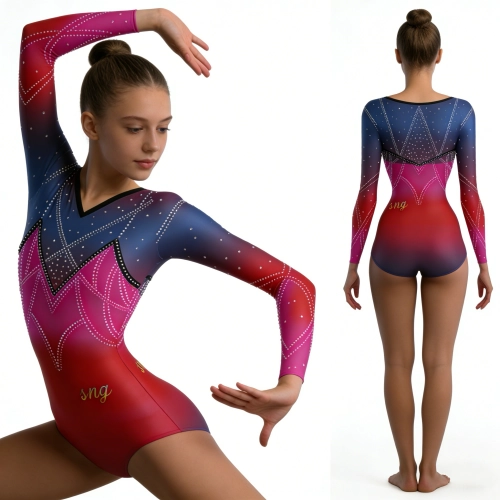
Competition leotards are worn during meets and performances. They are more decorative and often more expensive than practice leotards. These leotards may include rhinestones, sublimation printing, mesh panels, and intricate color blocking. They are designed to catch the eye and help the gymnast stand out. However, they must also fit precisely and provide secure coverage. T&J Sportswear produces competition gymnastics leotards that combine performance fabrics with creative designs, sublimation printing, rhinestones, and other decorative techniques. The company pays close attention to fabric selection, cutting, stitching, embellishment, and finishing to create eye-catching leotards that allow athletes to move confidently during competition.
Warm-up wear is essential for gymnasts to stay warm before competitions and during breaks. It includes jackets, pants, and sometimes leotards with matching warm-ups. Team apparel helps create a sense of unity and professionalism. Parents who are part of a gymnastics club may be asked to purchase team leotards and warm-ups. T&J Sportswear also provides custom gymnastics warm-ups and matching team apparel. Team colors, logos, patterns, labels, packaging, and other details can be customized according to requirements.
Fit is the most important factor. A leotard that is too small will dig into the shoulders, restrict movement, and cause discomfort. A leotard that is too large will sag, shift, and may not provide adequate coverage. Parents should measure their child carefully and consult the size chart provided by the manufacturer or retailer. It is often helpful to take measurements of the chest, waist, hips, and torso. The torso measurement is especially important for leotards because it determines the overall length. Some brands run small or large, so parents should read reviews and ask for guidance. For custom team leotards, manufacturers like T&J Sportswear can produce sizes based on specific measurements, which helps ensure a better fit for each gymnast.
The fabric determines how the leotard feels and performs. Common materials include Lycra, Spandex, Polyester, Mystique, and Mesh. Lycra and Spandex provide excellent stretch and recovery. Polyester is durable and resistant to fading. Mystique has a shiny, metallic appearance that is popular for competition leotards. Mesh adds breathability and visual interest. T&J Sportswear uses materials including Lycra, Spandex, Polyester, Mystique, and Mesh, depending on the design and application. Different products can be developed for different priorities, such as stretch, lightweight construction, breathability, quick drying, comfort, durability, and visual appearance. For training leotards, the focus is on comfortable stretch, durability, moisture management, and everyday wear. For competition leotards, the emphasis is on precision fit, secure coverage, decorative details, and professional finishing.
Coverage is a common concern for parents. A good leotard should provide full coverage in the front and back, especially during bends, jumps, and splits. The leg openings should be comfortable and not too tight. The neckline should stay in place without gaping. Parents should check the cut of the leotard. Some leotards have a higher neckline, while others have a lower back. The choice depends on the child's preference and the requirements of the gym or team. Comfort also involves seams. Flatlock seams are often used in gymnastics apparel to reduce chafing. Parents should look for leotards with smooth seams and soft fabric against the skin.
Gymnastics leotards are worn frequently and washed often. They need to withstand stretching, sweating, and repeated laundering. Parents should look for leotards made from high-quality fabrics that retain their shape and color. Care instructions should be followed to extend the life of the leotard. Generally, leotards should be washed in cold water, preferably by hand or on a gentle cycle, and air-dried. Avoid bleach and fabric softeners, which can damage stretch fibers. Rhinestones and embellishments require special care. Turning the leotard inside out before washing can help protect decorations. With proper care, a good leotard can last for many months or even years.
Style is a big part of the appeal for young gymnasts. Girls often enjoy choosing colors, patterns, and sparkles that reflect their personality. Parents can use style as a way to encourage their child's participation and confidence. However, style should not come at the expense of fit and comfort. A beautiful leotard that scratches or rides up will not be worn happily. Parents should balance aesthetic preferences with practical considerations.
Leotards come in a wide range of colors, from solid black and pink to vibrant prints and gradients. Sublimation printing allows for complex, colorful designs that do not fade or crack. Rhinestones add sparkle and are especially popular for competition leotards. T&J Sportswear offers rhinestone gymnastics leotards and can apply rhinestones in custom layouts. The company also supports sublimation printing, color blocking, mesh, and different fabric effects to create distinctive visual designs. Customers can customize colors, logos, patterns, labels, and other branding elements.
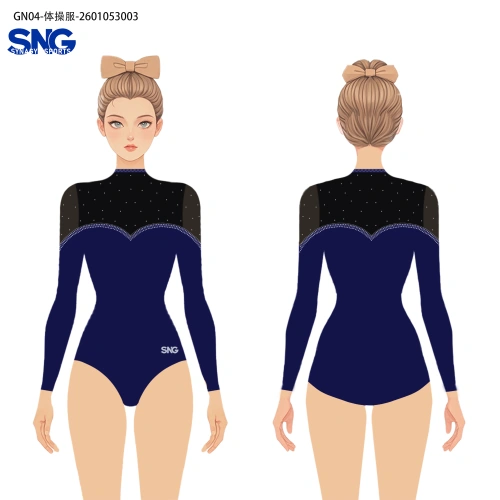
Leotards are available in sleeveless, short sleeve, and long sleeve styles. Sleeveless leotards are cool and allow maximum freedom of movement. Short sleeve leotards offer a bit more coverage. Long sleeve leotards are often required for competitions and can provide warmth. Necklines vary from high to low, and backs can be open or closed. Parents should consider the gym's dress code and the child's comfort. For competition, long sleeve leotards with secure coverage are common. For practice, sleeveless or short sleeve leotards are often preferred.

Many gymnastics clubs and teams order custom leotards for competitions. Custom team leotards allow the club to have a unique look, include team logos, and ensure all members match. Parents may be asked to pay for their child's team leotard. It is helpful to understand how the process works, what factors affect cost, and what to expect in terms of sizing and delivery time.
Custom team leotards are usually produced by specialized gymnastics apparel manufacturers. These manufacturers handle design, fabric selection, printing, cutting, sewing, rhinestone application, quality inspection, and packaging. T&J Sportswear is a professional gymnastics apparel manufacturer specializing in custom gymnastics leotards and teamwear for clubs, teams, brands, wholesalers, and distributors worldwide. With more than 10 years of manufacturing experience, the company provides reliable quality, flexible customization, and professional service for customers in the US, Europe, and other international markets.
OEM stands for Original Equipment Manufacturer. In this model, the customer provides the design, and the manufacturer produces it. ODM stands for Original Design Manufacturer. In this model, the manufacturer helps develop the design based on the customer's ideas, sketches, or reference images. T&J Sportswear supports both OEM and ODM services. The company's professional design team can assist with artwork development and product optimization, helping customers turn concepts into finished gymnastics apparel. For clubs and teams, this means they can either supply their own design or work with the manufacturer's designers to create something new.
One major advantage for small and growing customers is a low MOQ starting from 10 sets for selected products. This gives gymnastics clubs, new brands, boutique retailers, and smaller distributors greater flexibility when testing new designs or launching new collections. Instead of requiring customers to commit to large quantities before they know how a design will perform in their market, the manufacturer can support smaller initial orders and help customers gradually develop their collections. T&J Sportswear offers low MOQ, competitive pricing, professional communication, and one-to-one service.
Quality control is essential for gymnastics apparel. A leotard that falls apart after a few wears is a waste of money and can cause embarrassment during competition. Parents and team managers should ask about the manufacturer's quality control process. T&J Sportswear maintains quality and consistency throughout production. The company works to maintain stable workmanship and carefully inspects finished products before shipment. Quality control starts before bulk production. During sample development, customers can review the design, fabric, fit, decoration, and finishing before confirming mass production. For finished garments, key inspection points can include fabric condition, printing quality, stitching, measurements, rhinestone placement, coverage, and overall appearance. The production process is designed to reduce common problems such as inconsistent sizing, printing defects, loose decoration, or uneven finishing. T&J Sportswear's product information also lists certifications such as ISO9001, SGS, and CE for applicable products. Specific certification and testing documentation can be provided according to the product and customer requirements.
Production capacity matters when ordering custom leotards for a team or a retail collection. T&J Sportswear's factory team includes 30+ skilled workers, with reported production capacity of 300+ leotards per day. This provides a balance between flexible customization and the ability to support larger wholesale and team orders. For customers, production capacity is not simply about quantity. The real value is the ability to maintain consistent workmanship when moving from samples to bulk production. The company pays attention to fabric, printing, stitching, sizing, rhinestone placement, and overall finishing throughout production.
Parents have several options when buying leotards. They can purchase from retail stores, online shops, or through their gymnastics club. Retail leotards are convenient and often available in standard sizes. However, they may not offer the perfect fit or the exact design a child wants. Custom manufacturing is an alternative for teams and clubs. It allows for specific colors, logos, sizes, and designs. For individual parents, custom manufacturing may not be practical unless they are ordering for a team. However, some manufacturers offer semi-custom options or small batch orders. T&J Sportswear works with gymnastics clubs, teams, brands, wholesalers, distributors, and other sportswear businesses. The company focuses on customers in the US, Europe, and other international markets.
T&J Sportswear is a professional gymnastics apparel manufacturer specializing in the development and production of high-quality gymnastics leotards and teamwear. With more than 10 years of experience in the sportswear industry, the company has built strong expertise in product development, custom design, manufacturing, and international business. Its main products include competition gymnastics leotards, practice gymnastics leotards, custom team leotards, rhinestone gymnastics leotards, and gymnastics warm-up wear.
The company understands that gymnastics apparel needs to combine comfort, flexibility, durability, fit, and visual appeal. Its production team pays attention to every stage of manufacturing, from fabric selection and pattern development to cutting, sewing, printing, rhinestone application, quality inspection, and final packaging. This helps provide products that are suitable for both demanding training sessions and high-level competitions.
Customization is one of T&J Sportswear's key strengths. The company offers OEM and ODM services and can develop products based on customers' designs, sketches, reference images, color requirements, or original ideas. Its professional design team can assist with artwork development and product optimization, helping customers turn concepts into finished gymnastics apparel.
T&J Sportswear also understands that different customers have different order requirements. Whether a customer is a growing gymnastics club looking for customized team uniforms, a new brand developing its first collection, or an established distributor requiring regular production, the company provides flexible solutions with low MOQ, competitive pricing, professional communication, and one-to-one service.
Quality and consistency are important throughout the production process. T&J Sportswear works to maintain stable workmanship and carefully inspects finished products before shipment. The company's goal is not only to manufacture gymnastics apparel, but also to build long-term partnerships with customers through reliable products and responsive service.
With experienced production capabilities, professional design support, flexible customization, and a customer-focused approach, T&J Sportswear is committed to being a dependable gymnastics apparel manufacturing partner for customers around the world. The company has served customers in 36+ countries, giving it practical experience working with different markets, customer requirements, sizing systems, and product preferences. Its main markets include North America and Europe, where customers place strong emphasis on product quality, customization, consistency, and reliable communication.
For competition leotards, T&J Sportswear can combine sublimation graphics, color blocking, mesh, rhinestones, crystal decoration, and different fabric effects to create distinctive visual designs. Customers can also customize colors, logos, patterns, labels, and other branding elements. For training leotards, the company focuses on comfortable stretch, durability, moisture management, and everyday wear. For competition leotards, it places greater emphasis on precision fit, secure coverage, decorative details, and professional finishing.
It depends on how often the child trains. A gymnast who trains three to four times per week may need at least three to four practice leotards. This allows for rotation and washing. Competition leotards are usually separate and may only be needed for meets. It is also helpful to have a spare leotard in the gym bag in case of accidents or forgotten items.
A leotard should fit snugly but not tightly. It should stay in place during movement without digging into the skin. The torso should be long enough to allow full extension without pulling. The leg openings should not cut into the thighs. If the leotard leaves red marks or restricts movement, it is too small. If it wrinkles or sags, it is too large.
More expensive leotards often use better fabrics, more precise construction, and more intricate designs. They may last longer and fit better. However, price does not always guarantee quality. Parents should look for reputable manufacturers and read reviews. For competition leotards, investing in a well-made custom leotard can be worthwhile because it affects performance and appearance. For practice, mid-range leotards from reliable brands are often sufficient.
Yes. Many manufacturers offer customization for teams and clubs. Customization can include colors, logos, patterns, rhinestones, fabric combinations, sizes, labels, and packaging. T&J Sportswear supports OEM and ODM services and can develop products based on designs, sketches, reference images, color requirements, or original ideas. The company's production process covers design development, fabric selection, digital artwork, printing, cutting, sewing, decoration, inspection, packaging, and delivery.
Leotards should be washed in cold water with a mild detergent. Hand washing is best, but a gentle cycle in a laundry bag is acceptable. Avoid bleach, fabric softener, and high heat. Air drying is recommended. Turn the leotard inside out to protect prints and rhinestones. Following these steps helps maintain stretch, color, and shape.
Buying leotards for gymnastics girls can feel overwhelming, but with the right information, parents can make confident choices. The most important factors are fit, comfort, fabric, and durability. Style and design are also important because they affect the child's confidence and enjoyment. Parents should measure carefully, choose reputable brands or manufacturers, and consider custom options for teams. T&J Sportswear, with its 10+ years of experience, 36+ countries served, 30+ skilled workers, 300+ daily leotard capacity, low MOQ, professional design support, OEM/ODM customization, and one-to-one service, is a dependable manufacturing partner for gymnastics clubs, teams, brands, wholesalers, and distributors. Whether the need is a single practice leotard or a full team collection, the right apparel helps young gymnasts feel comfortable, confident, and ready to perform.
This buying guide is intended to help parents understand the key considerations when purchasing leotards for gymnastics girls. By focusing on fit, fabric, quality, and appropriate style, parents can support their child's gymnastics journey from the first class to the competition floor.
