Breathable fabrics have become a defining feature of modern practice gymnastics leotards. As training hours increase and indoor environments grow warmer, athletes, coaches and parents increasingly judge training garments on comfort and temperature regulation rather than appearance alone. This shift has pushed manufacturers to engineer fabrics that combine air permeability with effective moisture management, rather than relying on a single performance property.
Current trends include strategic mesh panels placed in genuine heat zones such as the upper back, underarms and side seams; lightweight knits and flatter seam construction that reduce bulk and improve airflow; moisture-wicking and quick-dry fibres that keep athletes drier for longer; antimicrobial treatments that control odour and extend garment life; and recycled polyester options that meet growing sustainability expectations. Sublimation printing allows detailed, colourful designs to be applied to breathable base fabrics without blocking airflow, while improved pattern development ensures that fit supports rather than restricts movement.
For clubs and brands, evaluating practice leotards requires attention to fabric composition, panel placement, weight and opacity, seam construction, size consistency and decoration method. Care practices such as cool washing, avoiding fabric softener and air drying help preserve breathability over the life of the garment.
Behind these trends sits manufacturing capability. T&J Sportswear, a professional gymnastics apparel manufacturer with more than ten years of experience, supports customers across thirty-six countries with in-house design, OEM and ODM customisation, low minimum order quantities from ten sets for selected products, a factory team of more than thirty skilled workers and a reported capacity of over three hundred leotards per day. From fabric selection and pattern development to cutting, sewing, printing, rhinestone application, inspection and packaging, every stage influences the final performance of the product.
The future of breathable practice leotards will be shaped by lighter fabrics that maintain opacity, broader use of recycled fibres, more refined body-mapped ventilation and faster customisation cycles. Underlying all of it is a simple principle: gymnastics apparel must serve the athlete first, with comfort, coverage and freedom of movement forming the foundation on which visual identity is built.
Practice Gymnastics Leotards Trends in Breathable FabricsBreathable fabrics have quietly become one of the most important battlegrounds in gymnastics apparel. While competition leotards tend to draw the spotlight with crystals, sublimated graphics and dramatic color blocking, it is the everyday practice leotard that athletes spend the most hours wearing. A gymnast training four to six days a week may spend twenty or more hours inside the same style of garment, repeating skills, sweating through rotations, and moving through temperature changes from a cold morning warm-up to a heated afternoon session. In that environment, breathability is not a luxury feature. It is the difference between a leotard that supports performance and one that quietly works against it.
This article examines the current trends shaping practice gymnastics leotards, with a particular focus on breathable fabric development. It looks at how fabrics are engineered, how construction details influence airflow, how clubs and brands are choosing their training collections, and how manufacturers such as T&J Sportswear approach the balance between comfort, durability and visual appeal. The goal is to give coaches, club owners, brand managers and distributors a practical understanding of where the market is heading and what to look for when sourcing practice leotards in 2025 and beyond.
For much of the sport's history, practice leotards were judged primarily on stretch, fit and price. A club needed a garment that would survive a full season of training, hold its shape through repeated washing and fit a wide range of body types. Breathability was a secondary consideration, often addressed simply by choosing a lighter weight Lycra or by cutting the garment in a way that exposed more skin.
undefined
Several forces have changed that calculation. First, training volumes have increased. Elite and pre-elite programs now run longer sessions with more repetition, and recreational programs have expanded into multi-hour classes. Second, indoor training environments are often warmer and more humid than they were in the past, particularly in facilities where air circulation is limited. Third, athletes and parents have become far more educated consumers. They read fabric labels, they compare how a leotard feels after ninety minutes of training, and they talk to each other about which brands hold up.
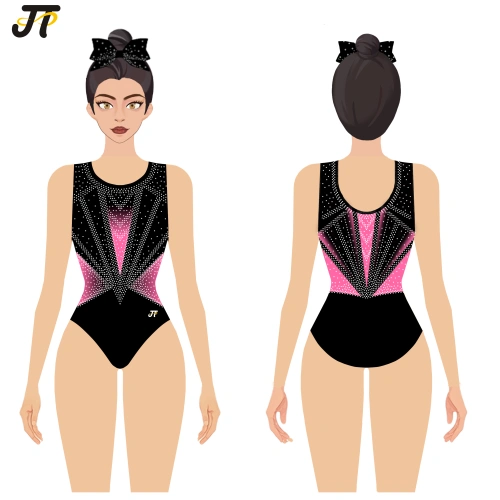
The result is that breathability has moved from the margins to the center of product development. A practice leotard that traps heat and moisture now generates complaints quickly, and in a crowded market, complaints travel faster than advertising. Clubs that order team training kits in bulk are increasingly asking specific questions about fabric composition, moisture management and ventilation before they place an order.
Breathability is often used as a single word, but in textile terms it describes several distinct behaviours that work together. Understanding them helps buyers evaluate fabric claims more critically.
Air permeability refers to how easily air passes through a fabric structure. A loosely knitted mesh with an open structure allows air to move freely, which helps heat escape. Moisture management, by contrast, describes how a fabric moves liquid sweat away from the skin and spreads it across the surface so it can evaporate quickly. A fabric can be excellent at one and poor at the other. A dense, tightly knitted Lycra may manage moisture reasonably well through capillary action but allow very little direct airflow. An open mesh may allow plenty of airflow but offer limited stretch and coverage.
The most successful modern practice leotards combine both properties in a single garment. They use a moisture-managing base fabric across the torso and then introduce mesh panels in high-heat zones such as the upper back, underarms, side seams and the lower back. This hybrid approach gives the athlete stretch and coverage where it matters while creating deliberate escape routes for heat and vapour.

Manufacturers such as T&J Sportswear work with a range of materials, selecting each one according to the design intent and the performance priority of the product. The most common options include:
Each material brings a different balance of stretch, weight, drying speed, opacity and cost. The skill in product development lies not in choosing a single perfect fabric but in combining several so that the finished leotard performs well across the whole body.
The most visible breathability trend in practice leotards is the deliberate use of mesh. What began as a decorative detail has evolved into a functional design language. Designers now map the body's heat zones and place mesh accordingly rather than simply adding a mesh sleeve because it looks attractive.
Common ventilation placements include the centre back, the shoulder blades, the underarm gusset, the side waist and the lower back. In each case the mesh panel serves two purposes. It allows heat and moisture vapour to escape, and it reduces the total fabric mass covering the body, which lowers the garment's thermal load. Many clubs have found that a training leotard with well-placed mesh feels noticeably cooler than a solid garment of the same overall weight.
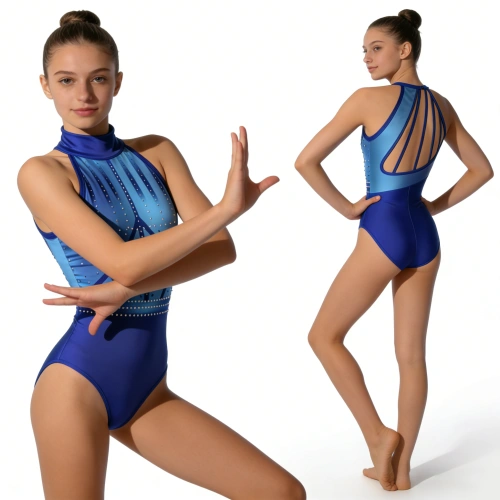
There is also a design benefit. Mesh panels break up large areas of solid colour and create contrast, which allows clubs to build recognisable team identities without relying on heavy decoration. A club colour can be expressed through a mesh insert rather than a printed block, keeping the leotard light and airy while still looking cohesive across an entire squad.
Weight reduction is a recurring theme in practice leotard development. Athletes and coaches consistently report that lighter garments feel less restrictive during long sessions, particularly in skills that involve repeated shoulder extension such as back handsprings and kips.
Manufacturers have responded with finer gauge knits, reduced panel counts and flatter seam constructions. Flatlock and bonded seams reduce bulk against the skin, which improves comfort and also removes the ridges that can trap heat. Some designs move toward a more seamless silhouette, with fewer interruptions across the torso and a smoother transition between the body and the leg openings.
Lightweight construction must be balanced against durability. A fabric that is too thin may become transparent when stretched, may lose shape after repeated washing, or may develop picks and pulls during bar work. Experienced manufacturers test fabric weight against expected use. A training leotard intended for recreational classes twice a week can be built lighter than one intended for a competitive squad training daily on apparatus that abrades the fabric.
Moisture-wicking technology has moved from running and cycling into gymnastics apparel with considerable momentum. The principle is straightforward. Rather than allowing sweat to saturate the fabric and cling to the skin, the fibre structure is engineered to pull moisture to the outer surface where it spreads and evaporates.
In practice, this produces a leotard that feels drier for longer and that dries quickly between sessions. For clubs running back-to-back classes, quick-dry properties also make laundry management easier. A garment that dries overnight reduces the need for multiple leotards per athlete and helps parents keep up with a demanding training schedule.
Modern quick-dry treatments are usually applied at the fibre level rather than as a surface coating, which means the performance does not wash out after a few cycles. This is an important distinction for buyers. Surface-coated fabrics can feel impressively cool in the showroom but lose their advantage after ten washes, whereas inherent fibre performance persists for the life of the garment.
Because practice leotards are worn close to the body and washed frequently, odour control has become a meaningful selling point. Antimicrobial treatments inhibit the bacteria that cause persistent odour in synthetic fabrics, helping garments stay fresher between washes and reducing the deterioration that odour-causing bacteria can cause in fibres over time.
For clubs ordering team kits, this matters practically. A shared training environment, long travel days and multi-day competitions all place demands on garments. Leotards that resist odour build-up reduce the laundry burden and help athletes feel comfortable throughout a long competition weekend.
Sustainability has become a genuine consideration in gymnastics apparel, particularly in European markets where clubs, parents and governing bodies are increasingly attentive to environmental impact. Recycled polyester, derived from post-consumer plastic bottles, is now widely available in weights and finishes suitable for training leotards.
Recycled polyester offers many of the same performance characteristics as virgin polyester, including moisture management, quick drying and durability, while reducing reliance on new petroleum-based raw material. Some manufacturers combine recycled yarns with elastane to preserve the four-way stretch that gymnastics requires.
The trend is not without complications. Recycled yarns can vary slightly in shade and hand feel between batches, which places greater demands on quality control and on communication between buyer and manufacturer. Suppliers with strong production experience and consistent fabric sourcing are better positioned to manage these variables while maintaining a stable finished product.
Sublimation printing has transformed what is possible in practice leotard design. Because the dye is transferred into the fabric rather than sitting on top of it, sublimated garments retain the breathability of the base material. The print does not create a plastic film that blocks airflow, which is a significant advantage over older heat-transfer or screen-printed decorations.
This has allowed clubs and brands to develop complex designs with gradients, geometric patterns, photographic elements and multi-colour team graphics while keeping the garment light and airy. Sublimation also makes small-batch customisation economically viable, since designs can be changed without the setup costs associated with traditional printing methods.
For clubs, the combination of sublimation and breathable base fabrics means a training kit can look distinctive and coordinated without becoming heavy or restrictive. Matching warm-ups, training tops and leotards can share a visual identity while each garment uses the fabric construction best suited to its purpose.
Breathability is not only about fabric. Fit has a direct effect on how air moves around the body and how comfortable a garment feels during movement. A leotard that is too tight compresses the fabric against the skin, reducing the air layer that helps regulate temperature. A leotard that is too loose can shift during skills, creating distraction and, in some cases, coverage concerns.
Modern pattern development focuses on graded fit across a wide size range, with particular attention to torso length, shoulder width, leg opening and the relationship between the body panels and the gusset. Designers increasingly use stretch direction deliberately, aligning the greatest elasticity horizontally across the chest and vertically along the torso so the garment moves with the athlete rather than resisting.
For clubs ordering in bulk, accurate size grading is one of the most practical quality indicators. Inconsistent sizing across a production run creates returns, exchanges and frustration. This is one reason clubs tend to return to manufacturers that can demonstrate stable pattern development and reliable measurement control.
Clubs increasingly think in terms of a complete training collection rather than a single leotard. A typical programme might include a core practice leotard, a second training style for variety, a warm-up jacket and pants, a competition leotard and matching accessories. The breathable practice pieces form the foundation because they are worn most often.
Building a coordinated collection requires a manufacturing partner that can handle several product types while maintaining consistent colour, branding and quality. This is where an integrated supplier becomes valuable. T&J Sportswear supports OEM and ODM services and can develop products based on customer designs, sketches, reference images, colour requirements or original ideas, with an in-house design team assisting with artwork development and product optimisation.
Team colours, logos, patterns, labels and packaging can all be customised. For a club, this means a training kit that reflects its identity rather than a generic catalogue item. For a new brand, it means the ability to launch a coherent first collection without managing multiple suppliers for leotards, warm-ups and accessories.
When evaluating practice leotards, several practical questions help separate genuinely breathable products from marketing claims.
A simple practical test is to hold the fabric up to a light source and observe how much light passes through, then stretch it and observe again. Fabrics that become noticeably more transparent under modest stretch may not perform well on athletes who prefer a secure, covered feel.
Understanding the production process helps buyers appreciate why some leotards perform better than others. At T&J Sportswear, a professional gymnastics apparel manufacturer with more than ten years of experience in the sportswear industry, production follows a structured sequence from fabric selection through to final packaging.
The process begins with fabric selection, where breathability, stretch, recovery, opacity and print compatibility are evaluated together. Pattern development follows, translating the design into graded panels that will fit a range of body types consistently.
Cutting accuracy determines how well panels align. Sewing determines how the garment behaves under movement. Decoration, whether sublimation printing, mesh inserts or rhinestone application, is then applied according to the design. Each stage influences the final breathability of the product, because a poorly constructed seam or an over-heavy embellishment can undermine the performance of an otherwise excellent fabric.
Inspection points include fabric condition, printing quality, stitching, measurements, rhinestone placement, coverage and overall appearance. The aim is to reduce common problems such as inconsistent sizing, printing defects, loose decoration or uneven finishing. Products can also be supported with certifications such as ISO9001, SGS and CE for applicable items, with documentation provided according to product and customer requirements.
Production capacity matters because it determines how smoothly a club or brand can scale. T&J Sportswear works with a factory team of more than thirty skilled workers and a reported capacity of over three hundred leotards per day, balancing flexible customisation with the ability to support larger wholesale and team orders. Low minimum order quantities starting from ten sets for selected products give gymnastics clubs, new brands, boutique retailers and smaller distributors the flexibility to test designs before committing to large volumes.
Several recurring mistakes appear in club purchasing decisions. The first is prioritising appearance over function. A visually striking leotard that traps heat will be unpopular with athletes regardless of how good it looks on a hanger. The second is choosing the lowest price without considering lifespan. A cheaper garment that loses shape, colour or opacity after a single season is rarely the better value.
The third mistake is treating breathability as a single attribute. Clubs sometimes assume that any mesh insert or any label mentioning moisture management guarantees comfort. In reality, the balance of fabric weight, panel placement, fit and construction determines the outcome.
Finally, clubs sometimes overlook the importance of a consistent supplier relationship. Changing manufacturers each season can produce variations in sizing, colour and fit that create practical problems for athletes and administrators alike. Building a long-term partnership with a manufacturer that understands a club's preferences reduces these risks considerably.
Breathable fabrics last longer when cared for properly. Washing in cool water, avoiding fabric softener, turning garments inside out and air drying where possible all help preserve fibre performance. Fabric softener in particular can coat fibres and reduce moisture transport, undermining the very property the garment was purchased for.
Rhinestone and crystal decoration should be treated with care. Washing in a mesh laundry bag and avoiding high heat protect both the adhesive and the stone itself. For clubs issuing guidance to parents, a short care card included with each order can significantly extend the usable life of a training kit.
Looking ahead, several developments appear likely. Fabric engineering will continue to push toward lighter weights without sacrificing opacity or durability. Recycled and bio-based fibres will expand their share of the market, particularly in Europe. Body-mapped ventilation, in which mesh density and placement are tailored to specific heat zones, will become more refined.
Printing technology will allow increasingly detailed designs on breathable bases, and digital design tools will make small-batch customisation faster and more accessible. Clubs and brands will expect shorter development cycles and closer collaboration with manufacturers, with samples produced quickly and adjustments made easily.
Underlying all of these trends is a simple principle. Gymnastics apparel must serve the athlete first. Comfort, freedom of movement, coverage and temperature regulation are not extras. They are the foundation on which visual identity is built. Manufacturers that understand this and invest in both fabric technology and consistent production quality will be the ones that clubs and brands return to season after season.
Whether a customer is a gymnastics club developing team uniforms, a new brand launching a first collection, a distributor expanding a product range or an established buyer seeking a dependable manufacturing partner, the choice of supplier shapes the outcome. With more than ten years of industry experience, customers served across thirty-six countries and a strong focus on North America and Europe, T&J Sportswear combines manufacturing capability with the flexibility that today's international gymnastics apparel market requires.
From initial inquiry and design development to sampling, production, inspection and shipment, the process is supported by professional communication and one-to-one service. The objective is not simply to manufacture gymnastics apparel but to build long-term partnerships through reliable products and responsive support. From a first sketch to a finished leotard, breathability, comfort and performance sit at the centre of the conversation.
For clubs, brands and distributors planning their next practice leotard collection, the most important step is to define performance priorities clearly — breathability, stretch, durability, decoration and budget — and then work with a manufacturer that can translate those priorities into a consistent finished product.
