This article provides a comprehensive guide to the questions that should be asked when evaluating a competition gymnastics leotard factory. It emphasizes the importance of experience, design capability, material quality, customization options, minimum order quantities, production capacity, quality control, certifications, communication, sampling, packaging, shipping, and long-term partnership. Using T&J Sportswear as an example, the article illustrates how a specialized manufacturer addresses these concerns. T&J Sportswear has over 10 years of experience, serves 36+ countries, employs 30+ skilled workers, produces 300+ leotards daily, offers low MOQ from 10 sets, supports OEM/ODM, provides an in-house design team, uses performance fabrics like Lycra, Spandex, Polyester, Mystique, and Mesh, holds certifications such as ISO9001, SGS, and CE, and delivers one-to-one professional service. By asking the right questions, buyers can avoid costly mistakes and build successful partnerships. The article concludes that thorough due diligence is essential for sourcing competition leotards that meet the demands of athletes and the expectations of clubs and brands.
Questions to Ask a Competition Gymnastics Leotard Factory: A Comprehensive GuideWhen a gymnastics club, team, or apparel brand decides to source competition leotards, the choice of manufacturing partner is critical. Competition leotards are not ordinary sportswear; they must combine precise fit, exceptional stretch, durable construction, and striking visual appeal. A factory that lacks specialized knowledge in gymnastics apparel can produce garments that restrict movement, lose shape after a few washes, or fail to meet the rigorous demands of competition. Therefore, asking the right questions before committing to a supplier is essential. This guide, written from a third-person perspective, outlines the key questions that should be posed to any competition gymnastics leotard factory. It also illustrates how a professional manufacturer such as T&J Sportswear addresses these concerns, providing a practical benchmark for evaluation.
Competition leotards are engineered garments. They must accommodate dynamic movements such as splits, leaps, and twists without riding up, pinching, or tearing. They must also present a polished, professional appearance under bright competition lights. A factory that specializes in general activewear may not understand these nuances. By asking targeted questions, buyers can assess a factory's experience, technical capabilities, quality control, and service level. This due diligence helps avoid costly mistakes, delays, and reputational damage. The following sections categorize questions into logical areas, from background and design to production and partnership.
undefined
Experience is a reliable indicator of expertise. A factory that has spent years focusing on gymnastics leotards will have developed specialized patterns, fabric knowledge, and construction techniques. It will also have encountered and solved a wide range of fit and durability issues. Buyers should ask for specific numbers and examples. For instance, T&J Sportswear has more than 10 years of experience in gymnastics apparel manufacturing, with a strong focus on competition and training leotards. This longevity suggests a deep understanding of the sport's requirements, including stretch, fit, comfort, coverage, and freedom of movement.
Some factories produce a broad range of sportswear, from soccer jerseys to yoga pants. While they may offer gymnastics leotards, their expertise may be diluted. A specialized factory, like T&J Sportswear, concentrates on gymnastics apparel. This specialization allows for more refined product development, better material selection, and more efficient production. T&J's main products include competition gymnastics leotards, practice gymnastics leotards, custom team leotards, rhinestone gymnastics leotards, and gymnastics warm-up wear. This narrow focus benefits customers who need garments that perform under competition conditions.
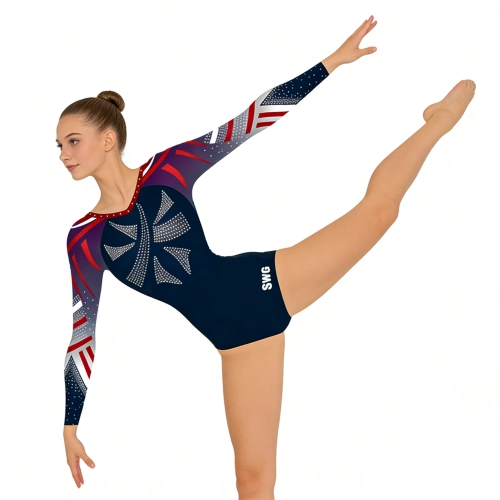
Understanding a factory's market experience helps buyers gauge its ability to meet specific sizing, quality, and compliance standards. Factories that export to North America and Europe, for example, must adhere to strict safety and labeling regulations. T&J Sportswear has served customers in 36+ countries, with main markets in North America and Europe. This international exposure means the factory is accustomed to different sizing systems, customer preferences, and quality expectations. Buyers should ask for a list of countries served and any market-specific certifications.
References from existing clients offer valuable insight into a factory's reliability, communication, and product quality. A reputable factory should be willing to share testimonials or facilitate contact with long-term customers. T&J Sportswear, for example, builds long-term partnerships with gymnastics clubs, teams, brands, wholesalers, and distributors. While specific references may be confidential, the factory can describe typical client profiles and project scopes.
An in-house design team is a significant advantage. It allows the factory to help customers develop ideas, refine artwork, and optimize designs for manufacturability. T&J Sportswear has a professional design team specializing in gymnastics apparel. They do more than simply manufacture designs supplied by customers; they can develop new concepts based on sketches, reference images, color combinations, team identities, or brand requirements. For competition leotards, this team can combine sublimation graphics, color blocking, mesh, rhinestones, crystal decoration, and different fabric effects to create distinctive visual designs.
Modern gymnastics leotard design relies on digital tools for precision and efficiency. Factories should use industry-standard software for pattern making, sublimation printing, and rhinestone placement. T&J Sportswear employs advanced techniques such as sublimation printing, which allows for vibrant, durable graphics that do not crack or peel. They also offer rhinestone application, which can be done manually or with automated equipment for consistency. Buyers should ask about the specific technologies used and how they ensure color accuracy and design fidelity.
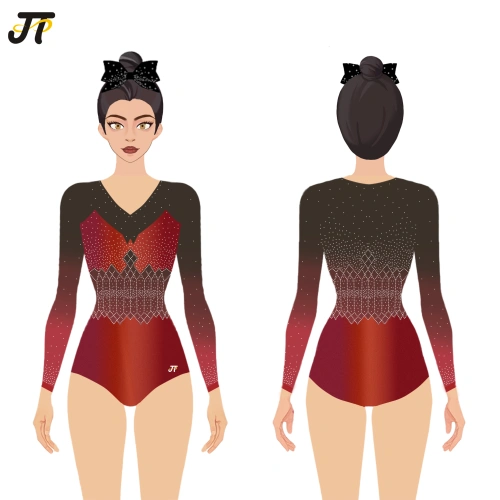
A factory with deep gymnastics knowledge can suggest design elements that enhance both performance and aesthetics. For example, they might recommend mesh panels for breathability, strategic color blocking to flatter different body types, or specific rhinestone layouts that catch the light without adding weight. T&J Sportswear's design team assists with artwork development and product optimization, helping customers turn concepts into finished gymnastics apparel. This collaborative approach is valuable for clubs and brands that may not have in-house designers.
Custom logos and branding are essential for team identity and brand recognition. The factory should offer options for logos, such as sublimation, embroidery, or heat transfer. T&J Sportswear allows customers to customize colors, logos, patterns, labels, and other branding elements. They can integrate team logos into the leotard design seamlessly, ensuring they look professional and withstand repeated wear and washing.
The choice of fabric directly affects comfort, stretch, durability, and appearance. Competition leotards typically use performance fabrics such as Lycra, Spandex, Polyester, Mystique, and Mesh. T&J Sportswear offers these materials, depending on the design and application. Different products can be developed for different priorities, such as stretch, lightweight construction, breathability, quick drying, comfort, durability, and visual appearance. Buyers should ask for fabric samples and specifications, including weight, stretch percentage, and care instructions.
Fabric quality is the foundation of a good leotard. Factories should source fabrics from reputable mills and conduct incoming quality control. They should test for colorfastness, shrinkage, and stretch recovery. T&J Sportswear pays close attention to fabric selection as part of its production process. They work to maintain stable workmanship and carefully inspect finished products before shipment. Buyers should ask about the factory's fabric suppliers and whether they can provide certificates of analysis.

Competition leotards require precise construction to ensure they stay in place during movement. Key techniques include flatlock stitching for stretch and comfort, reinforced seams, and strategic paneling. T&J Sportswear's production team pays attention to every stage of manufacturing, from fabric selection and pattern development to cutting, sewing, printing, rhinestone application, quality inspection, and final packaging. For competition leotards, they place greater emphasis on precision fit, secure coverage, decorative details, and professional finishing.
Different gymnasts and clubs have preferences for coverage, from high-cut legs to more modest cuts. The factory should offer a range of patterns and be able to adjust based on customer requirements. T&J Sportswear can develop products based on customers' designs, sketches, reference images, color requirements, or original ideas. Their pattern development process allows for customization of coverage, ensuring each leotard meets the athlete's comfort and modesty needs.
Customization is a major reason to choose a specialized factory. Options may include colors, prints, rhinestones, logos, labels, packaging, and sizing. T&J Sportswear supports extensive customization. Their process covers artwork, colors, sublimation printing, logos, rhinestone layouts, fabric combinations, sizes, labels, packaging, and other details. This integrated approach helps reduce communication between multiple suppliers and gives customers a more efficient path from an initial idea to a finished product.
OEM (Original Equipment Manufacturer) means the factory produces goods based on the customer's designs. ODM (Original Design Manufacturer) means the factory contributes to the design and then produces the goods. Both models have advantages. T&J Sportswear supports both OEM and ODM. For OEM, customers can provide their own designs and specifications. For ODM, T&J's design team can develop new products together with the customer. This flexibility is ideal for new brands and established distributors alike.
Gymnastics leotards must fit individual athletes precisely. Factories should offer custom sizing based on measurements or a comprehensive size chart. T&J Sportswear can produce leotards in standard sizes or custom sizes. They work with gymnastics clubs and teams to ensure proper fit. Buyers should ask about the sizing process, including how measurements are taken and whether sample garments are available for fitting.
Beyond competition leotards, teams often need practice leotards, warm-ups, and matching apparel. A factory that can provide a full collection ensures consistency in color, branding, and quality. T&J Sportswear offers competition gymnastics leotards, practice gymnastics leotards, custom team leotards, rhinestone gymnastics leotards, and gymnastics warm-up wear. For customers looking to build a complete team collection, they also provide custom gymnastics warm-ups and matching team apparel. Team colors, logos, patterns, labels, packaging, and other details can be customized according to requirements.
MOQ is a critical factor for small clubs, new brands, and boutique retailers. High MOQs can be a barrier to entry. T&J Sportswear offers a low MOQ starting from 10 sets for selected products. This gives gymnastics clubs, new brands, boutique retailers, and smaller distributors greater flexibility when testing new designs or launching new collections. Instead of requiring customers to commit to large quantities before they know how a design will perform in their market, T&J supports smaller initial orders and helps customers gradually develop their collections.
Pricing for competition leotards depends on several factors: fabric type, design complexity, rhinestone quantity, customization level, order quantity, and shipping terms. Factories should provide transparent quotes that break down these components. T&J Sportswear offers competitive pricing and flexible solutions. They work with customers to find the best balance between quality and cost. Buyers should ask for a detailed price breakdown and inquire about any additional fees, such as sample fees or setup charges.
Hidden costs can erode budgets and cause friction. Common hidden costs include shipping surcharges, customs duties, rush order fees, and artwork revision fees. A reputable factory will disclose all potential costs upfront. T&J Sportswear emphasizes professional communication and one-to-one service, which includes clear pricing and no surprises. Buyers should ask for a comprehensive quotation that includes all foreseeable expenses.
Payment terms affect cash flow and risk. Factories may require a deposit before production and balance before shipment. T&J Sportswear likely offers standard terms such as 30% deposit, 70% balance. Buyers should negotiate terms that are mutually agreeable and secure. They should also inquire about accepted payment methods, such as bank transfer, PayPal, or credit card.
Production capacity indicates a factory's ability to handle orders of different sizes. It also reflects their investment in equipment and workforce. T&J Sportswear's factory team includes 30+ skilled workers, with reported production capacity of 300+ leotards per day. This provides a balance between flexible customization and the ability to support larger wholesale and team orders. For customers, production capacity is not simply about quantity. The real value is the ability to maintain consistent workmanship when moving from samples to bulk production.
Lead times vary based on design complexity, order quantity, and factory workload. Factories should provide realistic timelines for sampling, production, and shipping. T&J Sportswear works to maintain efficient production schedules. For samples, typical lead time might be 2-4 weeks, while bulk orders can take 4-8 weeks depending on quantity. Buyers should ask for a detailed production schedule and factor in shipping time.
Sometimes competitions or events require expedited production. Factories should have procedures for rush orders, though additional fees may apply. T&J Sportswear's flexible production setup allows them to accommodate urgent requests when possible. Buyers should discuss rush options early and confirm any extra costs.
As a club or brand grows, its order volumes may increase. The factory must be able to scale without compromising quality. T&J Sportswear's capacity of 300+ leotards per day and 30+ skilled workers positions them to handle both small and large orders. They have experience working with wholesalers and distributors who require regular production. Buyers should ask about the factory's maximum monthly capacity and how they manage quality during peak periods.
Quality control is paramount for competition leotards. Factories should have a documented QC process that covers incoming materials, in-process inspection, and final inspection. T&J Sportswear's production process is designed to reduce common problems such as inconsistent sizing, printing defects, loose decoration, or uneven finishing. Key inspection points can include fabric condition, printing quality, stitching, measurements, rhinestone placement, coverage, and overall appearance. Quality control starts before bulk production. During sample development, customers can review the design, fabric, fit, decoration, and finishing before confirming mass production.
Certifications demonstrate a factory's commitment to quality, safety, and environmental standards. T&J Sportswear's product information lists certifications such as ISO9001, SGS, and CE for applicable products. Specific certification and testing documentation can be provided according to the product and customer requirements. Buyers should ask for copies of relevant certificates and verify their validity.
Even with good processes, issues can arise. A proactive factory will have corrective action procedures. T&J Sportswear inspects finished garments carefully before shipment. If defects are found, they are addressed before shipping. Buyers should ask about the factory's defect rate, return policy, and how they handle claims.
For competition leotards, fabric stretch, colorfastness, and skin safety are important. Factories should be able to provide test reports from accredited laboratories. T&J Sportswear can provide certification and testing documentation according to product and customer requirements. Buyers should specify any mandatory testing standards for their market, such as CPSIA for the US or REACH for Europe.
Clear and timely communication is essential, especially for custom orders. Factories should assign a dedicated account manager or sales representative. T&J Sportswear provides one-to-one professional service. From initial inquiry and design development to sampling, production, inspection, and shipment, their team provides professional support throughout the process. Customers can communicate their requirements directly and receive assistance with product development, customization, production details, and logistics.
Response time reflects a factory's customer service quality. A good factory will respond within 24-48 hours. T&J Sportswear emphasizes responsive service. Buyers should test response times during the initial inquiry phase and ask about standard communication channels (email, phone, messaging apps).
Transparency during production builds trust. Factories can provide regular updates, photos of samples, and progress reports. T&J Sportswear's customer-focused approach includes keeping customers informed. Buyers should request photo updates at key milestones, such as after printing, during sewing, and before packaging.
International buyers may face language differences. Factories should have English-speaking staff or professional translators. T&J Sportswear works with customers in the US, Europe, and other international markets, so they are experienced in cross-cultural communication. Buyers should ensure that technical specifications are clearly understood by both parties.
Sampling is a crucial step to confirm design, fit, and quality before bulk production. The process typically involves: design review, sample fee payment, sample production, customer review, and revisions. T&J Sportswear's professional design team can assist with artwork development and product optimization, helping customers turn concepts into finished gymnastics apparel. They support OEM and ODM services, from design development and sample making to bulk production.
Sample lead time depends on complexity and factory workload. Typically, 2-4 weeks is standard. T&J Sportswear works to provide samples efficiently. Buyers should confirm sample lead time before placing an order and factor it into their timeline.
Yes, revisions are common. The factory should allow for adjustments to design, fit, or materials based on sample feedback. T&J Sportswear values customer input and will make necessary modifications. Buyers should clarify how many rounds of revisions are included and any associated costs.
Some factories refund the sample fee upon placing a bulk order. T&J Sportswear's policy may vary. Buyers should ask about sample fee refundability and any conditions. This can be a negotiating point for larger orders.
Packaging protects the garments and enhances brand presentation. Options include poly bags, hang tags, custom labels, and boxes. T&J Sportswear allows customers to customize labels, packaging, and other details. They can provide retail-ready packaging for brands and simple bulk packaging for teams.
Shipping methods include express (DHL, FedEx), air freight, and sea freight. Incoterms such as EXW, FOB, CIF, and DDP define responsibilities. T&J Sportswear has experience with international shipping and can arrange logistics based on customer preference. Buyers should discuss shipping terms early to avoid misunderstandings.
International shipments require accurate customs documentation, including commercial invoices, packing lists, and certificates of origin. T&J Sportswear is familiar with export procedures to the US, Europe, and other regions. They can provide necessary documents to facilitate smooth customs clearance. Buyers should confirm which documents are provided and which they need to prepare.
Delays can happen due to various reasons. A good factory will communicate proactively and offer solutions. T&J Sportswear aims for reliable delivery. Buyers should ask about the factory's on-time delivery rate and how they handle delays, including any compensation or expedited shipping options.
A factory that seeks long-term partnerships is more likely to invest in quality and customer satisfaction. T&J Sportswear's goal is to build long-term partnerships rather than simply complete individual orders. They provide flexible solutions based on customer requirements, whether for a gymnastics club, new brand, distributor, or established buyer.
Growing clubs and brands need a supplier that can scale with them. T&J Sportswear offers low MOQ, flexible customization, competitive pricing, and one-to-one service. They make it easier for new brands, gymnastics clubs, and established distributors to develop their own collections. Buyers should discuss their growth plans and ask how the factory can accommodate increasing volumes.
After-sales support includes handling returns, replacements, and quality claims. T&J Sportswear's customer-focused approach extends beyond shipment. They work to resolve any issues promptly. Buyers should ask about the warranty period and the process for filing a claim.
Factories that serve international markets often have valuable insights into trends, colors, and styles. T&J Sportswear works with customers in 36+ countries, giving them a broad perspective on gymnastics apparel trends. They can share suggestions for designs that resonate in specific markets. Buyers should leverage this knowledge to enhance their product offerings.
Protecting designs and branding is crucial. Factories should have clear policies against copying designs and should sign non-disclosure agreements (NDAs) if requested. T&J Sportswear respects customer intellectual property. Buyers should discuss IP protection and ensure that their designs are not shared with competitors.
Staying current with trends in fabrics, cuts, and decorations is important for competition leotards. T&J Sportswear's design team continuously develops new concepts. They attend trade shows and monitor fashion and sportswear trends. Buyers can ask about the factory's recent innovations and how they incorporate feedback from gymnasts and coaches.
Rhinestones add sparkle and can be a key design element. Factories need skilled workers and proper equipment to apply rhinestones securely. T&J Sportswear offers rhinestone gymnastics leotards and pays attention to rhinestone placement during production. They can customize rhinestone layouts according to customer designs. Buyers should ask about the types of rhinestones used (e.g., Swarovski, glass, acrylic) and their durability.
Sublimation printing allows for vibrant, all-over designs that do not fade or crack. It is a popular choice for competition leotards. T&J Sportswear uses sublimation printing as part of its decoration techniques. They can create complex graphics and color gradients. Buyers should ask about the print resolution, color matching process, and whether the fabric is suitable for sublimation.
Mesh panels are often used for breathability and visual interest. Other specialty fabrics include Mystique, which has a shiny, metallic finish. T&J Sportswear's product range can use materials including Lycra, Spandex, Polyester, Mystique, and Mesh. They understand how to combine these fabrics for both performance and aesthetics. Buyers should ask for samples of specialty fabrics to assess their quality and feel.
Consistent sizing is critical, especially for team orders. Factories should use standardized patterns and grading rules. T&J Sportswear maintains stable workmanship and inspects measurements during quality control. Buyers should request a size chart and, if possible, order a sample set to verify sizing before bulk production.
T&J Sportswear serves as a practical example of a factory that addresses the key questions outlined in this guide. With more than 10 years of experience in gymnastics apparel manufacturing, T&J has built strong expertise in product development, custom design, manufacturing, and international business. Their main products include competition gymnastics leotards, practice gymnastics leotards, custom team leotards, rhinestone gymnastics leotards, and gymnastics warm-up wear.
Their in-house design team specializes in gymnastics apparel and can develop products based on customer designs, sketches, reference images, color requirements, or original ideas. They support OEM and ODM services, from design development and sample making to bulk production. They offer low MOQ starting from 10 sets for selected products, making it easier for new brands and small clubs to get started.
T&J Sportswear's factory team includes 30+ skilled workers with a production capacity of 300+ leotards per day. They pay close attention to every stage of manufacturing, from fabric selection and pattern development to cutting, sewing, printing, rhinestone application, quality inspection, and final packaging. They maintain quality control throughout, with inspections for fabric condition, printing quality, stitching, measurements, rhinestone placement, coverage, and overall appearance. Their product information lists certifications such as ISO9001, SGS, and CE for applicable products.
Their customer service is one-to-one and professional, providing support from initial inquiry to shipment. They aim to build long-term partnerships and have served customers in 36+ countries, with a strong focus on the US and Europe. Whether a customer needs a small customized team order or a large wholesale production project, T&J Sportswear is committed to delivering quality gymnastics apparel with consistent workmanship and dependable service.
By asking the questions in this guide, buyers can evaluate any factory against similar standards. T&J Sportswear demonstrates that a specialized, experienced, and customer-focused manufacturer can meet the demanding requirements of competition gymnastics leotards.
Selecting the right factory for competition gymnastics leotards is a decision that impacts athlete performance, team image, and brand reputation. The questions outlined in this comprehensive guide cover experience, design, materials, customization, MOQ, pricing, production capacity, quality control, communication, sampling, packaging, shipping, and partnership. By asking these questions, gymnastics clubs, teams, brands, wholesalers, and distributors can make informed choices and build successful, long-term relationships with their manufacturing partners.
A factory like T&J Sportswear exemplifies how a professional manufacturer addresses these concerns. With 10+ years of experience, 36+ countries served, 30+ skilled workers, 300+ daily leotard capacity, low MOQ, professional design support, OEM/ODM customization, and one-to-one service, T&J combines manufacturing capability with the flexibility required by today's international gymnastics apparel market. From the first idea to the final leotard, T&J Sportswear is committed to making custom gymnastics apparel more efficient, flexible, and reliable.
Summary: This article provides a comprehensive guide to the questions that should be asked when evaluating a competition gymnastics leotard factory. It emphasizes the importance of experience, design capability, material quality, customization options, minimum order quantities, production capacity, quality control, certifications, communication, sampling, packaging, shipping, and long-term partnership. Using T&J Sportswear as an example, the article illustrates how a specialized manufacturer addresses these concerns. T&J Sportswear has over 10 years of experience, serves 36+ countries, employs 30+ skilled workers, produces 300+ leotards daily, offers low MOQ from 10 sets, supports OEM/ODM, provides an in-house design team, uses performance fabrics like Lycra, Spandex, Polyester, Mystique, and Mesh, holds certifications such as ISO9001, SGS, and CE, and delivers one-to-one professional service. By asking the right questions, buyers can avoid costly mistakes and build successful partnerships. The article concludes that thorough due diligence is essential for sourcing competition leotards that meet the demands of athletes and the expectations of clubs and brands.
