Before producing custom gymnastics leotards, buyers should ask a factory a wide range of questions. These questions should cover experience, design capability, materials, construction, fit, customization, minimum order quantity, sampling, production capacity, quality control, certifications, decoration methods, sizing, packaging, pricing, communication, shipping, after-sales support, and intellectual property. A factory that specializes in gymnastics apparel will understand stretch, recovery, coverage, durability, and freedom of movement. It will have an in-house design team, flexible OEM and ODM services, and clear quality control procedures. T&J Sportswear is a professional gymnastics apparel manufacturer with more than 10 years of experience, products reaching 36+ countries, 30+ skilled workers, and a reported capacity of 300+ leotards per day. It offers competition leotards, practice leotards, custom team leotards, rhinestone leotards, and warm-up wear. It supports low MOQ starting from 10 sets for selected products, uses fabrics such as Lycra, Spandex, Polyester, Mystique, and Mesh, and lists certifications such as ISO9001, SGS, and CE for applicable products. Its one-to-one service and flexible customization help clubs, brands, wholesalers, and distributors develop reliable gymnastics apparel. By asking detailed questions before production, buyers can reduce risk, improve quality, and build long-term partnerships.
Selecting a gymnastics leotard factory is a critical decision for gymnastics clubs, teams, brands, wholesalers, and distributors. A leotard is not a simple garment. It must stretch, recover, breathe, cover, support, and survive intense movement. It must also look professional under competition lights and feel comfortable during long training sessions. Before a single production run begins, the buyer should ask a series of detailed questions. These questions help reveal whether the factory truly understands gymnastics apparel or merely treats leotards as another category of sportswear. The right factory will welcome these questions. The wrong factory will avoid them. This article outlines the most important questions to ask a gymnastics leotard factory before production, using the experience and capabilities of T&J Sportswear as a practical reference point.
Many buyers begin with price and lead time. Those factors matter, but they are not the first things to discuss. Before production, the buyer must understand the factory's experience, design ability, material knowledge, construction standards, quality control, customization options, and communication style. A factory that cannot answer basic questions about stretch fabrics, pattern development, rhinestone application, or sizing will struggle when the order moves into bulk production. A factory that understands gymnastics apparel will ask its own questions about fit, coverage, performance, decoration, and target market. The goal is not to interrogate the factory. The goal is to build a clear, shared understanding of the product. This reduces risk, prevents costly mistakes, and protects the buyer's brand reputation.
undefined
T&J Sportswear is a professional gymnastics apparel manufacturer specializing in the development and production of high-quality gymnastics leotards and teamwear. With more than 10 years of experience in the sportswear industry, the company has built strong expertise in product development, custom design, manufacturing, and international business. Its main products include competition gymnastics leotards, practice gymnastics leotards, custom team leotards, rhinestone gymnastics leotards, and gymnastics warm-up wear. It works with gymnastics clubs, teams, brands, wholesalers, distributors, and other sportswear businesses, with a strong focus on customers in the US, Europe, and other international markets. These facts provide a useful framework for the questions below.
General sportswear experience is not the same as gymnastics apparel experience. A factory may produce yoga wear, cycling wear, or dancewear, but gymnastics leotards have unique requirements. They need four-way stretch, secure coverage, high recovery, and freedom of movement. They must stay in place during tumbling, vaulting, bars, and beam. The buyer should ask how long the factory has focused on gymnastics leotards and teamwear. A factory with specialized experience will understand the difference between a practice leotard and a competition leotard. It will know how to adjust patterns for different body types and how to place decoration without restricting movement.
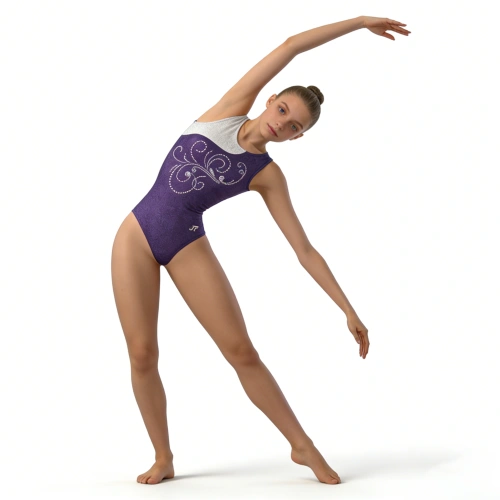
T&J Sportswear has more than 10 years of experience in gymnastics apparel manufacturing, with a strong focus on competition and training leotards. Unlike general sportswear suppliers, it understands the specific requirements of gymnastics apparel, including stretch, fit, comfort, coverage, durability, decoration, and freedom of movement. Over the years, its products and services have reached customers in 36+ countries, giving it practical experience working with different markets, customer requirements, sizing systems, and product preferences. Its main markets include North America and Europe, where customers place strong emphasis on product quality, customization, consistency, and reliable communication.
The buyer should ask whether the factory produces competition leotards, practice leotards, custom team leotards, rhinestone leotards, and warm-up wear. A factory that offers a full range can support a complete team collection. A factory that only produces basic practice wear may not be ready for complex competition designs. The answer also reveals the factory's production flexibility. Can it handle sublimation printing, color blocking, mesh inserts, rhinestone layouts, and embroidery? Can it produce matching warm-ups, jackets, pants, and bags? T&J Sportswear offers competition gymnastics leotards, practice gymnastics leotards, custom team leotards, rhinestone gymnastics leotards, and gymnastics warm-up wear. This range allows customers to develop a coordinated team collection rather than ordering from multiple suppliers.
Different markets have different expectations. US and European customers often prioritize consistent sizing, clear communication, quality control, and reliable delivery. They may also require specific labeling, packaging, and certification documentation. The buyer should ask which countries the factory regularly serves and whether it has experience with the buyer's market. A factory that has worked with many international customers will be more familiar with export documentation, shipping methods, and cultural communication styles. T&J Sportswear serves customers in the US, Europe, and other international markets, with products reaching 36+ countries. This international experience helps the factory adapt to different sizing systems, product preferences, and business practices.
Design is one of the most important parts of gymnastics apparel development. A factory without an in-house design team may only be able to copy existing samples or rely on the buyer to provide perfect technical drawings. That can slow down development and create communication problems. The buyer should ask whether the factory has professional designers who understand gymnastics silhouettes, color placement, fabric behavior, and decoration techniques. An in-house team can help turn sketches, reference images, color requirements, or original ideas into finished gymnastics apparel.
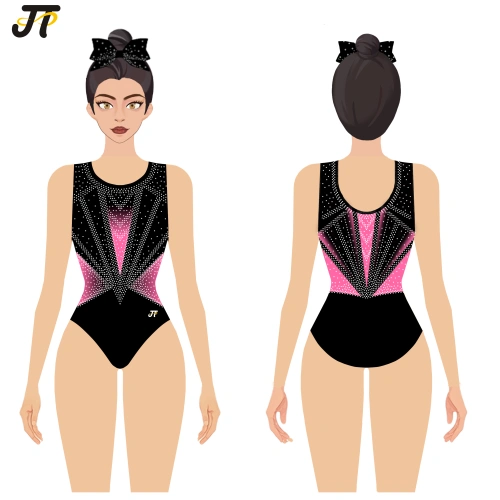
T&J Sportswear has a professional in-house design team specializing in gymnastics apparel. It does more than simply manufacture designs supplied by customers. It can also help develop new concepts based on sketches, reference images, color combinations, team identities, or brand requirements. For competition leotards, the team can combine sublimation graphics, color blocking, mesh, rhinestones, crystal decoration, and different fabric effects to create distinctive visual designs. Customers can also customize colors, logos, patterns, labels, and other branding elements.
Many gymnastics clubs and new brands have a clear idea but not a technical specification. They may have a sketch, a photo from a competition, a color palette, or a logo. The buyer should ask how the factory handles these starting points. Will it create a digital mock-up? Will it suggest fabric combinations? Will it adjust the design for production feasibility? A good factory will not simply say yes. It will explain the process, ask clarifying questions, and provide a realistic timeline. T&J Sportswear supports OEM and ODM services and can develop products based on customers' designs, sketches, reference images, color requirements, or original ideas. Its design team can assist with artwork development and product optimization, helping customers turn concepts into finished gymnastics apparel.
Artwork revision is a normal part of custom production. The buyer should ask how many revisions are included, how long each revision takes, and whether there is an extra cost. Clear revision policies prevent misunderstandings later. The factory should also explain how it communicates changes. Does it use email, shared files, or a project management system? Are measurements and color codes confirmed in writing? T&J Sportswear provides one-to-one professional service, which helps customers communicate requirements directly and receive assistance with product development, customization, production details, and logistics.
The fabric determines comfort, stretch, recovery, breathability, opacity, and durability. The buyer should ask which materials are available and how they are selected. Common gymnastics fabrics include Lycra, Spandex, Polyester, Mystique, and Mesh. Each has different properties. Lycra and Spandex offer stretch and recovery. Polyester can provide durability and color retention. Mystique offers a shiny, performance-oriented look. Mesh adds breathability and visual interest. The factory should be able to explain which fabric suits which product type.

T&J Sportswear pays close attention to fabric selection and garment construction. Its product range can use materials including Lycra, Spandex, Polyester, Mystique, and Mesh, depending on the design and application. Different products can be developed for different priorities, such as stretch, lightweight construction, breathability, quick drying, comfort, durability, and visual appearance. For training leotards, the focus is on comfortable stretch, durability, moisture management, and everyday wear. For competition leotards, the focus is on precision fit, secure coverage, decorative details, and professional finishing.
A leotard that loses its shape after a few wears is a problem. The buyer should ask how the factory evaluates stretch, recovery, and opacity. Does it test fabric before cutting? Does it check recovery after stitching? Does it consider how different colors and prints affect stretch? A factory that understands gymnastics apparel will have practical answers. It will know that not all Spandex is the same, and that cheaper fabrics may save money at first but create returns and complaints later.
Some brands prefer specific fabric suppliers or performance standards. The buyer should ask whether the factory can source requested fabrics or whether it works only with its existing supply chain. If the factory can source specific materials, the buyer should ask about minimum order quantities, lead times, and price impact. T&J Sportswear offers flexible customization and can develop products based on customer requirements, including fabric combinations and performance priorities.
Fit is one of the most sensitive issues in gymnastics apparel. A leotard must be snug without being restrictive. It must cover the body securely during dynamic movement. It must not ride up, dig in, or become transparent when stretched. The buyer should ask how the factory develops patterns and how it tests fit. Does it use standard blocks? Does it adjust patterns for different body types? Does it offer custom sizing? A factory with gymnastics experience will understand that a good fit is not just about measurements. It is about movement, stretch direction, seam placement, and fabric behavior.
T&J Sportswear understands that gymnastics apparel needs to combine comfort, flexibility, durability, fit, and visual appeal. Its production team pays attention to every stage of manufacturing, from fabric selection and pattern development to cutting, sewing, printing, rhinestone application, quality inspection, and final packaging. This helps provide products suitable for both demanding training sessions and high-level competitions.
Stitching affects stretch, durability, and comfort. Flatlock seams, coverstitch, and overlock seams are common in gymnastics apparel. The buyer should ask which seam types the factory uses for different areas of the leotard. Are seams flat and smooth against the skin? Are they strong enough for repeated stretching? Is there any risk of seam failure? A professional factory will explain its construction methods and why they are suitable for gymnastics.
Transparency is a common complaint in cheap leotards. It often appears when fabric is stretched over the body or when light-colored fabrics are used. The buyer should ask how the factory tests for transparency. Does it use lining? Does it choose denser fabrics? Does it adjust patterns to reduce stress on certain areas? The factory should be able to discuss these issues before production, not after complaints arrive.
OEM and ODM are important for clubs, brands, and distributors. OEM allows the buyer to produce its own designs. ODM allows the buyer to develop new products together with the factory. The buyer should ask which services are available and how they differ in terms of cost, timeline, and minimum order quantity. T&J Sportswear supports both OEM and ODM services, from design development and sample making to bulk production. Its professional design team can help transform ideas, sketches, or reference images into finished gymnastics apparel.
Customization can cover artwork, colors, sublimation printing, logos, rhinestone layouts, fabric combinations, sizes, labels, packaging, and other details. The buyer should ask for a full list of customization options and any limitations. For example, some fabrics may not print well. Some rhinestone layouts may be too heavy for certain designs. A good factory will explain what is possible and what is not. T&J Sportswear offers flexible customization and can develop products based on customers' designs, sketches, reference images, color requirements, or original ideas.
For customers looking to build a complete team collection, matching warm-ups and team apparel are valuable. The buyer should ask whether the factory can produce leotards, warm-up jackets, pants, and other items in coordinated colors and branding. T&J Sportswear provides custom gymnastics warm-ups and matching team apparel. Team colors, logos, patterns, labels, packaging, and other details can be customized according to requirements.
MOQ is a major concern for gymnastics clubs, new brands, and smaller distributors. A high MOQ can prevent a small organization from ordering custom team uniforms. A low MOQ allows the buyer to test designs and grow gradually. The buyer should ask about MOQ for each product type, fabric, and customization option. Some factories advertise a low MOQ but then apply higher minimums for certain colors or decorations. The buyer should clarify all details in writing.
T&J Sportswear offers a low MOQ starting from 10 sets for selected products. This gives gymnastics clubs, new brands, boutique retailers, and smaller distributors greater flexibility when testing new designs or launching new collections. Instead of requiring customers to commit to large quantities before they know how a design will perform in their market, the factory can support smaller initial orders and help customers gradually develop their collections.
Team orders often include multiple sizes and sometimes multiple colors. The buyer should ask whether the factory can produce mixed-size and mixed-color orders without excessive surcharges. Can it pack by size or by athlete? Can it label each item? A flexible factory will have a system for managing complexity. T&J Sportswear provides flexible solutions with low MOQ, competitive pricing, professional communication, and one-to-one service.
Reorders are common in gymnastics. Teams grow, athletes need replacement leotards, and new members join. The buyer should ask how the factory stores patterns, artwork, and fabric information. Will a reorder match the original exactly? How long does a reorder take? Is there a minimum quantity for reorders? A reliable factory will keep records and communicate any potential differences in fabric or color.
Sampling is the bridge between design and bulk production. The buyer should ask how many sample rounds are included, how long sampling takes, and what the sample cost is. Is the sample fee refundable against bulk production? Does the factory provide photos before shipping the sample? Can the buyer request changes after seeing the sample? A clear sampling process reduces risk and ensures that the final product meets expectations.
At T&J Sportswear, quality control starts before bulk production. During sample development, customers can review the design, fabric, fit, decoration, and finishing before confirming mass production. This step helps identify issues early and prevents costly mistakes later.
Sample shipping costs can add up, especially for international orders. The buyer should ask who pays for sample shipping and how long delivery takes. Are there express options? Is tracking provided? Clear logistics expectations prevent delays and misunderstandings.
If the buyer has specific size requirements, the factory should be able to produce a sample in those sizes. This is especially important for teams with unique sizing needs. The buyer should ask how the factory handles size grading and whether it can adjust patterns for a better fit.
Production capacity affects lead time and the ability to handle large orders. The buyer should ask how many leotards the factory can produce per day and how many workers are involved. A factory with 30+ skilled workers and reported production capacity of 300+ leotards per day can balance flexible customization with larger wholesale and team orders. However, capacity numbers should be verified with realistic lead times and current order volumes.
T&J Sportswear has a factory team including 30+ skilled workers, with reported production capacity of 300+ leotards per day. This provides a balance between flexible customization and the ability to support larger wholesale and team orders. For customers, production capacity is not simply about quantity. The real value is the ability to maintain consistent workmanship when moving from samples to bulk production.
Lead time depends on product complexity, order quantity, fabric availability, and decoration requirements. The buyer should ask for a realistic lead time for the specific order. A factory that promises unrealistically short lead times may cut corners or fail to deliver. The buyer should also ask what happens if production is delayed. Are there penalties? Is communication proactive? A professional factory will provide a production schedule and update the buyer regularly.
Gymnastics apparel has peak seasons, such as before competition season or the start of a new training year. The buyer should ask how the factory manages peak season capacity. Does it reserve capacity for regular customers? Does it require earlier orders? Are there additional fees for rush production? Understanding peak season policies helps the buyer plan ahead.
Quality control should not be an afterthought. The buyer should ask about inspection at each stage: fabric inspection, cutting, sewing, printing, rhinestone application, measurement, and final packaging. Who checks the products? What are the pass and fail criteria? What happens if defects are found? A factory with strong quality control will have documented procedures and trained inspectors.
T&J Sportswear works to maintain stable workmanship and carefully inspects finished products before shipment. For finished garments, key inspection points can include fabric condition, printing quality, stitching, measurements, rhinestone placement, coverage, and overall appearance. The production process is designed to reduce common problems such as inconsistent sizing, printing defects, loose decoration, or uneven finishing.
Certifications can provide assurance about quality management, product safety, and compliance. The buyer should ask which certifications the factory holds and whether they apply to the specific product. Common certifications include ISO9001, SGS, and CE for applicable products. The buyer should request documentation and verify that it is current and relevant. T&J Sportswear lists certifications such as ISO9001, SGS, and CE for applicable products. Specific certification and testing documentation can be provided according to the product and customer requirements.
Even with strong quality control, defects can occur. The buyer should ask how the factory handles defective items. Will it repair, replace, or credit? What is the time frame? Who pays for return shipping? A clear defect policy protects both parties and builds trust.
Sublimation printing is popular for competition leotards because it allows complex graphics, gradients, and team colors. The buyer should ask about print quality, color accuracy, and durability. Does the factory use high-quality inks? Does it test for cracking or fading? Can it match Pantone colors? A factory with strong sublimation experience will understand how colors appear on different fabrics and how stretch affects the final print.
T&J Sportswear combines performance fabrics with creative designs, sublimation printing, rhinestones, and other decorative techniques. It pays close attention to fabric selection, cutting, stitching, embellishment, and finishing to create eye-catching leotards that allow athletes to move confidently during competition.
Rhinestones can transform a leotard, but poor application leads to lost stones and unhappy customers. The buyer should ask about the rhinestone type, adhesive, and application method. Are stones heat-set or glued? Are they tested for wash and wear? How does the factory ensure consistent placement? T&J Sportswear offers rhinestone gymnastics leotards and pays attention to rhinestone application as part of its production process.
Many designs use a mix of sublimation, rhinestones, mesh, and color blocking. The buyer should ask whether the factory can combine these techniques effectively. Does it consider weight, stretch, and comfort? A heavy rhinestone layout may affect movement. A poorly placed mesh panel may reduce coverage. The factory should advise on the best combination for performance and appearance.
Gymnastics sizing varies by country and brand. The buyer should ask how the factory develops its size chart. Does it use US, European, or custom sizing? Can it produce custom measurements? How does it handle size grading? A factory with international experience will be familiar with different sizing systems. T&J Sportswear works with customers in the US, Europe, and other international markets, giving it practical experience with different sizing systems and product preferences.
Before bulk production, size samples can help the buyer confirm fit. The buyer should ask whether size samples are available and how they are priced. If size samples are not possible, the buyer should at least review the size chart and measurement tolerances. Clear communication about sizing reduces the risk of returns and complaints.
Measurement tolerances define how much variation is acceptable. The buyer should ask for the factory's standard tolerances and whether they can be tightened for specific measurements. Tight tolerances may increase cost or production time, but they can be important for competition fit.
Packaging protects the product and represents the brand. The buyer should ask about poly bags, hang tags, size stickers, and custom boxes. Can the factory include the buyer's logo and care instructions? Can it pack by size, color, or athlete? T&J Sportswear offers customization that can cover labels, packaging, and other details according to requirements.
Custom labels and tags help build a brand. The buyer should ask whether the factory can sew in labels, attach hang tags, and print care labels. Are there minimum quantities for custom labels? What is the lead time for label production? A factory with branding experience will guide the buyer through the options.
Folding and packing affect presentation. The buyer should ask how the factory folds leotards, whether it uses tissue paper, and how it organizes cartons. For wholesale orders, clear carton labels and packing lists are important. For direct-to-consumer orders, individual packaging may be required.
Price quotes can be misleading if they do not include fabric, printing, rhinestones, labels, packaging, or shipping. The buyer should ask for a detailed breakdown. What is the unit price? Are there additional costs for sizes, colors, or decorations? Are taxes and duties included? A transparent quote helps the buyer compare suppliers fairly.
Payment terms vary by factory and order size. The buyer should ask about deposit percentage, balance payment, and accepted payment methods. Is a letter of credit accepted? Are there payment milestones? Clear payment terms protect both parties. T&J Sportswear provides competitive pricing and professional communication, which helps customers understand costs and payment expectations.
Many factories offer lower unit prices for larger orders. The buyer should ask about price breaks and how they apply to different product types. However, lower price should not come at the expense of quality. The buyer should confirm that materials and workmanship remain consistent.
Clear communication is essential for custom gymnastics apparel. The buyer should ask who will manage the order from start to finish. Is there a dedicated account manager? How quickly does the factory respond to questions? What are the working hours and time zone differences? T&J Sportswear provides one-to-one professional service, allowing customers to communicate requirements directly and receive assistance with product development, customization, production details, and logistics.
International orders involve language and cultural differences. The buyer should ask whether the factory has English-speaking staff or translators. Are product specifications written clearly? Are measurements in centimeters or inches? A factory with international experience will be prepared for these issues. T&J Sportswear has experience serving customers in the US, Europe, and other international markets.
If a problem occurs, the buyer needs to know who to contact. The buyer should ask about the escalation process. Who handles quality complaints? Who handles shipping delays? Who can approve a solution? A factory that takes responsibility and communicates proactively is more valuable than one that offers the lowest price.
Shipping options include express courier, air freight, and sea freight. The buyer should ask which methods are available, how long each takes, and who handles customs clearance. For urgent orders, express shipping may be necessary. For large orders, sea freight may be more economical. The factory should provide tracking and documentation.
Import duties and taxes can significantly affect the total cost. The buyer should clarify who is responsible for these charges. Are they included in the quote? Can the factory provide the necessary documents for customs? Clear Incoterms, such as EXW, FOB, CIF, or DDP, help define responsibilities.
Gymnastics leotards should arrive in good condition. The buyer should ask about packaging materials, carton strength, and moisture protection. For rhinestone leotards, extra care may be needed to prevent stones from catching or falling off. The factory should explain its packaging standards.
After-sales support includes handling defects, answering questions, and supporting reorders. The buyer should ask what happens after delivery. Is there a warranty period? How are claims handled? How quickly does the factory respond? A strong after-sales process builds long-term partnerships. T&J Sportswear aims to build long-term partnerships with customers through reliable products and responsive service.
Reorders require consistency. The buyer should ask how the factory stores patterns, artwork, fabric, and color information. Will a reorder match the original? How long does a reorder take? Is there a minimum quantity? A factory that keeps detailed records can make reordering easy and reliable.
For brands and growing clubs, future collection development is important. The buyer should ask whether the factory can support ongoing design and production. Can it scale up as the business grows? Can it introduce new fabrics and decorations? T&J Sportswear provides flexible solutions based on customer requirements, whether the customer is a gymnastics club, a new brand, a distributor, or an established buyer.
Buyers should ask about labor conditions, working hours, and safety standards. A responsible factory will have clear policies and be willing to share information. Certifications such as ISO9001 can support quality management, but they do not automatically guarantee ethical labor practices. The buyer should ask direct questions and request documentation where possible.
Sustainability is increasingly important in apparel. The buyer should ask whether the factory offers recycled fabrics, eco-friendly packaging, or reduced-waste production methods. Are there certifications for sustainable materials? What is the cost impact? A factory that understands sustainability can help the buyer meet market expectations.
Chemical safety is important for products that touch the skin. The buyer should ask about fabric testing, dye safety, and compliance with relevant regulations. Certifications such as SGS and CE can provide additional assurance for applicable products. The buyer should request test reports when needed.
Custom designs are valuable intellectual property. The buyer should ask who owns the artwork, patterns, and design files after production. Will the factory keep the designs confidential? Can it produce similar designs for other customers? A clear intellectual property agreement protects the buyer's brand.
Factories may have access to sales data, customer lists, and design concepts. The buyer should ask about confidentiality policies and whether the factory will sign a non-disclosure agreement. Professional factories understand the importance of confidentiality and are willing to formalize it.
Some buyers want exclusivity for their designs. The buyer should ask whether the factory will agree not to produce the same design for competitors. Exclusivity may require higher order quantities or additional fees. The terms should be discussed and documented before production.
Certain answers should raise concern. A factory that cannot explain its fabric selection may not understand performance. A factory that avoids questions about quality control may have inconsistent workmanship. A factory that promises impossibly short lead times may cut corners. A factory that does not provide a written quote or specification may create billing disputes. A factory that is unwilling to provide references or certification documents may lack transparency. A factory that does not ask about fit, coverage, or decoration may not be specialized in gymnastics apparel.
Buyers should also be cautious if the factory cannot explain how it handles reorders, defects, or shipping delays. These issues are common in international manufacturing. A professional factory will have clear processes and communicate them openly. T&J Sportswear emphasizes quality and consistency throughout production, stable workmanship, careful inspection before shipment, and a customer-focused approach. This is the type of commitment buyers should look for.
The following checklist summarizes the key questions covered in this article. Buyers can use it as a starting point when evaluating a gymnastics leotard factory.
T&J Sportswear is a professional gymnastics apparel manufacturer specializing in custom gymnastics leotards and teamwear for clubs, teams, brands, wholesalers, and distributors worldwide. With more than 10 years of manufacturing experience, it provides reliable quality, flexible customization, and professional service for customers in the US, Europe, and other international markets.
Its main products include competition gymnastics leotards, practice gymnastics leotards, custom team leotards, rhinestone gymnastics leotards, and gymnastics warm-up wear. From everyday training to competition performances, its products are designed to provide a comfortable fit, excellent flexibility, and a professional appearance. Competition leotards combine performance fabrics with creative designs, sublimation printing, rhinestones, and other decorative techniques. Practice leotards focus on comfort, stretch, breathability, and durability. Custom warm-ups and matching team apparel allow customers to build a complete team collection.
T&J Sportswear supports OEM and ODM services, from design development and sample making to bulk production. Its professional design team can help transform ideas, sketches, or reference images into finished gymnastics apparel. With low MOQ, flexible customization, competitive pricing, and one-to-one service, it makes it easier for new brands, gymnastics clubs, and established distributors to develop their own collections.
The factory has 10+ years of industry experience, 36+ countries served, 30+ skilled workers, 300+ daily leotard capacity, low MOQ, professional design support, OEM/ODM customization, and one-to-one service. These capabilities combine manufacturing strength with the flexibility required by today's international gymnastics apparel market. Whether a customer needs a small customized team order or a large wholesale production project, T&J Sportswear is committed to delivering quality gymnastics apparel with consistent workmanship and dependable service.
Before production begins, questions are the buyer's best tool. They reveal whether a gymnastics leotard factory has the experience, design ability, material knowledge, quality control, and service mindset needed for a successful order. They also help the buyer and factory align on expectations, timelines, costs, and responsibilities. A factory that welcomes detailed questions is usually a factory that takes quality seriously. A factory that avoids questions may create problems later.
For gymnastics clubs, teams, brands, wholesalers, and distributors, the right manufacturing partner can make the difference between a smooth production run and a costly learning experience. T&J Sportswear is committed to being a dependable gymnastics apparel manufacturing partner for customers around the world. From the first idea to the final leotard, it aims to make custom gymnastics apparel more efficient, flexible, and reliable. By asking the right questions before production, buyers can protect their brand, satisfy their athletes, and build long-term success in the gymnastics apparel market.
