This article examines what makes a training gymnastics leotard durable, explaining that durability is not a single feature but a system of fabric selection, pattern engineering, stitching, reinforcement, embellishment, quality control, and proper care. Training leotards face repeated stretching, sweat, chalk, friction, and frequent washing, so they must combine comfort, flexibility, breathability, shape retention, and colorfastness. The article discusses common materials such as Lycra, Spandex, Polyester, Mystique, and Mesh, and it explains how fiber blends, fabric weight, recovery, and moisture management affect performance. It also covers construction details such as flatlock and coverstitch seams, stretch threads, bartacks, elastic edges, and reinforcement at stress points. Fit and pattern engineering are presented as durability factors because poor fit places abnormal stress on the garment. The article reviews embellishments including sublimation printing, rhinestones, crystals, and embroidery, noting that decoration must be securely applied without restricting movement. Quality control from sample development to bulk production is highlighted as essential for consistent sizing, printing, stitching, and finishing. T&J Sportswear, a professional gymnastics apparel manufacturer with more than 10 years of experience, is referenced throughout as an example of a company that focuses on fabric selection, custom design, OEM and ODM services, low MOQ, skilled production, and one-to-one service. The article also provides practical care tips, evaluation checks, common durability mistakes, and a conclusion that durable training leotards result from a chain of decisions involving both manufacturers and users. Overall, it argues that durability creates better value for gymnasts, clubs, brands, wholesalers, and distributors.
What Makes a Training Gymnastics Leotard DurableDurability is one of the most important qualities in a training gymnastics leotard, yet it is also one of the most misunderstood. Many buyers focus first on color, style, or price, but a leotard that loses shape, fades, tears, or irritates the skin after a few washes creates hidden costs for gymnasts, parents, coaches, and clubs. A durable training leotard is not simply a thick garment. It is the result of careful decisions about fabric, pattern engineering, stitching, embellishment, quality control, and care. For manufacturers such as T&J Sportswear, durability is built into every stage of production, from fabric selection and sample development to cutting, sewing, inspection, and final packaging.
Training leotards face conditions that competition leotards may not experience as often. They are worn repeatedly during long practice sessions, stretched through splits, jumps, turns, and tumbling, exposed to sweat, chalk, friction against mats and equipment, and washed far more frequently. A training leotard must therefore combine comfort, flexibility, breathability, and resilience. It must move with the gymnast without becoming loose, transparent, or worn out. This article examines the technical and practical factors that determine durability in a training gymnastics leotard, and it explains how experienced manufacturers approach these challenges for clubs, teams, brands, wholesalers, and distributors around the world.
Gymnastics is a sport of extreme range of motion. The shoulders, hips, back, and legs move through positions that place significant stress on any garment. A training leotard must stretch in multiple directions while recovering its original shape. If the fabric has poor elasticity or weak recovery, the leotard may sag, bag, or become uncomfortable. If the seams are not engineered for stretch, they may pop or restrict movement. If the leg openings or shoulder straps are too tight, they may cause chafing. If they are too loose, they may shift during skills and distract the athlete.
undefined
Unlike many other sports uniforms, a gymnastics leotard is often a single fitted garment. There are few places to hide construction weaknesses. Every seam, edge, and panel is visible and functional. Training leotards are also worn against sensitive skin for hours at a time. Durability therefore includes not only physical strength but also comfort, shape retention, colorfastness, and skin-friendly finishing. A leotard that survives many washes but becomes rough or irritating is not truly durable in the practical sense.
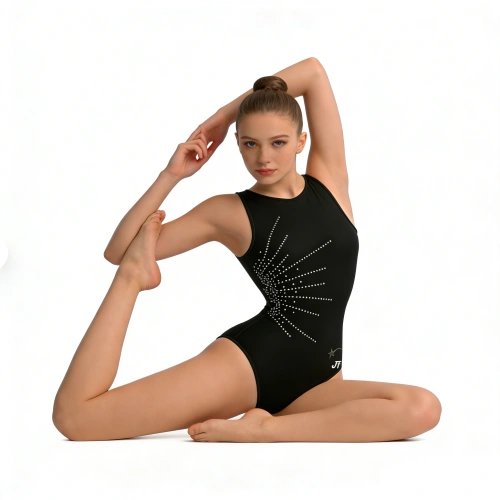
Coaches and club administrators often evaluate leotards by how well they survive a full season of training. Parents evaluate them by how well they wash and wear. Gymnasts evaluate them by how they feel during movement. A successful training leotard must satisfy all three groups. This is why leading gymnastics apparel manufacturers treat durability as a system rather than a single feature.
The fabric is the foundation of every training leotard. It determines stretch, recovery, breathability, opacity, softness, color retention, and resistance to pilling or abrasion. In gymnastics apparel, common materials include Lycra, Spandex, Polyester, Mystique, and Mesh. Each material has different strengths and is selected according to the design and application. For training leotards, manufacturers often prioritize comfortable stretch, durability, moisture management, and everyday wear. For competition leotards, the emphasis may shift toward precision fit, secure coverage, decorative details, and professional finishing.
Elastane, also known as Spandex or Lycra, is the key fiber that gives a leotard its stretch and recovery. A higher elastane content generally improves stretch and shape retention, but too much elastane without the right supporting fibers can reduce durability. Nylon and polyester are often blended with elastane to provide strength, colorfastness, and abrasion resistance. Nylon blends tend to feel soft and smooth, while polyester blends often offer excellent color retention and resistance to fading. The best blend depends on the intended use, the desired hand feel, and the printing or decoration methods that will be applied.
For training leotards that are washed frequently, a balanced blend is essential. The fabric must be able to stretch repeatedly without losing its memory. It must also resist the gradual thinning that can lead to transparency. T&J Sportswear, a professional gymnastics apparel manufacturer with more than 10 years of experience, pays close attention to fabric selection because it directly affects product performance. The company works with materials such as Lycra, Spandex, Polyester, Mystique, and Mesh, and it develops different products for different priorities, including stretch, lightweight construction, breathability, quick drying, comfort, durability, and visual appearance.

Fabric weight and density also influence durability. A very light fabric may feel cool and airy, but it can be more prone to transparency, snagging, and loss of shape. A heavier fabric may feel more supportive, but it can also feel restrictive if it lacks proper stretch. The goal is not simply to choose the heaviest fabric. The goal is to choose a fabric with the right density, elasticity, and recovery for the intended training conditions. Recovery is especially important. After the fabric is stretched, it should return closely to its original dimensions. Poor recovery leads to baggy knees, sagging seats, and stretched necklines.
Manufacturers evaluate fabric recovery through testing and sample fitting. They may also consider the direction of stretch. A four-way stretch fabric moves in both horizontal and vertical directions, which is often preferable for gymnastics because it supports complex movements. Two-way stretch may be suitable for certain panels, but it can limit movement if used in the wrong areas. Pattern makers use these differences strategically, placing more stretch where the body needs it and more stability where support is required.
Durability is not only about mechanical strength. Sweat, humidity, and repeated washing can degrade certain fabrics and trims over time. Moisture management helps keep the gymnast dry and comfortable, but it also reduces the risk of fabric breakdown caused by prolonged dampness. Breathable fabrics allow air to circulate, which helps regulate temperature during intense training. When a leotard retains moisture, it can become heavy, cling uncomfortably, and develop odors. Over time, poor moisture management may also contribute to weakened fibers and deteriorated elastic.
Training leotards should therefore be made from fabrics that can handle sweat and frequent laundering. Quick-drying properties are beneficial because they allow the garment to return to a fresh state more quickly. Mesh panels can add ventilation, but they must be selected carefully because some mesh fabrics are more delicate than solid knit fabrics. A durable design uses mesh as a functional and aesthetic element without compromising the overall strength of the garment.

Even the best fabric can fail if the construction is poor. Stitching is where many durability problems begin. A training leotard undergoes repeated tension at the shoulders, armholes, crotch, leg openings, and side seams. If these areas are not sewn with appropriate techniques, the seams may break, pucker, or create uncomfortable ridges. Good construction distributes stress across the garment and allows the fabric to stretch without tearing.
Flatlock seams are common in athletic apparel because they lie flat against the skin and stretch with the fabric. Overlock seams are strong and efficient, but they can be bulky if not finished properly. Coverstitch seams are often used for hems and edges because they provide stretch and a clean finish. The choice of seam type depends on the location and the fabric. For example, a shoulder seam may need a different treatment than a crotch seam. Stitch density also matters. Stitches that are too loose may allow seams to open, while stitches that are too tight may perforate the fabric and cause tearing.
Experienced manufacturers adjust stitch type, thread tension, needle size, and seam allowance for each fabric. They also test samples under stretch to ensure that seams do not crack or pop. T&J Sportswear maintains a production process that covers design development, fabric selection, digital artwork, printing, cutting, sewing, decoration, inspection, packaging, and delivery. This integrated approach helps the company control construction quality from the first sample to bulk production.
Reinforcement is another key to durability. Stress points such as the crotch, underarm, shoulder, and leg openings may require additional stitching, bartacks, or binding. A bartack is a dense series of stitches that strengthens an area that receives repeated pull. It is often used at the ends of openings or where straps meet the body. Without reinforcement, these areas can tear gradually under repeated use.
Elastic edges must also be carefully applied. The elastic should be strong enough to hold the leotard in place but soft enough to avoid digging into the skin. It should be stitched with a stretch stitch so that it can extend with the fabric. If the elastic is too tight, it may cause discomfort and premature wear. If it is too loose, the leotard may shift during training. The right balance is achieved through pattern development, sample fitting, and consistent production standards.
Construction must respect the elasticity of the fabric. Seams that do not stretch will restrict movement and eventually break. Threads must also have some elasticity. A common mistake in low-quality gymnastics apparel is the use of rigid thread on a highly stretchable fabric. The thread may survive the first few wears, but repeated stretching will cause it to snap. Durable manufacturing uses appropriate stretch threads and stitch patterns that move with the garment.
Recovery is also affected by how the garment is cut and assembled. If the pattern is not designed for the fabric's stretch characteristics, the leotard may not return to its intended shape. This is why pattern development and fabric selection cannot be separated. They must be considered together. T&J Sportswear emphasizes pattern development as part of its manufacturing expertise, helping ensure that the final product fits well and performs during demanding training sessions.
Fit is not only a comfort issue. It is a durability issue. A leotard that fits poorly will experience abnormal stress. If the leotard is too small, the fabric is overstretched, seams are strained, and the garment may become transparent. If the leotard is too large, it may rub against the skin, shift during movement, and wear unevenly. Proper fit distributes tension evenly and allows the fabric to work as intended.
Pattern engineering determines how the leotard follows the body. Key areas include the rise, the leg line, the shoulder strap placement, the chest coverage, and the crotch gusset. A well-designed gusset improves comfort and reduces pulling. A well-placed leg line allows freedom of movement without cutting. A secure shoulder strap stays in place during inversions and tumbling. These details are especially important for training leotards because gymnasts wear them for long periods and repeat movements thousands of times.
Custom team leotards add another layer of complexity because they must fit a range of body types. A club may need sizes for youth and adult gymnasts, and it may need consistent fit across the entire team. Manufacturers with experience in custom teamwear understand how to grade patterns accurately so that the same design works across multiple sizes. T&J Sportswear works with gymnastics clubs, teams, brands, wholesalers, and distributors, and it supports custom team leotards as one of its main product categories. This experience helps the company address different sizing systems and customer preferences in markets such as North America and Europe.
Many training leotards include decorative elements such as sublimation printing, rhinestones, crystals, mesh inserts, color blocking, or embroidery. These features can make a leotard visually appealing, but they must not compromise durability. Poorly applied embellishments may fall off, crack, or create stiff areas that irritate the skin. A durable training leotard uses decoration techniques that are appropriate for the fabric and the intended use.
Rhinestones and crystals are popular in competition leotards, but they also appear in training and team designs. The key to durability is secure application. Stones should be attached with appropriate adhesive or mechanical settings that withstand stretching and washing. The layout should avoid placing heavy decoration directly over high-stretch areas where it may pop off or restrict movement. T&J Sportswear offers rhinestone gymnastics leotards and pays attention to rhinestone application as part of its production process. The company can customize rhinestone layouts according to customer requirements while maintaining quality control.
Sublimation printing is another common decoration method. Unlike surface printing that sits on top of the fabric, sublimation dyes penetrate the fibers. This can result in graphics that do not crack, peel, or feel heavy. However, sublimation quality depends on the fabric, ink, temperature, and pressure. Poor sublimation may appear faded or blurred. A durable printed leotard should maintain its colors after repeated washing and stretching. T&J Sportswear uses sublimation printing and other decorative techniques to create eye-catching competition leotards while paying close attention to fabric selection, cutting, stitching, embellishment, and finishing.
Embroidery and appliques can also be durable if they are properly backed and stitched. Heavy embroidery on a stretch fabric may create rigidity, so it is usually placed on stable panels or combined with appropriate stabilizers. The goal is to add visual identity without reducing the garment's ability to move. Logos, team names, and brand elements should be applied in a way that remains secure throughout the product life.
A training leotard may be washed dozens of times in a single season. If the colors fade, bleed, or change, the leotard may still be structurally intact but no longer suitable for team use. Colorfastness is therefore an important part of durability. Chlorine, sweat, detergent, heat, and sunlight can all affect dyes. Fabrics with good colorfastness retain their appearance longer and help clubs maintain a consistent team look.
Manufacturers can improve colorfastness by selecting suitable dyes, controlling dyeing processes, and testing fabrics before production. Sublimation printing can also offer excellent color retention when properly executed. However, not all fabrics respond the same way to printing and dyeing. Polyester and nylon blends may behave differently, and the final result depends on the entire production chain. T&J Sportswear focuses on quality and consistency throughout its production process, inspecting finished products before shipment to help reduce common problems such as inconsistent sizing, printing defects, loose decoration, or uneven finishing.
Even the most durable training leotard benefits from proper care. Gymnasts, parents, and coaches can extend the life of a leotard by following simple maintenance practices. These practices protect the fabric, elastic, and embellishments.
These steps do not replace good manufacturing, but they help preserve the investment. A durable leotard is a partnership between the manufacturer and the user. When both sides take care, the garment can last longer and perform better.
Durability is not achieved by accident. It requires quality control at every stage. Quality control begins before bulk production, during sample development. Customers can review the design, fabric, fit, decoration, and finishing before confirming mass production. This step is critical because it allows adjustments to be made before large quantities are produced. Once production begins, inspections should continue throughout cutting, sewing, printing, rhinestone application, and final packaging.
Key inspection points for training leotards include fabric condition, printing quality, stitching, measurements, rhinestone placement, coverage, and overall appearance. Inspectors may check for loose threads, skipped stitches, uneven seams, incorrect sizing, and weak elastic. They may also stretch the garment to see how it recovers. These checks help reduce common problems such as inconsistent sizing, printing defects, loose decoration, or uneven finishing.
T&J Sportswear is a professional gymnastics apparel manufacturer specializing in high-quality gymnastics leotards and teamwear. With more than 10 years of experience in the sportswear industry, the company has built expertise in product development, custom design, manufacturing, and international business. Its production team pays attention to every stage of manufacturing, from fabric selection and pattern development to cutting, sewing, printing, rhinestone application, quality inspection, and final packaging. This helps provide products that are suitable for both demanding training sessions and high-level competitions.
Customization is a major advantage for clubs, teams, and brands. It allows a gymnastics club to create team uniforms that reflect its identity. It allows a new brand to develop a unique collection. It allows a distributor to offer products that meet the preferences of its market. However, customization must not come at the expense of durability. A custom leotard should be designed and manufactured with the same attention to fabric, fit, and construction as a standard product.
T&J Sportswear supports OEM and ODM services, allowing customers to choose between producing their own designs and developing new products together with the manufacturer. Customization can cover artwork, colors, sublimation printing, logos, rhinestone layouts, fabric combinations, sizes, labels, packaging, and other details. The company can develop products based on customer designs, sketches, reference images, color requirements, or original ideas. Its professional design team can assist with artwork development and product optimization, helping customers turn concepts into finished gymnastics apparel.
For training leotards, customization often focuses on comfort and practicality. Clubs may request specific colors, logos, and size ranges. Brands may request unique prints and fabric combinations. Distributors may request packaging and labeling that suit their retail channels. In every case, the manufacturer must balance visual appeal with performance. A beautiful leotard that fails during training is not a successful product. A durable leotard that looks professional and fits well creates long-term value.
Durability is also linked to business flexibility. Clubs and new brands may not be able to commit to large order quantities before testing a design. If the minimum order quantity is too high, they may be forced to choose lower-quality suppliers or delay their projects. A manufacturer that offers low MOQ can support smaller initial orders and help customers gradually develop their collections.
T&J Sportswear provides flexible solutions with low MOQ, competitive pricing, professional communication, and one-to-one service. The company understands that different customers have different order requirements. Whether a customer is a growing gymnastics club looking for customized team uniforms, a new brand developing its first collection, or an established distributor requiring regular production, T&J Sportswear aims to provide a practical path from idea to finished product. Low MOQ starting from 10 sets for selected products gives gymnastics clubs, new brands, boutique retailers, and smaller distributors greater flexibility when testing new designs or launching new collections.
This flexibility does not mean lower quality. On the contrary, it allows customers to evaluate durability, fit, and market response before scaling up. A small trial order can reveal how a fabric performs, how a print holds up, and how a size range fits. With that knowledge, customers can make better decisions for larger production runs.
OEM and ODM services are important for customers who want to build their own gymnastics apparel lines. OEM allows a customer to provide a design and have it manufactured to specification. ODM allows the manufacturer to contribute design and development expertise. Both models can result in durable training leotards when the manufacturer has the right experience and quality systems.
T&J Sportswear supports both OEM and ODM. The company can develop products based on customers designs, sketches, reference images, color requirements, or original ideas. Its design team can assist with artwork development and product optimization. The production process covers design development, fabric selection, digital artwork, printing, cutting, sewing, decoration, inspection, packaging, and delivery. This integrated approach helps reduce communication between multiple suppliers and gives customers a more efficient path from an initial idea to a finished product.
For training leotards, the OEM and ODM process should include discussions about fabric weight, stretch direction, seam placement, coverage, and care instructions. These details may seem technical, but they directly affect durability. A manufacturer that understands gymnastics apparel can ask the right questions and recommend suitable materials and construction methods. This is especially valuable for new brands that may not have deep technical knowledge of gymnastics fabrics.
Durability depends on skilled workmanship. Machines can sew quickly, but experienced operators know how to handle stretch fabrics, adjust tension, and inspect their own work. A factory with a skilled team can maintain consistency from sample to bulk production. This consistency is essential for clubs and distributors that need reliable sizing and quality across repeat orders.
T&J Sportswear has a factory team that includes 30+ skilled workers, with reported production capacity of 300+ leotards per day. This provides a balance between flexible customization and the ability to support larger wholesale and team orders. For customers, production capacity is not simply about quantity. The real value is the ability to maintain consistent workmanship when moving from samples to bulk production. The company pays attention to fabric, printing, stitching, sizing, rhinestone placement, and overall finishing throughout production.
Over the years, T&J Sportswear products and services have reached customers in 36+ countries. This international experience gives the company practical knowledge of different markets, customer requirements, sizing systems, and product preferences. Its main markets include North America and Europe, where customers place strong emphasis on product quality, customization, consistency, and reliable communication.
Certifications and testing can provide additional confidence in durability and safety. T&J Sportswear product information lists certifications such as ISO9001, SGS, and CE for applicable products. Specific certification and testing documentation can be provided according to the product and customer requirements. These certifications do not replace hands-on quality control, but they demonstrate a commitment to standardized processes and international expectations.
For buyers, it is important to ask about the specific tests that are relevant to the product. Fabric strength, colorfastness, dimensional stability, and pH value may be important for certain markets. Rhinestone adhesion and small parts safety may be important for youth products. Elastic recovery and seam strength may be important for training leotards. A professional manufacturer can discuss these requirements and provide appropriate documentation.
When evaluating a training leotard, buyers and coaches can look beyond appearance. A few practical checks can reveal a great deal about durability.
These checks are not a substitute for laboratory testing, but they help buyers identify potential weaknesses. They also help manufacturers understand what customers value. A training leotard that passes these practical checks is more likely to deliver long-term performance.
Many durability problems can be traced to common mistakes. One mistake is choosing fabric solely for its appearance or price. A fabric that looks good in a photo may not perform well in training. Another mistake is using rigid thread or non-stretch seams on a stretch fabric. This can cause seams to break under movement. A third mistake is ignoring fit. A poorly fitting leotard places stress on the wrong areas and wears out faster.
Another common mistake is applying heavy decoration to high-stretch areas. Rhinestones, embroidery, and thick prints can restrict movement and fall off if they are not properly applied. A fourth mistake is skipping sample evaluation. When customers do not review a sample before bulk production, they may discover fit or quality issues too late. A fifth mistake is inconsistent sizing. If sizes vary from order to order, clubs may struggle to equip their teams and gymnasts may experience discomfort.
Finally, poor care can shorten the life of even a well-made leotard. Washing with rough items, using hot water, or drying on high heat can damage elastic and prints. Manufacturers can provide care instructions, but users must follow them. T&J Sportswear works to reduce common problems through quality control and careful production, and it provides professional support throughout the process from initial inquiry and design development to sampling, production, inspection, and shipment.
For clubs, brands, wholesalers, and distributors, the right manufacturing partner can make a significant difference in product durability. A supplier that only takes orders may not help solve technical problems. A partner that understands gymnastics apparel can advise on fabric, fit, construction, decoration, and quality control. This partnership approach leads to better products and stronger long-term relationships.
T&J Sportswear aims to build long-term partnerships rather than simply complete individual orders. Whether a customer is a gymnastics club developing team uniforms, a new brand launching a collection, a distributor expanding a product range, or an established buyer looking for a reliable manufacturing partner, the company provides flexible solutions based on requirements. With 10+ years of industry experience, 36+ countries served, 30+ skilled workers, 300+ daily leotard capacity, low MOQ, professional design support, OEM and ODM customization, and one-to-one service, T&J Sportswear combines manufacturing capability with the flexibility required by today international gymnastics apparel market.
The company main products include competition gymnastics leotards, practice gymnastics leotards, custom team leotards, rhinestone gymnastics leotards, and gymnastics warm-up wear. From everyday training to competition performances, these products are designed to provide a comfortable fit, excellent flexibility, and a professional appearance. For customers looking to build a complete team collection, custom gymnastics warm-ups and matching team apparel are also available. Team colors, logos, patterns, labels, packaging, and other details can be customized according to requirements.
What makes a training gymnastics leotard durable? The answer is a chain of decisions that begins with fabric and ends with care. The fabric must stretch, recover, breathe, and resist wear. The pattern must fit the body and support movement. The seams must stretch without breaking. The elastic must hold without digging. The embellishments must stay secure. The colors must remain vibrant. The manufacturing process must be consistent. The user must follow reasonable care practices. When all these elements work together, the result is a training leotard that lasts longer, feels better, and provides better value.
For gymnastics clubs, durability affects budgets and team appearance. For gymnasts, it affects comfort and confidence. For brands and distributors, it affects reputation and customer satisfaction. For manufacturers, it is a test of skill, experience, and quality control. T&J Sportswear approaches durability as a core requirement rather than an afterthought. From fabric selection and pattern development to cutting, sewing, printing, rhinestone application, quality inspection, and final packaging, the company focuses on the details that determine how a leotard performs over time.
In a sport where movement is constant and expectations are high, a durable training leotard is not a luxury. It is a necessity. By understanding the factors that influence durability and by choosing manufacturing partners with the right expertise, gymnastics organizations and apparel businesses can provide products that support athletes through every practice, every skill, and every season. T&J Sportswear remains committed to making custom gymnastics apparel more efficient, flexible, and reliable for customers around the world.
