What makes gymnastics practice leotards last through hard use is a combination of quality materials, smart construction, correct fit, strict quality control, and proper care. Practice leotards endure repeated stretching, sweat, chalk, friction from mats and equipment, and frequent washing. Fabric selection is the first defense. Lycra, Spandex, Polyester, Mystique, and Mesh can each serve different purposes, but the best practice leotards prioritize stretch, recovery, breathability, moisture management, and abrasion resistance. Construction details such as stitching, elastic, binding, gusset design, and secure embellishments also determine lifespan. A leotard that is too tight strains seams, while one that is too loose rubs and wears unevenly. Consistent sizing and custom fit help reduce these problems.
Quality control from sample to bulk production prevents common failures such as inconsistent sizing, weak seams, printing defects, and loose rhinestones. Manufacturing experience matters because it helps a supplier understand how fabrics behave under real gymnastics conditions. T&J Sportswear, a professional gymnastics apparel manufacturer with more than 10 years of experience, focuses on competition gymnastics leotards, practice gymnastics leotards, custom team leotards, rhinestone gymnastics leotards, and gymnastics warm-up wear. The company serves clubs, teams, brands, wholesalers, and distributors in the US, Europe, and other international markets. It offers OEM and ODM services, low MOQ from 10 sets, professional in-house design, 30+ skilled workers, and reported capacity of 300+ leotards per day. T&J Sportswear also emphasizes stable workmanship, inspection before shipment, and one-to-one service. Proper care further extends leotard life: cold gentle washing, mild detergent, no fabric softener, air drying, rotation, and careful storage. In the end, durable practice leotards are not the result of one feature. They are the result of a complete system that connects fabric, design, construction, production, and daily maintenance.
What Makes Gymnastics Practice Leotards Last Through Hard UseGymnastics practice leotards are not ordinary activewear. They are stretched, twisted, compressed, rubbed against mats, bars, beams, and ropes, exposed to sweat and chalk, and washed far more often than most sports garments. A practice leotard must survive all of this while still looking presentable and feeling comfortable enough for hours of repetition. That combination of demands is why durability in gymnastics apparel is never accidental. It comes from deliberate choices in fabric, construction, fit, quality control, and care. T&J Sportswear, a professional gymnastics apparel manufacturer with more than 10 years of experience, understands this reality well. The company develops competition gymnastics leotards, practice gymnastics leotards, custom team leotards, rhinestone gymnastics leotards, and gymnastics warm-up wear for clubs, teams, brands, wholesalers, and distributors around the world.
Hard use in gymnastics is not limited to competition season. It happens every day in the gym. A young athlete may wear the same style of practice leotard several times a week, sometimes for multiple hours per session. The fabric must stretch in every direction without losing its shape. The seams must hold when the body moves through splits, bridges, swings, and landings. The leg openings must stay comfortable while also staying in place. The shoulders and neckline must allow full range of motion without digging or slipping. When a leotard fails, it usually fails at one of these stress points rather than in the middle of a large fabric panel.
Practice leotards also face environmental stress. Chalk dust can work into fabric and seams. Sweat introduces salt, oils, and moisture. Repeated washing removes dirt but can also weaken poor-quality elastic and fade prints. Mats create friction. Bar work creates pressure. Beam work creates abrasion along the legs and hips. A durable practice leotard must be engineered for this cycle, not just designed for a photograph. This is why T&J Sportswear focuses on the entire manufacturing process, from fabric selection and pattern development to cutting, sewing, printing, rhinestone application, quality inspection, and final packaging.
Stretch is the most obvious requirement, but recovery is equally important. A leotard can stretch comfortably and still become loose and baggy after a few wears if the elastane content is low or the fabric construction is weak. Good practice leotards use quality Lycra or Spandex blends that snap back to their original shape. Recovery helps the garment maintain fit, coverage, and appearance. It also reduces the chance that seams will be pulled out of alignment over time.
undefined

Comfort during hard training depends on breathability and moisture management. Polyester and mesh can help move moisture away from the skin and dry quickly. Heavy fabrics may feel durable, but if they hold sweat and stay damp, they can become uncomfortable and may even cause chafing. The best practice leotards balance durability with lightweight comfort. T&J Sportswear can use materials including Lycra, Spandex, Polyester, Mystique, and Mesh, depending on the design and application, so different products can prioritize stretch, lightweight construction, breathability, quick drying, comfort, durability, and visual appearance.
Friction is a quiet destroyer of practice leotards. It wears down fabric surfaces, loosens stitching, and can cause pilling or thinning. High-stress areas include the seat, inner thighs, sides, and areas that contact equipment. Reinforced seams, appropriate fabric weights, and thoughtful pattern design can all improve abrasion resistance. T&J Sportswear pays close attention to cutting, stitching, and finishing because these details determine how well a leotard handles repeated friction.
Durability is not only about the fabric surviving. It is also about the leotard continuing to look good. Prints should not crack or fade quickly. Dark colors should not become dull after a few washes. Rhinestones, if used, should stay securely attached. Practice leotards may be less decorative than competition leotards, but they still represent a club, team, or brand. T&J Sportswear uses sublimation printing, color blocking, mesh, rhinestones, crystal decoration, and different fabric effects to create designs that can withstand regular use when produced with proper materials and methods.
No amount of good sewing can rescue poor fabric. Fabric selection is the foundation of a long-lasting practice leotard. The right fabric must match the intended use. A practice leotard for daily training may need different priorities than a competition leotard designed for a single routine and maximum visual impact. T&J Sportswear develops products for both categories and understands that durability, comfort, flexibility, fit, and visual appeal must work together.
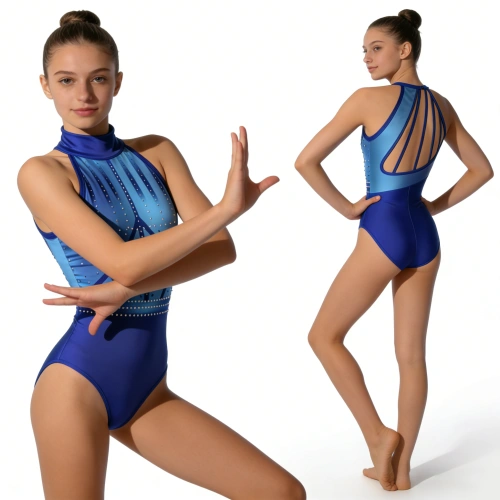
Lycra and Spandex are common choices because they provide excellent stretch and recovery. However, not all Spandex is equal. The percentage of elastane, the weight of the base fabric, and the quality of the yarn all affect performance. A higher-quality blend may cost more, but it can extend the life of the leotard significantly. For practice leotards, the goal is a fabric that moves with the gymnast without becoming thin, shiny, or loose too quickly.
Polyester is often used for strength, color retention, and moisture management. It can be blended with Spandex to create a fabric that is both stretchy and durable. Performance knits can be engineered for breathability, quick drying, and a smooth surface that resists pilling. These qualities matter in a training environment where the leotard is worn frequently and washed often.
Mystique and similar fabrics offer shine and visual impact. They are popular in competition leotards and can also appear in practice wear when a team wants a more polished look. The challenge is that decorative fabrics may have different stretch characteristics from the main body fabric. If they are not matched carefully, they can cause puckering, restrict movement, or wear out faster than the rest of the garment. T&J Sportswear addresses this through pattern development and fabric testing during sampling.
Mesh is often used for ventilation and design contrast. It can help regulate temperature and add a modern look. However, mesh must be strong enough to withstand stretching and friction. It also needs to be sewn with appropriate seam types so that it does not tear at the edges. When used strategically, mesh can improve comfort without compromising durability.
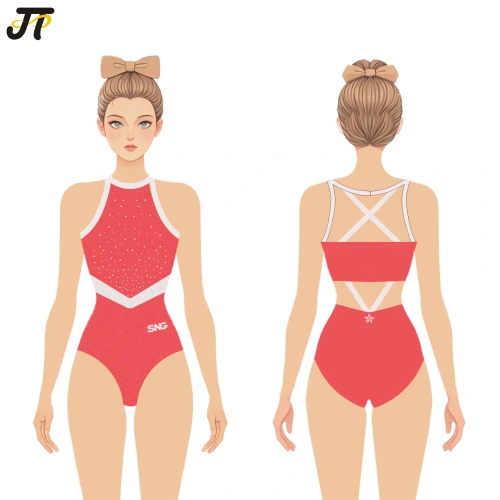
Construction is where fabric becomes a functional garment. Two leotards made from similar fabric can have very different lifespans depending on how they are cut, sewn, and finished. T&J Sportswear pays attention to every stage of manufacturing because durability is built stitch by stitch.
Seams are among the most stressed parts of a leotard. They must stretch with the fabric without breaking or creating a stiff ridge. Flatlock, overlock, and coverstitch constructions are common in gymnastics apparel, but the correct choice depends on the fabric and the location of the seam. Poorly tensioned stitching can cause seams to pop. Rough seam edges can cause irritation. Inconsistent stitching can create weak points that fail during hard use.
Leg openings and necklines often use elastic or binding to maintain shape and coverage. Low-quality elastic can lose stretch, become brittle, or leave marks on the skin. High-quality elastic is soft, durable, and resistant to repeated washing. T&J Sportswear carefully inspects elastic placement and tension so that the finished leotard stays comfortable and secure.
The gusset is a small but critical area. It affects comfort, coverage, and durability. A well-designed gusset can reduce pulling and improve fit during splits and leaps. It also helps protect the garment from excessive stress in a high-movement area. For practice leotards, coverage and comfort are especially important because the athlete may wear the garment for long sessions.
Rhinestones can make a leotard stand out, but they must be applied correctly. Poor adhesion can lead to stones falling off during practice or washing. The base fabric must also be able to support the weight and heat of the application process. T&J Sportswear produces rhinestone gymnastics leotards and understands that decoration should enhance the garment, not shorten its life. For practice leotards, clubs may choose minimal embellishment or place stones in areas that are less likely to rub against equipment.
Fit is often discussed in terms of comfort and appearance, but it also affects durability. A leotard that is too tight puts excessive strain on seams and elastic. A leotard that is too loose can shift, rub, and wear unevenly. Correct sizing is therefore a durability feature. T&J Sportswear works with customers in 36+ countries, which means the company understands that sizing systems and body shapes vary across markets. This experience helps in developing patterns that fit different athlete populations more reliably.
For gymnastics clubs and teams, custom sizing can be a major advantage. A team leotard that is designed around the actual measurements of its athletes will perform better than a generic size chart. T&J Sportswear supports custom team leotards, allowing colors, logos, patterns, labels, and packaging to be customized according to requirements. This is especially valuable for clubs that want a consistent look and a reliable fit across many athletes.
Durability cannot be guaranteed by a single inspection at the end. It must be controlled throughout production. T&J Sportswear begins quality control during sample development. Customers can review the design, fabric, fit, decoration, and finishing before confirming mass production. This stage catches problems early, when changes are still efficient to make.
During bulk production, key inspection points can include fabric condition, printing quality, stitching, measurements, rhinestone placement, coverage, and overall appearance. The goal is to reduce common problems such as inconsistent sizing, printing defects, loose decoration, or uneven finishing. T&J Sportswear works to maintain stable workmanship and carefully inspects finished products before shipment. Product information also lists certifications such as ISO9001, SGS, and CE for applicable products, and specific certification and testing documentation can be provided according to the product and customer requirements.
Experience is not just a marketing phrase. In gymnastics apparel, it means understanding how a pattern will behave when a gymnast raises her arms, how a fabric will respond after ten washes, and how a rhinestone layout will look under gym lighting. T&J Sportswear has more than 10 years of experience in gymnastics apparel manufacturing, with a strong focus on competition and training leotards. Unlike general sportswear suppliers, the company understands the specific requirements of gymnastics apparel, including stretch, fit, comfort, coverage, durability, decoration, and freedom of movement.
T&J Sportswear has a factory team that includes 30+ skilled workers, with reported production capacity of 300+ leotards per day. This provides a balance between flexible customization and the ability to support larger wholesale and team orders. Production capacity is not only about quantity. The real value is the ability to maintain consistent workmanship when moving from samples to bulk production. T&J Sportswear pays attention to fabric, printing, stitching, sizing, rhinestone placement, and overall finishing throughout production.
For gymnastics clubs, new brands, boutique retailers, and smaller distributors, low minimum order quantities can make a significant difference. T&J Sportswear offers a low MOQ starting from 10 sets for selected products. This gives customers greater flexibility when testing new designs or launching new collections. Instead of committing to large quantities before knowing how a design will perform in their market, customers can support smaller initial orders and gradually develop their collections.
Customization is at the center of T&J Sportswear service. The company supports both OEM and ODM, allowing customers to choose between producing their own designs and developing new products together with the T&J team. Customization can cover artwork, colors, sublimation printing, logos, rhinestone layouts, fabric combinations, sizes, labels, packaging, and other details. The production process covers design development, fabric selection, digital artwork, printing, cutting, sewing, decoration, inspection, packaging, and delivery. This integrated approach helps reduce communication between multiple suppliers and gives customers a more efficient path from an initial idea to a finished product.
Design is one of T&J Sportswear key strengths. The company has an in-house professional design team specializing in gymnastics apparel. T&J Sportswear does more than simply manufacture designs supplied by customers. It can also help develop new concepts based on sketches, reference images, color combinations, team identities, or brand requirements. For competition leotards, the design team can combine sublimation graphics, color blocking, mesh, rhinestones, crystal decoration, and different fabric effects to create distinctive visual designs. For practice leotards, the focus can shift toward comfort, durability, and a clean team look while still offering custom colors and logos.
Even the best practice leotard will last longer with proper care. Gymnastics apparel is exposed to sweat, chalk, and repeated washing, so small habits can make a big difference. Clubs and athletes should treat practice leotards as performance garments rather than ordinary laundry.
Cold or lukewarm water is usually safer than hot water. A gentle cycle reduces mechanical stress on seams and elastic. Mild detergent is preferable, and fabric softener should be avoided because it can coat performance fibers and reduce moisture management. Bleach and harsh chemicals can damage elastane and fade colors. Turning the leotard inside out before washing can protect prints and rhinestones.
Air drying is generally best. High heat from a dryer can break down elastane and cause shrinkage or loss of stretch. Hanging the leotard away from direct sunlight can also help preserve color. If a dryer must be used, low heat and a short cycle are safer than high heat for a long period.
Rotating practice leotards is a simple but effective strategy. Wearing the same leotard every day accelerates wear. A rotation of several leotards allows each garment to recover between uses and reduces the number of washes per garment per week. For teams, this may mean ordering multiple practice leotards in the same style or a mix of styles.
Leotards should be stored away from rough surfaces, sharp hooks, and Velcro. Velcro can snag fabric and pull threads. Hanging leotards individually or folding them neatly can prevent unnecessary abrasion. Rhinestone leotards should be stored so that stones do not rub against each other or against rough surfaces.
When selecting practice leotards for a club or team, durability should be evaluated alongside price, comfort, and appearance. The following checklist can help buyers make better decisions.
T&J Sportswear supports customers through each of these points. From initial inquiry and design development to sampling, production, inspection, and shipment, the team provides professional support throughout the process. Customers can communicate their requirements directly and receive assistance with product development, customization, production details, and logistics.
Off-the-shelf practice leotards can be convenient, but they may not match a club identity, fit a specific group of athletes, or meet particular durability requirements. Custom practice leotards allow clubs and teams to choose fabrics, colors, patterns, logos, labels, and sizing. This can improve team cohesion and make it easier to reorder the same design in the future. T&J Sportswear offers OEM and ODM services and can develop products based on customer designs, sketches, reference images, color requirements, or original ideas. The professional design team can assist with artwork development and product optimization, helping customers turn concepts into finished gymnastics apparel.
For new brands, custom manufacturing can be a way to enter the gymnastics market with a distinct collection. For established distributors, it can be a way to expand product ranges with reliable production. For gymnastics clubs, it can be a way to create team uniforms that are both practical and visually appealing. T&J Sportswear works with gymnastics clubs, teams, brands, wholesalers, distributors, and other sportswear businesses, with a strong focus on customers in the US, Europe, and other international markets.
Understanding why leotards fail can help buyers avoid the same problems. Common causes of early failure include:
Each of these issues can be addressed through better material selection, construction, and manufacturing discipline. T&J Sportswear focuses on these details because the company aims to build long-term partnerships rather than simply complete individual orders.
T&J Sportswear is a professional gymnastics apparel manufacturer specializing in the development and production of high-quality gymnastics leotards and teamwear. With more than 10 years of experience in the sportswear industry, the company has built strong expertise in product development, custom design, manufacturing, and international business. Its main products include competition gymnastics leotards, practice gymnastics leotards, custom team leotards, rhinestone gymnastics leotards, and gymnastics warm-up wear.
The company understands that gymnastics apparel needs to combine comfort, flexibility, durability, fit, and visual appeal. Its production team pays attention to every stage of manufacturing, from fabric selection and pattern development to cutting, sewing, printing, rhinestone application, quality inspection, and final packaging. This helps provide products that are suitable for both demanding training sessions and high-level competitions.
For practice leotards, T&J Sportswear focuses on comfort, stretch, breathability, and durability for everyday training. The company offers a wide range of colors, patterns, and styles, with customized designs available for gymnastics clubs and teams. For customers looking to build a complete team collection, T&J Sportswear also provides custom gymnastics warm-ups and matching team apparel. Team colors, logos, patterns, labels, packaging, and other details can be customized according to requirements.
Quality and consistency are important throughout the T&J Sportswear production process. The company works to maintain stable workmanship and carefully inspects finished products before shipment. Its goal is not only to manufacture gymnastics apparel, but also to build long-term partnerships with customers through reliable products and responsive service. With experienced production capabilities, professional design support, flexible customization, and a customer-focused approach, T&J Sportswear is committed to being a dependable gymnastics apparel manufacturing partner for customers around the world.
What makes gymnastics practice leotards last through hard use. The answer is not one fabric, one stitch, or one design trick. It is a system. It starts with quality materials such as Lycra, Spandex, Polyester, Mystique, and Mesh selected for the right purpose. It continues with careful pattern development, accurate cutting, strong stitching, secure elastic, and thoughtful decoration. It depends on correct fit and consistent sizing. It is protected by quality control from sample to bulk production. And it is extended by proper washing, drying, rotation, and storage.
For gymnastics clubs, teams, brands, wholesalers, and distributors, choosing the right manufacturing partner can make a significant difference. T&J Sportswear combines more than 10 years of experience, customers in 36+ countries, 30+ skilled workers, 300+ daily leotard capacity, low MOQ from 10 sets, professional design support, OEM and ODM customization, and one-to-one service. From the first idea to the final leotard, T&J Sportswear is committed to making custom gymnastics apparel more efficient, flexible, and reliable.
Practice leotards that last are the result of thoughtful manufacturing and proper care. When clubs and brands invest in quality fabrics, proven construction, and reliable production, athletes can focus on training instead of worrying about their apparel. That is the standard T&J Sportswear works toward every day.
