This article explains the key questions buyers should ask a gymnastics leotard supplier before placing an order. It covers supplier background, specialization, product range, OEM and ODM customization, fabric selection, stretch and recovery, breathability, sampling, MOQ, pricing, quality control, certifications, production capacity, lead times, sizing, fit, decoration, packaging, communication, payment, shipping, intellectual property, sustainability, and trial orders. The article emphasizes that gymnastics leotards require specialized manufacturing because they must combine comfort, flexibility, durability, fit, coverage, and visual appeal. Buyers should confirm that a supplier understands these unique requirements and can provide consistent quality from sample to bulk production. A professional supplier should welcome detailed questions, offer transparent pricing, provide samples, explain quality control steps, and support customization for colors, logos, rhinestones, labels, and packaging. The article also highlights T&J Sportswear as an example of a specialized gymnastics apparel manufacturer with more than 10 years of experience, 36+ countries served, 30+ skilled workers, 300+ daily leotard capacity, low MOQ starting from 10 sets, OEM and ODM services, and one-to-one service. It recommends that buyers start with a trial order, request references, protect intellectual property, and avoid choosing a supplier based only on low price. By asking the right questions, gymnastics clubs, teams, brands, wholesalers, and distributors can reduce risk, improve product quality, and build long-term partnerships with reliable manufacturing partners.
Ordering gymnastics leotards is a significant decision for any gymnastics club, team, brand, wholesaler, or distributor. The right supplier can provide consistent quality, reliable delivery, and valuable design support. The wrong supplier can lead to sizing problems, poor fabric performance, delayed shipments, and unhappy athletes. Before committing to a purchase order, buyers should ask a series of focused questions. These questions help reveal whether a supplier truly understands gymnastics apparel and whether they can meet the specific needs of the buyer's market. This article outlines the most important questions to ask a gymnastics leotard supplier before ordering. It also explains why each question matters and what answers indicate a professional, dependable manufacturing partner.
Gymnastics leotards are not ordinary sportswear. They must stretch, recover, stay in place, provide coverage, and look attractive under competition lights. They must also withstand frequent use, washing, and movement. A supplier who treats leotards like generic activewear may produce garments that look good in photos but fail in the gym. Therefore, the buyer's questions should go beyond price and delivery time. They should explore the supplier's specialization, materials, construction methods, customization capabilities, quality control, and communication style. A supplier that welcomes detailed questions is often a supplier that understands the importance of details. For example, T&J Sportswear, a professional gymnastics apparel manufacturer with more than 10 years of experience, focuses specifically on competition gymnastics leotards, practice gymnastics leotards, custom team leotards, rhinestone gymnastics leotards, and gymnastics warm-up wear. This kind of specialization matters because it shows the supplier has experience with the unique demands of the sport.
Experience is not everything, but it is a useful starting point. A supplier with many years in gymnastics apparel has likely encountered different body types, sizing systems, fabric challenges, and decoration techniques. They may also have learned how to prevent common problems such as poor stretch recovery, weak stitching, or rhinestones that fall off after a few washes. Buyers should ask how long the supplier has been in business and how long they have focused on gymnastics leotards specifically. A general sportswear manufacturer may offer leotards, but a specialized manufacturer is more likely to understand the finer points. T&J Sportswear, for instance, has more than 10 years of experience in the sportswear industry and has built strong expertise in product development, custom design, manufacturing, and international business. That depth of experience can be valuable when a buyer needs guidance on fabrics, fit, or decoration.
undefined
Specialization affects quality. A supplier that produces only gymnastics apparel is more likely to have dedicated patterns, machinery, and quality standards for stretch fabrics. They may also have a design team that understands how to place rhinestones, how to create color blocking, and how to ensure coverage during splits and leaps. Buyers should ask what percentage of the supplier's production is gymnastics apparel. They should also ask whether the supplier works with gymnastics clubs, teams, brands, or wholesalers. T&J Sportswear works with gymnastics clubs, teams, brands, wholesalers, distributors, and other sportswear businesses, with a strong focus on customers in the US, Europe, and other international markets. This international experience can help a buyer who needs a supplier familiar with different sizing expectations and market preferences.
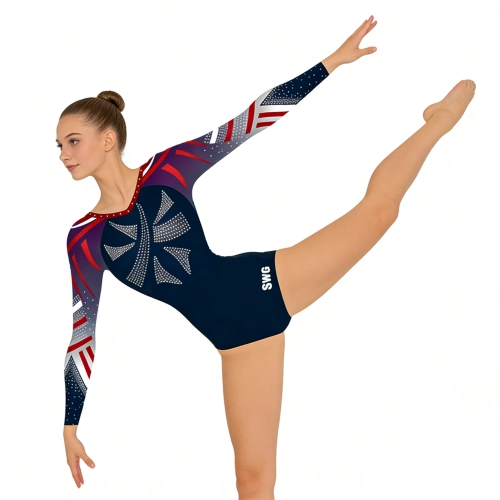
Different markets have different expectations. North American and European buyers often emphasize consistent sizing, reliable quality, and responsive communication. They may also require specific labeling, packaging, or certification documentation. A supplier with experience in multiple markets can often adapt more easily to a buyer's requirements. Buyers should ask which countries the supplier exports to and whether they have references or case studies from similar markets. T&J Sportswear has served customers in 36+ countries, giving them practical experience with different markets, customer requirements, sizing systems, and product preferences. That kind of global exposure can reduce the risk of misunderstandings during production.
Before ordering, a buyer should confirm that the supplier can produce the specific type of leotard needed. Competition leotards, practice leotards, and warm-up wear have different requirements. Competition leotards often need more precise fit, secure coverage, and decorative details such as sublimation printing or rhinestones. Practice leotards focus on comfort, stretch, breathability, and durability for everyday training. Warm-up wear may need a different fabric weight and style. Buyers should ask whether the supplier can produce all these categories or only one. T&J Sportswear produces competition gymnastics leotards, practice gymnastics leotards, custom team leotards, rhinestone gymnastics leotards, and gymnastics warm-up wear. This range allows a club or brand to source multiple product types from one manufacturing partner.
OEM and ODM services are important for brands and clubs that want custom products. OEM means the supplier manufactures according to the buyer's design. ODM means the supplier helps develop the design based on the buyer's ideas or requirements. Buyers should ask whether the supplier offers both options and how involved their design team can be. T&J Sportswear supports OEM and ODM services and can develop products based on customers' designs, sketches, reference images, color requirements, or original ideas. Their professional design team can assist with artwork development and product optimization, helping customers turn concepts into finished gymnastics apparel. This is especially valuable for new brands that need design support but do not have an in-house design team.
Design support can range from simple logo placement to full collection development. Buyers should ask whether the supplier can create mockups, suggest fabric combinations, adjust artwork for production, and provide technical advice on fit and decoration. They should also ask how many revisions are included and how long the design process takes. A supplier with a strong in-house design team can often save the buyer time and reduce errors. T&J Sportswear has an in-house professional design team specializing in gymnastics apparel. They can combine sublimation graphics, color blocking, mesh, rhinestones, crystal decoration, and different fabric effects to create distinctive visual designs. Customers can also customize colors, logos, patterns, labels, and other branding elements.
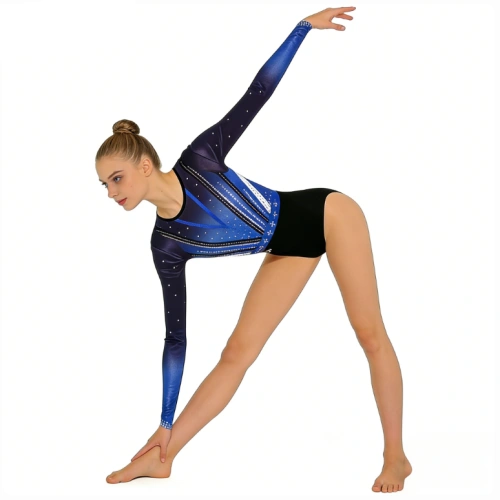
The fabric determines how a leotard feels, moves, and lasts. Buyers should ask about the main fabrics used for competition and practice leotards. Common materials include Lycra, Spandex, Polyester, Mystique, and Mesh. Each has different properties. Lycra and Spandex offer stretch and recovery. Polyester can provide durability and color retention. Mystique has a shiny, eye-catching finish often used in competition leotards. Mesh can add breathability and visual interest. Buyers should ask whether the supplier can source specific fabrics and whether they test them for stretch, colorfastness, and shrinkage. T&J Sportswear uses materials including Lycra, Spandex, Polyester, Mystique, and Mesh, depending on the design and application. Different products can be developed for different priorities, such as stretch, lightweight construction, breathability, quick drying, comfort, durability, and visual appearance.
Stretch and recovery are critical in gymnastics apparel. A leotard must stretch with the athlete and return to its original shape. If it loses recovery, it may become loose, sag, or fail to provide coverage. Buyers should ask how the supplier tests stretch and recovery. They should also ask about the percentage of elastane or Spandex in the fabric and whether the supplier uses high-quality elastic for trims and leg openings. A professional supplier will have standards for fabric selection and garment construction. T&J Sportswear pays close attention to fabric selection and garment construction. For training leotards, they focus on comfortable stretch, durability, moisture management, and everyday wear. For competition leotards, they place greater emphasis on precision fit, secure coverage, decorative details, and professional finishing.
Gymnasts train for long hours and often sweat. Breathability and moisture management help keep athletes comfortable and focused. Buyers should ask whether the supplier offers moisture-wicking fabrics, mesh panels, or ventilated designs. They should also ask how these features affect the look and durability of the leotard. Practice leotards often benefit from breathable fabrics and simple construction. Competition leotards may need a balance between breathability and decorative elements. A supplier that understands this balance can help buyers choose the right fabric for each product. T&J Sportswear develops products with different priorities, including breathability and quick drying, so buyers can select materials that match their needs.
Fabric testing is a sign of a serious supplier. Buyers should ask whether the supplier conducts laboratory tests for stretch, recovery, shrinkage, and colorfastness. They should also ask whether test reports are available for review. A supplier that tests fabrics can predict how a leotard will perform after repeated washing and wear. T&J Sportswear pays close attention to fabric selection and quality control. Their production process is designed to reduce common problems such as inconsistent sizing, printing defects, loose decoration, or uneven finishing. Testing helps maintain stable workmanship from sample to bulk production.

Colorfastness affects how a leotard looks after washing and exposure to sweat. Buyers should ask about colorfastness ratings for sublimation printing and dyed fabrics. They should also ask whether the supplier tests for bleeding, fading, and crocking. A supplier with strong colorfastness standards can help buyers avoid complaints about colors that fade too quickly. T&J Sportswear offers sublimation printing and other decorative techniques. They understand that competition leotards need to look vibrant and professional throughout the season.
Pilling and fading can make a leotard look old before its time. Buyers should ask about fabric quality, yarn type, and finishing treatments. They should also ask whether the supplier tests for pilling resistance and color retention. A supplier that selects quality fabrics and monitors production can reduce these issues. T&J Sportswear focuses on durability and visual appeal, combining performance fabrics with careful construction.
Size grading is the process of scaling a pattern across different sizes. Buyers should ask how the supplier grades sizes and whether they follow a standard size chart or a custom one. They should also ask how they test fit across sizes. Poor grading can lead to inconsistent fit, which is a common problem in gymnastics apparel. T&J Sportswear understands that fit is essential. Their production team pays attention to pattern development and cutting, helping ensure that sizes are consistent and comfortable.
Measurement tolerance is the acceptable range of variation in garment measurements. Buyers should ask what tolerance the supplier uses for key measurements such as chest, waist, hip, and length. They should also ask how they inspect measurements during production. A supplier with tight tolerances is more likely to deliver consistent products. T&J Sportswear carefully inspects finished products before shipment, including measurements and overall appearance.
Before bulk production, buyers should receive measurement specifications for approval. This document helps confirm that the supplier understands the required dimensions. Buyers should ask whether measurement specs are included in the sample approval process. A professional supplier will provide clear specs and update them if changes are made. T&J Sportswear supports sample development and allows customers to review fit and finishing before mass production.
Stitch type affects stretch, durability, and comfort. Buyers should ask whether the supplier uses flatlock, overlock, coverstitch, or other stitches suitable for stretch fabrics. They should also ask about thread quality and seam strength. A supplier that uses the right stitches for gymnastics apparel can prevent seam popping and discomfort. T&J Sportswear pays attention to cutting, stitching, and finishing, helping create garments that move with the athlete.
Leg openings and trims must be comfortable and secure. Buyers should ask how the supplier finishes these areas, whether they use elastic, binding, or folded hems, and how they prevent digging or riding up. They should also ask about the width and stretch of elastic. A supplier with good finishing techniques can improve comfort and coverage. T&J Sportswear focuses on secure coverage and professional finishing for competition leotards.
Crotch lining and gussets are important for comfort and hygiene. Buyers should ask whether the supplier includes these features and what materials they use. They should also ask whether the lining is breathable and moisture-wicking. A supplier that understands gymnastics apparel will offer appropriate lining options. T&J Sportswear develops products that combine comfort, flexibility, durability, and fit.
Buyers in many markets need assurance that products are free from harmful substances. They should ask whether the supplier provides test reports for substances such as azo dyes, formaldehyde, and heavy metals. They should also ask whether testing is done by a third-party laboratory. T&J Sportswear lists certifications such as ISO9001, SGS, and CE for applicable products. Specific certification and testing documentation can be provided according to the product and customer requirements.
Many leotards are worn by children. Buyers should ask whether the supplier complies with children's safety regulations in their market. They should also ask about small parts, cords, and chemical restrictions. A supplier with international experience is more likely to understand these requirements. T&J Sportswear serves customers in the US, Europe, and other international markets, so they are familiar with different compliance expectations.
Flammability and chemical safety are important for apparel. Buyers should ask whether the supplier tests for flammability and whether fabrics meet relevant standards. They should also ask about chemical safety documentation. A supplier that proactively addresses these issues can help buyers avoid regulatory problems. T&J Sportswear works to maintain quality and consistency throughout production and can provide documentation based on product and customer requirements.
Sampling is one of the most important steps in custom gymnastics apparel. A sample allows the buyer to check design, fabric, fit, decoration, and finishing before committing to bulk production. Buyers should always ask whether the supplier provides samples and whether the sample is made with the same materials and processes as bulk production. A supplier that resists sampling may be a risk. T&J Sportswear supports sample development and allows customers to review the design, fabric, fit, decoration, and finishing before confirming mass production. This step helps reduce misunderstandings and ensures the final product meets expectations.
Sampling time affects the overall production schedule. Buyers should ask for a clear timeline, including design confirmation, fabric sourcing, sample production, and shipping. They should also ask what happens if the sample does not meet expectations. A professional supplier will provide a realistic timeline and explain any potential delays. T&J Sportswear's production process covers design development, fabric selection, digital artwork, printing, cutting, sewing, decoration, inspection, packaging, and delivery. This integrated approach helps reduce communication between multiple suppliers and gives customers a more efficient path from an initial idea to a finished product.
Sample costs vary by design complexity, fabric, and decoration. Buyers should ask whether the sample fee is refundable upon bulk order and whether it covers shipping. They should also ask if there are additional costs for multiple revisions or new sizes. Understanding these details upfront prevents surprises later. A supplier that is transparent about sample costs is often easier to work with in the long term.
Minimum order quantity is a key factor for clubs, new brands, and small distributors. A high MOQ can make it difficult to test new designs or launch a small collection. Buyers should ask about the MOQ for each product type, color, and size. They should also ask whether the MOQ can be mixed across sizes or colors. T&J Sportswear offers a low MOQ starting from 10 sets for selected products. This gives gymnastics clubs, new brands, boutique retailers, and smaller distributors greater flexibility when testing new designs or launching new collections. Instead of requiring customers to commit to large quantities before they know how a design will perform in their market, they can support smaller initial orders and help customers gradually develop their collections.
Pricing in gymnastics apparel depends on fabric, design complexity, decoration, quantity, and packaging. Buyers should ask for a detailed breakdown of costs, including fabric, labor, printing, rhinestones, labels, packaging, and shipping. They should also ask whether there are any hidden fees. A clear pricing structure helps buyers compare suppliers fairly. T&J Sportswear provides competitive pricing and flexible solutions based on different order requirements. Whether a customer is a growing gymnastics club looking for customized team uniforms, a new brand developing its first collection, or an established distributor requiring regular production, they provide flexible solutions with low MOQ, competitive pricing, professional communication, and one-to-one service.
Volume discounts are common in manufacturing. Buyers should ask about price breaks at different quantities and whether discounts apply to repeat orders. They should also ask about payment terms and whether deposits are required. Understanding the pricing tiers helps buyers plan their budgets and inventory. A supplier that offers fair and transparent volume pricing can become a long-term partner.
Quality control should happen throughout production, not only at the end. Buyers should ask about inspections during fabric selection, cutting, sewing, printing, rhinestone application, and final packaging. They should also ask how defects are handled and whether there is a final inspection before shipment. T&J Sportswear maintains quality and consistency throughout the production process. They work to maintain stable workmanship and carefully inspect finished products before shipment. For finished garments, key inspection points can include fabric condition, printing quality, stitching, measurements, rhinestone placement, coverage, and overall appearance. Their production process is designed to reduce common problems such as inconsistent sizing, printing defects, loose decoration, or uneven finishing.
Certifications can provide assurance about quality management and product safety. Buyers should ask whether the supplier has certifications such as ISO9001, SGS, or CE for applicable products. They should also ask whether certification and testing documentation can be provided for specific products. T&J Sportswear lists certifications such as ISO9001, SGS, and CE for applicable products. Specific certification and testing documentation can be provided according to the product and customer requirements. This is especially important for buyers in markets with strict import regulations.
Even with strong quality control, defects can happen. Buyers should ask about the supplier's policy for defective items. Will they replace them? Will they issue a credit? How quickly will they respond? A clear defect policy protects the buyer and shows the supplier's commitment to accountability. A professional supplier will have a written policy and will work to resolve issues quickly.
Production capacity affects how quickly an order can be completed and how well the supplier can handle larger projects. Buyers should ask about daily output, number of workers, and whether capacity is dedicated to gymnastics apparel. T&J Sportswear's factory team includes 30+ skilled workers, with reported production capacity of 300+ leotards per day. This provides a balance between flexible customization and the ability to support larger wholesale and team orders. For customers, production capacity is not simply about quantity. The real value is the ability to maintain consistent workmanship when moving from samples to bulk production.
Lead times depend on order size, design complexity, and season. Buyers should ask for standard lead times for samples, bulk production, and shipping. They should also ask how lead times change during peak seasons. A supplier that provides realistic lead times and updates throughout production is easier to work with. T&J Sportswear provides professional support throughout the process, from initial inquiry and design development to sampling, production, inspection, and shipment.
Sometimes clubs need leotards quickly for competitions or events. Buyers should ask whether the supplier can accommodate rush orders and what additional costs are involved. They should also ask about the maximum rush capacity. A supplier that can handle rush orders reliably can be a valuable partner during busy seasons.
Sizing is one of the most challenging parts of gymnastics apparel. A leotard must fit closely without restricting movement. Buyers should ask how the supplier develops size charts, whether they use standard sizes or custom measurements, and how they test fit on different body types. They should also ask about size consistency between orders. T&J Sportswear understands that gymnastics apparel needs to combine comfort, flexibility, durability, fit, and visual appeal. Their production team pays attention to every stage of manufacturing, from fabric selection and pattern development to cutting, sewing, printing, rhinestone application, quality inspection, and final packaging.
Many clubs and teams have specific sizing needs. Buyers should ask whether the supplier can work with a custom size chart or individual measurements. They should also ask how many sizes can be included in one order and whether there are extra costs for custom sizing. A supplier that is flexible with sizing can help reduce returns and improve athlete satisfaction.
Fit and coverage are critical for competition leotards. Buyers should ask whether the supplier tests garments on real gymnasts or mannequins. They should also ask about coverage in the chest, back, and leg openings. A professional supplier will have procedures to check coverage during movement. T&J Sportswear focuses on precision fit and secure coverage for competition leotards, helping athletes move confidently.
Decoration can make a leotard stand out. Buyers should ask about sublimation printing, screen printing, rhinestones, crystals, mesh, and other techniques. They should also ask which techniques are most durable and which are best for competition versus practice. T&J Sportswear's competition leotards combine performance fabrics with creative designs, sublimation printing, rhinestones, and other decorative techniques. They pay close attention to fabric selection, cutting, stitching, embellishment, and finishing to create eye-catching leotards that allow athletes to move confidently during competition.
Durability is a common concern with decorated leotards. Buyers should ask how rhinestones are attached, whether they are hot-fix or glued, and how they hold up after washing. They should also ask about the colorfastness of sublimation printing. A supplier that tests these elements can help buyers avoid complaints. T&J Sportswear pays attention to rhinestone placement and overall finishing, helping reduce issues such as loose decoration.
Team identity is important. Buyers should ask whether the supplier can match specific Pantone colors, reproduce logos accurately, and place them according to team requirements. They should also ask about minimum quantities for custom colors. A supplier with strong customization capabilities can help clubs and brands create a cohesive look. T&J Sportswear allows customers to customize colors, logos, patterns, labels, and other branding elements.
Labels and packaging affect the buyer's brand image. Buyers should ask whether the supplier can produce custom woven labels, printed labels, hang tags, poly bags, and boxes. They should also ask about minimum quantities for these items. T&J Sportswear provides customization for labels, packaging, and other details according to customer requirements. This helps brands present a professional image to their customers.
Packaging protects the product during shipping. Buyers should ask about individual poly bags, size stickers, barcode labels, and carton packing. They should also ask about carton dimensions and weight limits. A supplier with good packaging standards can reduce damage and make warehouse handling easier.
Hang tags and poly bags are small details that can have a big impact. Buyers should ask whether these items are included or require extra cost. They should also ask about eco-friendly options if sustainability is important to their brand.
Clear communication is essential for custom orders. Buyers should ask who will manage their account, how quickly they can expect replies, and whether the contact person speaks their language. They should also ask about communication channels such as email, messaging apps, or video calls. T&J Sportswear provides one-to-one professional service and professional communication. Customers can communicate their requirements directly and receive assistance with product development, customization, production details, and logistics.
International buyers often work across different time zones. Buyers should ask how the supplier manages communication to avoid delays. They should also ask about response times and whether there is a backup contact. A supplier with experience in international markets is often better prepared for time zone challenges. T&J Sportswear focuses on customers in the US, Europe, and other international markets, so they understand the importance of responsive communication.
After-sales support matters if problems arise. Buyers should ask about the supplier's policy for returns, replacements, and quality claims. They should also ask how quickly issues are resolved. A supplier that stands behind its products is more likely to build long-term partnerships. T&J Sportswear's goal is not only to manufacture gymnastics apparel but also to build long-term partnerships with customers through reliable products and responsive service.
Payment terms affect cash flow and risk. Buyers should ask about deposit percentages, payment methods, and whether letters of credit are accepted. They should also ask about currency and any bank fees. Clear payment terms help avoid misunderstandings. A professional supplier will provide a written agreement.
Brands and teams often share original designs, logos, and artwork. Buyers should ask how the supplier protects confidential information and whether they will sign a non-disclosure agreement. They should also ask whether the supplier will produce the same design for other customers. A trustworthy supplier will respect intellectual property and avoid unauthorized production.
Shipping terms determine who pays for freight, insurance, and duties. Buyers should ask about Incoterms such as EXW, FOB, CIF, or DDP. They should also ask about shipping methods, transit times, and tracking. A supplier with logistics experience can help buyers choose the best option for their market.
A clear order process reduces confusion. Buyers should ask for a step-by-step explanation, including inquiry, quotation, design confirmation, sampling, sample approval, deposit, bulk production, inspection, balance payment, and shipment. They should also ask who is responsible for each step. T&J Sportswear provides professional support throughout the process, from initial inquiry and design development to sampling, production, inspection, and shipment.
Approvals are important checkpoints. Buyers should ask what needs to be approved, such as artwork, fabric, sample, measurement specs, and packaging. They should also ask how approvals are documented. A supplier that uses written approvals can reduce the risk of errors. T&J Sportswear's production process covers design development, fabric selection, digital artwork, printing, cutting, sewing, decoration, inspection, packaging, and delivery.
Buyers should ask what happens if bulk production does not match the approved sample. Will the supplier remake the order? Will they offer a discount? A clear policy protects the buyer. T&J Sportswear works to maintain stable workmanship and carefully inspects finished products before shipment, helping ensure consistency from sample to bulk.
Some buyers need fast restocking. They should ask whether the supplier can hold inventory or produce repeat orders quickly. They should also ask about minimum quantities for restocking. A supplier with flexible production can help buyers respond to demand. T&J Sportswear offers flexible solutions with low MOQ and can support both small and large orders.
Restocking is important for popular designs. Buyers should ask how long restocking takes and whether fabrics are kept in stock. They should also ask whether colors can be matched from previous orders. A supplier with good inventory management can help buyers avoid stockouts.
As a club or brand grows, order volumes may increase. Buyers should ask whether the supplier can scale production without sacrificing quality. They should also ask about maximum capacity. T&J Sportswear has 30+ skilled workers and reported production capacity of 300+ leotards per day, providing a balance between customization and larger order support.
Sustainability is increasingly important. Buyers should ask whether the supplier offers recycled fabrics, organic cotton, or eco-friendly packaging. They should also ask about certifications for sustainable materials. A supplier with sustainable options can help buyers meet customer expectations. T&J Sportswear can discuss material options based on product requirements.
Ethical manufacturing matters. Buyers should ask about working conditions, wages, and worker safety. They should also ask whether the supplier has a code of conduct or social compliance audits. A responsible supplier will be transparent about labor practices.
Buyers should ask about the supplier's long-term sustainability goals, such as reducing waste, energy use, and water consumption. They should also ask about progress and reporting. A supplier that is committed to improvement can be a better long-term partner.
References can provide valuable insight. Buyers should ask for references from gymnastics clubs, brands, or distributors similar to their own business. They should also ask about the customer's experience with quality, communication, and delivery. T&J Sportswear has served customers in 36+ countries, giving them experience with different markets and customer types.
A trial order is a low-risk way to test a supplier. Buyers should ask whether the supplier accepts small trial orders and what the MOQ is for a trial. They should also ask about lead times and costs for trial orders. T&J Sportswear offers a low MOQ starting from 10 sets for selected products, making trial orders more accessible.
Buyers should ask how the supplier measures satisfaction and whether they collect feedback after orders. They should also ask how they use feedback to improve. A supplier that values feedback is more likely to improve over time.
Not every supplier is a good fit. Buyers should be cautious if a supplier avoids answering detailed questions, refuses to provide samples, offers unusually low prices, or cannot explain their quality control process. Other red flags include poor communication, lack of certifications, unclear payment terms, and no references. A supplier that pressures the buyer to order quickly without sampling may be a risk. A professional supplier will welcome questions and provide clear answers.
Choosing a gymnastics leotard supplier is about more than finding a low price. It is about finding a manufacturing partner who understands the sport, the athletes, and the buyer's market. By asking the right questions before ordering, buyers can reduce risk, improve product quality, and build a reliable supply chain. A supplier with specialized experience, professional design support, flexible customization, consistent quality control, and responsive service is more likely to deliver leotards that perform in the gym and impress in competition. T&J Sportswear is an example of a professional gymnastics apparel manufacturer that combines more than 10 years of experience, 36+ countries served, 30+ skilled workers, 300+ daily leotard capacity, low MOQ, OEM and ODM services, and one-to-one service. Whether the buyer is a gymnastics club, a new brand, a distributor, or an established wholesaler, asking the right questions will help them find a dependable partner for custom gymnastics leotards and teamwear. From the first idea to the final leotard, the right questions lead to better decisions, stronger partnerships, and happier athletes.
