Choosing a practice gymnastics leotards supplier requires more than comparing prices. Buyers should ask about the supplier's specialization in gymnastics apparel, years of experience, and knowledge of stretch, fit, coverage, and durability. A supplier like T&J Sportswear, with more than 10 years of experience and customers in 36+ countries, can demonstrate relevant expertise in competition leotards, practice leotards, custom team leotards, rhinestone leotards, and warm-up wear.
Fabric and construction questions are essential. Buyers should ask which materials are used, such as Lycra, Spandex, Polyester, Mystique, and Mesh, and how they affect stretch, breathability, opacity, and recovery. Sizing and fit must also be clarified, including size charts, custom measurements, and consistency between samples and bulk orders. Customization should cover colors, logos, sublimation printing, rhinestones, labels, packaging, and OEM or ODM services. T&J Sportswear offers in-house design support and can develop products from sketches, reference images, or original ideas.
MOQ, sampling, and quality control are other key areas. A low MOQ starting from 10 sets for selected products gives clubs and new brands flexibility. Buyers should confirm sample lead times, revision rounds, and approval procedures before bulk production. Quality control should include fabric inspection, stitching, measurements, printing, rhinestone placement, coverage, and finishing. Certifications such as ISO9001, SGS, and CE may be available for applicable products. Production capacity also matters; T&J Sportswear has 30+ skilled workers and reported capacity of 300+ leotards per day.
Finally, buyers should ask about communication, payment terms, shipping, packaging, lead times, reorders, and after-sales support. Clear one-to-one service and consistent updates reduce the risk of misunderstandings. A reliable supplier will welcome detailed questions and provide honest answers. The goal is not simply to place an order but to build a dependable partnership. By asking the right questions before ordering, gymnastics clubs, teams, brands, wholesalers, and distributors can secure practice leotards that combine comfort, performance, durability, and visual appeal. T&J Sportswear is committed to being a dependable gymnastics apparel manufacturing partner from first idea to final leotard.
What to Ask a Practice Gymnastics Leotards Supplier Before OrderingChoosing a supplier for practice gymnastics leotards is not the same as buying generic activewear. Practice leotards are worn repeatedly, washed often, stretched in every direction, and expected to stay comfortable through long training sessions. For gymnastics clubs, team managers, brands, wholesalers, and distributors, the right supplier can mean the difference between a reliable product line and a constant stream of fit, quality, and delivery problems. Before placing an order, buyers should ask a structured set of questions that cover experience, materials, sizing, customization, quality control, production capacity, pricing, and service. This article outlines the key questions to ask a practice gymnastics leotards supplier, with practical context that helps buyers evaluate whether a manufacturer is truly prepared for gymnastics apparel.
A practice leotard supplier should be more than a factory that can sew stretch fabric. Gymnastics apparel has specific demands: freedom of movement, secure coverage, consistent sizing, durable stitching, breathable fabrics, and colors that survive repeated use. A supplier that understands these demands can guide buyers through fabric selection, pattern development, sample approval, and bulk production. A supplier that does not may produce leotards that look acceptable at first but fail after a few washes or training cycles. T&J Sportswear, a professional gymnastics apparel manufacturer, is an example of a supplier that specializes in this category. With more than 10 years of experience, T&J Sportswear focuses on competition gymnastics leotards, practice gymnastics leotards, custom team leotards, rhinestone gymnastics leotards, and gymnastics warm-up wear.
The first question is about specialization. Buyers should ask whether the supplier mainly produces general sportswear or has dedicated experience with gymnastics leotards. Gymnastics apparel requires different pattern blocks, stretch ratios, coverage standards, and decoration methods than yoga wear, dancewear, or general fitness clothing. A supplier with gymnastics expertise will understand how a leotard should sit on the shoulders, how leg openings should feel, how much stretch is needed in the back, and how to avoid riding up during movement.
T&J Sportswear has more than 10 years of experience in gymnastics apparel manufacturing, with a strong focus on competition and training leotards. Unlike general sportswear suppliers, T&J Sportswear understands the specific requirements of gymnastics apparel, including stretch, fit, comfort, coverage, durability, decoration, and freedom of movement. Over the years, its products and services have reached customers in 36+ countries, giving the company practical experience with different markets, sizing systems, and product preferences. Buyers should ask similar questions: Which countries does the supplier serve? How long has it worked with gymnastics clubs or teams? Can it provide relevant examples of practice leotards?
undefined
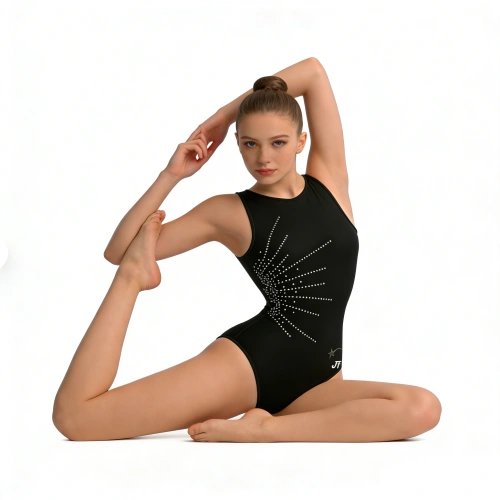
Practice leotards need to balance comfort, stretch, breathability, durability, and shape retention. Buyers should ask which fabrics the supplier recommends and why. Common materials include Lycra, Spandex, Polyester, Mystique, and Mesh. Each has different properties. Lycra and Spandex offer stretch and recovery. Polyester can add durability and colorfastness. Mystique can create a shiny performance look. Mesh can add ventilation and visual interest. The right combination depends on the intended use, climate, design, and budget.
For training leotards, the focus should be on comfortable stretch, durability, moisture management, and everyday wear. For competition leotards, greater emphasis may be placed on precision fit, secure coverage, decorative details, and professional finishing. A supplier should be able to explain fabric weight, stretch direction, recovery, opacity, and care instructions. T&J Sportswear pays close attention to fabric selection and garment construction. Its product range can use materials including Lycra, Spandex, Polyester, Mystique, and Mesh, depending on the design and application. Different products can be developed for different priorities, such as stretch, lightweight construction, breathability, quick drying, comfort, durability, and visual appearance.
Sizing is one of the most common sources of frustration in gymnastics apparel. A practice leotard must fit a wide range of body types while allowing full range of motion. Buyers should ask how the supplier develops size charts, whether it offers child and adult sizes, how it handles custom measurements, and how it tests fit. They should also ask about size consistency between samples and bulk production. Inconsistent sizing can lead to returns, unhappy athletes, and damaged brand reputation.
A strong supplier will discuss torso length, chest, waist, hip, and leg opening measurements. It will also consider how different fabrics stretch and recover. For clubs ordering team leotards, the supplier should provide a clear measurement guide and support size sets or mixed sizes. T&J Sportswear supports customized team leotards and can develop products based on customer designs, sketches, reference images, color requirements, or original ideas. Its design and production teams can help optimize fit and sizing for specific teams, clubs, or markets.

Customization is often a major reason to work with a specialized supplier. Buyers should ask whether the supplier offers OEM and ODM services, whether it can produce from sketches or reference images, and what elements can be customized. For practice leotards, customization may include colors, patterns, logos, sublimation printing, rhinestone layouts, fabric combinations, sizes, labels, and packaging. For team orders, matching warm-ups and other apparel may also be relevant.
T&J Sportswear supports both OEM and ODM services, allowing customers to choose between producing their own designs and developing new products together with the manufacturer. Its professional in-house design team specializes in gymnastics apparel and can help develop new concepts based on sketches, reference images, color combinations, team identities, or brand requirements. For competition leotards, T&J Sportswear can combine sublimation graphics, color blocking, mesh, rhinestones, crystal decoration, and different fabric effects. For practice leotards, the focus is on comfort, stretch, breathability, and durability, with a wide range of colors, patterns, and styles available. Buyers should ask for examples of previous customization work and clarify how many revision rounds are included.
Minimum order quantity, or MOQ, is a critical question for gymnastics clubs, new brands, boutique retailers, and smaller distributors. Large MOQs can make it difficult to test new designs or launch a first collection. Buyers should ask whether the supplier offers low MOQ for selected products, whether MOQ differs by fabric or design complexity, and whether reorders have the same minimum. They should also ask about price breaks at different quantities.
One major advantage for small and growing customers is a low MOQ starting from 10 sets for selected products. This gives gymnastics clubs, new brands, boutique retailers, and smaller distributors greater flexibility when testing new designs or launching new collections. Instead of requiring customers to commit to large quantities before they know how a design will perform in their market, T&J Sportswear can support smaller initial orders and help customers gradually develop their collections. A buyer should confirm MOQ in writing and understand how it applies to custom colors, custom labels, and special packaging.
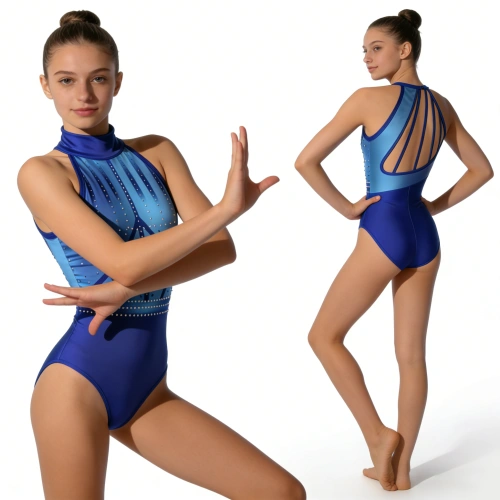
Samples are essential for practice leotards because fit, fabric, and decoration cannot be fully judged from a technical drawing. Buyers should ask about the sampling process, sample lead time, sample cost, and whether sample fees are refundable or deductible from bulk orders. They should also ask how many revision rounds are allowed and what happens if the sample does not meet expectations. A supplier that rushes sampling or avoids detailed feedback may create problems later in bulk production.
Quality control should start before bulk production. During sample development, customers can review the design, fabric, fit, decoration, and finishing before confirming mass production. T&J Sportswear supports design development and sample making as part of its OEM and ODM services. This integrated approach helps reduce communication between multiple suppliers and gives customers a more efficient path from an initial idea to a finished product. Buyers should insist on a written approval process before bulk production begins.
Quality control is not only a final inspection issue. It should cover incoming fabric, cutting, sewing, printing, decoration, measurement, and packaging. Buyers should ask what inspection points are used, whether the supplier has internal quality standards, and how defects are handled. For practice leotards, key inspection points include fabric condition, printing quality, stitching, measurements, rhinestone placement, coverage, and overall appearance. The supplier should be able to reduce common problems such as inconsistent sizing, printing defects, loose decoration, or uneven finishing.
T&J Sportswear works to maintain stable workmanship and carefully inspects finished products before shipment. Its production process is designed to reduce common problems and maintain consistency from sample to bulk production. Product information also lists certifications such as ISO9001, SGS, and CE for applicable products. Specific certification and testing documentation can be provided according to the product and customer requirements. Buyers should ask for inspection reports, test reports, or certificates relevant to their market, especially if they sell to the US or Europe.
Production capacity matters for both small and large orders. Buyers should ask how many leotards the supplier can produce per day, how many workers are involved, and how capacity is managed during peak seasons. They should also ask for standard lead times for sampling, bulk production, quality inspection, and shipping. Lead time can vary by design complexity, fabric availability, decoration requirements, and order quantity. A supplier that gives unrealistic promises may struggle to deliver on time.
T&J Sportswear has a factory team that includes 30+ skilled workers, with reported production capacity of 300+ leotards per day. This provides a balance between flexible customization and the ability to support larger wholesale and team orders. For customers, production capacity is not simply about quantity. The real value is the ability to maintain consistent workmanship when moving from samples to bulk production. T&J Sportswear pays attention to fabric, printing, stitching, sizing, rhinestone placement, and overall finishing throughout production. Buyers should ask for a production schedule and clarify responsibilities for delays.
Clear communication is essential in custom manufacturing. Buyers should ask who their main contact will be, how often they will receive updates, what communication channels are used, and how time zones are handled. They should also ask whether the supplier provides one-to-one service or routes inquiries through a general sales team. For customized gymnastics apparel, small misunderstandings about colors, measurements, or decoration can become expensive problems.
T&J Sportswear provides professional support from initial inquiry and design development to sampling, production, inspection, and shipment. Customers can communicate their requirements directly and receive assistance with product development, customization, production details, and logistics. The company emphasizes one-to-one service and professional communication. Buyers should test communication during the inquiry stage. If a supplier is slow or vague before an order, that behavior may continue after payment.
Buyers should ask about payment methods, deposit percentages, balance terms, currency, and whether prices include or exclude shipping. They should also ask about packaging options, such as poly bags, hang tags, size labels, care labels, and custom branded packaging. For distributors and brands, packaging can affect retail presentation and customer experience. Shipping terms such as EXW, FOB, CIF, or DDP should be clarified, along with estimated transit times and customs documentation.
T&J Sportswear supports customization of team colors, logos, patterns, labels, packaging, and other details. For customers building a complete team collection, it also provides custom gymnastics warm-ups and matching team apparel. Buyers should request a detailed quotation that separates product cost, customization fees, sampling fees, packaging, and shipping. They should also confirm which party handles import duties, taxes, and customs clearance.
Practice leotards may be sold to local clubs, national teams, online customers, or international distributors. Each market may have different size expectations, labeling rules, safety requirements, and fashion preferences. Buyers should ask whether the supplier has experience with their region. For example, customers in North America and Europe often place strong emphasis on product quality, customization, consistency, and reliable communication. They may also require specific labeling, testing, or compliance documentation.
T&J Sportswear works with gymnastics clubs, teams, brands, wholesalers, distributors, and other sportswear businesses, with a strong focus on customers in the US, Europe, and other international markets. Its products and services have reached customers in 36+ countries. This international experience helps the company understand different sizing systems, product preferences, and market requirements. Buyers should ask for references or examples from their region if available.
The supplier relationship should not end at delivery. Buyers should ask about reorder procedures, whether previous specifications are saved, how quickly reorders can be produced, and how quality issues are resolved after delivery. They should also ask about warranty, returns, replacements, or credits for defective goods. A supplier that keeps detailed records of approved samples, fabrics, and measurements can make reorders faster and more consistent.
T&J Sportswear aims to build long-term partnerships rather than simply complete individual orders. Whether a customer is a gymnastics club developing team uniforms, a new brand launching a collection, a distributor expanding a product range, or an established buyer looking for a reliable manufacturing partner, T&J Sportswear provides flexible solutions based on requirements. Buyers should discuss reorder expectations early, especially if they plan to expand a practice leotard collection over multiple seasons.
Some warning signs can help buyers avoid unreliable suppliers. These include vague answers about fabric composition, unwillingness to provide samples, unusually low prices with no explanation, poor communication, no clear quality control process, and pressure to pay large deposits before details are confirmed. Buyers should also be cautious if a supplier cannot explain sizing, cannot show relevant gymnastics apparel experience, or refuses to put specifications in writing.
A reliable supplier will welcome detailed questions. It will provide clear information about materials, production capacity, MOQ, sampling, quality control, lead times, and shipping. It will also be honest about what it can and cannot do. T&J Sportswear, for example, combines 10+ years of industry experience, 36+ countries served, 30+ skilled workers, 300+ daily leotard capacity, low MOQ, professional design support, OEM and ODM customization, and one-to-one service. Buyers should compare several suppliers and evaluate total value, not just unit price.
The following checklist can help buyers organize their questions and compare supplier responses.
Practice leotards are the workhorses of a gymnastics wardrobe. They are worn more often than competition leotards and must withstand frequent washing, stretching, and movement. A supplier that treats them as simple stretch garments may overlook important details such as seam placement, gusset construction, leg opening elasticity, fabric recovery, and colorfastness. These details affect comfort, confidence, and durability. For clubs, poorly fitting practice leotards can distract athletes during training. For brands and distributors, poor quality can lead to returns and lost customers.
A specialized supplier can help buyers make better decisions. It can recommend fabrics for different climates and training intensities. It can adjust patterns for different body types. It can choose decoration methods that do not irritate the skin or restrict movement. It can also provide consistent sizing across reorders. T&J Sportswear focuses on comfort, flexibility, durability, fit, and visual appeal. Its production team pays attention to every stage of manufacturing, from fabric selection and pattern development to cutting, sewing, printing, rhinestone application, quality inspection, and final packaging. This helps provide products suitable for both demanding training sessions and high-level competitions.
T&J Sportswear is a professional gymnastics apparel manufacturer specializing in custom gymnastics leotards and teamwear for clubs, teams, brands, wholesalers, and distributors worldwide. With more than 10 years of manufacturing experience, the company provides reliable quality, flexible customization, and professional service for customers in the US, Europe, and other international markets. Its main products include competition gymnastics leotards, practice gymnastics leotards, custom team leotards, rhinestone gymnastics leotards, and gymnastics warm-up wear.
For practice gymnastics leotards, T&J Sportswear focuses on comfort, stretch, breathability, and durability for everyday training. The company offers a wide range of colors, patterns, and styles, with customized designs available for gymnastics clubs and teams. It supports low MOQ from 10 sets for selected products, making it easier for new brands, clubs, and smaller distributors to start. Its in-house design team can help transform ideas, sketches, or reference images into finished gymnastics apparel. Its factory team includes 30+ skilled workers and reported production capacity of 300+ leotards per day. Quality control covers sample development through bulk production, with attention to fabric, printing, stitching, measurements, rhinestone placement, coverage, and overall appearance. Certifications such as ISO9001, SGS, and CE may be available for applicable products.
For buyers, the value of working with a supplier like T&J Sportswear is not only the product itself. It is also the ability to ask detailed questions and receive practical answers. Customization can cover artwork, colors, sublimation printing, logos, rhinestone layouts, fabric combinations, sizes, labels, packaging, and other details. The production process covers design development, fabric selection, digital artwork, printing, cutting, sewing, decoration, inspection, packaging, and delivery. This integrated approach reduces communication between multiple suppliers and creates a more efficient path from idea to finished product.
Before ordering practice gymnastics leotards, buyers should ask questions that go beyond price. They should evaluate specialization, fabric knowledge, sizing systems, customization options, MOQ, sampling, quality control, production capacity, lead times, communication, shipping, and after-sales support. The best supplier is not always the cheapest. It is the one that can deliver consistent, comfortable, durable leotards that meet the needs of gymnasts and the business goals of the buyer.
A structured supplier evaluation helps clubs, teams, brands, wholesalers, and distributors avoid costly mistakes. It also creates a stronger foundation for long-term partnership. With experienced production capabilities, professional design support, flexible customization, and a customer-focused approach, T&J Sportswear is committed to being a dependable gymnastics apparel manufacturing partner for customers around the world. From a first idea to the final leotard, the right questions can make custom gymnastics apparel more efficient, flexible, and reliable.
