When selecting training leotards for girls' gymnastics, prioritize fabric, fit, construction, and durability. Look for four-way stretch materials like Lycra, Spandex, or Polyester blends that offer breathability and moisture-wicking. Fit should be snug but not restrictive, with flatlock seams and a lined gusset for comfort. Durability is essential; avoid excessive embellishments and choose reinforced stitching. Customization for teams ensures consistent sizing and design. Manufacturers like T&J Sportswear, with 10+ years of experience, offer OEM/ODM services, low MOQ, and quality control from sample to bulk production. They serve 36+ countries and produce 300+ leotards daily. Proper care—hand washing, air drying, and rotating leotards—extends lifespan. By focusing on these factors, parents and coaches can ensure gymnasts train comfortably and confidently, while supporting long-term performance and enjoyment of the sport.
Gymnastics is a sport that demands precision, flexibility, and confidence. For young female gymnasts, the right training leotard is not just a piece of clothing—it is a critical piece of equipment that can influence performance, comfort, and even safety during practice. Unlike competition leotards, which are often designed for visual impact and short bursts of activity, training leotards must withstand hours of rigorous movement, repeated washing, and the unique physical demands of daily practice. Parents, coaches, and gymnasts themselves need to understand the key factors that distinguish a high-quality training leotard from a mediocre one. This article explores what to look for in leotards for girls' gymnastics training, covering fabric, fit, construction, durability, and customization options, while highlighting how experienced manufacturers like T&J Sportswear approach these requirements.
The fabric of a training leotard is arguably the most important consideration. Girls spend countless hours in the gym, and their skin needs to breathe. Look for materials that offer four-way stretch, moisture-wicking properties, and a soft feel against the skin. Common fabrics include Lycra, Spandex, Polyester, Mystique, and Mesh. Each has distinct advantages: Lycra and Spandex provide exceptional elasticity and recovery, Polyester adds durability and color retention, Mystique offers a shiny, sleek appearance, and Mesh introduces breathability in targeted areas.
For training purposes, a blend of Lycra and Polyester is often ideal because it balances stretch with durability. The fabric should be lightweight yet substantial enough to avoid being see-through when stretched. T&J Sportswear, a professional gymnastics apparel manufacturer with more than 10 years of experience, emphasizes performance-oriented materials. Their training leotards focus on comfortable stretch, durability, moisture management, and everyday wear. They select fabrics that can withstand the friction of bars, beams, and floor exercises without pilling or losing shape.
Breathability is another critical factor. Girls' bodies heat up quickly during training, and a leotard that traps sweat can cause discomfort, chafing, and even overheating. Mesh panels or moisture-wicking fabrics help regulate temperature. Parents should check the label or product description for terms like "breathable," "quick-drying," or "moisture-wicking." A good training leotard will keep the gymnast dry and comfortable, allowing her to focus on her skills rather than adjusting her clothing.
undefined
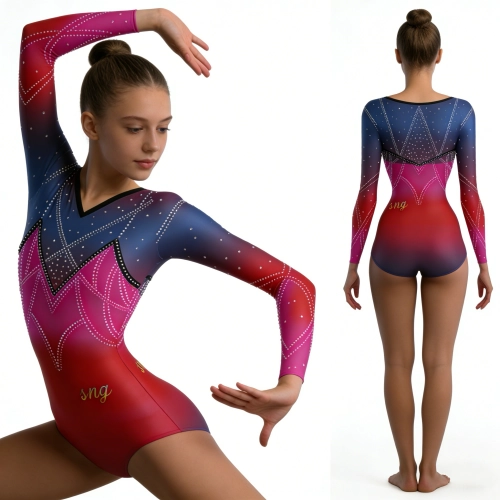
A training leotard must fit like a second skin—snug enough to stay in place during inversions, swings, and leaps, but not so tight that it restricts movement or causes discomfort. Poor fit can lead to wardrobe malfunctions, restricted range of motion, and even skin irritation. When evaluating fit, consider the following:
Customization can solve many fit issues. T&J Sportswear offers custom team leotards and practice leotards with flexible sizing options. Their design team can adjust patterns to accommodate different body types, ensuring that each gymnast receives a leotard that fits properly. For growing gymnasts, a slightly roomier fit in the torso may be preferable, but it should never be so loose that it bunches or shifts.
The construction of a training leotard significantly affects its comfort and longevity. Flatlock seams are a hallmark of quality gymnastics apparel because they lie flat against the skin, reducing chafing and irritation. Overlocked or serged seams can create ridges that rub during movement, leading to discomfort and even skin breakdown.
Look for reinforced stitching at stress points such as the shoulders, crotch, and leg openings. These areas endure the most tension during practice. A well-constructed leotard will also have a lined gusset for hygiene and comfort. Elastic bands should be covered or soft to prevent digging into the skin. T&J Sportswear pays close attention to cutting, stitching, and finishing. Their production process includes careful inspection of stitching, measurements, and overall appearance to reduce common problems such as inconsistent sizing or uneven finishing.
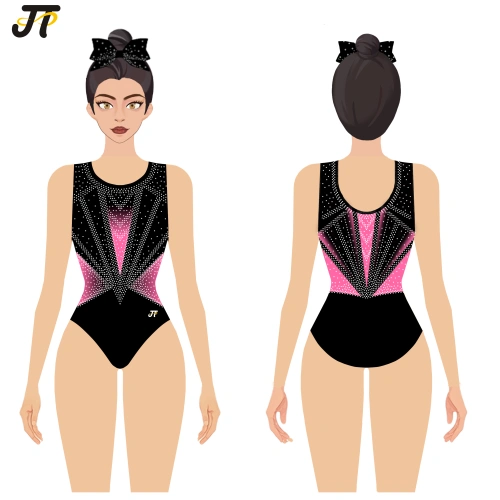
Another construction detail is the neckline and armholes. A modest scoop neck or a higher neckline can provide better coverage during inverted skills. Armholes should be cut to allow full shoulder rotation without exposing the sides of the body. Some training leotards feature adjustable straps or snaps at the bottom, but these can be less durable than a fixed design. For everyday training, simplicity and robustness often win over adjustable features.
Training leotards are washed frequently and subjected to constant friction from equipment and the gymnast's own movements. Durability is therefore non-negotiable. Factors that contribute to durability include fabric quality, stitch density, and colorfastness. Cheap fabrics may pill, fade, or lose elasticity after a few washes. High-quality Lycra or Polyester blends retain their shape and color much longer.
Rhinestones and other decorations are common on competition leotards but are generally not recommended for training leotards, as they can snag on equipment or fall off. If a training leotard does include embellishments, they should be securely attached and placed away from high-friction areas. T&J Sportswear, while specializing in rhinestone gymnastics leotards for competitions, advises that practice leotards focus on comfort, stretch, breathability, and durability. Their training leotards are designed for the everyday demands of the gym, not for the spotlight of competition.
Washing instructions also play a role in durability. Most training leotards should be hand-washed in cold water and hung to dry. Machine washing and drying can break down elastic fibers and cause fading. Parents should teach young gymnasts to care for their leotards properly to extend their lifespan.
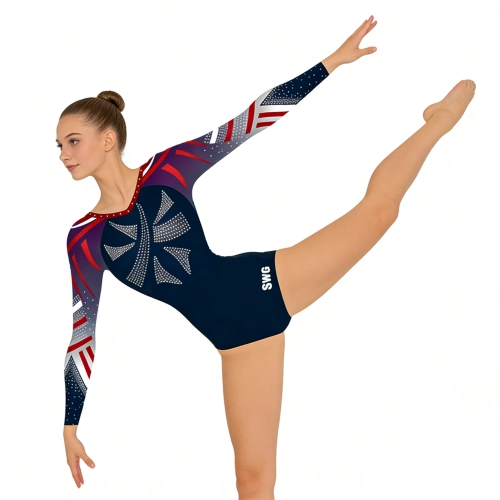
While function is paramount for training, girls still want to feel good about what they wear. A leotard that reflects her personal style can boost confidence and motivation. Training leotards come in a wide range of colors, patterns, and cuts—from solid tank leotards to racerback styles, from subtle prints to bold geometric designs. The key is to ensure that style does not compromise function.
For example, a leotard with a high neckline and keyhole back may look elegant but could cause chafing during bar exercises. Similarly, a leotard with a lot of cutouts may not provide enough coverage for certain moves. Parents should let the gymnast choose a design she loves, but gently guide her toward options that prioritize comfort and coverage.
Custom team leotards are an excellent way to combine style with function. T&J Sportswear offers custom gymnastics leotards for clubs and teams, with options for team colors, logos, patterns, and labels. Their professional design team can help transform ideas, sketches, or reference images into finished apparel. For training, they can create leotards that are both visually appealing and performance-ready, using sublimation printing that won't crack or peel over time.
For gymnastics clubs and teams, having matching training leotards fosters a sense of unity and professionalism. When ordering for a group, consistency in sizing, color, and quality is critical. This is where choosing the right manufacturer becomes essential. T&J Sportswear supports OEM and ODM services, allowing clubs to develop custom team leotards from scratch or modify existing designs. They offer low MOQ starting from 10 sets for selected products, making it feasible for smaller clubs to order custom apparel without committing to large quantities.
When ordering team leotards, consider the following:
T&J Sportswear has more than 10 years of experience in gymnastics apparel manufacturing and serves customers in 36+ countries. Their production capacity includes 30+ skilled workers and the ability to produce 300+ leotards per day, ensuring that both small and large orders are handled efficiently. They maintain quality control from sample to bulk production, inspecting fabric condition, printing quality, stitching, measurements, rhinestone placement, and overall appearance.
Whether purchasing a single leotard or ordering for a team, the manufacturer matters. A reliable manufacturer will provide transparent information about materials, construction, and certifications. Look for certifications such as ISO9001, SGS, and CE, which indicate adherence to quality and safety standards. T&J Sportswear lists these certifications for applicable products and can provide testing documentation upon request.
Communication is another key factor. A manufacturer that responds promptly, offers one-to-one service, and provides professional design support can make the customization process smooth and enjoyable. T&J Sportswear emphasizes one-to-one professional service, guiding customers from initial inquiry and design development to sampling, production, inspection, and shipment. Their goal is to build long-term partnerships, not just complete individual orders.
Finally, consider the manufacturer's expertise in gymnastics apparel specifically. General sportswear suppliers may not understand the unique requirements of gymnastics, such as the need for four-way stretch, secure coverage, and freedom of movement. T&J Sportswear focuses exclusively on gymnastics apparel, including competition leotards, practice leotards, custom team leotards, rhinestone leotards, and warm-up wear. This specialization translates into better-designed, better-fitting products.
Even the highest-quality leotard will deteriorate prematurely if not cared for properly. Here are some best practices for maintaining training leotards:
By following these guidelines, a quality training leotard can last for many months, even with daily use. Parents should involve their gymnast in the care process, teaching responsibility and respect for her equipment.
Selecting the right training leotard for a young gymnast involves careful consideration of fabric, fit, construction, durability, and style. The ideal leotard is one that the gymnast forgets she is wearing—it moves with her, breathes with her, and stays in place through every routine. Parents and coaches should prioritize comfort and function over flashy designs, especially for daily training.
Manufacturers like T&J Sportswear demonstrate how specialized expertise can make a difference. With over a decade of experience, a professional design team, flexible customization options, and a commitment to quality control, they provide gymnastics apparel that meets the demanding needs of training. Whether purchasing a single leotard or outfitting an entire team, understanding what to look for ensures that every gymnast can train confidently and comfortably. The right leotard is an investment in a gymnast's performance, comfort, and love for the sport.
