This article provides comprehensive supplier selection tips for gymnastics clubs and schools seeking high-quality leotards. It explains why supplier choice affects athlete comfort, team appearance, budgets, and delivery schedules. Clubs and schools should first define their needs, including training versus competition leotards, quantities, sizes, budgets, and deadlines. Specialized gymnastics apparel manufacturers are preferable because they understand stretch, fit, coverage, durability, and decoration requirements. Key evaluation criteria include product range, design capability, OEM/ODM support, materials such as Lycra, Spandex, Polyester, Mystique, and Mesh, MOQ, production capacity, quality control, certifications, communication, and pricing. The article highlights T&J Sportswear as an example of a professional manufacturer with more than 10 years of experience, 36+ countries served, 30+ skilled workers, 300+ leotards per day capacity, low MOQ from 10 sets, and one-to-one service. It also covers training leotards, competition leotards, custom team designs, rhinestones, sublimation, sampling, quality checklists, seasonal planning, and red flags to avoid. A step-by-step selection process helps clubs and schools compare suppliers objectively, request samples, approve designs, and plan reorders. The conclusion emphasizes that the best supplier relationships are built on trust, consistency, clear communication, and long-term partnership. By following these tips, clubs and schools can choose a reliable gymnastics leotard supplier that delivers comfortable, durable, and visually appealing apparel for athletes at every level.
Selecting the right gymnastics leotard supplier is a decision that affects athlete comfort, team appearance, budget planning, and long-term program success. For gymnastics clubs and school programs, leotards are not simply uniforms. They are performance garments worn during long training sessions, local competitions, regional meets, and national events. A well-chosen supplier can make the ordering process smooth, predictable, and cost-effective. A poor choice can lead to sizing problems, delayed deliveries, inconsistent quality, and frustrated athletes and parents. This article provides practical supplier selection tips for clubs and schools, with insights that can help decision-makers evaluate manufacturers, compare options, and build reliable partnerships.
Gymnastics clubs and school teams often order leotards in batches. Some programs order practice leotards several times a year. Others order competition leotards once per season, often with strict deadlines. The supplier must understand these rhythms. The supplier must also understand that gymnasts need freedom of movement, secure coverage, stretch, durability, and visual appeal. A supplier that treats gymnastics apparel like ordinary sportswear may miss critical details such as gusset construction, leg opening comfort, shoulder fit, and rhinestone placement. Clubs and schools therefore need to look beyond price alone and evaluate the full manufacturing and service package.
undefined
In many cases, clubs and schools work with a limited budget. They may need to balance affordability with quality, especially when ordering for large groups. Schools may need uniforms that can survive frequent washing and daily use. Clubs may need competition leotards that look impressive under arena lighting. The right supplier can offer flexible solutions, clear communication, and consistent workmanship. The wrong supplier can create rework, returns, and unhappy families. This is why a structured selection process is valuable.
Before contacting suppliers, clubs and schools should define their own requirements. This step prevents confusion and helps suppliers provide accurate quotes and timelines. Key questions include: How many athletes need leotards? Are these for training, competition, or both? What is the budget per leotard? What sizes are needed, and how many custom sizes might be required? What colors, logos, and design elements should be included? When are the leotards needed? Will the program reorder in the future? Does the program need warm-ups, bags, or other matching teamwear? Answering these questions internally saves time and reduces the risk of ordering the wrong product.
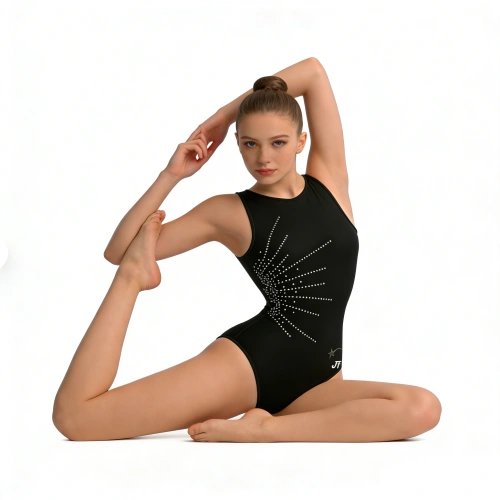
Training leotards and competition leotards serve different purposes. Training leotards prioritize comfort, breathability, stretch, and durability. They are worn repeatedly, washed often, and must withstand daily wear. Competition leotards prioritize precision fit, secure coverage, visual impact, and decorative details such as sublimation printing, mesh panels, and rhinestones. A supplier should be able to explain how its materials and construction differ for these two categories. Clubs and schools may choose to order both types from the same supplier to maintain consistent sizing and team identity. T&J Sportswear, for example, offers competition gymnastics leotards, practice gymnastics leotards, custom team leotards, rhinestone gymnastics leotards, and gymnastics warm-up wear. This range allows clubs and schools to build a complete team collection with one manufacturing partner.
Not all sportswear manufacturers understand gymnastics. General apparel suppliers may produce T-shirts, leggings, or dancewear, but gymnastics leotards require specific knowledge. Gymnastics apparel must stretch in multiple directions, recover its shape, remain opaque during movement, and provide coverage without restricting motion. It must also handle embellishments such as rhinestones, sublimation graphics, and mesh inserts. A specialized supplier understands these demands from the pattern development stage through final inspection.
T&J Sportswear is a professional gymnastics apparel manufacturer with more than 10 years of experience in the sportswear industry. The company specializes in high-quality gymnastics leotards and teamwear. Its experience covers product development, custom design, manufacturing, and international business. Over the years, its products and services have reached customers in 36+ countries. Its main markets include North America and Europe, where customers place strong emphasis on product quality, customization, consistency, and reliable communication. This international experience helps the company understand different sizing systems, market preferences, and quality expectations.
Clubs and schools can use a set of criteria to compare suppliers objectively. These criteria should cover product capability, customization, quality control, communication, pricing, and production capacity. The following sections explain each criterion in detail.
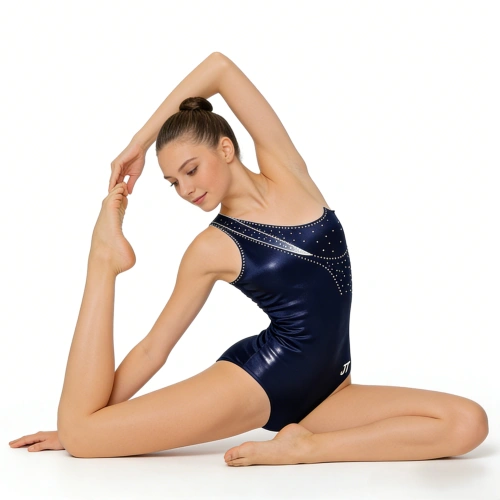
A supplier should offer a product range that matches the program's needs. For clubs and schools, useful categories include competition leotards, practice leotards, custom team leotards, rhinestone leotards, and warm-up wear. The supplier should also support customization. This can include colors, logos, patterns, sublimation printing, rhinestone layouts, fabric combinations, sizes, labels, and packaging. T&J Sportswear supports OEM and ODM services. Its professional design team can help transform ideas, sketches, or reference images into finished gymnastics apparel. This means a club or school does not need to have a complete technical design package before approaching the supplier. The supplier can assist with artwork development and product optimization.
Design capability is a major differentiator. Some suppliers only manufacture designs provided by customers. Others can develop new concepts based on team identity, color combinations, or brand requirements. For competition leotards, a strong design team can combine sublimation graphics, color blocking, mesh, rhinestones, crystal decoration, and different fabric effects to create distinctive visual designs. Clubs and schools may want a leotard that reflects their mascot, school colors, or club logo. A supplier with in-house design support can make this process more efficient and reduce the need to coordinate with multiple vendors.
A beautiful leotard must also perform during movement. Clubs and schools should ask about fabric options and garment construction. Common materials include Lycra, Spandex, Polyester, Mystique, and Mesh. Different fabrics offer different benefits. Lycra and Spandex provide stretch and recovery. Polyester can offer durability and color retention. Mystique can provide a shiny, performance-ready look. Mesh can add breathability and visual interest. The supplier should explain how fabric selection affects fit, comfort, coverage, and durability. For training leotards, the focus should be on comfortable stretch, durability, moisture management, and everyday wear. For competition leotards, the focus should be on precision fit, secure coverage, decorative details, and professional finishing.
Minimum order quantity, or MOQ, is often a concern for smaller clubs and schools. Some manufacturers require large orders that are difficult for growing programs to manage. A supplier with low MOQ can offer greater flexibility. T&J Sportswear offers low MOQ starting from 10 sets for selected products. This allows gymnastics clubs, new brands, boutique retailers, and smaller distributors to test new designs or launch new collections without committing to large quantities. For schools, this flexibility can be useful when ordering for a single team or a specific grade level. For clubs, it can support gradual program growth and seasonal design changes.

Production capacity affects delivery reliability. A supplier with sufficient capacity can handle both small custom orders and larger team orders. T&J Sportswear has a factory team that includes 30+ skilled workers, with reported production capacity of 300+ leotards per day. This capacity provides a balance between flexible customization and the ability to support larger wholesale and team orders. For clubs and schools, production capacity is not simply about quantity. The real value is the ability to maintain consistent workmanship when moving from samples to bulk production. Lead times should be discussed clearly, especially for competition season. Clubs and schools should ask about sample lead time, production lead time, shipping time, and buffer time for quality inspection.
Quality control should start before bulk production. During sample development, customers can review the design, fabric, fit, decoration, and finishing before confirming mass production. For finished garments, key inspection points can include fabric condition, printing quality, stitching, measurements, rhinestone placement, coverage, and overall appearance. A reliable supplier designs its production process to reduce common problems such as inconsistent sizing, printing defects, loose decoration, or uneven finishing. Clubs and schools should ask how the supplier handles sample approval, size checks, and final inspection. They should also ask whether the supplier can provide photos or reports before shipment.
Certifications can provide additional confidence, especially for schools and institutional buyers. T&J Sportswear lists certifications such as ISO9001, SGS, and CE for applicable products. Specific certification and testing documentation can be provided according to the product and customer requirements. Clubs and schools may need documentation for procurement, safety, or compliance purposes. Suppliers should be able to explain which certifications apply to which products and what testing has been performed.
Clear communication and responsive service are essential for customized gymnastics apparel. From initial inquiry and design development to sampling, production, inspection, and shipment, the supplier should provide professional support. T&J Sportswear offers one-to-one service. Customers can communicate their requirements directly and receive assistance with product development, customization, production details, and logistics. For clubs and schools, this means fewer misunderstandings and faster problem-solving. A dedicated contact person can help track orders, confirm details, and provide updates.
Price is important, but it should be evaluated alongside quality, durability, and service. A low-priced leotard that fades, loses shape, or arrives late can cost more in the long run. Clubs and schools should compare total value. This includes fabric quality, stitching, fit consistency, decoration durability, reorder reliability, and customer service. T&J Sportswear aims to provide competitive pricing with flexible solutions. Its goal is not only to manufacture gymnastics apparel but also to build long-term partnerships through reliable products and responsive service.
Training leotards are the workhorses of a gymnastics wardrobe. They are worn multiple times per week, washed frequently, and stretched in every direction. Clubs and schools should prioritize comfort, breathability, durability, and fit. The fabric should be soft against the skin and should manage moisture. The construction should allow full range of motion without riding up or digging into the shoulders. The leg openings should be comfortable and secure. The colors and patterns should hide minor wear and tear. T&J Sportswear practice gymnastics leotards focus on comfort, stretch, breathability, and durability for everyday training. The company offers a wide range of colors, patterns, and styles, with customized designs available for gymnastics clubs and teams.
Competition leotards must do more than look good. They must fit precisely, stay in place, and support confident movement. Clubs and schools should look for secure coverage, strong stitching, reliable embellishments, and a professional finish. Rhinestones should be attached securely and placed comfortably. Sublimation printing should remain vibrant when the fabric stretches. Mesh panels should be soft and durable. T&J Sportswear competition leotards combine performance fabrics with creative designs, sublimation printing, rhinestones, and other decorative techniques. The company pays close attention to fabric selection, cutting, stitching, embellishment, and finishing to create eye-catching leotards that allow athletes to move confidently during competition.
Custom team leotards help clubs and schools build identity. They can feature team colors, logos, mascots, patterns, and slogans. The design process should involve coaches, athletes, and sometimes parents. It is helpful to gather inspiration images, color references, and logo files before contacting a supplier. The supplier can then create artwork mockups for review. Clubs and schools should ask about color matching, logo placement, and size ranges. They should also consider how the design will look in different sizes and under different lighting conditions. T&J Sportswear offers custom team leotards and matching team apparel. Team colors, logos, patterns, labels, packaging, and other details can be customized according to requirements.
Decorative details can make a leotard stand out, but they must be durable and comfortable. Rhinestones should be attached with reliable methods that withstand stretching and washing. Sublimation printing should bond with the fabric and resist cracking or fading. Mesh inserts should be soft and stretchable. Clubs and schools should ask suppliers about their decoration processes and quality checks. T&J Sportswear can combine sublimation graphics, color blocking, mesh, rhinestones, crystal decoration, and different fabric effects to create distinctive visual designs. Customers can also customize colors, logos, patterns, labels, and other branding elements.
MOQ can make or break a supplier relationship for smaller programs. A low MOQ allows clubs and schools to test designs, sizes, and demand before committing to a large order. T&J Sportswear offers low MOQ starting from 10 sets for selected products. This gives gymnastics clubs, new brands, boutique retailers, and smaller distributors greater flexibility. Instead of requiring customers to commit to large quantities before they know how a design will perform, the company can support smaller initial orders and help customers gradually develop their collections. For schools, this can mean ordering for a single team or grade level without overstocking. For clubs, it can mean testing a new competition design before rolling it out to all competitive levels.
The sampling process usually includes design confirmation, fabric selection, artwork development, sample production, and customer review. Clubs and schools should provide clear feedback on fit, comfort, and appearance. If changes are needed, the supplier should explain what can be adjusted and how it affects cost or lead time. Once the sample is approved, bulk production can begin. A good supplier will keep the approved sample as a reference for quality control.
Quality control should be systematic. Clubs and schools can ask suppliers about their inspection points. A thorough checklist may include the following items.
T&J Sportswear works to maintain stable workmanship and carefully inspects finished products before shipment. The company's production process covers design development, fabric selection, digital artwork, printing, cutting, sewing, decoration, inspection, packaging, and delivery. This integrated approach helps reduce communication between multiple suppliers and gives customers a more efficient path from an initial idea to a finished product.
Gymnastics seasons often follow predictable cycles. Competition season may require leotards by a specific date. School terms may require uniforms before the first meet. Clubs may need practice leotards before summer camps. Suppliers with reliable production capacity can help programs meet these deadlines. T&J Sportswear has 30+ skilled workers and reported production capacity of 300+ leotards per day. This capacity supports both custom team orders and larger wholesale production. Clubs and schools should still plan ahead. They should confirm sample deadlines, production schedules, and shipping methods. It is wise to build in buffer time for quality inspection and unexpected delays.
Some warning signs can help clubs and schools avoid problems. These include vague answers about materials, no sample process, unrealistic lead times, poor communication, hidden fees, inconsistent sizing, and lack of quality control. A supplier that cannot explain its fabric options or construction methods may not be specialized. A supplier that refuses to provide samples may be risky. A supplier that does not ask about fit, coverage, or decoration requirements may not understand gymnastics. Clubs and schools should trust their instincts and ask detailed questions.
A structured process can make supplier selection easier. Clubs and schools can follow these steps.
T&J Sportswear is a professional gymnastics apparel manufacturer specializing in custom gymnastics leotards and teamwear for clubs, teams, brands, wholesalers, and distributors worldwide. With more than 10 years of manufacturing experience, the company provides reliable quality, flexible customization, and professional service for customers in the US, Europe, and other international markets. Its main products include competition gymnastics leotards, practice gymnastics leotards, custom team leotards, rhinestone gymnastics leotards, and gymnastics warm-up wear. From everyday training to competition performances, these products are designed to provide a comfortable fit, excellent flexibility, and a professional appearance.
For customers looking to build a complete team collection, T&J Sportswear also provides custom gymnastics warm-ups and matching team apparel. Team colors, logos, patterns, labels, packaging, and other details can be customized according to requirements. The company supports OEM and ODM services, from design development and sample making to bulk production. Its professional design team can help transform ideas, sketches, or reference images into finished gymnastics apparel. With low MOQ, flexible customization, competitive pricing, and one-to-one service, T&J Sportswear makes it easier for new brands, gymnastics clubs, and established distributors to develop their own collections.
Whether a club needs a small customized team order or a school needs a large wholesale production project, T&J Sportswear is committed to delivering quality gymnastics apparel with consistent workmanship and dependable service. The company combines manufacturing capability with the flexibility required by today's international gymnastics apparel market. Its goal is to build long-term partnerships rather than simply complete individual orders. This approach helps clubs and schools feel confident that their leotard orders will be handled professionally year after year.
The best supplier relationships are built on trust, communication, and consistency. Clubs and schools should look for a supplier that remembers their preferences, maintains size records, and can reproduce designs accurately. A long-term partner can help with seasonal planning, reorders, and design updates. T&J Sportswear aims to be a dependable gymnastics apparel manufacturing partner. With 10+ years of industry experience, 36+ countries served, 30+ skilled workers, 300+ daily leotard capacity, low MOQ, professional design support, OEM/ODM customization, and one-to-one service, the company combines manufacturing capability with the flexibility required by clubs and schools. From the first idea to the final leotard, T&J Sportswear is committed to making custom gymnastics apparel more efficient, flexible, and reliable.
Choosing a gymnastics leotard supplier for a club or school is a decision that deserves careful thought. The right supplier will understand gymnastics-specific needs, offer flexible customization, maintain quality control, and communicate clearly. Clubs and schools should evaluate product range, design capability, materials, MOQ, production capacity, certifications, and service. They should request samples, check references, and plan ahead for seasonal deadlines. By following a structured selection process, programs can find a supplier that delivers comfortable, durable, and attractive leotards for training and competition. Suppliers such as T&J Sportswear demonstrate how specialized manufacturing experience, in-house design, low MOQ, and one-to-one service can support clubs and schools in building successful team apparel programs.
